Working with recombinant human bFGF changes how you think about cell culture. The first time I watched a stem cell colony maintain its pluripotency over multiple passages without the usual drift, something clicked about why this growth factor matters so much to researchers across so many fields. It’s not just another media supplement—it’s often the difference between an experiment that works and one that doesn’t.
How Recombinant Human bFGF Works at the Molecular Level
Recombinant human bFGF, also known as FGF-2, belongs to the fibroblast growth factor family and sits at the center of several biological processes that researchers care deeply about. Cell proliferation, differentiation, and angiogenesis all depend on this protein doing its job correctly.
The molecule itself is a single polypeptide chain, typically around 16.5 kDa. When recombinant human bFGF binds to specific receptors on the cell surface, it triggers a cascade of signal transduction events inside the cell. Receptor tyrosine kinases activate, phosphorylation events follow downstream, and gene expression shifts in ways that influence whether cells grow, survive, or migrate.
This mechanism explains why bFGF plays such a central role in tissue development, repair, and maintenance. The protein structure and how it interacts with cellular machinery determine everything about its effectiveness in research applications.
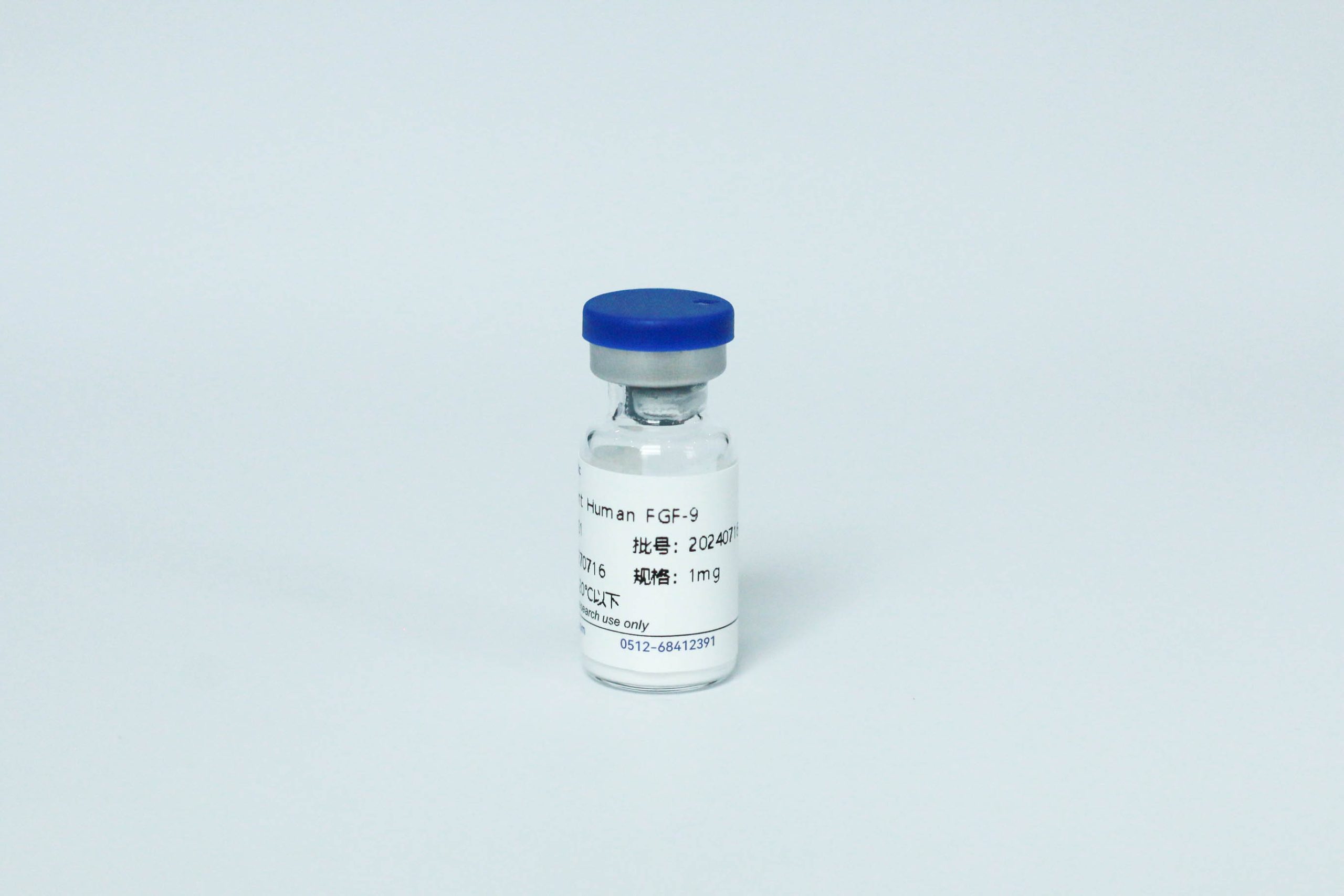
Where Recombinant Human bFGF Makes the Biggest Difference
The range of applications for recombinant human bFGF keeps expanding as researchers push into new territory. Its ability to stimulate cell growth and guide differentiation makes it valuable across fields that might seem unrelated at first glance.
| Application Area | Key Benefits of rhbFGF |
|---|---|
| Stem Cell Culture | Maintains pluripotency, supports proliferation |
| Organoid Culture | Promotes growth, guides differentiation |
| Regenerative Medicine | Enhances tissue repair, accelerates wound healing |
| Tissue Engineering | Supports cell integration, scaffold vascularization |
| Cultivated Meat | Drives muscle cell growth, improves yield |
| Serum-Free Media | Reduces variability, ensures defined conditions |
Supporting Stem Cell and Organoid Culture
Recombinant human bFGF has become indispensable for anyone working with stem cells or organoids. For induced pluripotent stem cells and embryonic stem cells, it helps maintain pluripotency and prevents the spontaneous differentiation that can derail long-term experiments.
In organoid culture, bFGF functions as a key component of growth factor cocktails. It shapes the cellular microenvironment and promotes the organized growth of complex 3D structures. Researchers building disease models or running drug discovery screens depend on this consistency.
Why Serum-Free Media Formulations Rely on bFGF
Using recombinant human bFGF in serum-free cell culture solves problems that matter most in translational research and manufacturing. Defined media formulations reduce the batch-to-batch variability that makes experiments hard to reproduce.
Cell consistency improves. Results become more reliable. For cell therapy applications and clinical work, serum-free and animal-origin free media also address regulatory requirements by minimizing the risk of adventitious agents.
Quality Parameters That Actually Matter
The reliability of recombinant human bFGF determines whether your research outcomes mean anything. Stringent quality control isn’t optional—it’s the foundation of reproducible science.
Key parameters include protein purity, demonstrated biological activity, and endotoxin levels. East-Mab Bio’s Recombinant Human FGF-2/bFGF, produced in E. coli, meets these standards with ≥95% purity and ≤20 EU/mg endotoxin. Stability testing confirms shelf-life and performance under specified storage conditions.
For biopharmaceutical applications, GMP-grade manufacturing principles and batch consistency become even more critical. Robust analytical methods characterize the entire recombinant protein manufacturing process, from production through to the final lyophilized bFGF product.
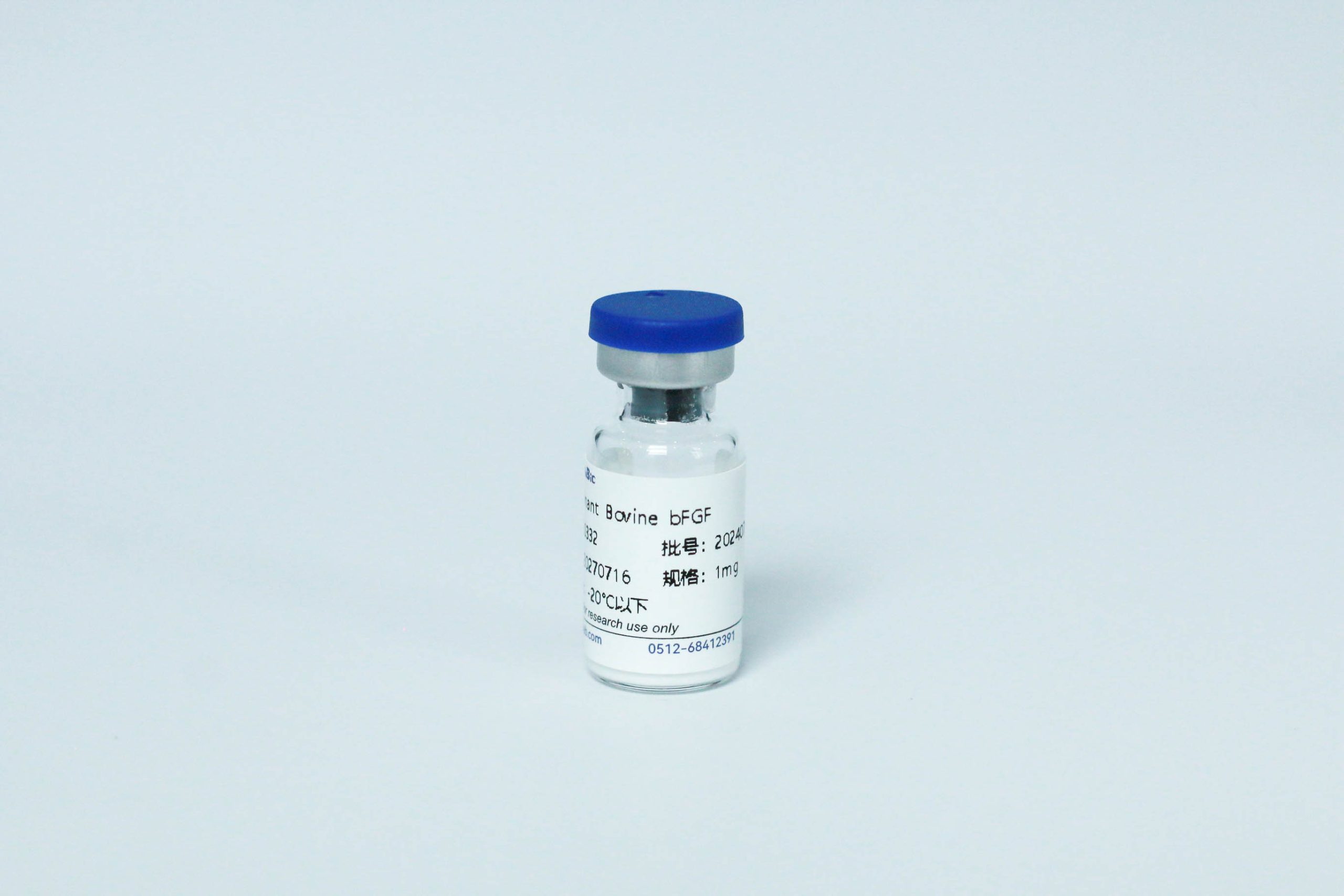
Evaluating Quality Before You Buy
Selecting high-quality recombinant human bFGF requires looking at several parameters together. Purity analysis typically needs to show ≥95% purity to minimize experimental interference.
A robust bioactivity assay should demonstrate functional efficacy, often expressed as an ED₅₀ value—something like ≤2.0 ng/mL for NIH3T3 cell proliferation. Endotoxin limits should be as low as possible: ≤20 EU/mg for research-grade, significantly lower for GMP-grade applications.
Comprehensive stability data indicating optimal storage conditions and shelf life matters too. Thorough protein characterization, complete quality documentation, and a supplier’s track record all factor into whether you can trust the product to perform consistently.
Finding a Supplier You Can Count On
Choosing the right supplier for recombinant protein raw materials affects research success and development timelines in ways that aren’t always obvious until something goes wrong. A reliable partner provides high-quality products, supply chain reliability, and technical support when you need it.
East-Mab Bio offers a world-class platform for recombinant protein research, validation, and production. Custom solutions and scalability accommodate projects at any stage, from early-stage research through large-scale biopharmaceutical raw material production. A robust quality management system ensures product excellence and long-term support.
What’s Coming Next for bFGF Research
The future of bFGF research points toward innovations that will expand its applications further. Advanced bioprocessing techniques continue improving production efficiency and purity, making next-generation growth factors more accessible to researchers.
Sustained release formulations are on the horizon, potentially enhancing bFGF’s therapeutic potential in wound healing and tissue engineering. Gene therapy and personalized medicine will likely rely more heavily on recombinant human bFGF as these fields mature and demand precise cellular control. These biomanufacturing trends will drive new regenerative therapies and integrate bFGF into medical solutions that don’t exist yet.
Partner with East-Mab Bio
Jiangsu East-Mab Biomedical Technology Co., Ltd. provides recombinant human bFGF and other recombinant protein raw materials backed by world-class R&D and stringent quality control. Whether you’re working in cell therapy, organoids, cultivated meat, or IVD diagnostics, we can support your specific project needs with products that deliver the purity, biological activity, and batch consistency your work requires.
Email: [email protected]
Phone: +86-400-998-0106
Frequently Asked Questions about Recombinant Human bFGF
What separates research-grade from GMP-grade recombinant human bFGF?
Research-grade bFGF works well for laboratory experiments and non-clinical studies. It meets high purity standards but typically comes with less extensive documentation than GMP-grade material. GMP-grade recombinant human bFGF follows Good Manufacturing Practice guidelines, which means stricter quality assurance, full traceability, and the consistency that clinical applications and regulatory bodies require. East-Mab offers both grades depending on your project phase.
How do I maintain biological activity and stability during experiments?
Proper handling and storage make the difference. Keep lyophilized bFGF at recommended temperatures, usually -20°C or -80°C. After reconstitution, use solutions promptly or aliquot them for storage—avoid repeated freeze-thaw cycles. Sterile technique during handling prevents contamination. Regular purity and bioactivity assays, like those East-Mab performs on its products, confirm that performance remains reliable.
Can recombinant human bFGF be used in human therapeutic applications?
Yes, particularly in regenerative medicine and wound healing applications. GMP-grade recombinant human bFGF is mandatory for therapeutic use, ensuring the product meets rigorous regulatory guidelines for safety, efficacy, and batch consistency. East-Mab’s recombinant protein production adheres to these standards, supporting the development of advanced therapies intended for clinical use.