A pleasant aroma can make a store feel welcoming, but turning that into lasting customer loyalty demands more than a nice fragrance. Scent marketing for customer loyalty relies on the brain’s wiring to connect smell with emotion and memory, creating a sensory signature that customers associate with your brand at every visit. Without strategic consistency and the right equipment, scent becomes background noise instead of a profit driver. Drawing on a decade of fragrance development and global scenting projects, I’ve learned that brands succeed when they treat their signature scent with the same rigor they give their logo, and that’s where the real retention gains happen.
The Psychology of Scent and Emotional Loyalty
Smell is the only sense that bypasses the thalamus and travels directly to the limbic system, the brain’s emotional and memory center. That biology turns a well-chosen scent into a shortcut for feelings of comfort, excitement, or luxury. When a customer repeatedly encounters the same fragrance in your space, the brain ties that sensory experience to your brand. Over time, the scent alone can trigger the same emotional response as the brand itself.
I’ve seen this play out repeatedly in hospitality. Hotels that invest in a distinctive lobby scent don’t just make the space smell nice; they embed a memory cue that guests carry away and recognize upon return, even years later. This unconscious recall translates directly into repeat bookings and word-of-mouth referrals, often cited in guest reviews as the “feeling” the hotel gave them. For retail and service brands, the mechanism is identical. A signature scent lifts perceived product quality and makes the shopping experience feel more curated, which raises the likelihood of both immediate purchase and long-term store preference.
Creating a Signature Scent for Brand Recognition
A signature scent isn’t just a pleasant fragrance. It’s a proprietary blend that communicates your brand’s personality before a customer sees a logo or hears a slogan. Development starts by mapping brand values onto fragrance families. A tech-forward brand might lean toward crisp, mineral notes. A wellness or spa brand often favors green or herbal accords. Luxury labels gravitate to complex chypre or oriental constructions.
| Fragrance Family | Emotional Tone | Brand Suitability |
|---|---|---|
| Citrus | Energetic, clean | Fitness, modern retail, co-working spaces |
| Floral | Romantic, soft | Spa, boutique fashion, wedding venues |
| Woody / Oriental | Warm, refined | Luxury hotels, private clubs, law firm lobbies |
| Fresh / Aquatic | Bright, approachable | Healthcare, casual dining, tech showrooms |
| Spicy / Gourmand | Comforting, indulgent | Bakeries, upscale restaurants, real estate |
I’ve guided many brands through this mapping exercise. The most successful signature scents emerge from a structured workshop where we pull apart the brand’s visual palette, target demographics, and the emotion they want to own. Once that brief is clear, our R&D team formulates several candidates from a library of over 300 scent types. Testing is essential. I always recommend brands trial two or three contenders in a controlled space before committing, observing both customer behavior and staff feedback. The scent that “feels right” almost always aligns with the brand identity, not necessarily the one leadership initially preferred.
If your program involves multiple locations with varying square footage, it is worth confirming diffuser coverage and scent throw before finalizing your equipment list. Reach out at [email protected] to discuss your layout.
Choosing a Fragrance That Builds Customer Loyalty
The scent that works in one market can fall flat in another, and that has little to do with quality. Cultural scent preferences shape what triggers positive emotions. In Middle Eastern markets, rich oud and amber notes convey hospitality and status. European consumers often respond better to subtle white floral or green tea accords. Through our projects across 68 countries, I’ve learned that local testing wins over global guesswork every time.
Beyond cultural fit, practical factors determine whether a fragrance becomes a loyalty asset or an irritation. Safety comes first. Every oil we formulate complies with IFRA standards, and I insist brands verify that their fragrance supplier provides full IFRA conformity certificates. Next, concentration matters. A scent that’s too strong overwhelms, causing staff complaints and customer avoidance. Too weak, and it disappears in ambient air, delivering zero recall benefit. The sweet spot is often described as “noticeable when you enter, but forgotten within minutes” — not because it’s forgettable, but because it blends into an emotional ambiance rather than an active distraction.
 A common mistake I encounter is matching scent directly to the product category without considering the customer journey. A bakery can certainly smell like baked bread, but a subtle vanilla-caramel note diffused at the entrance may work harder at pulling people in, while a different citrus note at the counter encourages a faster transaction. Loyalty builds when every zone inside the space feels intentionally designed, not randomly scented.
Installing and Managing Scent Systems for Consistency
Even the perfect fragrance will not build loyalty if it comes and goes. The scent system is the delivery engine, and consistency across hours, days, and seasons is what the brain registers as “this is the brand.” I’ve seen too many deployments where the diffuser runs only during peak hours, or the fragrance runs out over a weekend, and the loyalty loop breaks. Customers don’t articulate it as a missing scent; they simply feel the space is “off.”
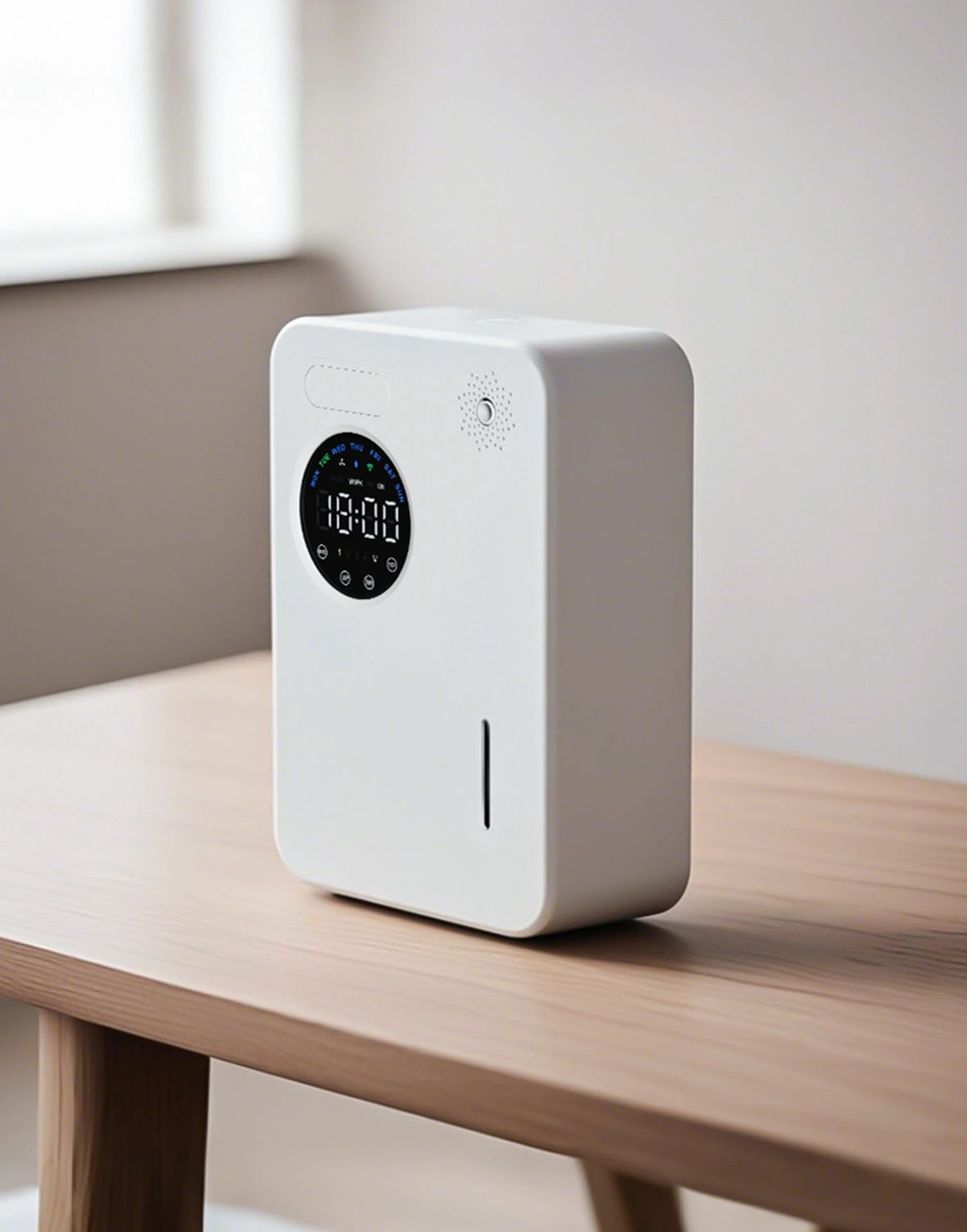
Standalone, wall-mounted units like our Commercial Scent Oil Diffuser cover up to 300m³ and work well inside boutique stores or small lobbies. For larger floorplates, HVAC-integrated diffusion pushes scent evenly across multiple zones. Our Commercial HVAC Scent Diffuser Aroma Dispenser System reaches 8,000m³ and connects to existing ductwork, so there is no visible hardware. Bluetooth APP control lets managers adjust intensity schedules remotely, and liquid-level sensors send alerts before a bottle runs dry.
| Diffuser Type | Coverage | Power | Ideal Use |
|---|---|---|---|
| Battery Wall Mount | 200m³ | Battery or Type-C | Small retail, office entrance |
| Bluetooth Standalone | 300m³ | DC12V | Single-room boutique, clinic |
| Hotel Tower Diffuser | 3,000m³ | DC12V | Hotel lobby, event hall |
| HVAC Integrated | Up to 8,000m³ | DC12V | Multi-zone hotel, corporate campus |
| Ceiling Track-Mount | 500m³ | DC12V | Modern office, gallery |
I always advise brands to schedule quarterly maintenance checks. A diffuser that runs dry for even a day can break the scent chain. Staff should be trained on simple weekly inspections: check the bottle level, wipe atomizer heads, and confirm the timer hasn’t drifted. When maintained properly, these systems can run 24/7 for years without noticeable decline in performance.
Measuring Scent Marketing’s Impact on Repeat Business
Metrics around scent marketing are inherently messy because loyalty is multi-factorial. Still, I’ve found that combining three data points gives a reliable picture. First, track repeat visit frequency in a comparable before-and-after window, ideally six months. Second, monitor dwell time through POS or footfall counters. Third, run a simple customer survey asking whether the environment felt more inviting, without leading the question toward scent.
In several retail deployments I’ve audited, store managers reported noticeable increases in repeat customer visits within three to six months of continuous scenting. Some saw a small bump in transaction value, though I’m careful not to attribute that solely to fragrance since seasonal promotions and staffing changes play roles too. The pattern that does stand out is the return rate: when customers mention “the atmosphere” in positive reviews after a scent upgrade, you know the olfactory layer is working.
No brand should expect a fragrance alone to fix a broken customer experience. Scent amplifies what’s already there. If service is slow or product quality is inconsistent, a nice smell will not paper over that. But when the fundamentals are solid, a well-executed scent program deepens the emotional connection that keeps customers coming back, often without them realizing why they prefer your space over a competitor’s.
Building customer loyalty through scent means treating fragrance as a core brand asset, not an afterthought. At Scent-Share, we guide businesses from the first scent concept to ongoing diffusion management, ensuring every customer touchpoint carries the same unmistakable brand essence. If you’re ready to turn scent into a loyalty engine, share your project details and we’ll create a custom proposal. Email [email protected] or call +86 185 6557 5758.
Common Questions About Scent Marketing and Loyalty
How much does a commercial scent marketing program cost?
Costs scale with square footage, equipment type, and fragrance complexity. A small boutique might start with a Bluetooth-enabled standalone diffuser covering 300m³ and a simple signature oil, while a multi-floor hotel typically requires an HVAC integrated system with higher-capacity tanks and custom fragrance development. Fragrance oil consumption also depends on daily runtime and scent intensity settings. We provide transparent proposals after a site assessment rather than generic pricing, because every space has unique airflow and occupancy patterns that affect cost efficiency.
Can scent marketing work for B2B or small businesses, not just luxury brands?
Absolutely. Any business that benefits from repeat footfall can use scent. A dental office might diffuse a calming chamomile blend to reduce pre-treatment anxiety and encourage return visits, while a B2B showroom could deploy a crisp, clean accord to reinforce professionalism during client tours. The key is matching the scent to the customer expectation, not copying luxury hotel profiles. In my experience, a subtle, non-obtrusive fragrance often outperforms a bold statement scent for service-oriented small businesses where trust and comfort matter more than opulence.
How long does it take to see improvements in customer loyalty after installing a scent system?
Immediate effects on mood and dwell time appear within days. Staff and customers often notice the change right away. Building genuine loyalty through repeated positive experiences takes longer. I’ve tracked programs where measurable differences in repeat purchase rates emerged after about four to six months of consistent scent deployment, provided the fragrance and brand alignment were on target. It’s a cumulative effect. The brain needs enough repetitions of “scent plus positive experience” before the association becomes automatic.
Do I need to install expensive HVAC scent systems, or are standalone diffusers enough?
The right choice depends on your square footage and ceiling layout. Standalone or wall-mounted diffusers cover up to around 1,000 sq ft and work well for single-room retail, clinics, and small lobbies. For larger or multi-zone spaces exceeding 3,000 sq ft, an HVAC integrated system distributes scent evenly through existing ductwork without visible hardware. Our team performs airflow analyses before recommending equipment. Share your layout and we’ll confirm which solution fits your space and budget.
If you’re interested, check out these related articles: