

Ethanol distillation column specifications influence far more than final ethanol purity. The column’s diameter, tray configuration, and operating pressure directly shape the entire plant’s steam demand, by-product quality, and ability to switch between fuel-grade and industrial alcohol. In our integrated corn ethanol projects, we have seen that a column sized without considering the downstream dehydration system or waste heat recovery network can lock a plant into 15–20% higher energy costs for its operating life. This article sets out the key column parameters and explains how they must be evaluated as part of a complete corn-to-ethanol material and energy balance — not as an isolated unit operation.
Ethanol Distillation Column Core Specifications
A fuel or industrial ethanol distillation column is not a single tower but a sequence of interconnected columns, typically a mash column, a rectifier, and a hydroselection column. The mash column strips ethanol from the fermented beer, producing a vapor of roughly 50% ethanol. The rectifier concentrates this to 94–95% ethanol, which is the azeotropic limit at atmospheric pressure. The hydroselection column, placed as a side draw on the rectifier or as a separate unit, removes fusel oils — higher alcohols that would otherwise contaminate the product.
For fuel ethanol plants, the rectifier often operates with 40 to 60 valve trays, though some designs use structured packing to lower the pressure drop and reduce the reboiler steam load. Column diameter is set by the vapor velocity, typically targeting 70–80% of the flooding velocity under maximum throughput. A 150,000‑ton‑per‑year fuel ethanol plant will commonly require a rectifier diameter of 2.8 to 3.5 meters, depending on the tray efficiency and the reflux ratio chosen. Industrial alcohol applications, which demand higher purity or specific fusel oil profiles, may add a polishing section or adjust the hydroselection draw point.
The pressure regime matters as well. Atmospheric operation simplifies the mechanical design and allows direct steam integration with the plant’s waste heat recovery system, while vacuum distillation, less common in fuel ethanol but sometimes used in industrial alcohol, lowers the boiling point and can reduce steam demand at the cost of larger column diameters and a vacuum system.
Integration with Molecular Sieve Dehydration
To reach anhydrous ethanol concentrations above 99.5%, the 94–95% ethanol from the rectifier must pass through a dehydration unit. In nearly all modern corn ethanol plants, this is done with molecular sieve pressure swing adsorption (PSA). The sieve unit’s size and regeneration cycle are directly coupled to the rectifier output flow and ethanol concentration. A rectifier that delivers only 93% ethanol instead of 94% can increase the PSA bed size by 10–15%, because the extra water load reduces the sieve’s effective capacity.
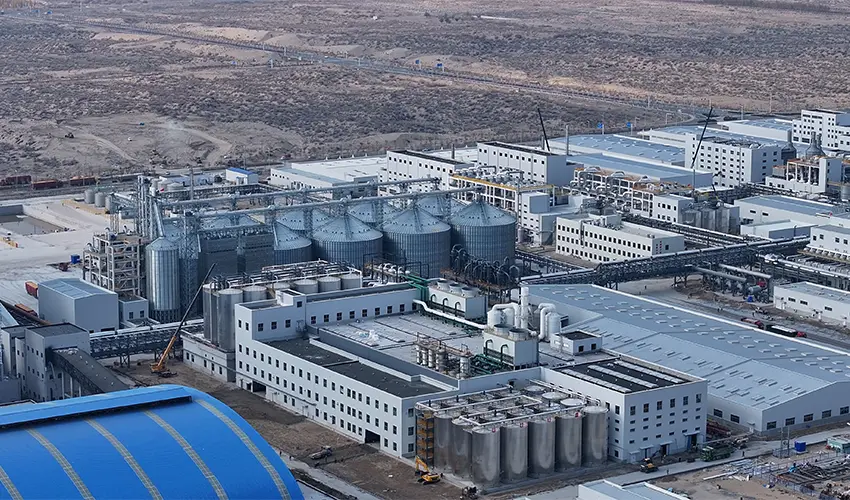
The column design, therefore, must anticipate the dehydration interface. Rectifier tray count and reflux ratio should be chosen to guarantee a stable overhead concentration under normal operating swings, while the hydroselection column must strip fusel oils sufficiently to prevent them from accumulating in the sieve beds. We have seen plants where fusel oil carryover reduced sieve life from 5 years to under 3, simply because the hydroselection draw tray was positioned too low in the rectifier. Specifying the column without a clear hydraulic and compositional link to the dehydration system risks chronic underperformance.
Energy Cascade and Steam Consumption
Distillation is the largest single steam consumer in a corn ethanol plant, accounting for 40–55% of total process steam. Column specifications directly determine the thermal load. Reflux ratio, tray type, and operating pressure each affect the reboiler duty per liter of ethanol produced. Valve trays typically provide a lower pressure drop than sieve trays, which can reduce the steam temperature required and open opportunities for low-grade heat integration.
A well-configured energy cascade couples the distillation steam system to other plant units. The overhead vapors from the rectifier can be used to preheat the feed to the mash column or to drive the evaporation of thin stillage. In our EPC projects, we engineer the column steam system together with the plant’s waste heat recovery network, so that the distillation reboiler uses 2–3 bar saturated steam while the condensate return preheats process water. This approach has cut total distillation steam demand by 20–25% compared to a standalone column design that simply vents condensation heat.
When your project requires both fuel-grade anhydrous ethanol and industrial-grade alcohol from the same column set, the configuration of the rectifier and dehydration sections becomes critical for energy optimization. We can help assess the optimum internals and molecular sieve unit size for your dual-purpose plant — reach out at [email protected].
Material Selection and Compliance Standards
Ethanol distillation columns handling food-grade or fuel-grade streams are almost always built from stainless steel. 304 stainless is acceptable for most process sections where the liquid phase is non-acidic, but the rectifier’s upper trays and the vapor space often require 316L stainless due to the presence of organic acids and trace chlorides that can promote pitting. The hydroselection column, where fusel oils and acids concentrate, is normally specified in 316L with a higher molybdenum content, or in duplex stainless steel if the chloride levels are elevated.
For fuel ethanol, the finished product must meet ASTM D4806 in the United States or EN 15376 in Europe. These standards specify limits on acidity, water content, and sulfur, but they do not prescribe column materials. However, the materials chosen directly affect the product’s trace metal and chloride content. A column with unlined 304 stainless in the rectifier top may leach enough iron to cause off-spec color in industrial alcohol destined for solvent markets. When specifying, it is prudent to require that all product-contact surfaces be pickled and passivated after fabrication, and that the column nozzle flanges be designed to the appropriate ASME B31.3 or EN 13480 pressure piping code.
Circular Economy and By-Product Synergy
An ethanol distillation column does not exist in isolation from the plant’s by-product streams. The whole stillage from the mash column bottom contains protein, fiber, and oil that become DDGS animal feed after centrifugation, evaporation, and drying. The column’s operation directly affects DDGS quality. Excessive bottom temperatures in the mash column, often caused by an overly aggressive stripping steam rate, can denature proteins and reduce the feed’s digestible amino acid content. We have tested DDGS from plants where mash column bottom temperatures exceeded 110°C, and the lysine availability dropped by roughly 8% compared to samples from plants operating at 105°C. The column specification, therefore, must include a maximum allowable bottom temperature that protects protein quality, not just ethanol recovery.
The carbon dioxide from fermentation is also a valuable co-product. While the distillation column does not directly affect CO2 purity, the overall steam and energy balance does: a plant that reduces distillation steam use through waste heat recovery may have surplus low-pressure steam to drive a CO2 liquefaction plant, improving the economic return. In an integrated ethanol plant designed around a circular corn‑food‑energy‑feed model, every specification decision in the distillation column has a ripple effect on the revenue from DDGS, CO2, and biogas.
Common Questions About Ethanol Distillation Columns
How do tray columns compare with packed columns for ethanol?
Packed columns offer a lower pressure drop per theoretical stage, which can save steam and allow a taller column in a single shell. However, packed beds are more sensitive to fouling from corn oil carryover and solids in the feed. For fuel ethanol plants processing whole stillage, valve trays or sieve trays are generally preferred because they can tolerate moderate fouling without rapid loss of efficiency. Packing is more common in fine chemical or high-purity industrial alcohol applications where the feed is a clean rectified spirit.
What determines the optimum reflux ratio in an ethanol rectifier?
The reflux ratio balances product purity against energy cost. For fuel ethanol, a reflux ratio of 2.5 to 3.5 is typical, giving an overhead ethanol concentration of 94–95% with a moderate reboiler duty. Higher ratios push purity higher but increase steam consumption almost linearly, so the ratio is usually set by the lowest acceptable concentration that keeps the molecular sieve unit’s size and regeneration frequency economical. The optimum also depends on the number of actual trays and their efficiency.
Is it possible to use a single column for both fuel and industrial alcohol?
Yes, but the column train must include a hydroselection section with an adjustable draw point and possibly a separate industrial alcohol side draw. Switching between fuel-grade and industrial-grade production usually involves changing the fusel oil withdrawal rate and adjusting the rectifier reflux ratio, not a complete column rebuild. The mechanical design should allow for these operational changes without requiring plant shutdowns.
What safety codes apply to ethanol distillation column design?
Ethanol is a flammable liquid, so distillation columns must comply with NFPA 30 and NFPA 70 standards for electrical area classification, and the pressure vessel code ASME Section VIII Division 1 (or the equivalent EN 13445 in Europe). Relief valves must be sized for fire case scenario, and the column should be equipped with a rupture disc in parallel with the relief valve for rapid overpressure events. If your program involves both North American and European supply, verify that the column documentation package covers both ASME and PED requirements. Share your requirements and we will confirm compliance documentation availability.
If you’re interested, check out these related articles:
Driving Global Food Conservation Through Technological Innovation