A single sniff of coconut sunscreen can yank you back to a childhood beach vacation. That instant, involuntary recall is not a magic trick, it is a hardwired neural shortcut. The science of scent memory reveals why smells bypass the conscious brain’s gatekeepers, landing directly in emotional centers. For scent solution designers like our team at Scent-Share, understanding this mechanism is the foundation for creating brand experiences that people feel years later.
The Neuroscience of Scent and Memory
Scent is the only sense that routes directly to the brain’s limbic system without first passing through the thalamus, the brain’s sensory switchboard. Odor molecules bind to receptors in the nasal cavity, sending signals along the olfactory nerve to the olfactory bulb, which sits just beneath the frontal lobe. From there, the signal fans out to the amygdala, the seat of emotional processing, and the hippocampus, where long-term memories are consolidated. This direct anatomical pathway explains why a smell can trigger a flashbulb memory with a vividness that a photograph rarely matches.
Functional MRI studies have shown that odor-evoked memories activate the hippocampal formation more robustly than memories cued by words or images. The emotional intensity of the original event intensifies during encoding because the amygdala tags sensory input with emotional weight. When you later encounter that same scent, the amygdala fires first, pulling the full associated memory into consciousness before you can even name the smell. This phenomenon, often called the Proust effect, is not literary fancy, it is observable and measurable.
The implication for businesses is straightforward: if a brand can embed itself in this deeply emotional network, customer loyalty becomes a physiological response rather than a rational calculation. But achieving that requires thoughtful control over more than just the fragrance itself.
How Fragrance Chemistry Shapes Scent Memories
Not all scent memories are created equal. The chemical structure of a fragrance determines how it travels, how the nose receives it, and how long it lingers in memory. In my decade of formulating scents for international clients, I have observed that top notes like citrus greet you immediately but evaporate quickly. Heart notes like florals and spices arrive after a few minutes and sustain the emotional tone. Base notes like woods, musks, and resins have low volatility and stay on surfaces for hours or days. A fragrance designed for memory must carefully balance these three layers.
For example, a hotel lobby scent that leans too heavily on fleeting top notes will feel fresh but forgettable. If we add a base note of ambergris or sandalwood, the lingering trace triggers memory consolidation over repeated exposures. Our team often combines a bright opening of bergamot with a warm cedar base to create a scent experience that feels both welcoming and lasting. The key is to align the fragrance arc with the guest journey: a gesture of arrival, a mood of comfort, and a subtle farewell that stays with you.
At the molecular level, certain scent families are more closely linked to autobiographical memory than others. Gourmand notes like vanilla and caramel, because they connect to early childhood feeding experiences, often evoke the deepest emotional resonance. Woody and earthy notes like vetiver and oakmoss tend to anchor spatial memories, making them excellent for large commercial spaces where place identity matters. This is not guesswork; sensory testing reveals consistent patterns across diverse cultures.
The Role of Scent Diffusion in Memory Consistency
Even the most beautifully composed fragrance fails as a memory tool if it is delivered unevenly. The brain’s ability to form a strong odor-place association depends on consistent concentration across the entire space. When scent intensity fluctuates, memory encoding becomes fragmented, and the brand’s emotional signature weakens.
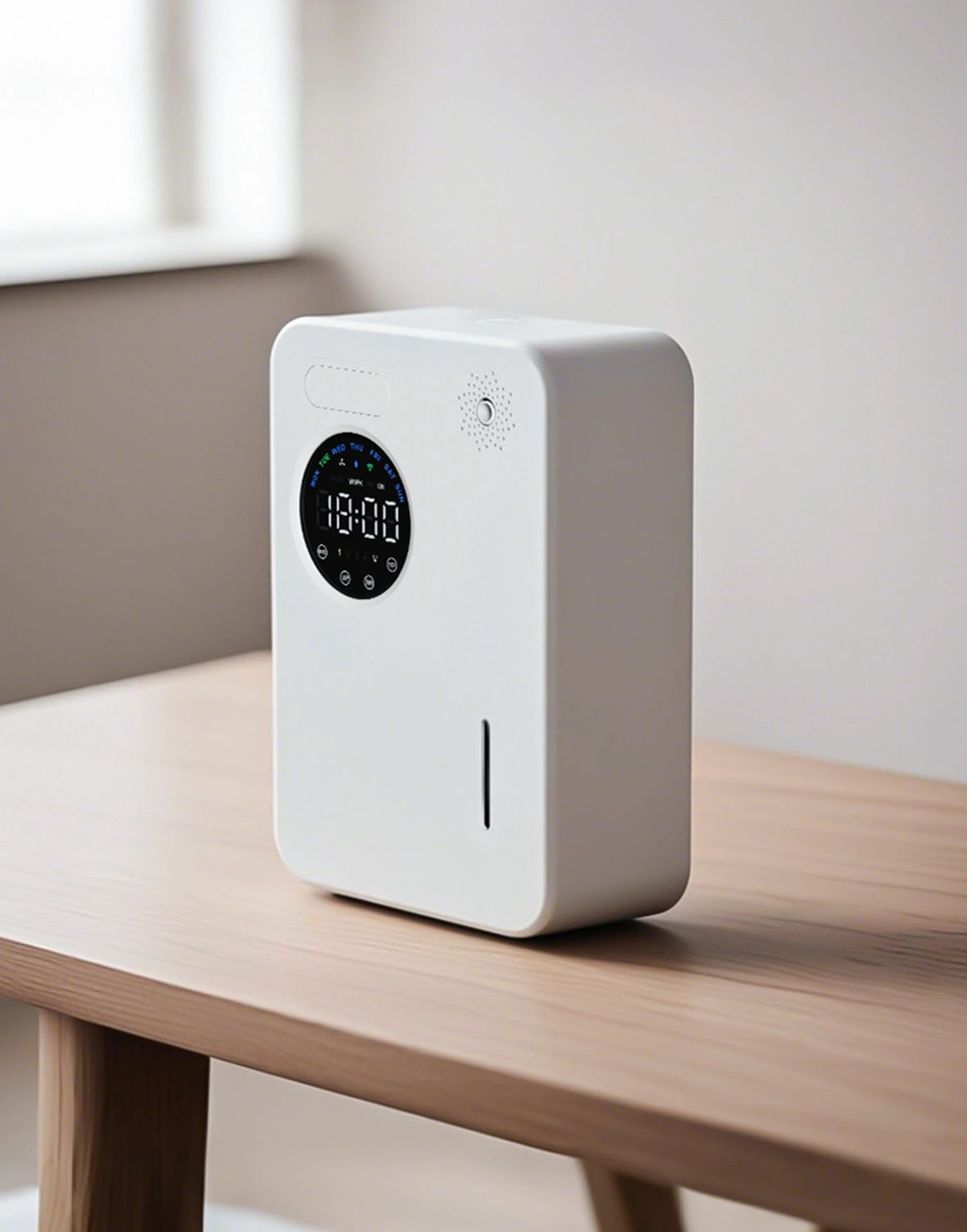 The solution lies in the diffusion technology. Different spaces demand different delivery methods. A standalone plug-in unit might suffice for a boutique fitting room of 80m², but it will not provide the uniform coverage needed in a 3,000m² hotel lobby. In larger environments, HVAC-integrated diffusers that atomize fragrance oil into the air handler can blanket an entire floor with a steady molecular layer. Our large-scale dual-system HVAC diffuser, for instance, delivers up to 15,000m³ of coverage using independent pumps that maintain precise output even when the building’s airflow varies.
Bluetooth and Wi-Fi enabled controllers add another layer of memory engineering. They allow facility managers to program scent intensity by time of day or day of the week, aligning the strongest olfactory signal with peak guest traffic. This synchronization reinforces memory through repetition at predictable intervals, much like a brand jingle, but far more intimate.
| Diffuser Type | Ideal Coverage | Control Method | Best For Memory Encoding |
|---|---|---|---|
| Wall-Mount Battery Diffuser | Up to 200m² | Manual/Bluetooth | Boutiques, small offices |
| Desktop Bluetooth Diffuser | Up to 300m² | Bluetooth APP | Personal offices, VIP lounges |
| Commercial HVAC Scent Diffuser | Up to 8,000m² | Bluetooth APP | Hotel lobbies, retail floors |
| Dual-System HVAC Diffuser | Up to 15,000m² | Bluetooth/WiFi | Large venues, multi-floor spaces |
For any space over 500m², an HVAC-integrated approach is the only reliable way to achieve the diffusion uniformity that memory encoding requires. Standalone units placed around a large room inevitably create hot and cold spots, causing the brain to process the scent as intermittent rather than ambient.
If your program involves a multi-level commercial environment, it is worth confirming the HVAC interconnection specifications before finalizing your diffusion plan. Our team at Scent-Share can evaluate your building’s airflow profile and recommend a configuration that yields consistent scent memory at every touchpoint: [email protected].
From Science to Strategy: Creating a Memorable Brand Scent
Turning science into a signature scent requires a structured creative process paired with technical rigor. Over the years, we have refined a step-by-step approach that balances emotional creativity with measurable consistency.
First, define the emotional target. What memory do you want customers to store? The calm of a luxury spa, the invigoration of a morning coffee shop, the safety of a hospital waiting area? Identifying this core emotion before smelling a single oil prevents you from getting lost in abstract fragrance poetry. Write it down as a simple sentence: “I want guests to remember feeling safe and cared for.”
Second, select a scent family that aligns neurologically with that emotion. For serenity, consider soft florals with a musk base. For energy, bright citruses paired with a hint of green tea. The pairing matters because the base note extends the memory window while the top note sets the initial impression.
Third, test the scent in the target environment with a representative diffusion system, not from a bottle. A fragrance behaves differently when atomized through a commercial diffuser than on a scent blotter. Pay attention to how the scent settles after 30 minutes of continuous diffusion. That mid-level heart note is the one guests will remember.
Fourth, commit to consistency. One of the most common mistakes I see is a brand that falls in love with a scent but changes the procurement source every six months. Even slight formula variations from different suppliers can fracture the memory link. Long-term partnerships with a single fragrance manufacturer that uses fixed formulation protocols are essential.
Finally, measure not sales alone but also dwell time and repeat visit sentiment. A scent designed for memory works slowly, reinforcing neural pathways over weeks and months. We have observed small retail experiments where introducing a consistent signature scent raised returning customer rates by more than 15% within a single quarter. While every vertical is different, the directional effect is undeniable.
Practical Steps to Introduce Scent into Your Space
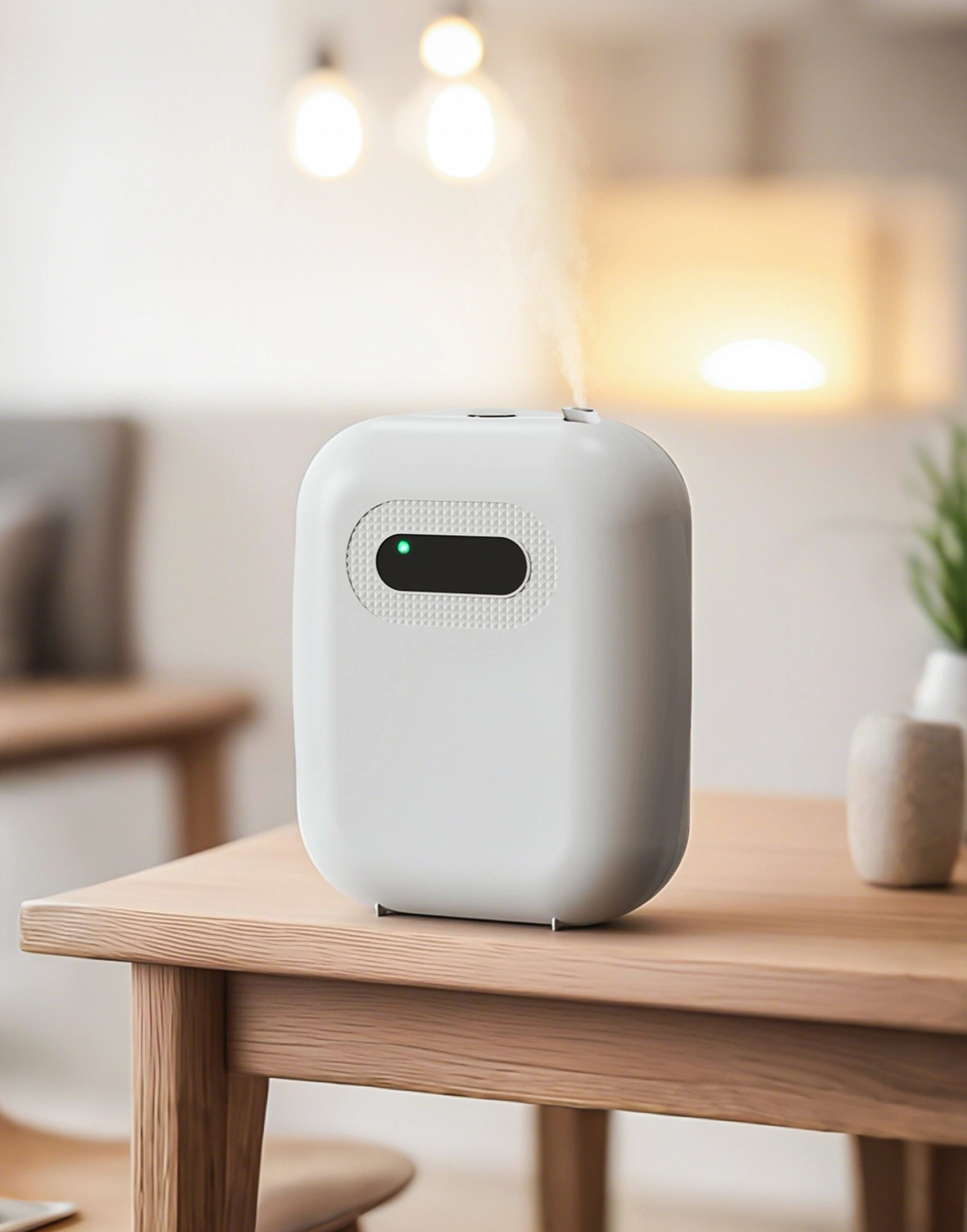
If you are considering scent for the first time, start small. Choose one zone, a reception desk, a fitting room, a conference room, and deploy a compact, connected diffuser like our desktop Bluetooth model. Run a single fragrance for at least 30 days before changing it. This gives the brain time to form the association.
During this trial, ask your staff and customers what they notice. The goal at this stage is not feedback on the fragrance itself but on any change in perceived atmosphere. You will often hear comments like “the space just feels better,” which is a strong early indicator that memory anchoring is underway.
When you are ready to scale, the transition to a centralized HVAC system or a network of synchronized wall-mounted units becomes a more natural next step. At that point, the science of scent and memory moves from theory into daily practice.
Understanding how scent triggers memory gives you a remarkable advantage: the ability to own a feeling, not just a visual identity. If you are ready to explore how a tailored scent can become your brand’s most enduring signature, share your space layout and emotional brief with us at [email protected] or call +86 185 6557 5758. We will help you design a fragrance and select the right diffusion technology to make your brand unforgettable.
Common Questions About Scent and Memory
Does scent memory last longer than visual memory?
Scent memory often feels more durable because it carries an emotional charge that visual memory does not always have. The amygdala’s involvement at the moment of encoding strengthens the trace, but like all memories, scent memory fades without reinforcement. Consistent, repeated exposure is what builds a lasting olfactory association. For businesses, this means running the same signature scent reliably, with no silent days.
Why do some fragrances remind me of a person or place I cannot identify?
This is the Proust phenomenon at work. The memory is real, but the context was encoded below conscious awareness. The scent may have been present during an experience you were not focused on, such as a cleaning product used in your childhood school. The hippocampus files the sensory data without attaching a clear narrative, so when the scent returns, you feel the emotion but cannot locate its origin.
Can a business change its signature scent without losing the memory effect?
Yes, but it requires a transition period. If you must change, introduce the new scent gradually by diffusing it alongside the old one for at least two weeks. This co-diffusion helps the brain overlay the new association onto the existing memory structure. Abrupt switching, on the other hand, can create a jarring sense of dislocation and undo months of memory building.
Are synthetic fragrance oils less effective for memory encoding than natural oils?
From a neurological standpoint, effectiveness depends on the molecular structure reaching the olfactory receptors, not on whether the molecule was synthesized in a lab or extracted from a plant. High-purity synthetic compounds can be engineered for superior stability and longer diffusion life, which actually enhances memory encoding consistency. The key quality factor is the purity of the formulation, not the natural versus synthetic origin.
How can I ensure the scent strength is right for memory without overwhelming customers?
The correct concentration sits at the threshold of conscious detection: strong enough to be noticed when you walk in but not strong enough to demand attention. In technical terms, the parts-per-million of fragrance in air should stay within 0.5 to 2.0 ppm for most commercial spaces. Using a diffuser with programmable output, such as our Bluetooth-enabled commercial scent machines, lets you calibrate exactly this range. Once you find the sweet spot, the olfactory bulb adapts to the baseline, and customers perceive the scent as part of the environment rather than an intrusion. If you would like to test a calibrated diffusion setup in your own space, share your room dimensions and ceiling height with us at [email protected] and we will recommend the right equipment and starting concentration.
If you’re interested, check out these related articles: