Working with Recombinant Bovine bFGF over the years has given me a clear sense of what separates a reliable growth factor from one that introduces frustrating variability into experiments. This protein sits at the heart of so many cell culture workflows, from expanding stem cell populations to scaling muscle cells for cultivated meat production. The difference between a high-quality source and an inconsistent one often shows up in subtle ways at first, then becomes impossible to ignore when you need reproducible results across dozens of batches. What follows covers the technical foundations, practical applications, and quality considerations that matter most when working with this growth factor.
How Recombinant Bovine bFGF Works at the Molecular Level
Recombinant Bovine bFGF belongs to the Fibroblast Growth Factor family, where it also goes by the name FGF-2. The protein itself is a single-chain polypeptide with a molecular weight around 17-18 kDa and a notably high affinity for heparin. When expressed in E. coli systems, the resulting Recombinant Bovine bFGF typically reaches 17.4 kDa with purity levels at or above 95%.
The biological activity of Recombinant Bovine bFGF stems from its interaction with Fibroblast Growth Factor Receptors on cell surfaces. Once bFGF binds to these receptors, it triggers receptor dimerization and autophosphorylation of tyrosine residues. This kicks off recruitment of adaptor proteins and activates several downstream pathways simultaneously. The MAPK/ERK pathway drives proliferation signals. The PI3K/Akt pathway promotes cell survival. The PLCγ pathway contributes to differentiation cues. Together, these cascades regulate cell proliferation, differentiation, angiogenesis, and tissue repair with remarkable precision.
What bFGF Actually Does in Cell Culture Systems
In practical cell culture work, Recombinant Bovine bFGF serves as a potent mitogen that pushes multiple cell types toward active proliferation. Fibroblasts, endothelial cells, and various stem cell populations all respond strongly to its presence. Beyond simply driving division, bFGF enhances overall cell viability and helps prevent apoptosis when culture conditions become stressful.
For stem cell applications specifically, bFGF plays a dual role. It helps maintain pluripotency during expansion phases while also providing guidance toward specific lineages when differentiation is the goal. This makes Recombinant Bovine bFGF essentially non-negotiable in cell culture media designed for regenerative medicine workflows.
Why Recombinant Production Matters More Than You Might Think
The distinction between recombinant and native bFGF goes deeper than production method. Native bFGF extracted from animal tissues carries inherent risks: batch-to-batch variability, potential impurities, and the ever-present concern about animal-derived contaminants. These issues compound when you need consistent results across long experimental timelines or when regulatory requirements demand traceability.
Recombinant bFGF produced in controlled E. coli expression systems sidesteps these problems. The controlled environment delivers purity levels consistently above 95%, verified biological activity, and animal-origin-free status. Low endotoxin levels, typically at or below 200 EU/mg, become achievable and verifiable. This controlled production approach eliminates much of the batch-to-batch variation that can derail otherwise well-designed experiments.
Where Recombinant Bovine bFGF Makes the Biggest Impact
The applications for Recombinant Bovine bFGF span an impressive range of biotechnology fields, each leveraging the protein’s fundamental ability to stimulate cell growth and survival.
Regenerative medicine relies heavily on bFGF for expanding mesenchymal stem cells and induced pluripotent stem cells. These expanded populations feed into tissue repair applications and organoid development programs. Cell therapy workflows use Recombinant Bovine bFGF to achieve robust proliferation and controlled differentiation, generating therapeutic cell populations at scale.
In vitro diagnostics applications incorporate bFGF to maintain cell lines and promote specific cellular responses within assay systems. The cultivated meat industry has emerged as a significant user of Recombinant Bovine bFGF, where the protein drives muscle cell proliferation essential for sustainable protein production. Cosmetic formulations tap into bFGF’s skin regeneration and anti-aging properties.
The growing preference for serum-free media formulations has further increased demand for high-quality Recombinant Bovine bFGF. Removing animal-derived components from culture systems addresses both regulatory compliance requirements and safety concerns in biopharmaceutical development.
| Application Area | Key Benefit of Recombinant Bovine bFGF | Relevant Cell Types |
|---|---|---|
| Regenerative Medicine | Promotes stem cell expansion & differentiation | MSCs, iPSCs, Endothelial cells |
| Cell Therapy | Enhances cell viability & proliferation | T-cells, NK cells, Chondrocytes |
| Cultivated Meat | Drives muscle cell growth & tissue formation | Myoblasts, Adipocytes |
| IVD Diagnostics | Supports cell line maintenance & assay development | Various cell lines |
| Cosmetic Formulations | Stimulates collagen production & skin repair | Fibroblasts, Keratinocytes |
The Production Process Behind High-Purity Recombinant Bovine bFGF
Manufacturing Recombinant Bovine bFGF at consistently high quality requires both sophisticated infrastructure and rigorous process control. The production sequence begins with cloning the bFGF gene into an optimized expression vector, transforming this construct into E. coli host cells, and inducing protein synthesis under controlled conditions.
The purification phase involves multiple chromatography steps designed to remove host cell proteins, nucleic acids, and other contaminants while preserving biological activity. Each batch then undergoes comprehensive quality control testing. Purity verification uses both SDS-PAGE and HPLC methods to confirm levels at or above 95%. Biological activity testing employs cell proliferation assays, with NIH3T3 cell proliferation serving as a standard readout where ED₅₀ values at or below 2.0 ng/mL indicate proper potency. Endotoxin measurement ensures levels remain at or below 200 EU/mg.
GMP-standard manufacturing practices provide the foundation for lot-to-lot consistency and regulatory compliance. The animal-origin-free production approach addresses safety requirements for sensitive applications.
What to Look for When Evaluating bFGF Suppliers
Several quality standards deserve careful evaluation when selecting a Recombinant Bovine bFGF supplier. Purity should exceed 95%, verified through analytical methods like SDS-PAGE and HPLC. Low endotoxin levels matter enormously for cell therapy and in vivo applications, with values below 0.1 EU/µg or 10 EU/mg representing appropriate targets.
Verified biological activity, expressed as an ED₅₀ value from a relevant cell proliferation assay, confirms that the protein actually functions as expected. Consistent batch-to-batch quality, documented through Certificates of Analysis, supports experimental reproducibility. GMP-compliant manufacturing practices and animal-origin-free production round out the critical requirements for meeting regulatory standards and ensuring safety.
The Case for Recombinant Bovine bFGF in Research Applications
Recombinant Bovine bFGF offers several distinct advantages that optimize research outcomes. The protein’s broad cellular activity means it stimulates proliferation across a wide array of cell types, making it a versatile tool for diverse experimental models. The potency of Recombinant Bovine bFGF, reflected in low effective doses with ED₅₀ values at or below 2.0 ng/mL for NIH3T3 cells, translates to cost-effectiveness since less protein achieves the desired effects.
The recombinant production method delivers high purity and consistency that native sources simply cannot match. This consistency directly supports research reproducibility, enabling scientists to generate reliable and comparable data across experiments. Animal-origin-free recombinant proteins also address ethical sourcing concerns and minimize adventitious agent risks, both critical factors in therapeutic development.
| Growth Factor | Primary Function | Typical Purity | Endotoxin Level (Example) | Key Advantage |
|---|---|---|---|---|
| Recombinant Bovine bFGF | Broad cell proliferation, angiogenesis | ≥95% | ≤200 EU/mg | High potency, broad activity, animal-free |
| Recombinant Human IL-2 | T-Cell Growth Factor | ≥95% | ≤1 EU/mg | Specific T-cell proliferation |
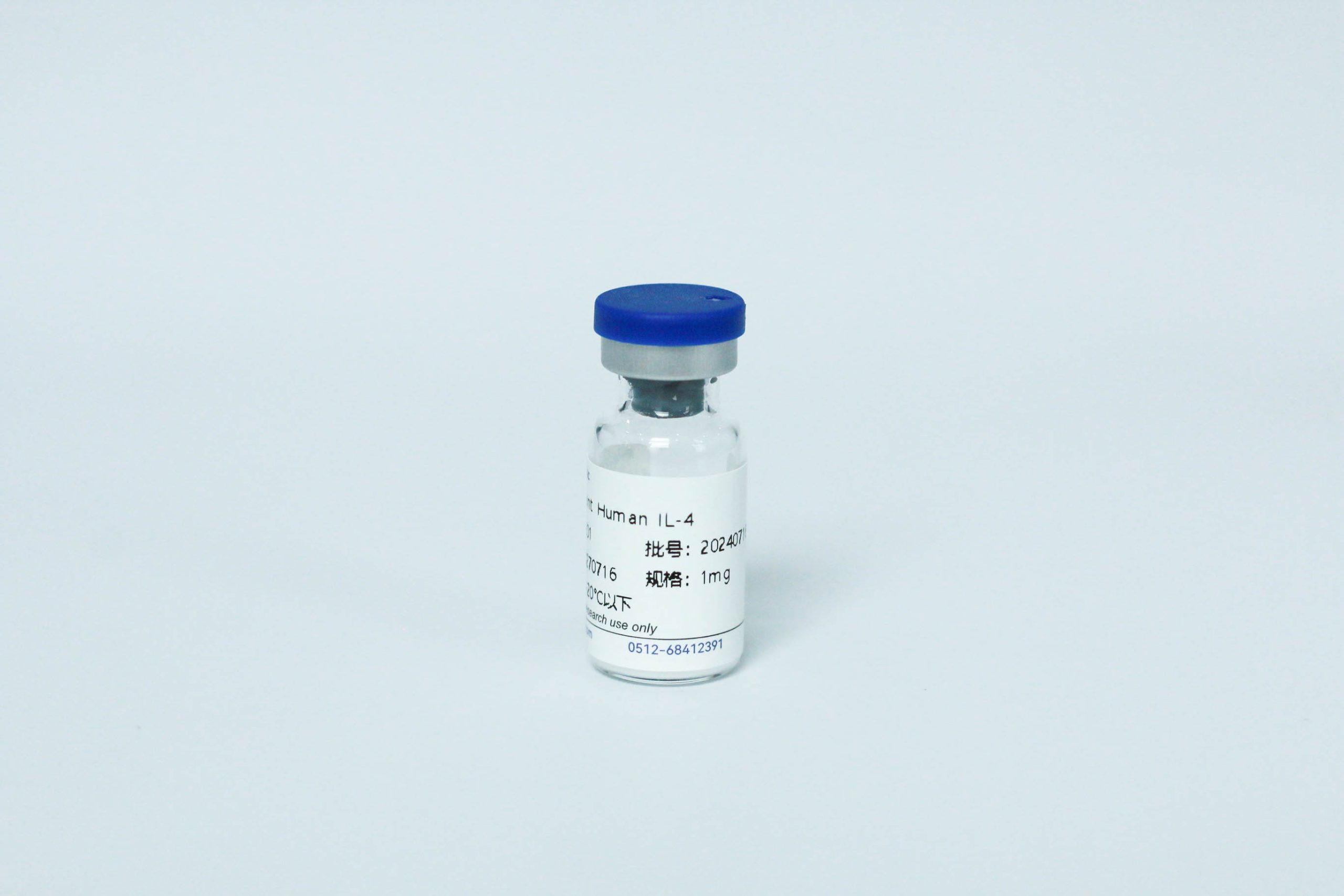
| Recombinant Human IL-4 | B-Cell Stimulatory Factor | ≥95% | ≤10 EU/mg | B-cell activation, immune modulation |
| Recombinant Human IL-6 | Cytokine, acute phase response | ≥95% | ≤10 EU/mg | Inflammation, immune response |
Handling Recombinant Bovine bFGF for Maximum Effectiveness
Proper handling makes a measurable difference in experimental outcomes when working with Recombinant Bovine bFGF.
- Storage Conditions: Store lyophilized Recombinant Bovine bFGF at -20°C or -80°C immediately upon receipt.
- Reconstitution: Use sterile, deionized water or PBS containing a carrier protein such as 0.1% BSA. The carrier protein prevents adsorption to container surfaces.
- Aliquoting: Divide the reconstituted solution into single-use vials. Repeated freeze-thaw cycles degrade protein activity noticeably.
- Working Stock Storage: Keep aliquots at -20°C or -80°C. Avoid storing reconstituted Recombinant Bovine bFGF at 4°C for extended periods.
- Optimal Concentration: Determine the best concentration for your specific cell type through titration experiments. Typical working concentrations for cell culture fall between 1-10 ng/mL.
- Media Supplementation: Add Recombinant Bovine bFGF to cell culture media immediately before use or during media changes to ensure consistent delivery to cells.
- Aseptic Technique: Handle bFGF and all cell culture reagents using strict aseptic techniques to prevent contamination.
- Troubleshooting: When expected results do not materialize, verify protein integrity, check storage conditions, and confirm the absence of proteases in your media.
Frequently Asked Questions About Recombinant Bovine bFGF
What role does Recombinant Bovine bFGF play in cell culture workflows?
Recombinant Bovine bFGF functions primarily as a mitogen and survival factor. It actively promotes proliferation, differentiation, and survival across multiple cell types including fibroblasts, stem cells, and endothelial cells. Tissue engineering and regenerative medicine applications depend on this protein for maintaining robust cell lines and achieving healthy cell growth.
How does recombinant bFGF compare to tissue-extracted versions?
Recombinant Bovine bFGF produced in controlled E. coli systems delivers high purity, consistent biological activity, and animal-origin-free status. Tissue-extracted native bFGF introduces variability, potential contaminants, and ethical concerns. The recombinant form provides superior reproducibility and safety for sensitive research and clinical-grade applications.
Which quality specifications matter most when sourcing bFGF?
Prioritize high purity above 95%, low endotoxin levels below 0.1 EU/µg or 10 EU/mg, and verified biological activity with ED₅₀ values at or below 2.0 ng/mL. Consistent batch-to-batch quality documented through Certificates of Analysis and GMP-compliant production practices ensure reliability and safety for sensitive applications.
Does Recombinant Bovine bFGF work in serum-free media?
Recombinant Bovine bFGF serves as a key component in many serum-free and chemically defined media formulations. Its inclusion reduces experimental variability and eliminates animal-derived components, which matters particularly for cell therapy, vaccine production, and cultivated meat applications.
What storage practices preserve bFGF activity?
Store lyophilized Recombinant Bovine bFGF at -20°C or -80°C. After reconstitution, aliquot solutions into small volumes and store immediately at -20°C or -80°C. Avoid repeated freeze-thaw cycles since these degrade protein activity and reduce potency over time.
Partner with East-Mab Bio for Your Research Breakthroughs
As a global leader in recombinant protein raw materials, Jiangsu East-Mab Biomedical Technology Co., Ltd. is dedicated to empowering your research and development with unparalleled quality. Our world-class platform, backed by over $30 million in investment, ensures reliable, high-purity Recombinant Bovine bFGF and other essential proteins for IVD, cell therapy, cosmetics, and cultivated meat applications. Partner with East Mab Bio to accelerate your breakthroughs. Contact us today for expert consultation or to explore our extensive product portfolio. Reach us at +86-400-998-0106 or [email protected].