IFRA certification is often treated as a simple checkbox in fragrance procurement, but in practice it represents the most widely recognized safety framework for fragrance ingredients worldwide. For brands and importers sourcing fragrance oils, understanding what IFRA compliance actually guarantees—and what it does not—can mean the difference between a product that clears regulatory review and one that faces rejection at customs. Drawing on over a decade in fragrance R&D and production across 68 countries, I have seen how IFRA standards shape everything from formulation decisions to documentation requirements, and why treating certification as a practical procurement filter rather than an abstract credential yields better sourcing outcomes.
What IFRA Certification Actually Covers
The International Fragrance Association does not “certify” individual products. When people in the industry talk about IFRA certification, they are referring to compliance with the IFRA Standards, which are based on safety assessments conducted by the Research Institute for Fragrance Materials (RIFM). These standards restrict or ban specific fragrance ingredients based on scientific evaluation of their potential health effects—skin sensitization, phototoxicity, systemic toxicity—and set maximum usage levels for finished consumer products.
A fragrance oil that meets IFRA Standards has been formulated so that every ingredient falls within the permitted concentration ranges for its intended application. This matters because the same ingredient might be safe at 2% in a wash-off product like shampoo but restricted to 0.5% in a leave-on product like a body lotion. The standard applies to the finished fragrance compound, not just the raw materials in isolation.

This is where practical experience diverges from textbook explanations. In formulation work, achieving IFRA compliance requires balancing olfactory performance against safety limits—sometimes frustratingly so. A fragrance designed for a hotel lobby diffuser has different exposure dynamics than one blended for a reed diffuser gift set, and IFRA categories account for this. The key distinction most buyers miss: IFRA compliance is application-specific, not product-generic. A fragrance oil that passes for ambient scenting through an HVAC system may not be compliant if the same oil ends up in a personal care product.
Why IFRA Standards Matter for Fragrance Oil Quality
There is a persistent market assumption that IFRA compliance equals higher fragrance quality. This is only partially accurate. IFRA Standards regulate safety, not aesthetic quality, longevity, or complexity. A compliant fragrance oil can still be poorly balanced, chemically unstable, or manufactured with low-grade raw materials that degrade within months.
What IFRA compliance does signal is that the manufacturer has invested in the technical capability to formulate within defined constraints. Meeting IFRA restrictions on materials like Lyral, Lilial, or certain oakmoss absolutes—ingredients that historically delivered outstanding scent profiles but were flagged for sensitization risks—requires real reformulation skill. A supplier that can produce IFRA-compliant fragrances that still perform well has demonstrated formulation competence that often correlates with better overall quality. It does not guarantee it, but the correlation is strong enough to make IFRA compliance a useful screening criterion in supplier evaluation.
 From a procurement perspective, the quality dimension that matters most is batch-to-batch consistency under IFRA constraints. We maintain over 300 fragrance types in our product library, and the ones destined for international markets undergo stricter raw material screening. When a fragrance contains 50 or more individual aroma chemicals, verifying that every component meets its IFRA category limit requires robust quality control systems at the incoming raw material stage—not just a final product test. I have seen cases where a single raw material lot change from a supplier shifted the concentration of a restricted substance enough to push a previously compliant formulation out of spec. That kind of drift only gets caught if the QC system tests incoming materials, not just finished goods.
How IFRA Compliance Affects Your Procurement Decisions
Treating IFRA compliance as a binary yes-or-no question during supplier evaluation misses the point. The more productive approach is to ask: compliant for which IFRA category, and documented how?
IFRA organizes its standards into categories based on product type and exposure route. Category 4 covers hydroalcoholic products for skin application—fine fragrances, eau de parfum. Category 9 covers articles with minimal skin contact. Category 11 covers non-skin-contact air care products, including commercial scent diffusers. A fragrance oil formulated for HVAC diffusion under Category 11 may use materials at concentrations that would not pass Category 4 limits. If a buyer sources a fragrance oil for a hotel diffuser and later decides to use it in a personal care product without reformulation, the compliance status changes entirely.
| IFRA Category | Product Type Example | Key Restriction Focus |
|---|---|---|
| Category 4 | Fine fragrances, eau de parfum | Skin sensitization, phototoxicity |
| Category 9 | Reed diffusers, minimal skin contact | Lower exposure thresholds |
| Category 11 | HVAC and ambient scenting | Respiratory and air exposure limits |
| Category 2 | Deodorants, antiperspirants | Mucosal contact considerations |
Documentation is the second procurement lever. An IFRA compliance certificate should specify the category, the amendment version—currently the 51st Amendment, issued June 2023—and the product references it covers. Certificates that list fragrance names without category assignments or amendment references are of limited value for customs clearance and regulatory filings. I have seen shipments held at European ports because the certificate lacked a category designation, and the customs officer could not independently verify that the fragrance was suitable for its declared end use.
If your procurement involves fragrances destined for multiple product categories across different markets, confirming the correct IFRA category assignment before finalizing specifications can prevent compliance gaps that surface only at the border. Send your product categories and target markets to [email protected], and our R&D team can review the documentation requirements for your specific shipment.
Common Misconceptions and How to Verify IFRA Compliance
The most persistent misunderstanding I encounter is the belief that IFRA certification is legally required. It is not. IFRA is a self-regulatory industry body; its standards are voluntary. However, many national regulations—including the EU Cosmetics Regulation and various ASEAN directives—incorporate IFRA Standards either directly or by reference, making compliance effectively mandatory for market access in those regions. So while no law says “you must be IFRA certified,” the practical reality is that non-compliant fragrances will not clear regulatory review in most developed markets.
Another misconception is that IFRA compliance guarantees a fragrance is natural or free from synthetic materials. IFRA Standards apply to both natural and synthetic ingredients equally. In fact, many natural materials face IFRA restrictions precisely because of their chemical constituents—bergamot oil contains bergapten, a phototoxic compound, and oakmoss absolute contains atranol and chloroatranol, both skin sensitizers. Meanwhile, certain synthetic alternatives may have cleaner safety profiles under current standards.
Verification starts before the purchase order. Request the IFRA certificate and check three things: the IFRA category assignment matches your intended application, the amendment version is current, and the certificate covers the specific fragrance names and batch references you are ordering. If the supplier cannot produce a certificate or offers one that lacks category-level detail, treat that as a procurement risk signal.
The second verification layer is the SDS documentation. A properly prepared safety data sheet will include hazard classifications that should be consistent with IFRA-compliant formulation. If the SDS flags severe sensitization warnings for a fragrance oil that the IFRA certificate says is safe for Category 4 application, press for an explanation. The two documents should not contradict each other, and when they do, the more conservative one usually reflects the actual risk.
In practical terms, the strongest verification comes from a supplier that formulates in-house and maintains traceable raw material records. At Scent-Share, our R&D team cross-references every incoming aroma chemical against the IFRA 51st Amendment database before it enters production. This is not a one-time check; it repeats with each new lot because raw material specifications can shift between suppliers. Buyers sourcing from manufacturers with integrated R&D and QC functions are getting a verification process embedded in production, not tacked on as paperwork after the fact.
Making IFRA Compliance Work for Your Sourcing Strategy
Understanding IFRA Standards as a practical procurement tool rather than an abstract regulatory concept changes how you evaluate fragrance suppliers. A supplier that provides category-specific certificates, current amendment references, and consistent SDS documentation is demonstrating the kind of formulation control that reduces downstream risk for your brand. When fragrance oils clear import inspection without delays and perform consistently across production batches, the value of that documentation becomes tangible—measured in avoided demurrage charges, uninterrupted retail launches, and customer trust you never have to rebuild.
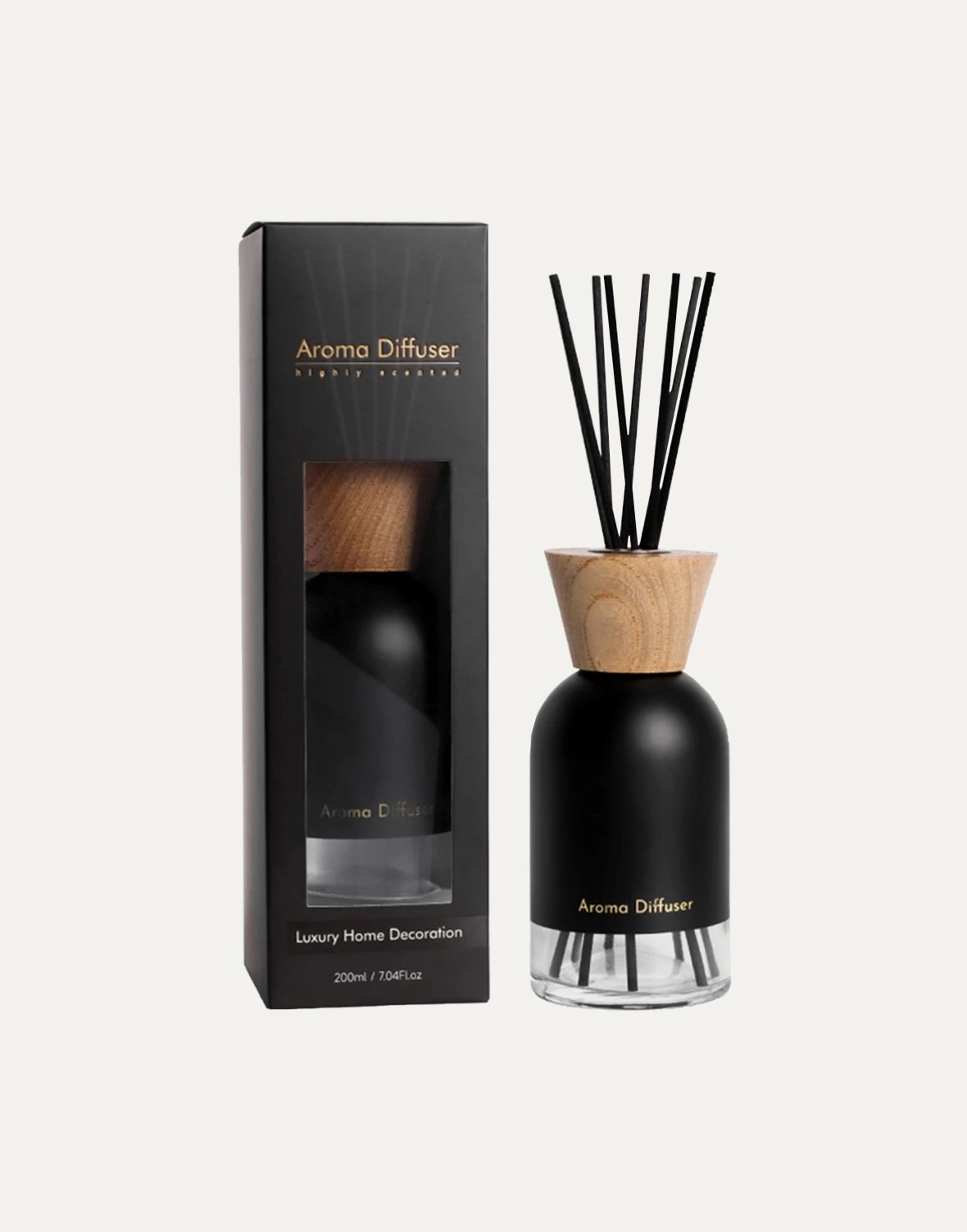
We work with brands across 68 countries to align fragrance formulations with IFRA requirements from the initial brief through final production. Whether you are sourcing commercial scenting oils, gift set fragrances, or custom formulations, getting the compliance documentation right at the specification stage saves time and cost at the border. Send your product categories and target markets to [email protected] or call +86 134 2048 5758, and our R&D team will confirm the IFRA category assignments and documentation package your shipment needs.
Questions Fragrance Buyers Ask About IFRA Standards
Does IFRA certification mean the fragrance is safe for all uses?
No. IFRA compliance is category-specific. A fragrance compliant for Category 11—air care diffusion—has not been assessed for skin application and should not be assumed safe for Category 4 use. The compliance covers only the application listed on the certificate. Reformulation and re-testing are required when changing product types, and the cost of skipping that step is usually far higher than doing it right the first time.
How often do IFRA Standards change, and what happens to existing formulations?
The IFRA Standards are updated through amendments. The current 51st Amendment was issued in June 2023, with previous amendments typically arriving every one to three years. When standards change, existing formulations may need reformulation to stay compliant. Suppliers generally receive transition periods, but brands should budget for periodic formula reviews. A well-managed fragrance library stays ahead of amendments by anticipating restriction trends rather than reacting to them—something that becomes easier with an R&D team that tracks the RIFM safety assessment pipeline.
Can a fragrance be IFRA-compliant and REACH-compliant at the same time?
Yes, and most professionally formulated fragrances for the European market meet both. IFRA addresses the safety of fragrance ingredients as used in finished products, while REACH governs the registration and chemical safety of substances manufactured or imported into the EU. They are complementary frameworks. A supplier serving the European market should be able to provide documentation for both without hesitation. If they cannot, that warrants a deeper conversation about their regulatory capabilities.
What documentation do I need for customs clearance?
The minimum is an IFRA certificate showing category assignment and amendment reference, an SDS compliant with the destination country’s format requirements, and a certificate of analysis for the specific batch. Some jurisdictions request additional allergen declarations or composition statements. The requirements vary by country and product type. If you are unsure which certificates your specific shipment needs, share your product categories and destination market with us at [email protected], and we will identify the right documentation package for your shipment.
If you’re interested, check out these related articles: