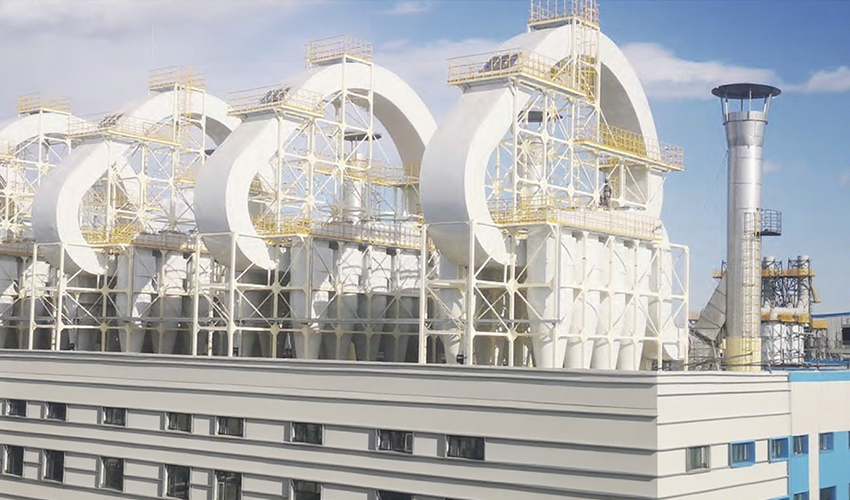

Getting a seedling greenhouse to actually perform well takes more than just putting up a structure and hoping for the best. I’ve seen too many operations struggle because the design phase treated climate control as an afterthought or ignored how water systems would scale. The real work happens when you start thinking about how every component—structure, environment, irrigation, automation—needs to function as a single system. That’s where the difference shows up in germination rates, plant uniformity, and whether the facility still makes economic sense five years down the road.
Why Site Selection and Structural Decisions Shape Everything That Follows
Intensive agriculture puts serious pressure on every square meter of growing space. The foundational choices you make during seedling greenhouse engineering determine whether you’re fighting your facility or working with it for years to come.
Site selection isn’t just about finding flat ground. You need optimal solar exposure throughout the growing season, proper drainage that won’t fail during heavy rain events, and accessibility for deliveries and staff. These factors compound over time—a site with marginal drainage becomes a constant headache once you’re running at full capacity.
Structural engineering for greenhouses requires honest environmental load calculations. Wind loads, snow accumulation, and the weight of mature crops all need to factor into the design. Cutting corners here creates safety risks and shortens facility lifespan. The structure needs to last through weather events that might only happen once every decade.
Controlled environment systems should match your specific crop requirements rather than following generic templates. What works for tomato seedlings won’t necessarily suit leafy greens or ornamentals. Modular greenhouse design gives you room to expand and adapt as markets shift, which they always do.
How Precision Climate Control Reduces Seedling Mortality
Advanced climate control systems can reduce seedling mortality rates by up to 20% compared to traditional methods. That’s not a small number when you’re producing thousands of plants per cycle.
The delicate balance required for vigorous seedling growth involves constant attention to temperature, humidity management systems, and CO2 enrichment for propagation. These variables interact with each other—raise the temperature and you often need to adjust humidity to compensate. Sensor technology in greenhouses provides the real-time data that makes precise environmental adjustments possible.
This data-driven approach means seedlings receive optimal conditions at every growth stage rather than average conditions that work poorly for everyone. Systems that dynamically respond to plant needs foster resilience and uniformity in the propagated material. Uniform seedlings transplant better and establish faster in their final growing locations.
Getting Light Spectrum and Intensity Right During Early Growth
Specific light recipes can accelerate germination and strengthen seedling resilience. LED grow lights have made lighting spectrum optimization far more accessible than it was even a decade ago.
Photoperiod control simulates natural light cycles or induces specific plant responses depending on what you’re growing. Some crops need long days to prevent premature flowering while others benefit from shorter photoperiods during certain growth phases. Accurate light intensity measurement ensures seedlings receive optimal light without the stress that comes from overexposure.
| Parameter | Temperature (°C) | Relative Humidity (%) | CO2 (ppm) | Light Intensity (µmol/m²/s) |
|---|---|---|---|---|
| Germination | 20-25 | 80-95 | 400-600 | 50-100 |
| Early Growth | 18-24 | 60-80 | 800-1000 | 150-250 |
| Hardening Off | 15-20 | 50-70 | 400-600 | 250-400 |
Water, Nutrient, and Substrate Systems That Actually Scale
Efficient irrigation and nutrient delivery matter enormously for resource conservation and consistent seedling quality in large-scale operations. The difference between a well-designed system and a cobbled-together one becomes obvious when you’re trying to produce uniform plants by the thousand.
Hydroponic seedling systems and aeroponic propagation techniques minimize water usage while maximizing nutrient uptake. The roots get exactly what they need without the waste that comes from traditional overhead irrigation. Nutrient delivery systems that precisely dose and distribute elements to each plant eliminate the guesswork that leads to deficiencies or toxicities.
Irrigation optimization through automated controls prevents the over-watering that drowns roots and the under-watering that stunts growth. Substrate selection for seedlings influences root development and overall plant health more than many growers realize. Rockwool, peat moss, coconut coir, perlite, and vermiculite each have distinct characteristics that suit different situations.
Water recycling systems enhance sustainability and reduce operational costs simultaneously. Root zone management ensures optimal oxygenation and nutrient availability, which directly affects how robust your seedlings become.
| Substrate Type | Advantages | Disadvantages | Best Use Cases |
|---|---|---|---|
| Rockwool | Excellent water retention, sterile, reusable | Non-renewable, disposal challenges | Hydroponics, consistent moisture needs |
| Peat Moss | High water retention, good aeration | pH adjustment often needed, non-renewable | General seedling trays, soil mixes |
| Coconut Coir | Renewable, good aeration, pH neutral | Can retain salts, variable quality | Hydroponics, organic growing |
| Perlite | Excellent aeration, lightweight | No nutrient value, dusty | Soil amendment, drainage improvement |
| Vermiculite | High water retention, nutrient exchange | Can compact, expensive | Seed starting, moisture-loving plants |
Where Automation and AI Deliver Real Returns in Nursery Operations
Automation can reduce labor costs by 30-50% and improve consistency in seedling handling and care. Those numbers reflect what happens when you remove human variability from repetitive tasks.
Automation in seedling production transforms traditional nurseries into high-efficiency operations where robotics in agriculture perform seeding, transplanting, and sorting with precision that humans simply can’t maintain over eight-hour shifts. The machines don’t get tired, don’t have bad days, and don’t accidentally skip trays.
AI for crop monitoring analyzes plant health, growth rates, and environmental data to enable proactive interventions. Instead of discovering a problem after it’s affected half your crop, you catch it when it’s still manageable. This data-driven cultivation approach optimizes resource allocation and minimizes waste.
Labor efficiency in nurseries improves because human workers focus on specialized tasks that actually require judgment and skill rather than repetitive manual work. The economics shift in favor of the operation rather than against it.
!alt text
 ## Building Sustainability and Biosecurity Into Facility Design
Implementing sustainable practices reduces environmental impact while significantly lowering long-term operational costs. These aren’t competing goals—they reinforce each other.
Energy efficiency in greenhouses comes from advanced insulation, smart ventilation, and renewable energy integration. The upfront investment pays back through lower utility bills month after month. Biosecurity measures prevent disease and pest outbreaks that can devastate valuable seedling stock in days. Once a pathogen gets established in a propagation facility, the costs multiply rapidly.
Integrated pest management strategies minimize chemical use, which promotes healthier plants and creates a safer working environment. Waste reduction strategies like composting and water recycling close loops that would otherwise drain resources and create disposal problems.
If you’re interested, check 《Driving Global Food Conservation Through Technological Innovation》.
Strategic Planning That Prevents Expensive Mistakes
A well-executed strategic plan can reduce project timelines by 15% and prevent costly redesigns. The planning phase is where you catch problems that would cost ten times more to fix during construction.
Cost-benefit analysis of greenhouse systems ensures optimal return on investment in controlled environment agriculture. Not every technology makes sense for every operation—the analysis helps you spend where it matters. Project management for agricultural facilities guides the process from conceptualization to full operational capacity, keeping timelines and budgets on track.
Future-proofing greenhouse designs incorporates flexibility for technological advancements and market shifts. The facility you build today needs to remain competitive in a market that will look different in five or ten years. Market demand analysis aligns facility capacity with projected growth so you’re not building too small to matter or too large to fill.
| KPI Category | Key Performance Indicator | Target Range | Measurement Frequency |
|---|---|---|---|
| Production | Germination Rate (%) | >95% | Weekly |
| Seedling Uniformity (CV%) | <10% | Bi-weekly | |
| Production Cycle Time (days) | Crop-specific | Monthly | |
| Resource Use | Water Use Efficiency (L/plant) | <0.5 | Daily |
| Energy Consumption (kWh/m²) | <0.2 | Monthly | |
| Financial | Cost per Seedling (USD) | <0.05 | Monthly |
| Revenue per Square Meter (USD/m²) | >50 | Quarterly |
Partner with Agrifam Co., Ltd. for Advanced Seedling Greenhouse Solutions
Agrifam Co., Ltd. brings deep expertise in seedling greenhouse engineering to operations ready to improve their propagation capabilities. From initial consultation and bespoke design through installation and ongoing optimization, integrated solutions ensure propagation facilities perform efficiently and remain productive for years. Contact us at 010-8591 2286 or via email at [email protected] for a tailored consultation.
What are the key considerations for designing a high-efficiency seedling greenhouse?
High-efficiency seedling greenhouse design requires integrating advanced climate control, optimized irrigation and nutrient delivery, structural integrity, and automation into a cohesive system. Site analysis determines solar exposure and drainage characteristics. Energy efficiency reduces operating costs. Biosecurity protocols protect plant stock. Scalability accommodates future growth. These elements work together within effective seedling greenhouse engineering to support long-term operational success.
How does climate control impact seedling propagation success?
Precision climate control directly influences germination rates, growth uniformity, and overall plant health. Managing temperature, humidity, light spectrum, and CO2 enrichment creates the microclimate that minimizes stress and maximizes vigor in young plants. Without this level of control, seedling quality varies unpredictably and mortality rates climb. The investment in climate systems pays back through more consistent, higher-quality output.
Why is integrated engineering crucial for modern propagation facilities?
Integrated engineering ensures all systems—structural design, environmental controls, irrigation, and automation—work together rather than against each other. When these components function cohesively, resource utilization improves and operational efficiency increases. The alternative is a facility where solving one problem creates another, where systems fight each other instead of supporting the same goals. Seedling greenhouse engineering that treats the facility as a unified system produces better results.
What sustainable practices are essential for modern seedling greenhouse operations?
Water recycling systems, energy-efficient LED lighting, renewable energy integration, integrated pest management to reduce chemical use, and waste reduction strategies all contribute to sustainable operations. These practices minimize environmental impact while improving long-term economic viability. The facilities that will remain competitive over the next decade are building these capabilities now rather than retrofitting them later.
What are the critical environmental factors for optimal seedling growth in a greenhouse?
Temperature, relative humidity, light intensity and spectrum, and CO2 concentration all require precise control for optimal seedling growth. Each crop type has specific ranges where these parameters produce the best results. Continuous monitoring and adjustment keeps conditions within those ranges despite external weather changes and internal heat loads from equipment and plants. The margin for error during early growth stages is smaller than many growers expect.
