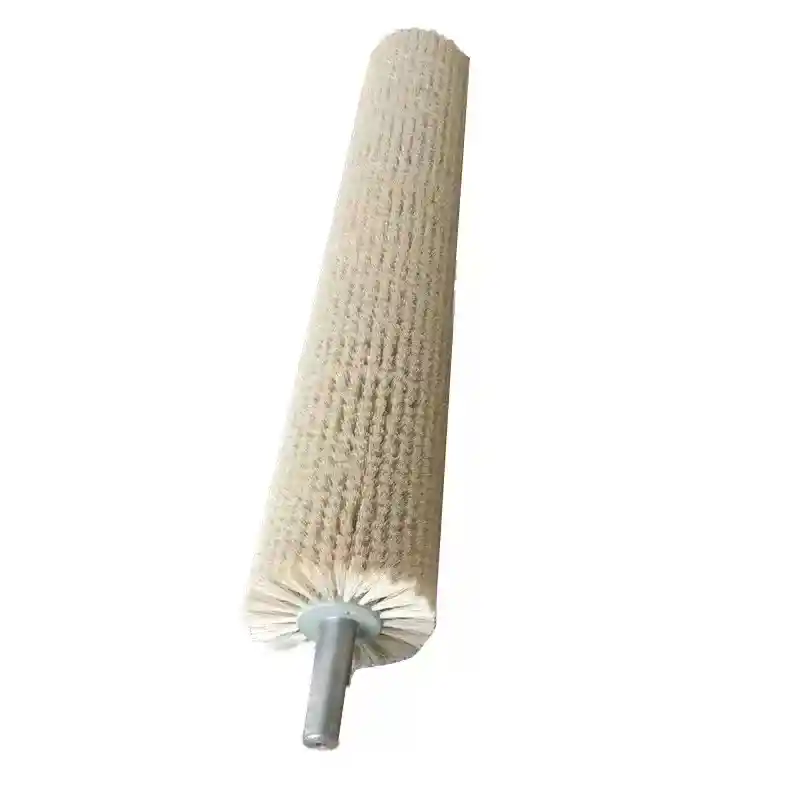

Sanding brush rollers have become a go-to solution for surface finishing work across manufacturing floors. The flexible filament design handles irregular shapes and contours that rigid abrasives simply cannot reach, which makes them particularly valuable when working with complex geometries. This piece covers how these tools perform across wood, metal, and composite materials, along with practical guidance on selecting the right configuration for specific applications.
Why Sanding Brush Rollers Outperform Traditional Methods
Sanding brush rollers deliver measurable advantages over conventional sanding approaches, primarily through their ability to maintain consistent contact across uneven surfaces. The flexible filaments bend and adapt to contours, which prevents the gouging and uneven material removal that plague rigid abrasive tools. This conformability proves especially valuable during deburring operations, where controlled edge rounding requires precise pressure distribution.
The abrasive brush technology enables material removal at predictable rates. Operators can preserve fine details and maintain structural integrity while still achieving aggressive stock removal when needed. A single sanding brush roller often handles tasks that would otherwise require multiple tool changes—from initial surface preparation through final polishing stages. This versatility reduces both tooling costs and changeover time on production lines.
Surface finish consistency matters significantly for downstream processes. Parts prepared with sanding brush rollers accept paint, powder coating, and plating more uniformly because the surface profile remains predictable across the entire workpiece. The deburring brush configuration removes sharp edges from machined components efficiently, while polishing brush rollers bring surfaces to their final aesthetic state.
| Feature | Sanding Brush Rollers | Traditional Sanding Methods |
|---|---|---|
| Surface Conformity | Excellent; flexible filaments adapt to contours | Limited; rigid abrasives struggle with irregular shapes |
| Finish Uniformity | High; consistent pressure across varied surfaces | Moderate; prone to uneven pressure and swirl marks |
| Material Removal | Controlled; reduces risk of over-sanding | Less controlled; higher risk of material damage |
| Deburring | Highly effective for edge rounding and flash removal | Often requires secondary processes or specialized tools |
| Tool Life | Extended due to even wear of abrasive filaments | Varies; localized wear can shorten lifespan |
Wood Sanding That Preserves Grain Character
Wood surfaces respond well to sanding brush rollers because the flexible bristles follow natural contours without flattening details. Furniture manufacturers and cabinet shops rely on these tools for reaching into carved profiles, routed edges, and turned elements that flat sanders would simply skip over or damage. The sanding brush for wood prepares surfaces for staining and finishing by creating uniform scratch patterns that promote even absorption.
Wood grain finishing benefits from the gentle action of brush filaments. Loose fibers get removed without tearing, and the natural texture becomes more pronounced rather than obscured. Restoration work particularly benefits from this approach—old paint and varnish come off efficiently while the underlying wood structure stays intact.
Heat management matters with wood. Sanding brush rollers generate less friction than aggressive belt sanders, which prevents the scorching and discoloration that can ruin delicate species. The controlled abrasive action removes material gradually, giving operators time to assess progress and adjust pressure as needed.
What is the difference between a sanding brush and a sanding disc?
Sanding brushes use flexible filaments that conform to irregular surfaces and edges, delivering uniform finishes without gouging. Sanding discs work well on flat surfaces but lack the adaptability needed for complex geometries. Brush rollers excel at deburring, polishing, and surface conditioning tasks where consistent contact across varied profiles determines the final quality. This distinction becomes especially apparent when processing wood, metal, or composite parts with intricate shapes.
Metal Finishing From Rough Deburring to Mirror Polish
Metal surface finishing demands tools that can handle everything from aggressive burr removal to delicate polishing operations. Sanding brush rollers serve this entire spectrum across automotive, aerospace, and general fabrication applications. Metal deburring brushes remove the sharp edges left by machining, laser cutting, and stamping operations—edges that create safety hazards and interfere with assembly.
Metal polishing brush rollers produce finishes ranging from functional satin textures to decorative mirror surfaces. The finish achieved depends on filament material, abrasive grit, and operating parameters. Parts destined for plating require specific surface profiles that brush rollers create consistently.
Industrial metal cleaning processes use brush rollers to remove oxides, scale, and surface contaminants without removing significant base material. This selective action preserves dimensional tolerances while preparing surfaces for subsequent operations. The selection of abrasive brush types for metal depends on material hardness and the target finish specification.
We offer specialized solutions for industrial surface treatment. Learn more about how our abrasive wheel brush can transform your processes by reading 《abrasive wheel brush a magical tool for industrial surface treatment》.
Composite Surface Preparation Without Structural Damage
Composite materials present unique challenges because aggressive abrasion can damage the reinforcing fibers that provide structural strength. Sanding brush rollers offer the controlled action needed for composite material preparation, creating consistent surface profiles without cutting into the laminate structure.
Sanding composites for adhesion requires removing release agents and surface contamination while creating mechanical texture for bonding. The surface must be uniformly roughened to promote adhesion, but over-preparation weakens the part. Rotary sanding brushes for composites condition surfaces at predictable rates, giving operators control over the final profile.
Aerospace and marine applications depend on reliable composite bonding. The flexibility of brush filaments prevents localized over-sanding that would compromise lightweight structures. Parts prepared with sanding brush rollers accept paint and clear coatings evenly, meeting both functional and aesthetic requirements.
Can sanding brush rollers be used for fine finishing?
Sanding brush rollers accommodate a wide range of finishing requirements through variations in abrasive grit and filament material. Coarse configurations handle heavy material removal and aggressive deburring, while fine-grit versions produce polished surfaces suitable for visible applications. Selecting the appropriate brush roller type and abrasive for the target finish determines the outcome on wood, metal, or composite materials.
Matching Brush Configuration to Material Requirements
Selecting the correct sanding brush roller requires understanding how filament type, abrasive grit, brush diameter, and filament density interact with specific materials. Aggressive material removal calls for coarser grits and stiffer filaments, while fine finishing needs finer abrasives and more flexible bristles.
The abrasive nylon brush handles general-purpose sanding across many materials, offering a balance between cutting action and surface conformity. Specialized wire brushes tackle heavy-duty deburring on hard metals where nylon filaments would wear too quickly. The material being processed—whether wood, metal, or composite—guides the selection of optimal abrasive type and filament construction.
| Factor | Wood | Metal | Composites |
|---|---|---|---|
| Filament Type | Nylon, Silicon Carbide | Steel, Brass, Ceramic, Silicon Carbide | Nylon, Ceramic, Silicon Carbide |
| Grit Range | P80-P320 (sanding), P400+ (polishing) | P60-P400 (deburring), P600+ (polishing) | P120-P400 (preparation), P600+ (fine finishing) |
| Density | Medium to High (for uniform finish) | High (for aggressive deburring/polishing) | Medium (to prevent damage) |
| Application | Grain enhancement, paint removal, contour sanding | Deburring, rust removal, surface conditioning | Surface activation, adhesion promotion, aesthetic |
Huixi Brush Manufacturing and Supply Capabilities
Huixi Brush has built industrial brush solutions over 16 years of manufacturing experience. The company specializes in customized brushes for sealing, cleaning, polishing, and deburring applications. Production facilities in Anhui Province handle manufacturing, while the Shanghai trading company manages international distribution.
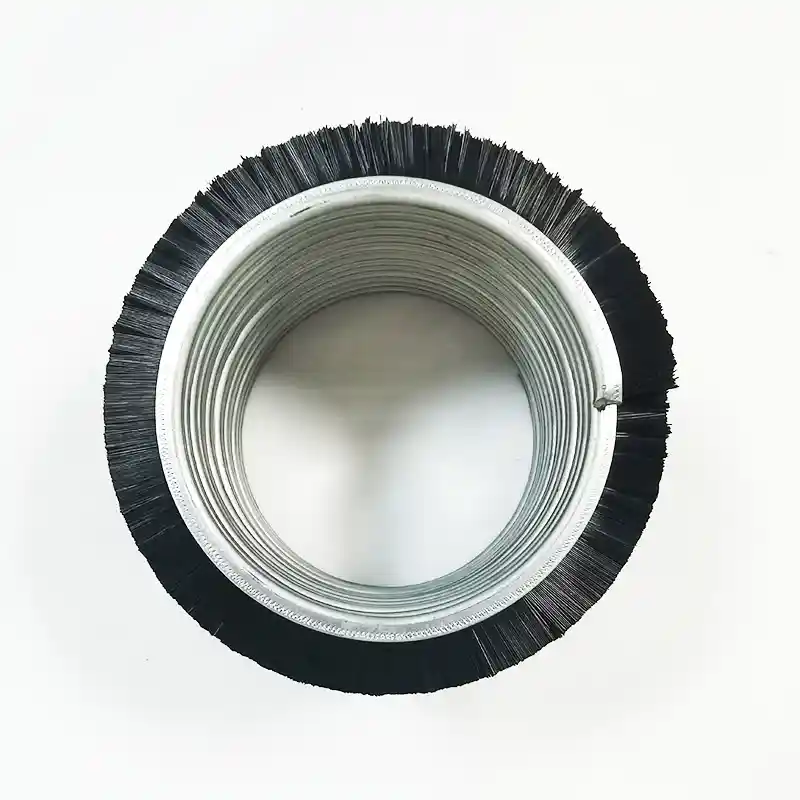
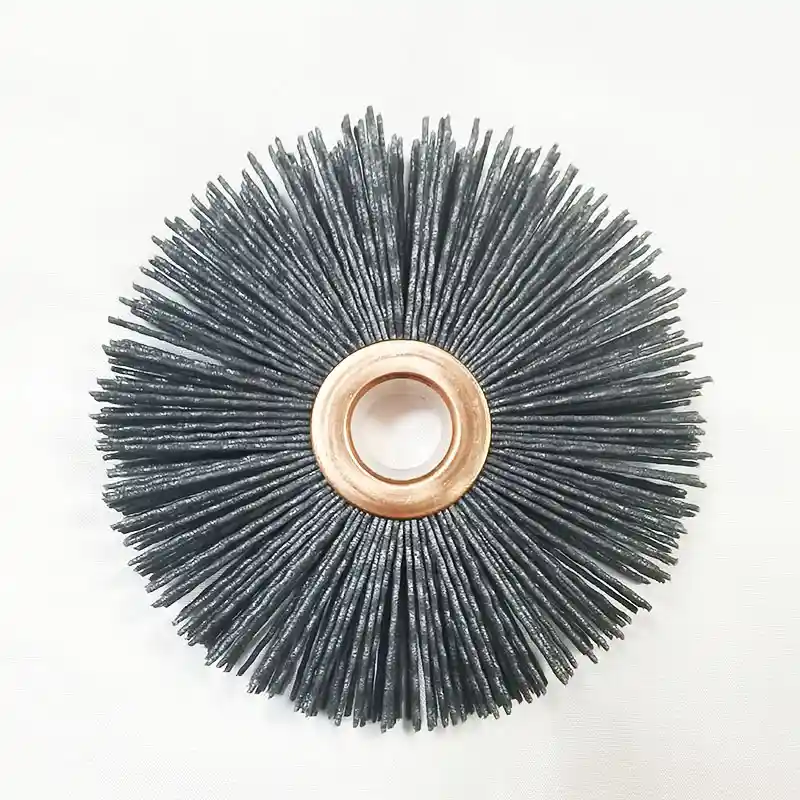
Export markets include Europe, North America, Australia, New Zealand, the Middle East, and Southeast Asia. The product range covers cylindrical spiral brush, spiral wire brush, strip brush, wire wheel brush, tube cleaning brush, disc brush, drill cleaning brush and wire scratch brushes. Technical support, ODM/OEM services, competitive pricing, low minimum order quantities, sample availability, and responsive delivery support the customer relationship.
Get Started With Custom Sanding Brush Solutions
Contact Shanghai Huixi Trading Co., Ltd. for consultation on sanding brush roller configurations matched to your specific wood, metal, or composite finishing requirements. Reach the team at +86 1580 0932 713 or [email protected].
Frequently Asked Questions About Sanding Brush Rollers
What is the difference between a sanding brush and a sanding disc?
Sanding brushes use flexible filaments that conform to irregular surfaces, contours, and edges, producing uniform finishes without gouging. Sanding discs perform well on flat surfaces but cannot adapt to complex geometries. Brush rollers handle deburring, polishing, and surface conditioning tasks where consistent contact across varied profiles determines quality outcomes on wood, metal, and composite materials.
Can sanding brush rollers be used for fine finishing?
Sanding brush rollers work across the full finishing spectrum. Manufacturers produce them with abrasive grits ranging from aggressive coarse grades for heavy material removal to very fine grades for delicate polishing. The appropriate brush roller type and abrasive selection determines whether the tool performs rough preparation or fine finishing on specific materials.
How do I clean and maintain my sanding brush roller?
Regular maintenance extends brush roller lifespan and maintains consistent performance. Remove accumulated dust and debris with compressed air or dedicated cleaning tools after each use. Some applications benefit from specialized cleaning solutions or mild detergents. Following manufacturer guidelines for specific brush roller types ensures optimal results, particularly when switching between wood, metal, and composite materials.