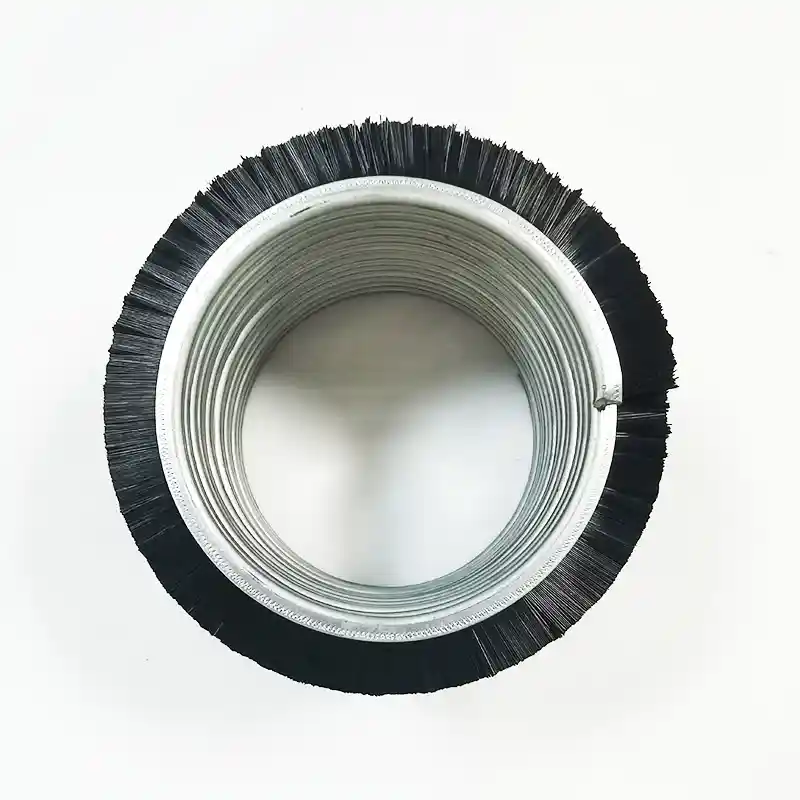

A rope cleaning brush removes dirt, dust, and hardened residue from wire rope before contaminated strands become a safety or inspection problem. The right brush surrounds the rope with uniform bristle contact, but the wrong fill material or spiral wrap can score the surface and shorten service life. After fifteen years in custom industrial brush manufacturing, I judge a rope cleaning brush by how well it cleans between strands without damaging the outer wires. Most catalog pages focus on brush size, while this article focuses on the specification points that matter for hoisting, winching, offshore, and coating line rope maintenance, including fill density, wrap direction, and integration with inspection or coating workflows.
How Does a Rope Cleaning Brush Remove Dirt From Wire Rope?
On a working rope, dust and spent lubricant collect between the outer strands. Once the rope bends under load, those contaminants grind into the contact points and damage the wires from the inside. A spiral rope cleaning brush wraps around the rope and uses bristle tips to dislodge loose dust, dried mud, salt, and old lubricant before that happens. The cleaning action should be full circumference, not a single side pass. In our custom brush work, we have seen the biggest improvement when the brush is set so the bristle tips contact only the outer strands and the top of the fill, without pressing into the rope core.
The brush works best when the rope moves through the brush under light tension, because the bristles can reach into the strand valleys without stopping the line. Hard scraping is not the goal. A rope cleaning brush should carry residue away from the surface, not push it deeper into the rope construction.
A rope cleaning brush works best when it surrounds the rope rather than scuffing one side. <rope cleaning brush for industrial use a key tool for maintaining safe production> explains how full circumference contact reduces contamination and improves inspection on hoist and winch ropes.
What Should You Check When Selecting a Rope Cleaning Brush?
Four operating details determine whether a standard brush will work or whether a custom design is needed: rope diameter, lay direction, contaminant type, and line speed. Rope diameter sets the core opening so the brush does not jam. Lay direction controls how debris moves along the rope, and contaminant type determines bristle stiffness. Line speed sets how fast the bristle tips must recover between contacts.
| Selection Input | What It Determines | Common Mistake |
|---|---|---|
| Rope diameter | Brush bore and fill length | Buying a brush that clamps too tight and clogs |
| Lay direction | Spiral wrap direction | Pushing debris into the strands instead of away |
| Contaminant type | Bristle material and aggressiveness | Using steel fill on galvanized rope without testing |
| Line speed | Brush length and bristle recovery | Specifying a brush too short for continuous travel |
Most rope cleaning brush inquiries do not fail on brush availability. They fail because the first sample is ordered before these four values are confirmed. If any one is estimated, the brush may still clean, but it will wear faster or leave residue in the strand valleys. I ask for the rope construction and a photo of the contaminated surface first, because that tells me more than the brush part number.
Why Do Spiral Brush Geometry and Bristle Material Matter?
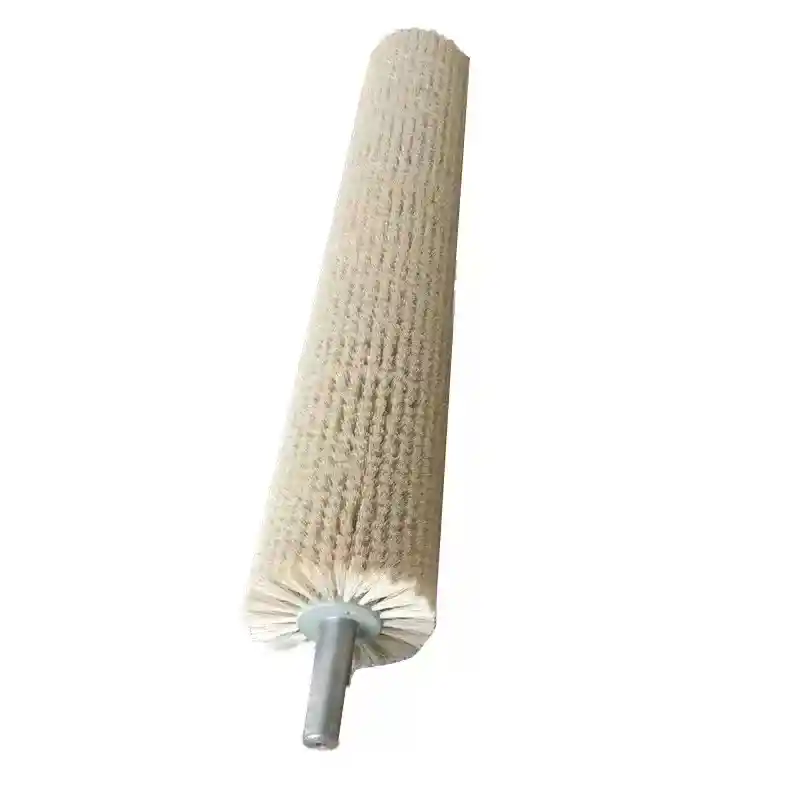
Bristles do the cleaning, but the spiral geometry determines where contact starts and how debris exits. A steep helix moves residue quickly along the rope and works well for loose dust. A shallow helix dwells longer on the surface and suits dried deposits. Dense fill increases the number of bristle tips in contact, which improves fine cleaning but also raises friction and heat on fast lines.
| Bristle Material | Best Use | Application Limit |
|---|---|---|
| Abrasive nylon | Routine dust, salt, and light residue | Less effective on hardened scale |
| Crimped stainless steel | Dried mud, light rust, and old lubricant | Can mark soft zinc coatings if fill is too dense |
| Brass coated steel | Harsh residue with less scoring risk | Shorter life in abrasive dust |
| Polypropylene | Gentle wiping and moisture carry off | Not for heavy embedded deposits |
For steel wire rope in wet or coastal service, I default to a stainless or brass fill unless the customer has already tested nylon on the same line. The reason is not that nylon is weak. It is that corrosion and heavy lubricant demand more resilient bristle tips, and the brush has to keep working long enough to justify the changeover.
The angle and wrap direction change how bristles contact the rope and where debris moves during rotation. <the differences between inward and outward spiral brush> explains how wrap direction shifts the cleaning action and when each design works better for a given rope surface.
If your program involves high line speeds, coarse dust, or coated ropes, confirm bristle trim length and fill density before finalizing the brush specification. Send your rope diameter and line speed to [email protected] and we will check the working contact area against your equipment.
Where Do Rope Cleaning Brushes Fit Into Inspection and Coating Workflows?
A dirty rope hides broken wires, corrosion pitting, and reduced diameter under a layer of residue. Operators who clean immediately before visual inspection are far more likely to catch a defect before the rope goes back into service. The same applies before applying lubricant or a protective coating. If the surface is not clean, the coating sits on dirt instead of the wire and fails early.
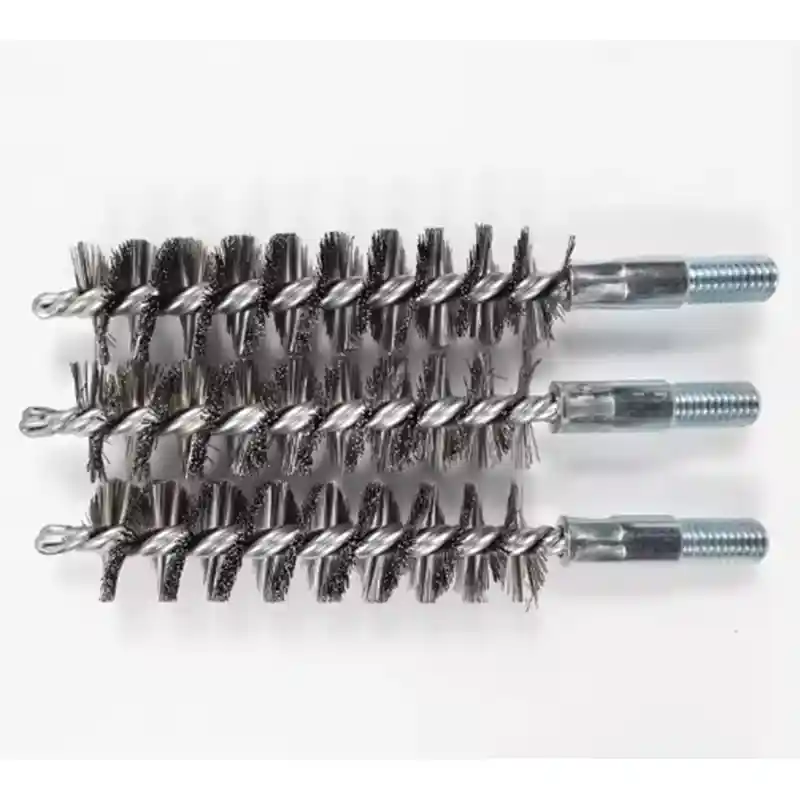
Rope cleaning brushes also fit after use, when salt, mine dust, or concrete splash is still soft enough to remove without aggressive brushing. In offshore and port equipment, a quick pass through a spiral brush at the end of a shift prevents salt from hardening in the strand gaps overnight.
Corrosion resistance becomes a specification question when rope cleaning moves from dry shop air to offshore or chemical exposure. <where stainless wire spiral brush can be used> covers environments where stainless wire spiral brushes hold up and where a standard carbon steel fill would break down too quickly.
What Is the Next Step for a Rope Cleaning Brush Requirement?
Standard rope cleaning brushes are easy to buy, but they are rarely designed for the exact rope diameter, lay direction, contaminant, and line speed in your operation. The most common failure is a brush that cleans the crown of the rope while leaving material in the strand valleys. A custom spiral brush avoids that by matching the core, fill, and wrap to your actual working conditions. Send your rope diameter, lay direction, contaminant type, and target line speed to [email protected] or call +86 1580 0932 713. We will confirm the brush specification, bristle material, and production lead time before you commit to an order.
What Else Should You Know Before Buying a Rope Cleaning Brush?
How do I know whether to choose nylon or steel bristles?
It depends on the contaminant and the rope surface. Nylon is the safer starting point for routine dust, salt, and light lubricant on galvanized or stainless rope. Steel bristles work better for dried mud, rust, or hardened residue, but only when the fill is matched to the rope hardness. If the rope is galvanized, I would test a nylon or brass fill first. If the contaminant is hard scale and the rope is uncoated carbon steel, a crimped stainless steel fill is the more productive choice.
Can a rope cleaning brush remove rust and scale?
Yes, a metallic fill can remove light rust and scale, but it is not a substitute for full descaling treatment. The brush is designed for surface residue between inspections, not heavy pitting. If the rust is loose and sits on the outer wires, crimped stainless or brass coated steel will pull it off. If the rope has deep corrosion, the wire condition must be evaluated before any aggressive brushing, because heavy scale removal can hide permanent strength loss.
Will the brush damage galvanized or stainless steel rope?
A common worry is that any steel brush will strip the zinc layer. That can happen, but it is not a given. Damage usually comes from a fill that is too stiff or too dense for the coating, not from the brush concept. For galvanized rope, select nylon, brass coated steel, or a light stainless fill and test on a short rope section first. Stainless rope tolerates stainless fill better, but bristle pressure still matters more than bristle material.
What information do I need before requesting a custom brush?
In quote requests we review four measurements before drawing the brush. We need the actual rope diameter, the lay direction, the main contaminant, and the expected line speed or travel length. A photo of the rope surface also lets us judge whether the fill should be dense or open. With those details we can propose a spiral brush that fits the rope envelope instead of asking you to adapt standard stock. If your rope runs in a saltwater or high dust environment, tell us the operating conditions and we will confirm whether a standard spiral brush or a custom fill will last longer. Share your requirements at [email protected] and we will respond with a specific brush proposal.
If you’re interested, check out these related articles:
brushes for steel wire industries cleaning descaling derusting polishing
rope cleaning brush for industrial use a key tool for maintaining safe production