Most buyers choose a fragrance before they choose the machine that carries it, and that order creates problems. Understanding how commercial scent machines work means looking at atomization, particle size, and airflow, not just the scent name on the bottle. A commercial unit is not an oversized home diffuser. It is built to break fragrance oil into a controlled dry mist and move it through a hotel lobby, a retail floor, or an HVAC duct network. In ten years of scent solution work, I have seen the same lesson repeat: the delivery mechanism matters more than the fragrance.
What Happens Inside a Commercial Scent Machine?
Most commercial scent machines use a pump and an atomizer head instead of heat. The pump draws fragrance oil from a bottle and pushes it through a narrow orifice, and the pressure drop creates a fine mist. A built-in fan moves that mist into the room. The oil stays cool during atomization, so the fragrance profile remains intact. That is why waterless cold air diffusion has become the standard for commercial spaces.
Inside a typical unit there are few moving parts: a bottle or reservoir, a pump, an atomizer head, a fan, and a control board. This simplicity matters. A commercial machine often runs 24/7, so fewer heat-generating components keep pump wear low and maintenance simple. The Scent-Share Commercial Scent Oil Diffuser (Bluetooth APP), for example, runs on DC12V and uses a long-life pump with a built-in fan for continuous operation.
Waterless machines differ from ultrasonic home units in one important way: they do not add water to the oil. Ultrasonic devices vibrate a water and oil mixture to create a wet mist, which works in a small room but not across a hotel lobby. Commercial waterless atomization produces a dry mist with much smaller particles that stay suspended longer and travel farther. The result is not just fragrance in the air, it is a consistent identity that follows the guest from the entrance to the elevator.
How Do Cold Air and HVAC Scent Systems Differ?
Cold air systems place the atomizer and fan in the room where the scent is needed. HVAC systems connect the atomizer to ductwork and inject fragrance into the air handler supply stream. Both use the same cold air principle, but their coverage paths are completely different.
A standalone unit works with the room’s natural air movement. It is fast to install and easy to adjust, but its effect is limited to the space around the unit and the direction of the fan. An HVAC scent system uses the building’s air handling network to carry fragrance across multiple rooms, floors, or zones. That creates much larger coverage, provided the ductwork is balanced and the injection point is placed correctly.
| Model | Coverage | Power | Bottle | Control |
|---|---|---|---|---|
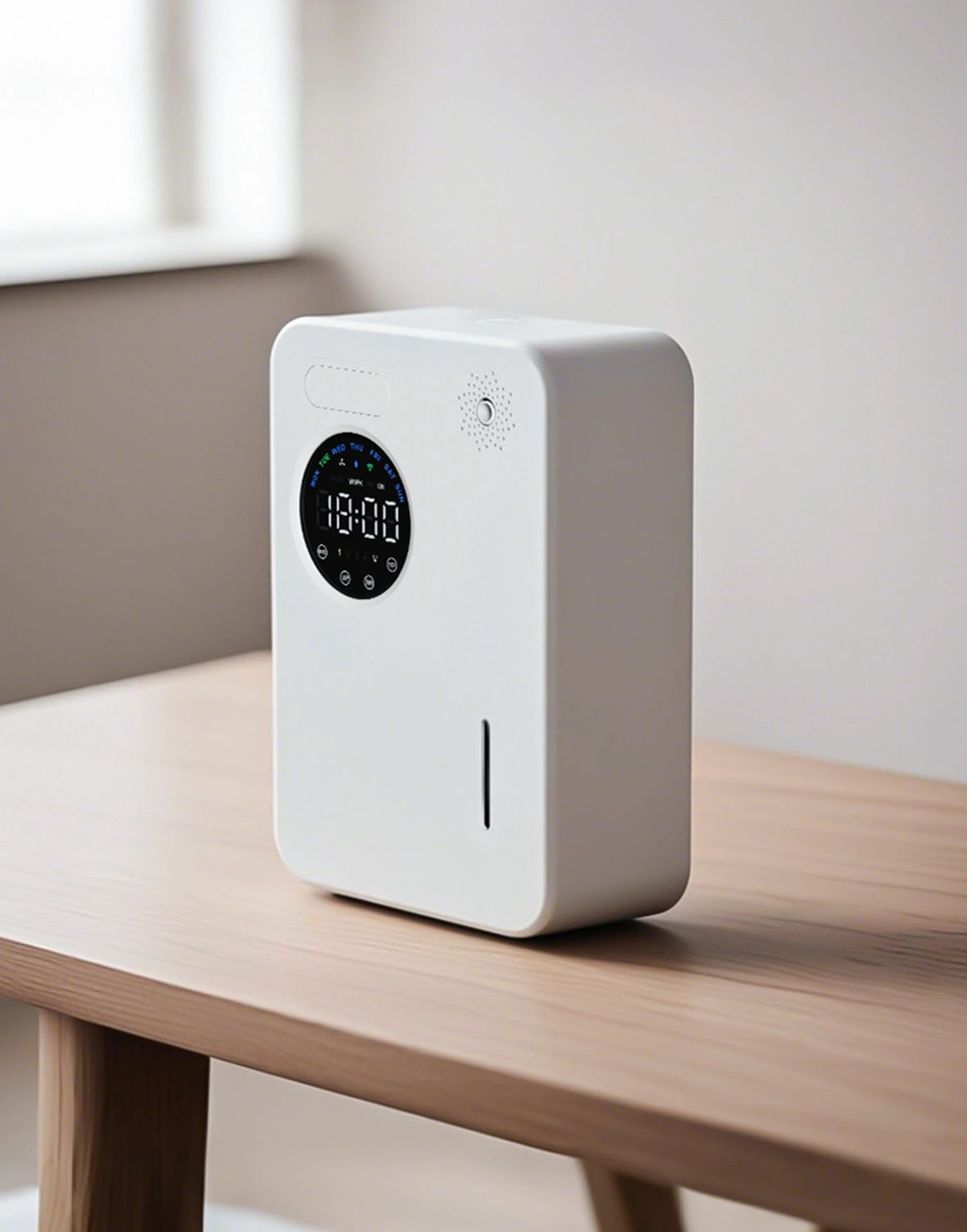
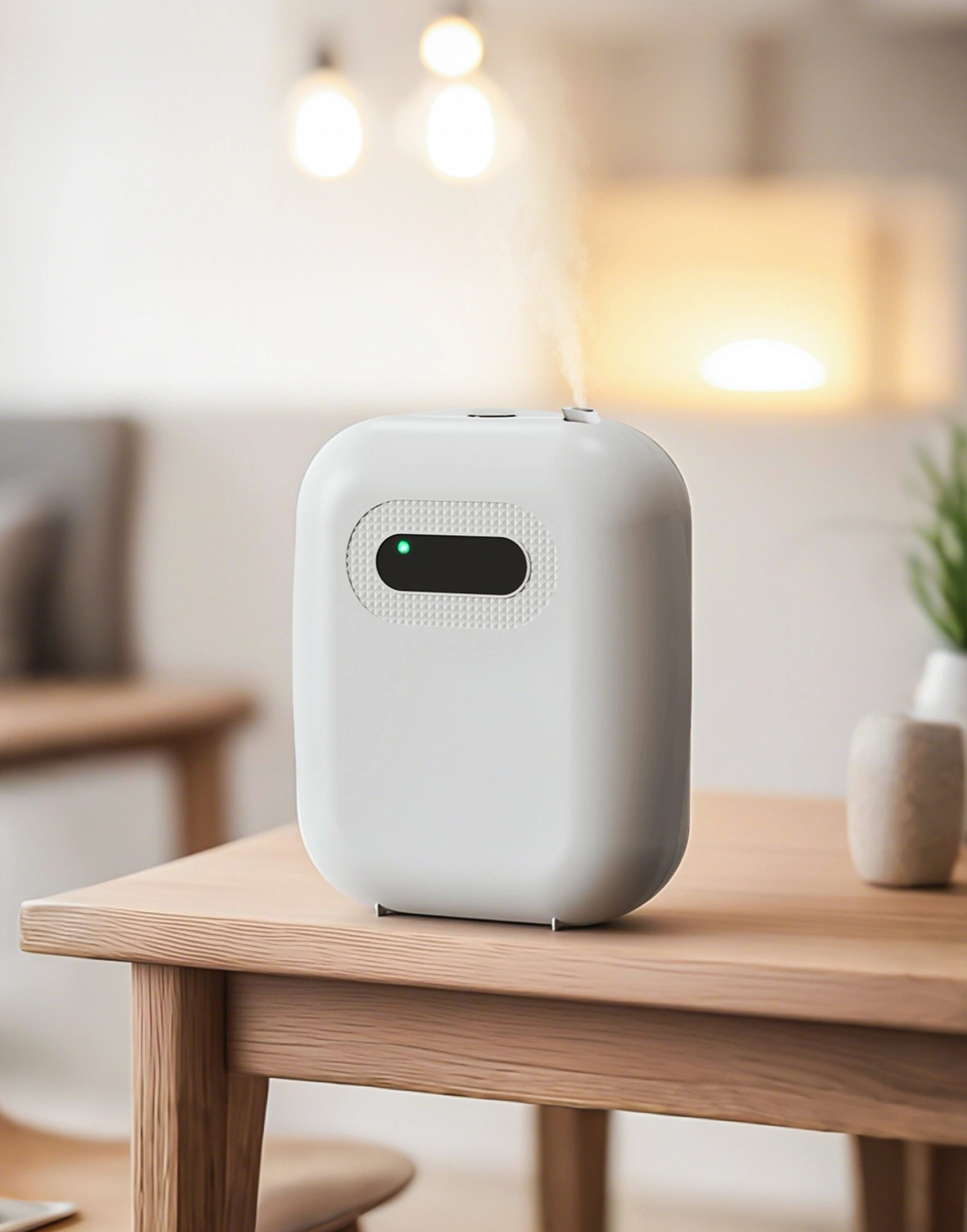
| Commercial Scent Oil Diffuser | 300 m³ (1,000 sq ft) | DC12V-1A | 150 ml plastic | Bluetooth APP |
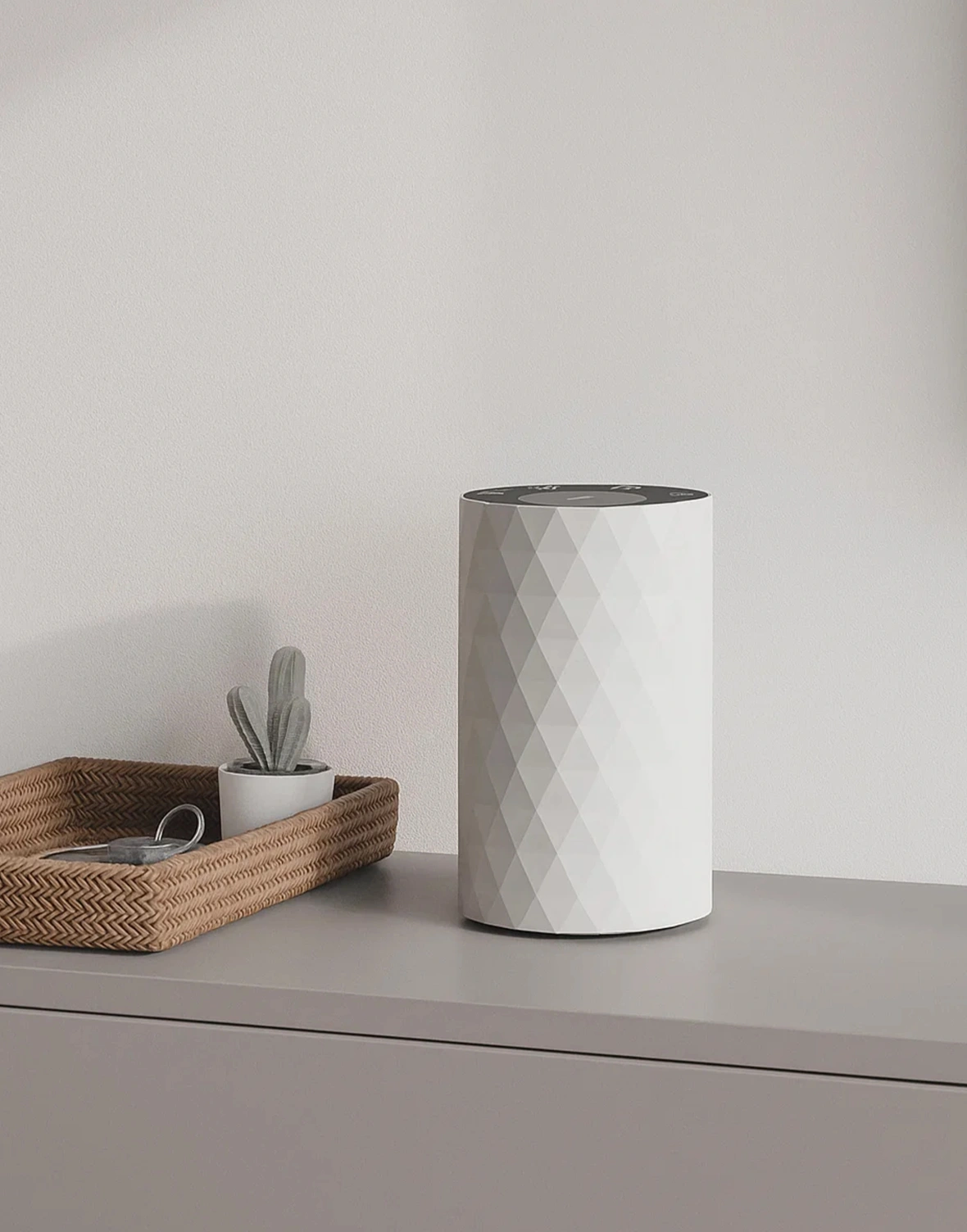
| Hotel Scent Oil Diffuser Tower | 3,000 m³ (11,000 sq ft) | DC12V-2A | 500 ml or 1 L aluminum | Bluetooth APP and touch |
| Commercial HVAC Scent Diffuser Aroma Dispenser System | 8,000 m³ (30,000 sq ft) | DC12V-3A | 1 L, 2.5 L, or 5 L aluminum | Bluetooth APP |
| Dual-System HVAC Scent Diffuser | 5,000 to 15,000 m³ | DC12V-3A | 1 L, 2.5 L, or 5 L x2 | Bluetooth APP |
Standalone units are easier to deploy when a space has no central air handling or when the scent schedule changes often. HVAC integration wins when the building already has ducted air handling and the goal is consistent scent across many rooms. But HVAC distribution is only as good as the existing airflow balance. If the first room near the injection point gets a strong scent and the last room gets almost nothing, the issue is usually duct design, not the machine.
What Determines Coverage and Scent Intensity?
Manufacturer coverage ratings are useful starting points, not guarantees. A machine rated for 1,000 square feet assumes a typical open room with standard ceiling height and no strong competing airflow. Real spaces have high ceilings, glass walls, open doorways, exhaust fans, and split levels. All of these change where the mist goes.
Three factors control intensity: oil delivery rate, fan output, and duty cycle. The delivery rate is set by the pump or atomizer, the fan output determines how far the mist travels, and the duty cycle controls how often the machine runs. On our Bluetooth APP models, you can schedule run and pause intervals to match foot traffic. A lobby may need a soft baseline in the morning and a stronger burst at check-in, which is one schedule, not a single all-day setting.
In one hotel lobby that opened into a two-floor atrium, a tower unit rated for 3,000 m³ was placed near the reception desk. The scent was strong at the desk and nearly absent on the mezzanine. The machine was not the problem. The main air return pulled the mist toward the desk before it could circulate upward. We moved the unit closer to the return path, reduced the duty cycle, and the mezzanine finally held the same perceived level. Coverage ratings assume airflow is working with the machine, not against it.
If your site has high ceilings, strong exhaust, or a split-level layout, it is worth confirming the airflow pattern before locking the model. Send the floor plan and ceiling height to [email protected] and we will check which diffuser coverage fits the real space.
How Much Fragrance Oil Does a Commercial Machine Use?
Fragrance oil consumption depends on reservoir size, duty cycle, atomization rate, and the scent intensity target. There is no single answer because a boutique store and a hotel corridor have different requirements. The right way to estimate consumption is to start with the hours the machine will actually run, not the size of the space alone.
Reservoir size gives a rough comparison. A 150 ml bottle on a small commercial diffuser lasts longer than most first-time buyers expect when the machine runs on a moderate schedule. A 500 ml or 1 L bottle on a tower or HVAC system supports larger spaces but is consumed proportionally faster at high output. The 1 L, 2.5 L, and 5 L options on the HVAC systems exist for a reason: central air injection can pull far more oil than a single room unit, especially in hotels and malls with high air change rates.
Two operating habits make a bigger difference than oil quality. One is to set the schedule instead of running at full output all day. Another is to place the unit away from open doors and strong exhaust paths. In a retail build with open double doors near the entrance, we set a 300 m³ unit to continuous mode at first. Most of the scent escaped before it reached the back wall. Dropping the duty cycle to 70 percent kept the same perceived level and extended the 150 ml bottle by about two weeks.
What Should Buyers Check Before Choosing a Machine?
Start with the space, not the fragrance. Ceiling height, floor area, air changes, and HVAC layout determine which mechanism can actually deliver the scent. After the space, check oil compatibility, bottle locking, power supply, and whether the control app can schedule different intensity levels across the day.
For a single retail floor or small lobby, a standalone waterless diffuser is usually the simplest answer. For a multi-floor hotel or office building with central air handling, an HVAC scent system or a dual-system unit makes more sense. Ceiling-mounted options suit projects with no floor space, while a tower unit works for open atriums and lobbies. The key is to match the machine to the airflow pattern, not to the room’s square footage alone.
Ask the supplier to confirm noise, maintenance access, and bottle replacement steps before ordering. Noise under 35 dBa is common in better commercial units, and it matters more than a decorative case. The same applies to bottle access. If staff need a ladder and a tool every time the oil runs out, the maintenance schedule will fail.
If your project involves a multi-room hotel or a retail chain, one machine model rarely fits every location. Send the building details and timeline to [email protected] or call +86 185 6557 5758, and we can confirm which diffuser and fragrance configuration will hold up before you commit to a bulk order.
Common Questions About Commercial Scent Machines
Do waterless commercial scent machines leave oily residue?
In most cases, no. Waterless cold air systems atomize fragrance oil into a dry mist that stays airborne long enough to be carried away. Residue appears when the mist particles are too large or the machine runs at maximum output in a small enclosed space. The fix is usually to reduce the duty cycle or move the unit away from walls, shelves, and electronics. We also recommend checking the oil type. Thicker oils need a different atomizer setting, and a mismatch can cause buildup even in a well-sized machine.
What is the difference between a waterless diffuser and an ultrasonic diffuser?
A common assumption is that both machines do the same job because both release a visible aroma into the room. They do not. Ultrasonic units use water and vibration to create a wet mist, which works for small rooms but adds humidity and has limited throw. Waterless commercial machines atomize pure fragrance oil through pressure alone, producing a dry mist with much smaller particles. That is why a 300 m³ waterless unit can cover a retail floor while an ultrasonic unit rated for 80 m³ is better suited to a desk, car, or small office.
How long will a bottle of fragrance oil last?
It depends on bottle size, duty cycle, and air change rate. A 150 ml bottle in a 300 m³ commercial diffuser can run several weeks on a moderate schedule, but a space with open doors and strong ventilation will burn through it faster. A 1 L or 5 L HVAC reservoir lasts longer because the capacity is higher, though the injection rate also rises with coverage. We calculate this during specification, because guessing leads to either an empty bottle mid-month or overstocking that sits unused.
Can one HVAC scent system cover an entire hotel?
The better question is whether one injection point can serve several different air handling zones. It rarely can. Each floor or major AHU usually needs its own injection point, because the first room in the duct run receives more scent than the last. Without separate injection points, some guest rooms will smell strongly while others get almost nothing. If you are planning a multi-zone site, share the HVAC layout with us at [email protected] and we will confirm how many injection points are needed before you order.
If you’re interested, check out these related articles: