Working with recombinant human interleukin-3 over the years has given me a clear sense of why this cytokine keeps showing up in both basic research and therapeutic development. It sits at a critical junction in blood cell production, influencing multiple lineages from a single signaling point. That kind of broad reach makes it valuable, but also means getting the details right matters more than usual.
How Recombinant Human IL-3 Drives Blood Cell Development
Human interleukin-3 is a glycoprotein that regulates blood cell production at its earliest stages. It acts on hematopoietic stem cells and early myeloid progenitor cells, promoting their survival, proliferation, and differentiation into granulocytes, monocytes, megakaryocytes, and erythroid cells. This broad activity explains why recombinant human IL-3 remains central to maintaining immune system balance and responding to hematopoietic stress.
The biological function of recombinant human IL-3 depends on its specific cell surface receptor, the IL-3 receptor. This receptor is a heterodimer with a ligand-specific alpha subunit (IL-3Rα) and a common beta subunit (βc) shared with IL-5 and GM-CSF receptors. When recombinant human IL-3 binds to IL-3Rα, the βc subunit joins the complex, triggering receptor dimerization and activating downstream signaling pathways. These pathways include the Janus kinase (JAK) / Signal Transducer and Activator of Transcription (STAT) pathway, the Mitogen-Activated Protein Kinase (MAPK) pathway, and the Phosphoinositide 3-kinase (PI3K) / Akt pathway. Activation of these cascades regulates gene expression, promotes cell proliferation, prevents apoptosis, and drives cell differentiation. Understanding these cytokine signaling mechanisms is fundamental to applying recombinant human IL-3 effectively across different contexts.
Therapeutic Uses of Recombinant Human IL-3 in Hematology
The hematopoietic stimulatory effects of recombinant human IL-3 have driven extensive investigation into its therapeutic applications. It holds promise for treating hematological disorders and conditions involving bone marrow suppression. Recombinant human IL-3 has been explored in aplastic anemia, myelodysplastic syndromes, and chemotherapy-induced myelosuppression, where enhancing blood cell recovery is critical. Its ability to stimulate production of multiple myeloid cell types makes it a versatile candidate for immune system regulation.
Clinical trials have evaluated recombinant human IL-3, often combined with other growth factors, to accelerate hematopoietic recovery following bone marrow transplantation. In drug discovery, recombinant human IL-3 serves as a valuable tool for preclinical research, enabling study of hematopoietic cell responses to novel compounds. Its role in promoting growth and differentiation of specific immune cells suggests potential applications in immunotherapy, particularly for enhancing myeloid cell-mediated immune responses. Research continues to explore its efficacy and safety across various clinical settings.
What are the primary therapeutic applications of recombinant human IL-3?
Recombinant human IL-3 primarily finds therapeutic application in conditions requiring enhanced hematopoiesis. This includes accelerating recovery from chemotherapy-induced myelosuppression, a common side effect of cancer treatment. It is also investigated for treating myelodysplastic syndromes and aplastic anemia, where the bone marrow fails to produce sufficient blood cells. Recombinant human IL-3 may support immune modulation by boosting specific myeloid cell populations.
For researchers and developers interested in optimizing immune responses, understanding immune co-stimulation is vital. We recommend reviewing 《Recombinant Human 4-1BBL: Unlocking Immune Co-stimulation for Advanced Therapies》.
Using Recombinant Human IL-3 for Cell Culture and Laboratory Research
Beyond direct therapeutic use, recombinant human IL-3 is an indispensable reagent in advanced in vitro cell culture and research. It is widely employed for ex vivo expansion of hematopoietic stem cells, facilitating their growth and maintenance outside the body for various research and clinical purposes. Researchers also utilize recombinant human IL-3 to culture myeloid progenitor cells, enabling detailed studies of their differentiation pathways and functional characteristics.
The cytokine is crucial for developing cell-based assays essential for drug screening and toxicity testing. These assays allow scientists to evaluate effects of new compounds on hematopoietic cells in controlled environments. The use of growth factors like recombinant human IL-3 is foundational for creating complex cellular models, including organoids, that mimic in vivo hematopoiesis. Its application extends to cultivated meat production, where it can support proliferation and differentiation of animal cells.
How does recombinant human IL-3 impact hematopoietic stem cell proliferation and differentiation?
Recombinant human IL-3 significantly enhances hematopoietic stem cell proliferation and differentiation by binding to its specific receptor and activating downstream signaling pathways. It supports the self-renewal capacity of these stem cells while directing their lineage commitment towards myeloid cell types. Often used in combination with other cytokines, recombinant human IL-3 is crucial for regenerative medicine applications and understanding stem cell biology.
Manufacturing High-Purity Recombinant Human IL-3
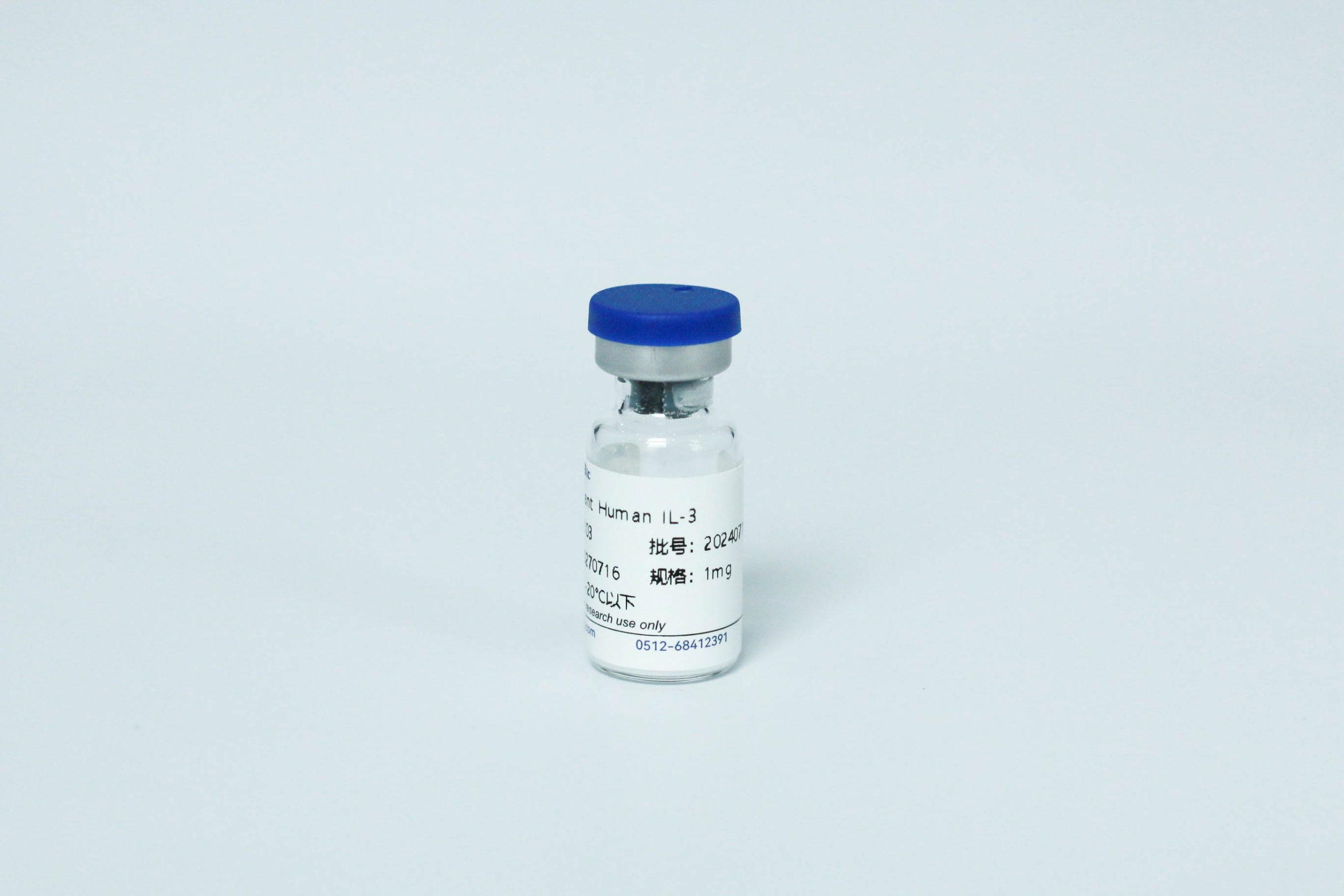
Producing high-quality recombinant human IL-3 requires sophisticated recombinant protein production technologies and stringent quality control measures. Jiangsu East-Mab Biomedical Technology Co., Ltd. utilizes advanced expression systems, such as E. coli, to produce recombinant human IL-3. Our product is E. coli expressed, has a molecular weight of 15.1 kDa, and exhibits ≥95% purity.
Purification strategies are meticulously designed to achieve high protein purity with minimal contaminants. We implement rigorous quality control standards, including bioactivity assays, to confirm functional efficacy. Our recombinant human IL-3 demonstrates an ED₅₀ of 0.02-0.1 ng/mL in TF-1 cell proliferation assays, indicating high potency. Endotoxin levels are maintained at ≤10 EU/mg, critical for both research and potential clinical applications. This commitment to quality ensures consistent, high-grade recombinant human IL-3 for our partners.
What are the critical quality attributes for recombinant human IL-3 used in research and clinical settings?
Critical quality attributes for recombinant human IL-3 include high purity, confirmed through techniques like SDS-PAGE and SEC-HPLC, to ensure product integrity. Demonstrating bioactivity via cell proliferation assays, such as the TF-1 cell proliferation assay, verifies functional potency. Low endotoxin levels and sterility assurance are paramount, particularly for clinical applications, to prevent adverse immune responses and contamination.
Emerging Research Directions for IL-3 Applications
The field of IL-3 research continues to evolve with promising directions. Innovations include development of engineered IL-3 variants designed for enhanced stability, altered receptor binding affinity, or improved therapeutic profiles. These modifications aim to optimize the cytokine’s efficacy and reduce potential side effects. The role of recombinant human IL-3 in combination therapies is also a significant area of focus, exploring synergistic effects with other cytokines or therapeutic agents to achieve more robust clinical outcomes.
Researchers are investigating novel applications of recombinant human IL-3 in various disease contexts, moving beyond traditional hematological indications. This includes its potential in precision medicine, where IL-3-based therapies could be tailored to individual patient profiles. Breakthroughs in immunology continue to uncover new roles for IL-3 in immune regulation and inflammation, suggesting broader therapeutic utility. Advanced diagnostics could also leverage IL-3 as a biomarker or a component in diagnostic assays. These ongoing efforts underscore the dynamic nature of IL-3 research.
Partner with East-Mab for Your Recombinant Human IL-3 Needs
For researchers and developers requiring high-quality recombinant human IL-3, Jiangsu East-Mab Biomedical Technology Co., Ltd. offers GMP-grade proteins with proven bioactivity and purity. Leverage our world-class research and production platform to advance your IVD, cell therapy, or biopharmaceutical projects. Contact us today at [email protected] or +86-400-998-0106 for expert consultation and reliable supply.
Frequently Asked Questions About Recombinant Human IL-3
What is the primary function of recombinant human IL-3 in biological systems?
Recombinant human IL-3 primarily functions as a hematopoietic growth factor, stimulating the proliferation, differentiation, and survival of various hematopoietic progenitor cells, particularly those of the myeloid lineage. It plays a crucial role in blood cell development and immune responses.
How does East-Mab ensure the high quality and bioactivity of its recombinant human IL-3?
Jiangsu East-Mab Biomedical Technology Co., Ltd. employs a world-class platform for recombinant protein production, adhering to stringent quality control standards. Our recombinant human IL-3 undergoes rigorous purification, comprehensive protein characterization, and validated bioactivity assays to ensure exceptional purity, consistency, and functional efficacy for all applications.
Can recombinant human IL-3 be used in both research and clinical applications?
Yes, recombinant human IL-3 is widely utilized in both research and clinical applications. In research, it is vital for cell culture, immunology studies, and drug discovery. Clinically, it has been explored for treating various hematological disorders, supporting bone marrow recovery, and in certain immunotherapies, requiring GMP-grade quality for clinical use.