Working with recombinant human FGF-4 over the years has taught me that this growth factor sits at a fascinating intersection of developmental biology and practical application. It’s one of those proteins where the basic science directly translates into real-world utility—from maintaining stem cell cultures to supporting tissue engineering projects. The challenge has always been sourcing material that performs consistently across experiments, because when you’re building on previous results, batch variability can derail months of work.
How FGF-4 Works at the Molecular Level
Fibroblast Growth Factor 4 belongs to a family of signaling proteins that cells rely on for growth and developmental cues. The protein operates by binding to receptor tyrosine kinases (FGFRs) on cell surfaces, which triggers a cascade of intracellular events. Three major pathways respond to this binding: MAPK/ERK, PI3K/Akt, and PLCγ. Each pathway influences different aspects of cell behavior, from proliferation rates to differentiation decisions and migratory capacity.
During embryonic development, FGF-4 proves particularly important for limb formation and mesoderm induction. These aren’t minor roles—they’re fundamental to how body plans take shape. In adult tissues, the protein contributes to angiogenesis, wound healing, and tissue repair processes. The interaction between FGF-4 and heparin binding proteoglycans deserves attention here because it affects both protein stability and receptor binding affinity. This interaction modulates biological activity in ways that matter for experimental design.
Manufacturing Recombinant Human FGF-4 That Performs Reliably
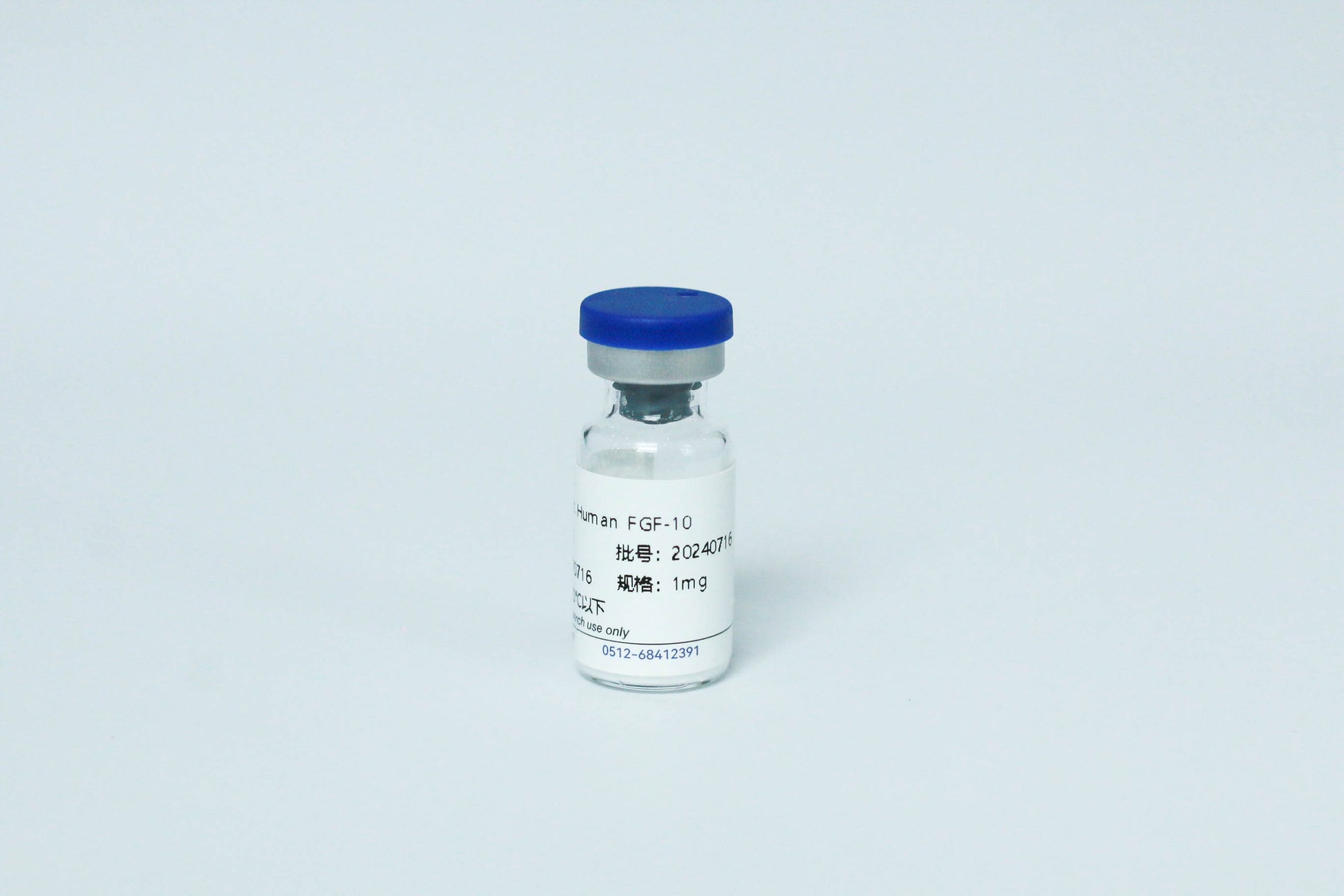
Producing recombinant human FGF-4 at research-grade or therapeutic-grade quality requires more than just expressing the protein. The choice of expression system matters significantly. E. coli systems offer cost efficiency and scalability, while mammalian expression systems can provide post-translational modifications closer to native forms. Both approaches have their place depending on the intended application.
Purification presents its own challenges. Multi-step chromatography methods remove host cell proteins, nucleic acids, and other contaminants that would otherwise interfere with downstream experiments. Quality control testing then verifies that each batch meets specifications. Bioactivity assays confirm functional performance. Endotoxin testing ensures safety for cell culture applications. Purity analysis through SDS-PAGE and mass spectrometry provides the documentation researchers need for reproducible work.
Jiangsu East-Mab Biomedical Technology Co., Ltd. has invested over $30 million in developing production capabilities for recombinant proteins, including FGF-4. This investment supports both research-grade and GMP-compliant manufacturing.
Why Recombinant FGF-4 Outperforms Native Sources
Recombinant human FGF-4 offers practical advantages that explain its dominance in research settings. Native FGF-4 extracted from biological tissues introduces variability that complicates experimental interpretation. Batch-to-batch differences in purity, activity, and contaminant profiles make it difficult to compare results across studies or even across experiments within the same project.
Recombinant production solves these problems through controlled manufacturing. Each batch follows the same process, yielding consistent product characteristics. Scalability becomes straightforward—increasing production doesn’t require finding more source tissue. Safety improves because the production environment eliminates risks from adventitious agents that might contaminate tissue-derived material.
| Feature | Native FGF-4 | Recombinant Human FGF-4 (East-Mab) |
|---|---|---|
| Source | Biological tissues/cells | E. coli expressed |
| Purity | Variable, often lower | ≥95% |
| Endotoxin Levels | Unpredictable | ≤10 EU/mg |
| Batch Consistency | Low | High |
| Scalability | Limited | High |
| Bioactivity (NIH3T3) | Variable | ED₅₀ 0.25-1 ng/mL |
| Molecular Weight | ~19.3 kDa (human) | 19.3 kDa |
Where Recombinant Human FGF-4 Makes a Difference
The applications for recombinant human FGF-4 span multiple fields, each leveraging the protein’s ability to influence cell proliferation and differentiation. Regenerative medicine researchers use it to support tissue engineering constructs and wound healing studies. The protein’s role in promoting angiogenesis makes it relevant for vascularization strategies in engineered tissues.
Cell therapy applications depend heavily on FGF-4 for maintaining and expanding cell populations. Stem cell researchers find it valuable for preserving pluripotency in induced pluripotent stem cells and embryonic stem cells. Organoid development protocols often include FGF-4 to guide differentiation along specific lineages. Mesenchymal stem cell work benefits from the protein’s effects on proliferation and lineage commitment.
Drug discovery programs incorporate FGF-4 into preclinical models studying neurogenesis and angiogenesis. The protein also appears in IVD diagnostic development and, increasingly, in cultivated meat production where cell growth and tissue formation require growth factor supplementation.
FGF-4 in Cell Culture and Regenerative Medicine Applications
Maintaining pluripotency in stem cell cultures requires careful attention to growth factor supplementation. FGF-4 serves as a key component in media formulations designed to keep induced pluripotent stem cells and embryonic stem cells in an undifferentiated state while supporting robust proliferation. The protein promotes fibroblast growth essential for generating sufficient cell numbers for downstream applications.
Regenerative medicine applications leverage FGF-4’s effects on specific cell types. Cartilage repair strategies benefit from the protein’s ability to stimulate chondrocyte activity. Bone regeneration approaches use FGF-4 to promote osteoblast function. Growth factor cocktails and serum-free media formulations frequently include FGF-4 to optimize cell viability and function across various tissue engineering applications.
Selecting a Supplier for Recombinant Human FGF-4
Supplier selection directly impacts experimental outcomes. The recombinant human FGF-4 you use becomes part of your data, so quality matters at every level. Procurement decisions should prioritize suppliers with documented quality assurance protocols and regulatory compliance appropriate to your application.
Technical support capabilities indicate whether a supplier understands the applications their products serve. Custom protein services matter if your project requires modified versions or specific formulations. Bulk supply capacity becomes relevant for larger-scale work or commercial development programs. Stability testing data helps you plan storage and handling. Lot-to-lot consistency documentation lets you evaluate whether a supplier can deliver reproducible material over time.
Always request a Certificate of Analysis for each batch. This document should detail purity specifications, biological activity measurements, and endotoxin testing results. Suppliers who provide comprehensive documentation demonstrate commitment to the transparency researchers need.
Quality Specifications That Matter
International quality standards provide a framework for evaluating recombinant human FGF-4 suppliers. ISO certification and cGMP guidelines indicate systematic approaches to quality management. Specific metrics tell you what to expect from the product itself.
Purity of ≥95% as verified by SDS-PAGE or HPLC ensures that the protein you’re adding to your experiments is actually FGF-4, not a mixture of the target protein and contaminants. Low endotoxin levels, typically ≤10 EU/mg, prevent cellular toxicity that would confound results in cell-based assays. Bioactivity confirmation through relevant assays like NIH3T3 cell proliferation verifies that the protein functions as expected.
| Quality Standard | Description | Importance |
|---|---|---|
| Purity | ≥95% (e.g., SDS-PAGE, HPLC) | Ensures specific protein activity, minimizes interference |
| Bioactivity | ED₅₀ 0.25-1 ng/mL (e.g., NIH3T3 cell proliferation) | Confirms functional efficacy and potency |
| Endotoxin Levels | ≤10 EU/mg | Prevents cellular toxicity and experimental variability |
| Batch Consistency | Minimal variation between production lots | Guarantees reproducibility of results |
| Sterility | Aseptic processing, absence of microbial contamination | Required for cell culture and clinical applications |
| Documentation (CoA) | Comprehensive Certificate of Analysis with test results | Provides transparency and traceability |
Frequently Asked Questions About Recombinant Human FGF-4
What cellular processes does recombinant human FGF-4 regulate?
Recombinant human FGF-4 stimulates cell proliferation, differentiation, and migration through receptor binding and downstream signaling pathway activation. These effects make it relevant for angiogenesis studies, embryonic development research, and tissue repair applications. The protein’s influence on multiple cellular processes explains its broad utility across biological research and regenerative medicine.
How does East-Mab verify purity and bioactivity for its recombinant human FGF-4?
East-Mab employs advanced expression systems followed by multi-step purification protocols. Quality control includes bioactivity assays using NIH3T3 cell proliferation, endotoxin testing, and purity analysis through SDS-PAGE and HPLC. GMP-compliant manufacturing processes support consistent performance across batches.
Does recombinant human FGF-4 work in serum-free media formulations?
Recombinant human FGF-4 functions effectively in serum-free and chemically defined media, where it supports cell growth, differentiation, and viability. Stem cell and organoid cultures particularly benefit from its inclusion. The defined nature of recombinant protein reduces variability compared to serum-containing formulations.
What storage conditions preserve recombinant human FGF-4 activity?
Lyophilized recombinant human FGF-4 maintains stability at -20°C or -80°C. After reconstitution, aliquot the protein and store at -20°C or -80°C. Avoid repeated freeze-thaw cycles, which degrade bioactivity over time. Proper handling preserves functional performance throughout the product’s useful life.
Partner with East-Mab for Your Recombinant Protein Needs
Access high-quality recombinant human FGF-4 from Jiangsu East-Mab Biomedical Technology Co., Ltd. for your research and product development projects. Our manufacturing platform delivers the purity, bioactivity, and batch consistency that demanding applications require. Contact our team at +86-400-998-0106 or [email protected] to discuss your specific requirements or explore our catalog of recombinant proteins for IVD, cell culture, and regenerative medicine applications.