
rhBMP-7 in Regenerative Medicine: Structure, Production, and Clinical Promise
Recombinant human Bone Morphogenetic Protein-7 sits at an interesting crossroads in regenerative medicine. After years of working with osteoinductive proteins, I’ve watched rhBMP-7 move from promising research candidate to clinical reality, though not without learning some hard lessons about what works and what doesn’t. The protein’s ability to trigger bone formation remains compelling, but getting it to perform consistently in real-world conditions requires understanding both its elegant molecular design and the messy realities of biological systems.
Molecular Architecture and Biological Function of rhBMP-7
rhBMP-7 belongs to the TGF-β superfamily, a group of proteins that seem deceptively simple until you start working with them. The active form exists as a dimer—two identical polypeptide chains held together by disulfide bonds. That dimeric structure isn’t just structural housekeeping; mess with it, and the protein loses activity entirely.
The protein binds to a receptor complex on cell surfaces, specifically targeting type I receptors (BMPR-IA and BMPR-IB) and type II receptors (BMPR-II, ActR-IIA, ActR-IIB). What happens next follows the canonical BMP pathway: the receptor complex phosphorylates Smad proteins, specifically Smad1, Smad5, and Smad8. These R-Smads partner with Smad4, forming a complex that migrates into the nucleus.
Once inside, this Smad complex acts as a transcription regulator, switching on genes that drive osteogenic differentiation. You see upregulation of alkaline phosphatase, osteocalcin, and Runx2—markers that signal cells are committing to becoming bone-forming osteoblasts. The pathway looks clean on paper, though in practice, cross-talk with other signaling systems can muddy the waters.
The osteoinductive capacity of rhBMP-7 makes it attractive for bone repair applications, but that same potency demands respect. Get the dosing or delivery wrong, and you might trigger bone formation where you don’t want it.
Advanced Expression and Purification of High-Purity rhBMP-7
Producing rhBMP-7 that actually works requires more than just expressing the gene sequence. The protein needs proper folding and post-translational modifications to achieve biological activity. That’s why mammalian expression systems, particularly Chinese Hamster Ovary (CHO) cells, remain the gold standard despite their complexity and cost.
Bacterial systems can’t handle the folding requirements. Yeast systems get closer but often fall short on glycosylation patterns. CHO cells, for all their finicky growth requirements, deliver proteins that closely match native human BMP-7.
Purification follows a multi-step chromatographic approach: affinity chromatography to capture the target protein, ion-exchange chromatography to remove charged contaminants, and size-exclusion chromatography for final polishing. Each step strips away host cell proteins, nucleic acids, and other impurities. The goal is >95% purity, though hitting that target consistently takes careful process control.
Quality control testing includes SDS-PAGE for purity assessment, HPLC for detailed compositional analysis, mass spectrometry for molecular weight confirmation, and bioactivity assays to verify the protein actually does what it’s supposed to do. Endotoxin testing is non-negotiable—even trace amounts can trigger inflammatory responses that confound results.
The entire process, from cell banking through final formulation, requires documentation and validation. For therapeutic applications, regulatory requirements add another layer of complexity.
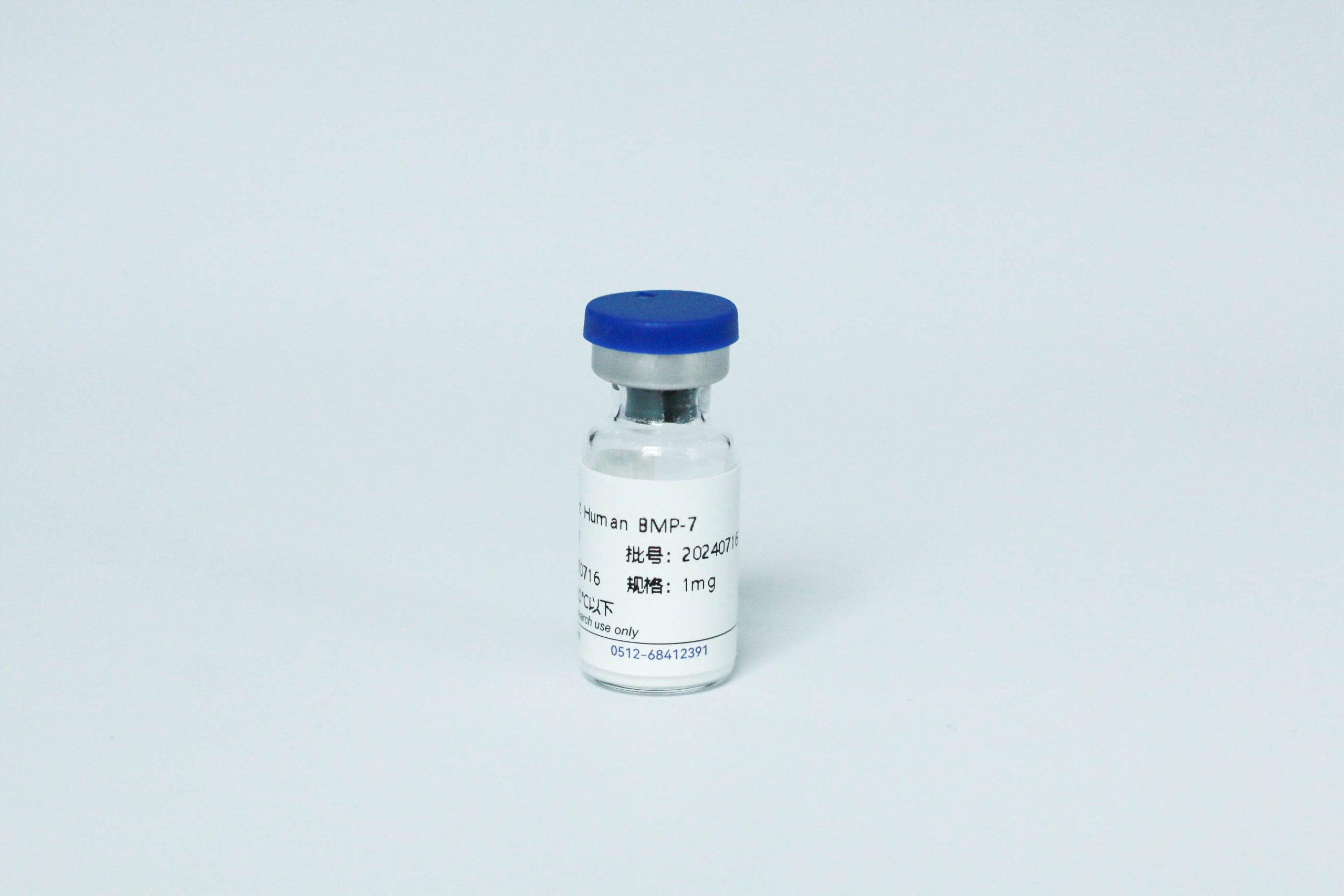
Therapeutic Applications of rhBMP-7 in Orthopedic and Regenerative Medicine
rhBMP-7 found its first major clinical application in non-union fractures—breaks that refuse to heal through normal processes. When a fracture site lacks the biological signals to trigger repair, rhBMP-7 can jump-start osteoblast differentiation and matrix formation. Clinical results have been mixed but generally positive, with success rates varying based on fracture location, patient factors, and delivery methods.
Spinal fusion represents another significant application. Traditional approaches rely on autograft bone, which means harvesting bone from the patient’s pelvis—a procedure that adds surgical time, pain, and potential complications. rhBMP-7 offers an alternative, either replacing autograft entirely or enhancing its effectiveness. Fusion rates in clinical trials have been comparable to autograft, though some studies show higher rates of complications when dosing isn’t carefully controlled.
The protein is also being explored for complex bone defects, dental applications, and craniofacial reconstruction. Each application presents unique challenges around delivery, dosing, and integration with existing tissue.
Comparison of Osteoinductive Factors
| Factor | Primary Mechanism | Key Advantages | Limitations |
|---|---|---|---|
| rhBMP-7 | Osteoinduction | Potent bone formation, FDA approved | Cost, potential for ectopic bone formation |
| Autograft | Osteoconduction, induction | Gold standard, no immune rejection | Donor site morbidity, limited supply |
| Allograft | Osteoconduction | Readily available | Disease transmission, immune response |
| Demineralized Bone Matrix (DBM) | Osteoinduction (variable) | Biocompatible, osteoconductive | Variable potency, less predictable |
Optimizing rhBMP-7 Activity for Enhanced Cell Culture and Organoid Development
In cell culture, rhBMP-7 drives mesenchymal stem cells toward osteoblastic differentiation. Concentration matters—too little and you get incomplete differentiation, too much and you can trigger off-target effects or even toxicity. Most protocols use concentrations between 50-300 ng/mL, though optimal dosing depends on cell type, culture conditions, and desired endpoints.
Timing also plays a role. Early exposure can commit cells to the osteogenic lineage, while later addition might enhance matrix mineralization in already-committed osteoblasts. Sequential dosing strategies sometimes outperform single-dose approaches.
For organoid development, rhBMP-7 helps create three-dimensional bone-like structures that better mimic native tissue architecture. These models are proving valuable for studying bone development, testing drug responses, and potentially even generating transplantable tissue constructs. Getting organoids to mature properly requires balancing rhBMP-7 with other signals—too much BMP signaling can overwhelm other pathways needed for proper tissue organization.
Combining rhBMP-7 with biomaterial scaffolds adds another dimension. The scaffold provides physical structure while the growth factor provides biological instruction. Scaffold composition, porosity, and degradation rate all influence how effectively rhBMP-7 promotes bone formation.
Future Directions and Innovations in rhBMP-7 Research
Delivery systems remain a major research focus. Bolus injection of rhBMP-7 leads to rapid clearance and potential systemic exposure. Sustained-release formulations using biodegradable polymers or hydrogels can maintain therapeutic concentrations at the target site while minimizing off-target effects. Some systems respond to local pH or enzymatic activity, releasing rhBMP-7 in response to the healing environment.
Personalized medicine approaches might identify which patients respond best to rhBMP-7 therapy. Genetic variations in BMP receptors or downstream signaling components could predict treatment outcomes, allowing more targeted use of this expensive therapeutic.
Combination strategies show promise. Pairing rhBMP-7 with other growth factors—VEGF for vascularization, PDGF for cell recruitment, or IGF for matrix synthesis—might achieve better results than any single factor alone. Cell-based therapies incorporating rhBMP-7-primed MSCs represent another avenue worth exploring.
Applications beyond orthopedics are emerging. Cartilage repair, wound healing, and even certain kidney conditions might benefit from rhBMP-7’s pleiotropic effects. Each new indication requires careful study to understand optimal dosing, delivery, and safety profiles.
Frequently Asked Questions
What are the key mechanisms of action for recombinant human BMP-7 in bone regeneration?
rhBMP-7 binds to serine/threonine kinase receptors on cell surfaces, triggering phosphorylation of Smad1, Smad5, and Smad8. These activated Smads complex with Smad4 and move into the nucleus, where they regulate genes involved in osteogenic differentiation and extracellular matrix production. The result is conversion of mesenchymal cells into bone-forming osteoblasts and subsequent new bone formation.
How does the purity and activity of rhBMP-7 impact its therapeutic efficacy?
High purity reduces immunogenic responses and ensures consistent biological effects. High activity means effective pathway activation at lower doses, reducing the risk of side effects. Low purity or activity leads to unpredictable outcomes, increased adverse events, and variability in research results. Quality-controlled expression and purification are non-negotiable for reliable therapeutic performance.
What are the current and emerging applications of rhBMP-7 in regenerative medicine?
Current applications center on spinal fusion, non-union fracture repair, and bone defect regeneration. Emerging uses include integration into advanced biomaterial scaffolds for complex tissue engineering, promotion of osteogenesis in organoid models, and incorporation into cell therapies for enhanced bone healing. The protein’s osteoinductive properties continue driving innovation across multiple research areas.
Partner with East-Mab Bio for Your rhBMP-7 Needs
Partner with Jiangsu East-Mab Biomedical Technology Co., Ltd. for your high-quality recombinant human BMP-7 needs. Our world-class platform ensures unparalleled purity and activity, supporting your advancements in IVD, cell therapy, and regenerative medicine. Contact us today at +86-400-998-0106 or [email protected] to discuss your project requirements.
