Recombinant Human Tissue Factor sits at the heart of coagulation research and diagnostic development. When you work with hemostasis assays or build diagnostic platforms around clotting pathways, the quality of your tissue factor reagent determines whether your results hold up across batches and laboratories. The recombinant form eliminates the variability that comes with plasma-derived sources, giving you a cleaner starting point for experiments where precision matters.
The Biological Function of Recombinant Human Tissue Factor
Tissue Factor, sometimes called Factor III or thromboplastin, is a transmembrane glycoprotein that kicks off the extrinsic coagulation pathway. When blood vessels sustain damage, TF becomes exposed to circulating blood. It binds Factor VII and converts it to its active form, Factor VIIa. The resulting TF-FVIIa complex then activates Factor X to Factor Xa and Factor IX to Factor IXa. This cascade ultimately generates thrombin and forms fibrin clots.
Recombinant human Tissue Factor reproduces this biological activity in a laboratory-manufactured protein. The engineering process aims to match the native protein’s function while providing a purified, standardized reagent. This standardization proves essential when you need reproducible results across sensitive biological assays. Without consistent reagent quality, hemostasis studies and diagnostic tool development become unreliable exercises.
Manufacturing Recombinant Human Tissue Factor That Performs Consistently
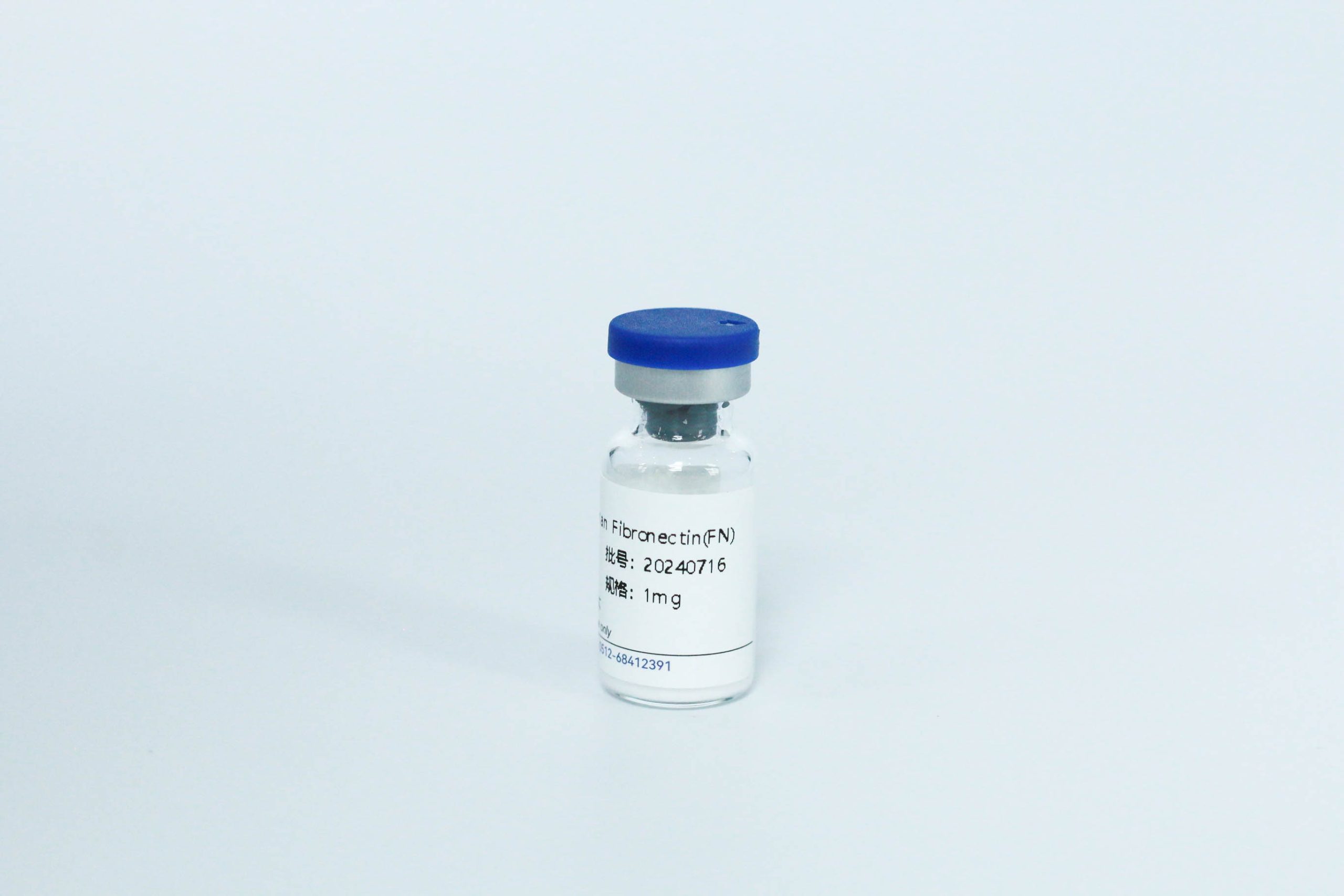
Producing rhTF that meets research and IVD standards requires careful control at each manufacturing step. Mammalian cell expression systems handle the protein production because they deliver proper folding and post-translational modifications. These modifications directly affect biological activity. Skip them or get them wrong, and the protein behaves differently than native tissue factor.
Purification relies on chromatography techniques that push purity levels above 95%. Quality control testing then verifies activity, purity, and endotoxin content. Products like Recombinant Human IL-2 demonstrate what these standards look like in practice, with purity exceeding 95% and endotoxin levels staying at or below 1 EU/mg.
Lot-to-lot consistency matters because diagnostic assays and cell culture experiments depend on predictable reagent behavior. A batch that performs differently from the last one introduces variables you cannot control, which undermines the entire point of using recombinant proteins in the first place.
Purity and Its Direct Effect on Experimental Outcomes
Impurities in recombinant human tissue factor create problems that show up in your data. Residual host cell proteins can trigger non-specific immune responses in cell culture systems. Leftover nucleic acids interfere with coagulation assay specificity. These contaminants introduce side reactions that obscure what you are actually trying to measure.
High-purity rhTF removes these variables from your experiments. When the reagent contains only what it should contain, your results reflect the biology you are studying rather than artifacts from manufacturing. This becomes especially important in sensitive applications where small perturbations produce measurable effects.
Where Recombinant Human Tissue Factor Gets Used
Diagnostic Applications
Recombinant human tissue factor serves as a core component in coagulation disorder testing. Prothrombin Time assays use rhTF to evaluate the extrinsic and common pathways. These tests help diagnose liver disease, identify vitamin K deficiency, and monitor patients on anticoagulant therapy.
Thrombin generation assays represent another major application. These tests assess a patient’s overall hemostatic potential by measuring how much thrombin their blood can produce. The consistency of rhTF directly affects the reliability of these measurements and the clinical decisions that follow from them.
D-dimer tests, used to diagnose thrombotic conditions like deep vein thrombosis and pulmonary embolism, also incorporate tissue factor. Standardized rhTF helps ensure that test results remain comparable across different laboratories and testing platforms.
Cell Culture Applications
Beyond diagnostics, rhTF has found a role as a cell culture supplement. Certain cell lines, particularly those involved in vascular biology or blood cell development, respond to tissue factor in ways that promote growth and differentiation.
Organoid models represent an emerging application area. These three-dimensional cell culture systems aim to recreate tissue microenvironments more faithfully than traditional flat cultures. Recombinant human tissue factor helps establish conditions that better reflect how tissues actually develop and function.
Meeting Regulatory Requirements and Choosing Suppliers
IVD and pharmaceutical applications for rhTF come with regulatory obligations. cGMP compliance affects whether products can move through development and reach markets. Suppliers need to demonstrate quality management systems that satisfy regulatory scrutiny.
Documentation requirements include Certificates of Analysis, stability data, and traceability records. These documents support regulatory submissions and provide the evidence needed during audits. Production scalability also matters because demand can increase substantially as products move from development into manufacturing.
East-Mab Bio has invested in platform capabilities that address these requirements. The infrastructure supports both quality compliance and the ability to scale production when projects grow beyond initial volumes.
Research Directions for Recombinant Human Tissue Factor
Several research areas are expanding the potential uses of rhTF. Investigators are examining tissue factor as a therapeutic target for conditions where coagulation plays a pathological role, including sepsis and certain cancers. Modulating TF activity could provide new treatment options for these difficult conditions.
Cell therapy applications represent another active area. Optimizing how cells differentiate during manufacturing could improve therapeutic products. Tissue engineering processes might benefit from controlled tissue factor exposure during development.
Personalized medicine approaches are also incorporating tissue factor measurements. Individual patients show different coagulation profiles, and tailoring anticoagulant therapy to these profiles could improve outcomes. Reliable rhTF reagents support the assays that make this personalization possible.
East-Mab Bio provides rhTF and custom protein services that support these research directions. For more details on available products, see 《Recombinant Protein Catalog》.
Working with East-Mab Bio
Jiangsu East-Mab Biomedical Technology Co., Ltd. manufactures recombinant protein raw materials for IVD, cell culture, and biopharmaceutical research. The platform delivers purity, activity, and lot-to-lot consistency for recombinant human tissue factor and related proteins. Contact the team at +86-400-998-0106 or [email protected] to discuss project requirements or explore the product catalog.
Frequently Asked Questions about Recombinant Human Tissue Factor
Which suppliers offer GMP-grade Recombinant Human Tissue Factor?
Jiangsu East-Mab Biomedical Technology Co., Ltd. produces rhTF under quality control standards appropriate for IVD and pharmaceutical applications. The company provides documentation that supports regulatory submissions and offers technical support throughout project development. GMP-grade material requires suppliers who maintain validated processes and comprehensive batch records, which East-Mab Bio delivers as part of standard operations.
Why choose recombinant tissue factor instead of plasma-derived material?
Plasma-derived tissue factor carries inherent variability because it comes from biological sources that differ between donors and collection batches. Recombinant production eliminates this variability and removes concerns about human-derived contaminants. The result is better lot-to-lot reproducibility and reduced risk of adventitious agents. For IVD assays and cell culture work where consistency determines success, recombinant human tissue factor provides a more controlled starting material.
How does East-Mab Bio maintain rhTF stability and activity?
The manufacturing process incorporates optimized expression and purification protocols designed to preserve protein function. Lyophilization techniques extend shelf life while maintaining activity. Stability testing under various storage conditions confirms that the product performs as expected over time. Each batch undergoes functional assays that verify biological activity before release. These measures ensure that the recombinant human tissue factor you receive behaves consistently in your applications.