When a shipment of carefully developed fragrance oils gets held at EU customs, the problem rarely starts with the regulation itself. It starts with an assumption that REACH compliance for fragrance products is someone else’s job. After spending over a decade formulating scents for clients across 68 countries, I’ve seen this assumption unravel too many times. Brands that treat compliance as a final check before shipping inevitably hit delays that could have been avoided at the sourcing stage. The difference between a smooth launch and a stalled container is not more legal knowledge. It is a supplier relationship built on transparent documentation from day one.
Understanding What REACH Means for Fragrance Buyers
REACH, the EU’s regulation on Registration, Evaluation, Authorisation and Restriction of Chemicals, applies to every chemical substance placed on the European market. For fragrance products this creates a unique challenge. A single fragrance oil can contain twenty, fifty, or even more individual aroma compounds, each of which must be assessed against the regulation. Cosmetics, air fresheners, scented candles, and reed diffusers all fall within scope. The regulatory burden scales with formulation complexity, and fragrance formulations are among the most complex in commercial chemistry.
Buyers who think of REACH as something their manufacturer handles are right in principle but wrong in practice. The responsibility rests with the EU-based importer or the manufacturer placing a product on the market. Chinese fragrance suppliers cannot “do REACH” on behalf of a client. They can, however, provide the full chemical disclosure, SDS, and substance inventory that the importer needs to meet obligations. If a supplier hesitates to share full compositional data, citing confidentiality, the buyer is already in dangerous territory. In programs we have supported, the clients who progressed fastest were those who asked for a REACH-ready substance list before they even requested a fragrance modification.
The Substances That Create Compliance Roadblocks
Not every chemical in a fragrance oil carries equal regulatory risk. The watch list centres on Substances of Very High Concern, or SVHCs, which ECHA publishes and updates twice a year. Carcinogens, mutagens, reproductive toxicants, and persistent bioaccumulative substances can all appear in fragrance components, sometimes as trace impurities in natural raw materials rather than intentional additions. Bergamot essential oil, for instance, may carry bergaptene at levels that require attention. Oakmoss extracts have faced multiple classification changes that disrupted entire fragrance portfolios. The risk is not that a supplier is careless; it is that the supply chain for natural ingredients is long and the testing data needed to prove absence is expensive to produce.
A practical step I always recommend is to ask for the CAS-number-level breakdown of any fragrance containing natural complex substances. If a supplier cannot provide CAS numbers and EC numbers for every deliberately added ingredient, and cannot confirm the presence or absence of SVHCs above 0.1% w/w in the final mixture, the fragrance is not yet ready for EU market entry. This is not a theoretical exercise. In our R&D process, we have reformulated client briefs multiple times because a specific citrus top note, beautiful as it was, relied on an ingredient with an uncertain regulatory future. The earlier that conversation happens, the kinder the budget impact.
If your current fragrance brief depends on natural extracts with variable composition, it is worth confirming the supplier’s latest batch analysis for SVHCs before locking the formulation. Send your brief and desired scent profile to [email protected] and we can check substance status against the current ECHA candidate list as part of the evaluation.
How to Verify REACH Compliance Before You Order
Genuine compliance shows up in documentation, not in a one-line statement on a quotation. A buyer should expect three core documents before signing a fragrance supply agreement for the EU market. The first is a full Safety Data Sheet compiled per CLP or equivalent, not a generic template. Every hazard classification needs to be substance-specific and cross-checked against the notified classification in ECHA’s C&L inventory. Second, a letter of compliance that lists the REACH-relevant status of each ingredient, including registration numbers where applicable and confirmation that no SVHC exceeds the threshold of 0.1% w/w in the fragrance as supplied. Third, analytical test reports for the batch or a representative sample, covering suspected substances.
I have seen suppliers offer an SDS that contains no REACH information beyond a general disclaimer. That is a red flag. An SDS for a fragrance product intended for the EU should contain Section 15, which references chemical safety assessment obligations, and Section 3, which must accurately list hazardous ingredients with their CAS numbers. If the SDS looks identical to those provided for non-EU markets, it has not been prepared with REACH in mind. In our own documentation suite, every fragrance oil we ship to EU clients carries a substance-specific SDS that identifies any ingredient requiring attention under Article 31 or Annex II, and our team prepares those documents during formulation, not after production.
 ## The Questions Every Fragrance Buyer Should Ask
Framing the right questions before ordering prevents expensive reformulation later. The first question is whether the supplier maintains a Substance Inventory that maps each ingredient to its EC number, CAS number, tonnage band, and registration status. If the answer is yes, ask to see the inventory for the specific fragrance under consideration. A supplier who is confident in their REACH readiness will share this data under a standard non-disclosure agreement. A supplier who deflects may be purchasing compounded bases from third parties and cannot supply full traceability.
The second question targets stability. Ask how the supplier monitors changes to the ECHA candidate list and how quickly affected formulations are flagged. In our lab, we run a six-month review cycle on all active fragrance formulas, cross-referencing the latest SVHC additions. When a substance is newly listed, we notify clients with existing products containing that substance within thirty days, and we suggest reformulation pathways. That speed of communication is what keeps a brand off the compliance hot seat.
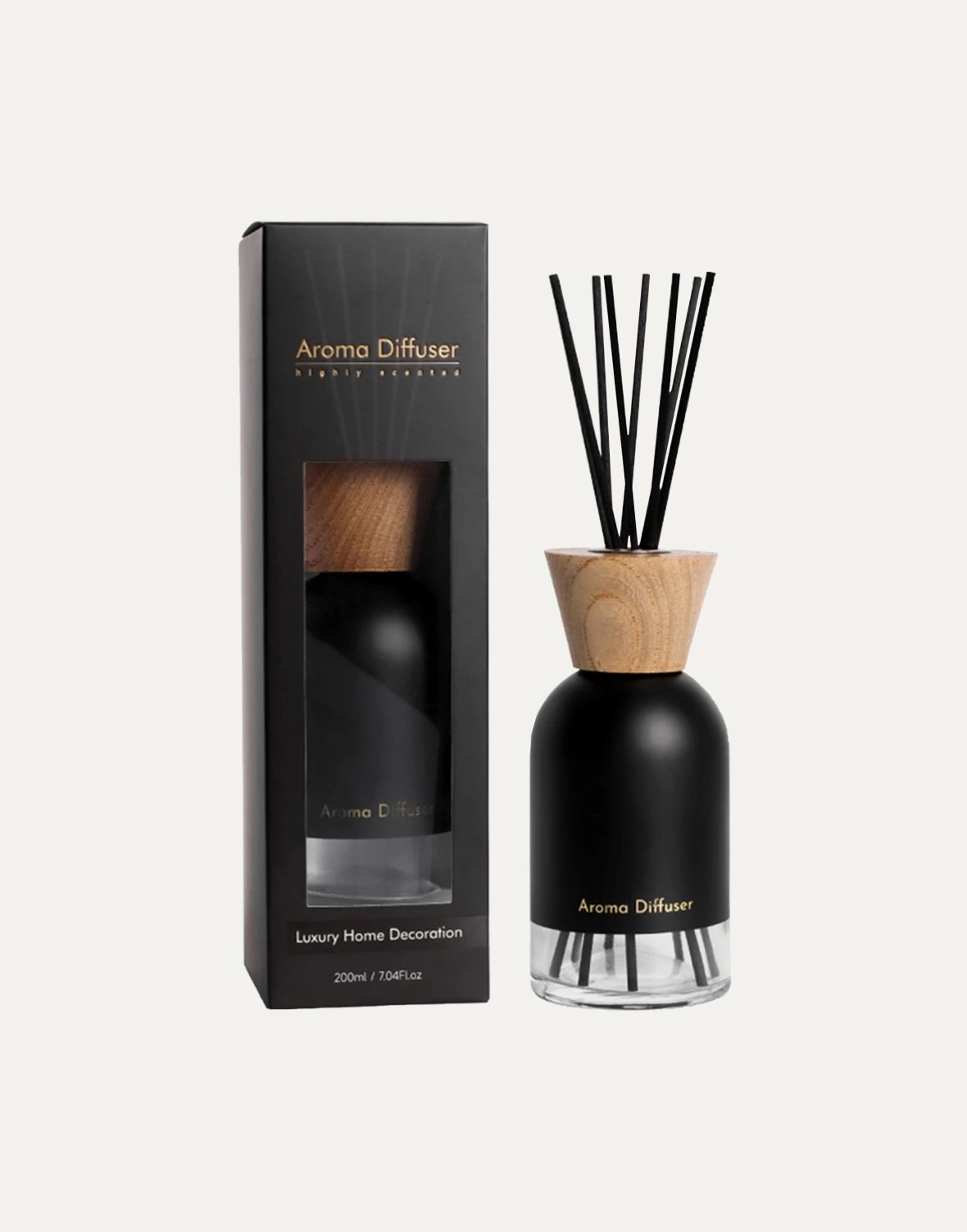
Third, if the fragrance product is a finished consumer article like a reed diffuser or scented candle, ask whether the supplier has calculated the article-level SVHC concentration, not just the oil concentration. Once a fragrance oil is diluted in a diffuser base, the threshold calculation changes. This nuance trips up importers because the obligation to report under Article 33 applies to the article as placed on the market. A supplier that can walk a buyer through these calculations is adding value far beyond filling an order.
Preparing Your Fragrance Portfolio for a Changing Regulatory Landscape
REACH is a living regulation, and the smartest buyers build adaptive sourcing strategies. The candidate list grows every year, and substances that were unregulated last season can become restricted within an eighteen-month window. A fragrance portfolio that relies on a single supplier with no visibility into raw material sourcing carries hidden risk. I always advise clients to maintain a designated REACH contact at the supplier organisation, someone who has access to the formulation records and can respond to a regulatory inquiry within seventy two hours. That simple relationship cuts the panic out of any future compliance deadline.
Another overlooked strategy is to request the IFRA certificate alongside the REACH documentation. While IFRA standards are voluntary and not legally binding, they often anticipate future regulatory direction because IFRA prohibitions are based on risk assessments that closely track EU methodology. We see clients who request IFRA-compliant fragrances independently of REACH, but the two overlap enough that the IFRA certificate can serve as an early-warning system for likely future REACH restrictions.

The brands that navigate Europe without disruption are not the ones with the biggest legal teams. They are the ones whose fragrance supplier views regulatory compliance as part of the product development workflow, not as a separate department. At Scent-Share, that means formulation chemists review safety data in real time during compound development, not after the scent is finalised. That integration is what I would look for in any fragrance partner if I were placing orders for multiple EU markets.
Taking the Guesswork Out of Fragrance Compliance
The real cost of REACH compliance is not the documentation. It is the reformulation work and the lost time when a fragrance that passed the creative brief fails the regulatory check. That friction can be almost entirely removed by choosing a supplier who treats compliance as a design parameter rather than an export hurdle. If you are evaluating fragrance oils for the European market, share your target criteria, volume projections, and regulatory market list with our team. We will confirm which of our 300 plus scent types already hold EU-ready documentation and where reformulation might be needed, before you commit to a single large batch. Reach Li Wei and the Scent-Share team at [email protected] or call +86 185 6557 5758.
Common Questions About REACH and Fragrance Compliance
Do fragrance oils need to be registered under REACH?
Most fragrance oils are mixtures, and REACH registration applies to individual chemical substances manufactured or imported in quantities above one tonne per year. The fragrance oil as a mixture is not registered. Instead, each substance within the oil must be registered by its manufacturer or importer if it exceeds the tonnage threshold. For buyers, the key is ensuring the supplier can confirm that every ingredient at or above one tonne per year is covered by a valid registration, and that SVHCs are disclosed even below that threshold.
What is the difference between IFRA and REACH?
IFRA standards are industry voluntary guidelines for safe fragrance use, driven by toxicological risk assessments. REACH is binding EU legislation that governs chemical safety across the entire supply chain. IFRA prohibits or restricts substances based on skin sensitisation and systemic toxicity; REACH addresses a broader set of hazards including environmental persistence. Many IFRA restrictions align with REACH’s direction, but only REACH carries legal penalties for non-compliance, including market withdrawal and fines.
Who is responsible if a fragrance product fails REACH checks at customs?
The EU importer or the authorised representative of a non-EU manufacturer bears the primary legal responsibility. Even if the Chinese supplier provided incorrect or incomplete data, customs enforcement will pursue the entity placing the product on the EU market. This is why buyers must independently verify supplier documentation and maintain their own compliance records, rather than relying solely on supplier assurances.
Can natural essential oils be REACH compliant?
Natural essential oils are classified as substances of unknown or variable composition, complex reaction products, or biological materials, known as UVCB substances, and they present specific challenges under REACH. They must still comply with article requirements regarding SVHCs and may require registration if placed on the market as such in quantities above one tonne per year. The presence of naturally occurring components that fall under SVHC classifications, such as safrole in sassafras oil or methyleugenol in certain botanicals, means additional analytical testing is non-negotiable. If your fragrance concept depends heavily on natural extracts, share the proposed profile with your supplier early to get a realistic compliance assessment before investing in sampling and sensory evaluation.
If you’re interested, check out these related articles: