Most brands have mastered the visual and auditory parts of their customer experience, but few have fully tapped into the most primitive and emotionally charged sense: smell. Multi-sensory marketing is not about decorating a space with pleasant fragrances; it is about engineering a consistent brand memory that customers carry with them. In my ten years of developing commercial scent solutions for clients in 68 countries, I have seen fragrance turn a forgettable lobby into a signature arrival experience, and a retail store into a destination that customers recall long after they leave. This article explains how you can add scent to your multi-sensory marketing toolkit, the technology that makes it possible, and what to expect when you move beyond the visual and auditory into the olfactory.
What Multi-Sensory Marketing Means for Your Brand
Multi-sensory marketing is the deliberate coordination of sight, sound, touch, taste, and smell to reinforce a single brand identity. Most brands already do this unconsciously: the texture of a product’s packaging, the music in a store, the weight of a shopping bag. The opportunity for brands using scent lies in the fact that odor is the sense most directly wired to the brain’s emotional and memory centers.
When you walk into a space that has a carefully chosen fragrance, you do not decode the scent intellectually; you feel it. That feeling becomes attached to the brand. A bank that smells of cedar and black tea communicates stability and warmth without ever saying a word. A fashion boutique that diffuses a light citrus-floral blend signals freshness and modernity. The brands that understand this dimension are building a competitive advantage that goes beyond what the eye can see.
Why Most Marketing Ignores the Most Powerful Sense
Visual marketing dominates because it is measurable and familiar. Ad creatives, social media feeds, and website design all live within a comfortable, trackable ecosystem. Scent, by contrast, seems intangible. Many marketers assume it requires a large infrastructure investment or that it only works for luxury hotels. In my experience supplying solutions to retail chains, offices, and medical facilities, the barrier is rarely technical; it is simply that scent is not yet part of the standard marketing workflow.
The physical basis for scent’s power is well understood. The olfactory bulb is part of the limbic system, the brain region that governs emotion and memory. A 2004 study by Rachel Herz demonstrated that scent-triggered memories are more emotionally intense than memories triggered by other senses. In a commercial environment, this translates directly into deeper customer loyalty and longer dwell times. The brands that move early into scent marketing are not just adding a layer; they are owning a sensory channel that their competitors have left vacant.
How Fragrance Triggers Emotion and Memory in Commercial Spaces
When a customer enters a scented environment, the immediate experience is emotional before it is cognitive. A scent that evokes clean linen, for example, can make a hotel lobby feel cared for and fresh, even if the design is understated. This is not a subjective claim. It follows from the brain’s anatomy: the orbitofrontal cortex integrates smell with other sensory inputs to form a unified perception of a place.
In practice, this means the fragrance must match the brand’s message. A fitness center might use an invigorating eucalyptus-mint profile to reinforce energy, while a real estate showroom might prefer a soft amber-wood scent to convey luxury and permanence. At Scent-Share, we work with 300+ scent types precisely because no single fragrance works across all brands. The key is aligning the scent character with the specific emotional outcome the brand wants to achieve, then maintaining that consistency across every location.
The Technology Behind Commercial Scenting
Modern scent delivery systems range from compact desktop units to large-scale HVAC-integrated diffusers. Choosing the right one depends on space volume, traffic flow, and the desired uniformity of the scent experience. A small office under 300 square feet can use a sleek, waterless device like the Desktop Scent Diffuser with Bluetooth control, while a hotel lobby of 10,000 square feet often requires a high-capacity system such as the Wall Mount Aroma Diffuser HVAC System, which connects directly to the building’s air circulation.
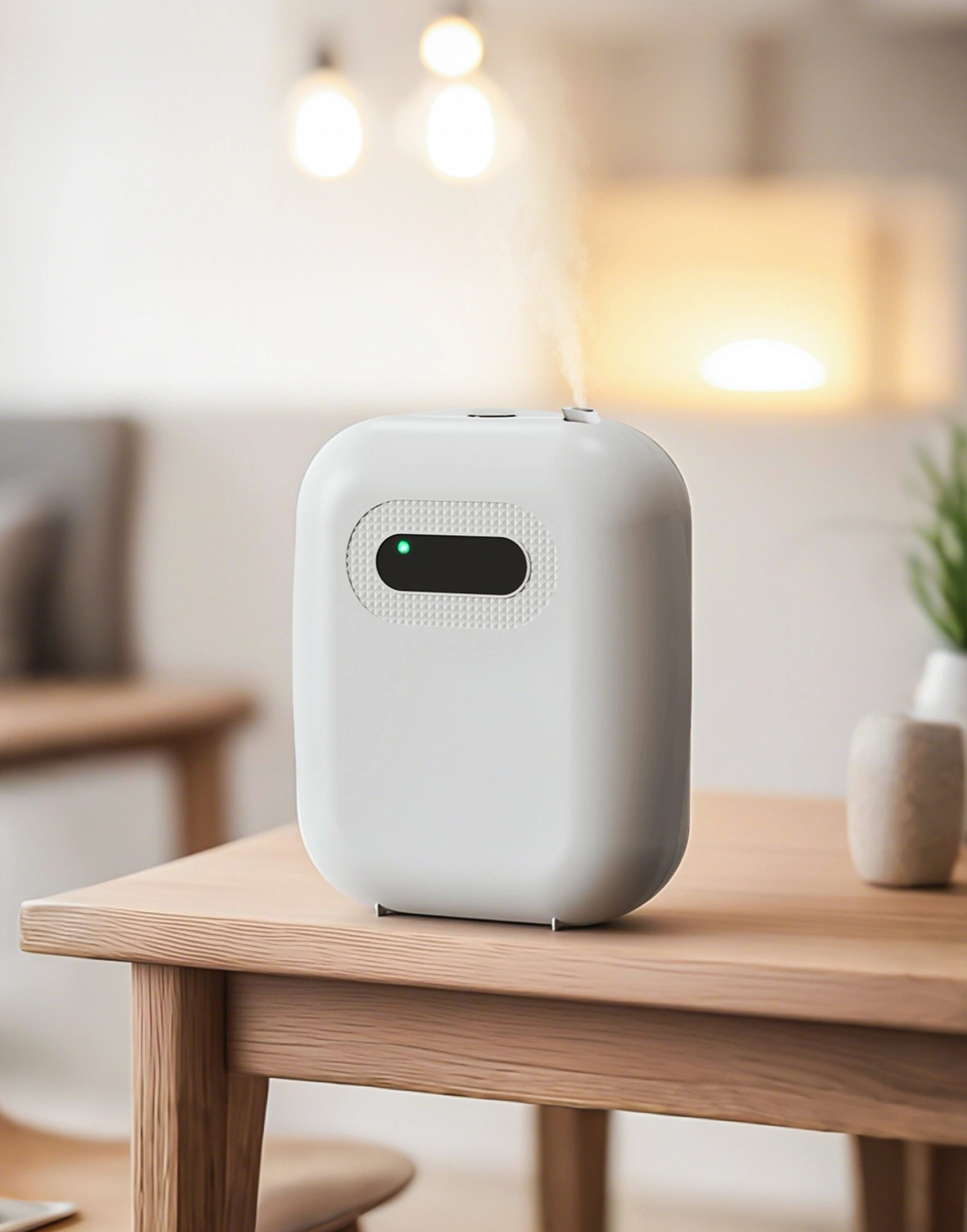
Beyond simple coverage, consistency matters. A diffuser that outputs too much fragrance in one zone and too little in another undermines the entire investment. That is why commercial-grade equipment includes programmable run schedules, adjustable intensity, and built-in sensors to adapt to real-time conditions. For new adopters, I recommend starting with a single, well-placed unit in the highest-impact area, then expanding based on observed customer behavior changes. Trying to cover an entire building on day one often leads to uneven results and wasted oil.
What a Scent Marketing Program Actually Costs and Returns
One of the most frequent questions I receive is about cost. A commercial scenting program is not a single line item; it includes the hardware, the fragrance oil refills, and ongoing maintenance. Entry-level programs for a single boutique might start at a few hundred dollars in equipment with monthly oil refills of around $50 to $100, depending on the chosen fragrance concentration and diffusion schedule. For large-scale deployments, the investment scales with the number of zones and the complexity of the HVAC integration.
Return on investment is measured not only in sales but also in customer dwell time, repeat visits, and brand recall in surveys. In our client experience, businesses that add scent often report a measurable increase in the time customers spend in the space, which correlates with higher average transaction values. A clothing retailer that diffuses a signature sandalwood-bergamot blend might not see a direct “scent sales figure,” but they will notice customers lingering longer in fitting rooms and returning more frequently. That behavioral shift translates into revenue over time.
If your operation spans multiple locations, it is worth comparing the cost of a centralized scent program against the expected lift in per-location performance. We have seen chains achieve 15–20% longer in-store dwell times after implementation, though every brand’s results differ based on the existing customer base and the strength of the scent integration. Before committing, request a fragrance sample kit and a coverage assessment for your specific floor plan to understand the real numbers.
 ## Getting Scent Marketing Right in a Real Business Environment
The most common mistake I observe is treating scent as an afterthought. A brand chooses a fragrance because a marketing manager likes it personally, without testing it against the brand identity or the target demographic. The second mistake is poor maintenance. A diffuser that runs empty or a fragrance that degrades in quality projects the opposite message of care.
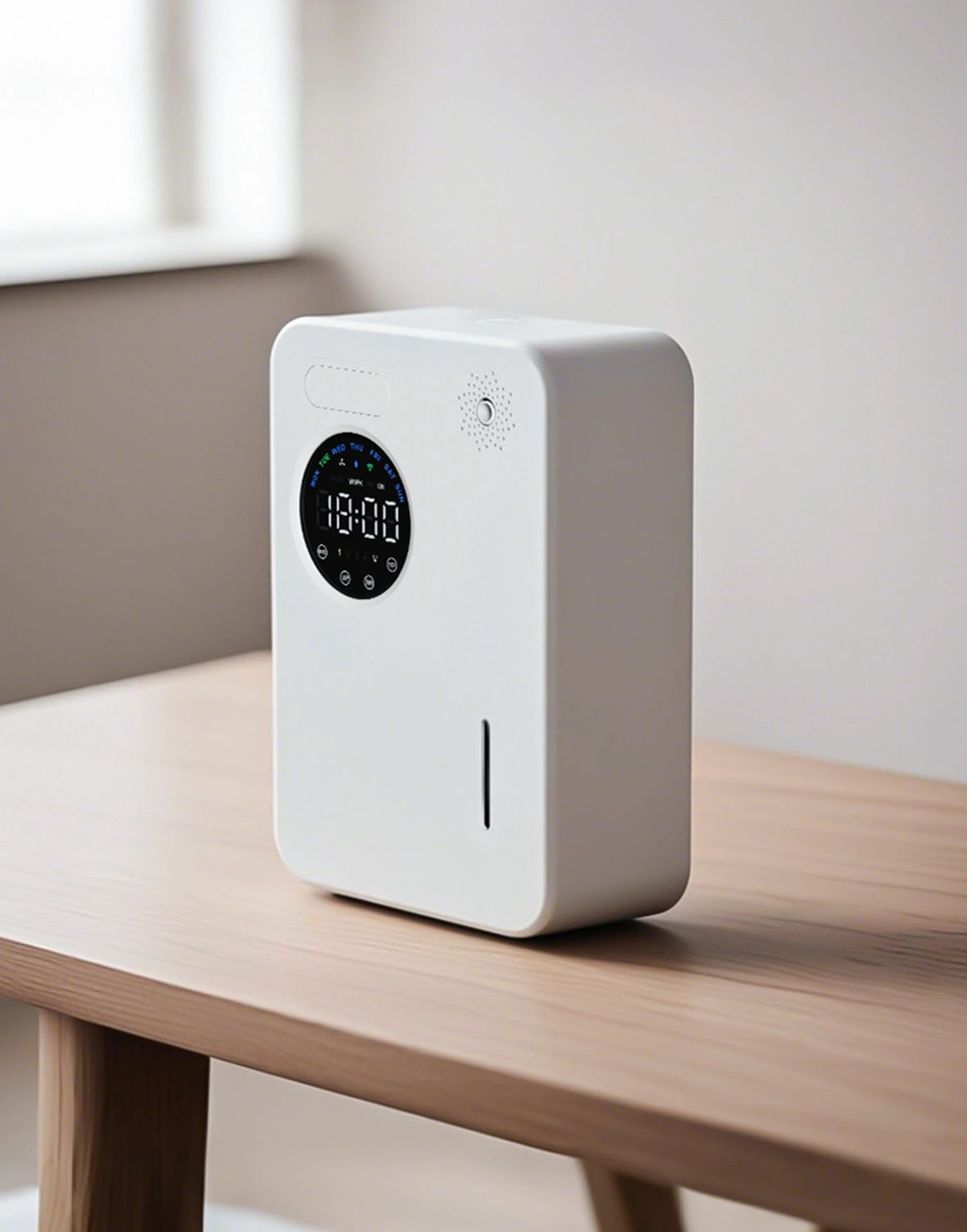
The right approach treats scent as a core brand asset with clear ownership. Assign someone on your team to manage the fragrance schedule, check oil levels, and gather informal feedback from customers and staff. For multi-location brands, centralized control from a Bluetooth-enabled system like Scent-Share’s commercial diffuser line gives you visibility into the status of every unit without requiring on-site visits. The technology exists to make scent reliable and consistent. The larger challenge is organizational commitment to sustain it over time.
Common Questions About Adding Scent to Your Multi-Sensory Mix
Does scent marketing work for businesses that are not luxury hotels?
Scent marketing works wherever the customer experience benefits from a well-defined emotional atmosphere. Dental clinics use light, clean fragrances to reduce patient anxiety. Grocery stores diffuse fresh-baked bread scents in the bakery section to prompt impulse purchases. Office buildings scent common areas to improve tenant satisfaction. The application is limited only by the brand’s imagination, not by industry segment. The key is to select a fragrance that aligns with the functional purpose of the space, not to try to mimic a five-star hotel in a medical office. In the programs we have supported, clients who test a few scent profiles in a single location before scaling consistently report better outcomes than those who jump to a full deployment.
How do I choose between an HVAC system and a standalone diffuser?
The decision hinges on space size and architectural layout. Standalone units like a desktop or wall-mounted diffuser cover up to about 1,000 square feet per device and require no construction. They are ideal for boutique retail, small offices, or specific zones within a larger space. HVAC-integrated systems, such as the Scent-Share Commercial HVAC Scent Diffuser, distribute fragrance through existing ductwork and can cover over 30,000 square feet from a single unit. They suit hotels, shopping malls, and office towers. If your facility has discrete zones that should have different scents, or if the ductwork is old, standalone units often give more control. I always recommend a site assessment that maps the airflow before choosing, because even the best HVAC system will perform poorly if the air distribution is uneven.
What if customers complain about the scent?
Customer feedback on scent typically falls into two categories: the fragrance is too strong, or it does not match the expectation of the space. Both are adjustable. Modern diffusers allow you to dial down intensity remotely, and swapping a fragrance oil takes only a few minutes. It is worth proactively surveying a small sample of loyal customers before a public launch. One of the most effective tactics I have observed is to introduce the scent gradually over a few weeks, starting at a barely perceptible level and increasing to the target intensity. That acclimation period prevents the shock of a sudden new element and turns skeptics into advocates. If your business serves a diverse demographic, we can help you select a universally agreeable scent category and provide sample kits for testing. Send your project brief and floor plan to [email protected], and we will confirm the compatible diffuser options and a suggested scent shortlist.
If you’re interested, check out these related articles: