When to choose an HVAC scent system vs standalone diffuser is a question that carries real cost and performance consequences. In commercial scenting projects, I have repeatedly seen buyers focus on the fragrance first and the delivery system second, only to find that coverage gaps or constant maintenance erode the experience within weeks. The issue is not which technology is better in general. It is which system holds consistent scent intensity in your specific space without creating new operational work. For large open areas and buildings with multiple zones, HVAC integration usually wins. For flexible, tenant driven, or smaller spaces, standalone diffusers are the more practical choice.
How Do HVAC Scent Systems Deliver Fragrance Through Existing Ductwork?
An HVAC scent system works by turning fragrance oil into a fine mist and injecting it into the supply airflow after the air handler. The scent rides the same ducts that carry heated or cooled air, so a single atomizer can reach every connected room without additional visible equipment. Coverage scales with the air handler rather than with the fragrance unit. Our commercial HVAC units run from about 3,000 cubic meters with a wall mount or rectangular system up to 15,000 cubic meters with a dual-system unit that runs two independent pumps and atomizers.
In large hotel or office projects, this is the main reason buyers choose HVAC delivery. Hallways, lobbies, and meeting rooms receive the same scent character without staff needing to refill multiple devices. However, intensity follows the fan schedule. I have seen a hotel lobby lose its scent presence in early morning because the air handler dropped to low speed before our team tied the atomizer cycle to fan run status. If your building uses variable air volume, scent delivery must be coordinated with fan behavior, not left on a fixed timer.
How Do Standalone Diffusers Handle Room by Room Placement?
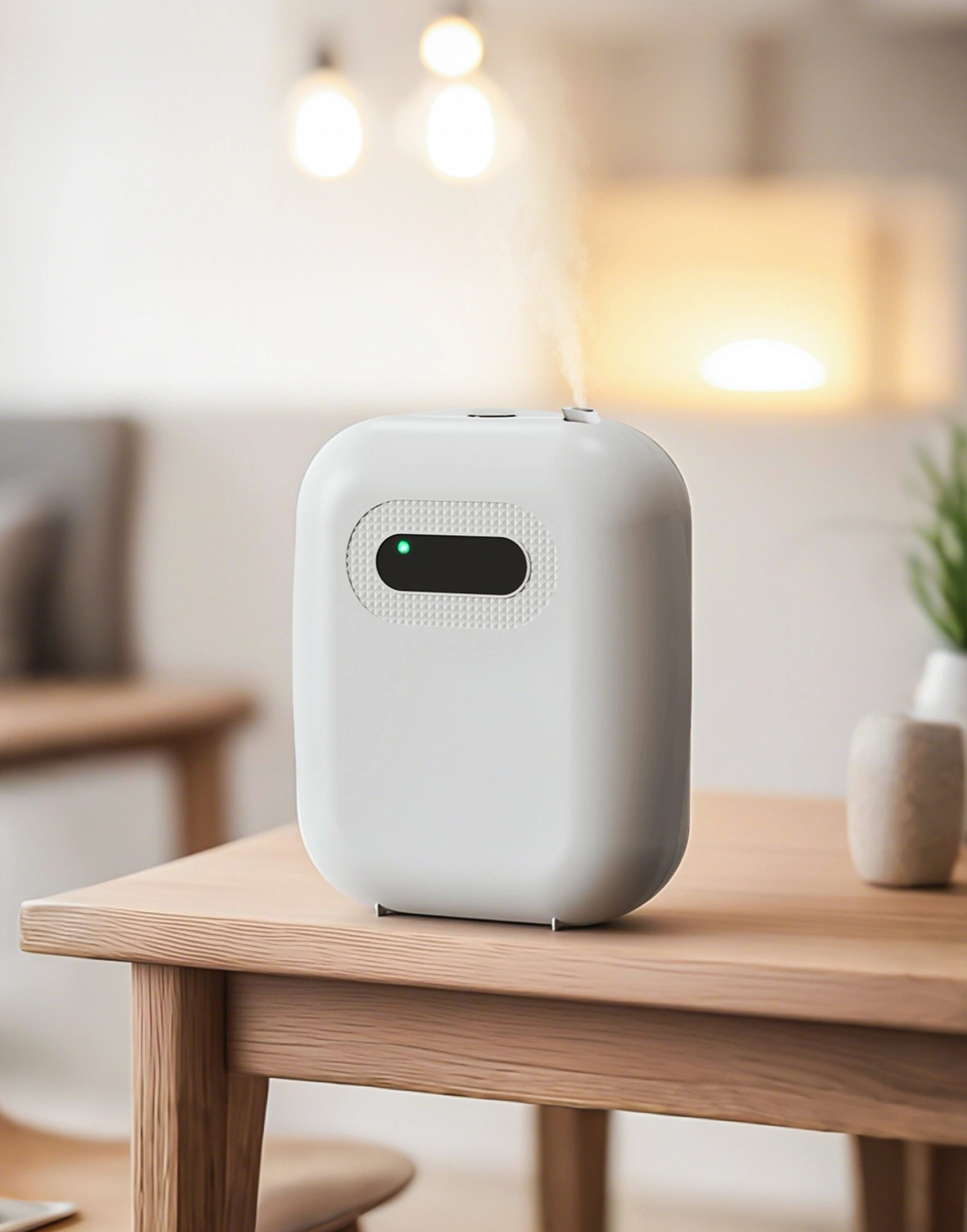
A standalone diffuser pushes fragrance directly into the room with its own fan or pump. The unit sits or mounts in the space, so every room with a diffuser gets direct, immediate scent. Coverage typically runs from about 300 cubic meters on a compact commercial unit to 3,000 cubic meters on a hotel tower unit. That makes standalone devices easier to place exactly where the impact matters most: reception desks, changing rooms, retail zones, or event spaces without duct access.
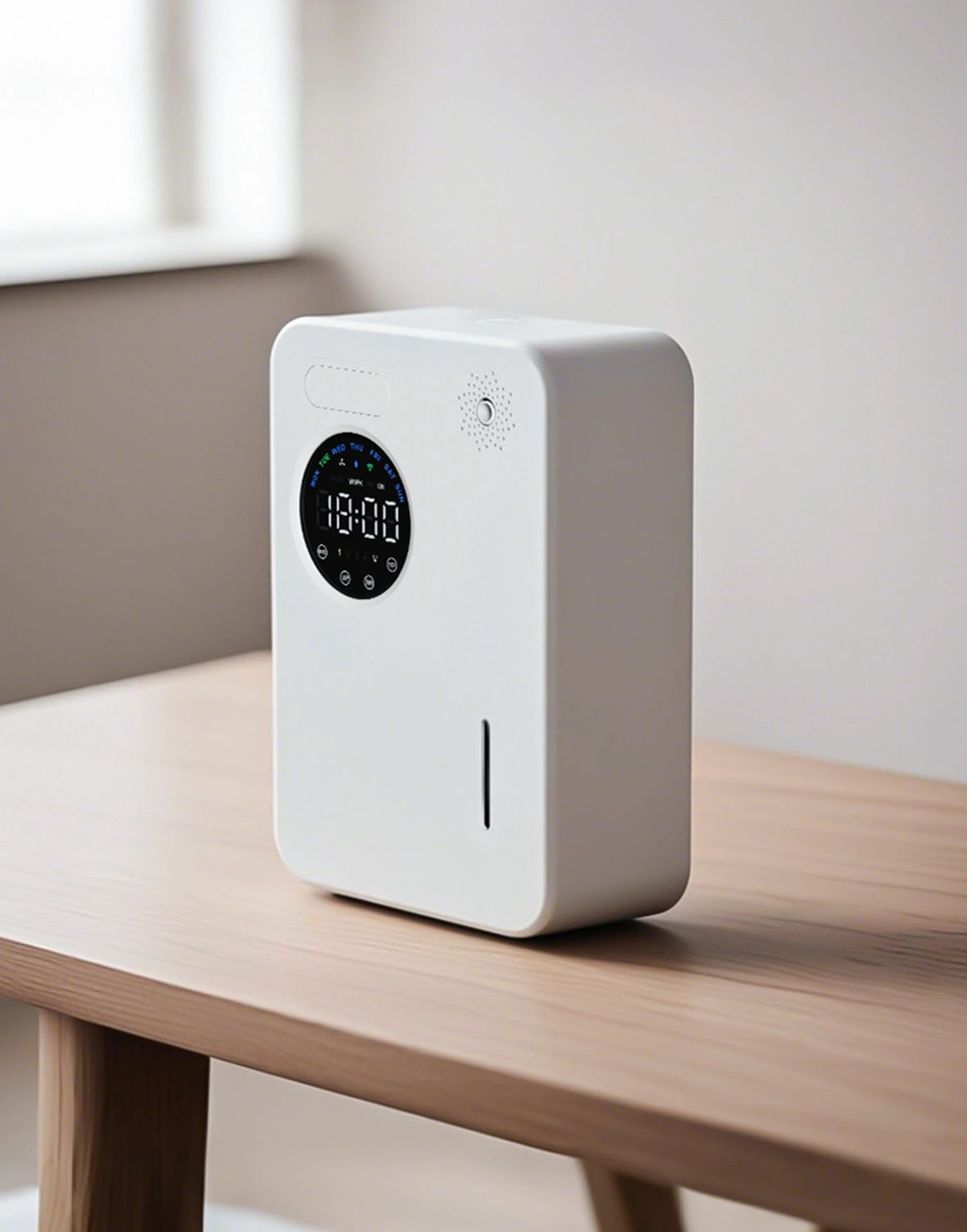 Retrofit projects get the most from this approach. There is no need to open ductwork or coordinate with building maintenance schedules. Boutique stores, gyms, and co-working spaces often start with two or three units and add more as zones prove their value. The tradeoff is coverage. Each unit affects its immediate area, and open sightlines with low partitions can let scent drift unpredictably. In spaces larger than 1,000 square meters, multiple standalone devices are usually required to avoid strong spots near the unit and weak spots at the edges.
Which Coverage and Control Factors Decide Between the Two Systems?
We usually compare the two systems across four variables: coverage, control, consistency, and installation.
| Factor | HVAC Scent System | Standalone Diffuser |
|---|---|---|
| Typical coverage | 3,000 to 15,000 cubic meters per unit | 300 to 3,000 cubic meters per unit |
| Installation | Connects to ductwork and power; often requires HVAC coordination | Wall, ceiling, or freestanding placement with a standard power connection |
| Scent control | Whole-zone delivery follows the air handler schedule | Room by room control through app, timer, or sensor |
| Refill frequency | 1L to 5L bottles; less frequent but higher total oil use | 150 mL to 500 mL bottles; more frequent refills |
| Best spaces | Hotels, offices, malls, large open areas | Boutiques, gyms, clinics, private offices, event spaces |
What works better for a hotel lobby with high ceilings?
High ceilings push standalone diffusion hard. Fragrance must fill a much larger air volume before it reaches nose level, so a single tower unit may underdeliver in a double-height lobby. HVAC delivery has an advantage here because the conditioned air already circulates through the entire volume. If the lobby connects to the main air handler, the scent follows the airflow pattern and stays more even. For open atriums above 3,000 cubic meters, we typically recommend an HVAC unit or a dual-system configuration.
When does a dual-system HVAC scent diffuser make sense?
A dual-system unit runs two pumps and two atomizers from one controller. That matters when a building has two distinct zones, such as a lobby and a conference floor, or when you want different intensity schedules in different air handler runs. It also gives you a fallback during maintenance because one system can operate while the other is serviced. We recommend it for properties above roughly 5,000 cubic meters that need separate zone profiles.
If your building mixes open lobbies with private offices, atomizer placement and zone count decide whether the scent stays even. A layout with multiple air handlers can also shift intensity in ways a floor plan alone does not show. Send your floor plan and HVAC zone count to [email protected] and we will confirm the configuration before you finalize the BOM.
What Should Buyers Expect for Installation, Maintenance, and Fragrance Cost?
Installation is the first real cost difference. An HVAC scent system taps into the duct, which usually means an HVAC technician or facility manager must be involved. The unit can be tied to air handler power or a nearby DC supply. Standalone diffusers are simpler to deploy; most mount in under an hour and connect to a standard outlet. For importers and distributors, this affects the after-sales burden. HVAC systems create fewer repeat units to stock but more technical support at setup. Standalone systems are easier to sell in volume but may require more refill management across multiple devices.
Fragrance consumption follows air volume and run time more than unit price. A large HVAC system can consume more oil per month than several standalone units combined, but it covers far more square meters. We calculate consumption from space volume, target intensity, and daily operating hours. If you send those three numbers, we can compare monthly oil cost for an HVAC plan against a standalone floor plan before you commit to inventory.
Which Scent System Configuration Fits Your Building Best?
The decision usually stalls when buyers try to choose between visible devices and duct integration without first checking airflow. A building with a single large air handler and consistent operating hours will behave very differently from a tenant property where every room has different occupancy. The only way to make the right call is to test the configuration against your actual space.
When you reach the quoting stage, share your floor plan, ceiling height, air handler layout, and daily operating hours. Our team will return a coverage plan with a recommended system, atomizer or unit count, and estimated fragrance consumption. Send the details to [email protected] or call +86 185 6557 5758. We work with buyers across 68 countries, so we can quote in your time zone and shipping terms.
What Else Should Buyers Know Before Choosing a Scent Delivery System?
Can I mix HVAC and standalone diffusers in one building?
Yes, and in many buildings this mixed approach is the most practical. HVAC delivers the main scent character through large common areas, while standalone units handle rooms that are not connected to the duct, such as private offices, restrooms, or temporary event spaces. The key is keeping the fragrance formula consistent across both systems so the experience does not shift between zones. We usually define one core scent for the building and use the same oil formulation in both delivery types. The standalone unit then acts as a local boost rather than a competing scent.
Does an HVAC scent system still work when the heating or cooling is off?
A common assumption is that the fragrance stops when the HVAC system is idle. In practice, it depends on how the building controls airflow. Many commercial air handlers run the fan continuously or in circulation mode even when heating and cooling are off. If the fan runs, an HVAC scent system can still deliver fragrance. If the fan stops completely, scent delivery stops with it unless the unit has its own fan-assisted bypass. Before you install, check whether your air handler has a continuous circulation setting or whether the fan shuts down overnight and on weekends.
How often will I need to refill the fragrance?
Refill frequency depends on the system’s bottle size, the space volume, and the intensity setting. A standalone unit with a 150 mL bottle may need attention every few weeks in a busy retail space. A commercial HVAC unit with a 1L or 2.5L bottle can run for a month or more in a similar application because it holds more oil and meters it through the air handler. The better question is which schedule fits your operations. If your staff cannot easily access ceiling or duct areas, a larger HVAC bottle reduces service visits. If you need frequent scent changes by season, smaller standalone bottles make rotation simpler.
Which system is easier to scale across multiple locations?
In multi-location rollouts, our team has found standalone diffusers easier to standardize at first. The same unit can be placed in different room shapes without requiring building-specific duct drawings. As locations grow, HVAC systems become more efficient for large flagship stores or hotels where one unit covers the entire air handler zone. The decision often comes down to who will service the property. If local staff handle refills, standalone units in accessible locations keep service simple. If a facilities partner manages the building, HVAC integration reduces the number of devices to monitor. Share your building area, ceiling height, and operating hours and we will confirm which configuration scales best for your next location.
If you’re interested, check out these related articles: