
Ten years in fragrance R&D have shown me a pattern that repeats more often than it should: an importer receives a container of aroma diffusers from a Chinese factory, unboxes the first unit, and finds the atomizer chokes within three days of continuous operation. By then, the balance payment has cleared and the freight charges are sunk. The diffusers look right — the aluminum housing is clean, the packaging is retail-ready — but the pump’s duty cycle was never rated for commercial use, and now you own inventory that cannot be deployed. Most importing guides stop at Incoterms and shipping schedules, skipping the part that matters most to anyone responsible for a scenting program: how to confirm, before committing to a production run, that the hardware will perform as promised over months of daily use.
What to Establish Before Contacting a Diffuser Manufacturer
I have worked with clients across 68 countries, and the ones who get reliable hardware consistently do one thing differently: they define their performance requirements before they request a quotation. Sending a generic inquiry like “we need commercial diffusers, please quote” invites the factory to propose whatever model they are trying to clear from inventory. A better approach is to specify three parameters upfront.
First, state your coverage requirement by cubic meter volume, not square footage. A hotel lobby with an eight-meter ceiling and a retail boutique with a three-meter suspended ceiling need different atomization output even if their floor areas are identical. HVAC-integrated systems like our dual-system units can handle 5,000 to 15,000 cubic meters, while standalone tower diffusers top out around 3,000 cubic meters. If you provide the ceiling height and any air exchange data from the building’s HVAC plan, a competent manufacturer should be able to confirm whether a single unit suffices or whether a multi-point layout is needed.
Second, define your operational cycle. A diffuser in a 24-hour hotel lobby runs continuously; one in an office may only need to operate during business hours. Pump life ratings are typically specified in continuous runtime hours, and a unit rated for 5,000 hours of continuous operation will fail much sooner in a 24/7 environment than the datasheet’s “three-year life” marketing claim suggests. I have seen this gap catch importers off guard more times than I can count.
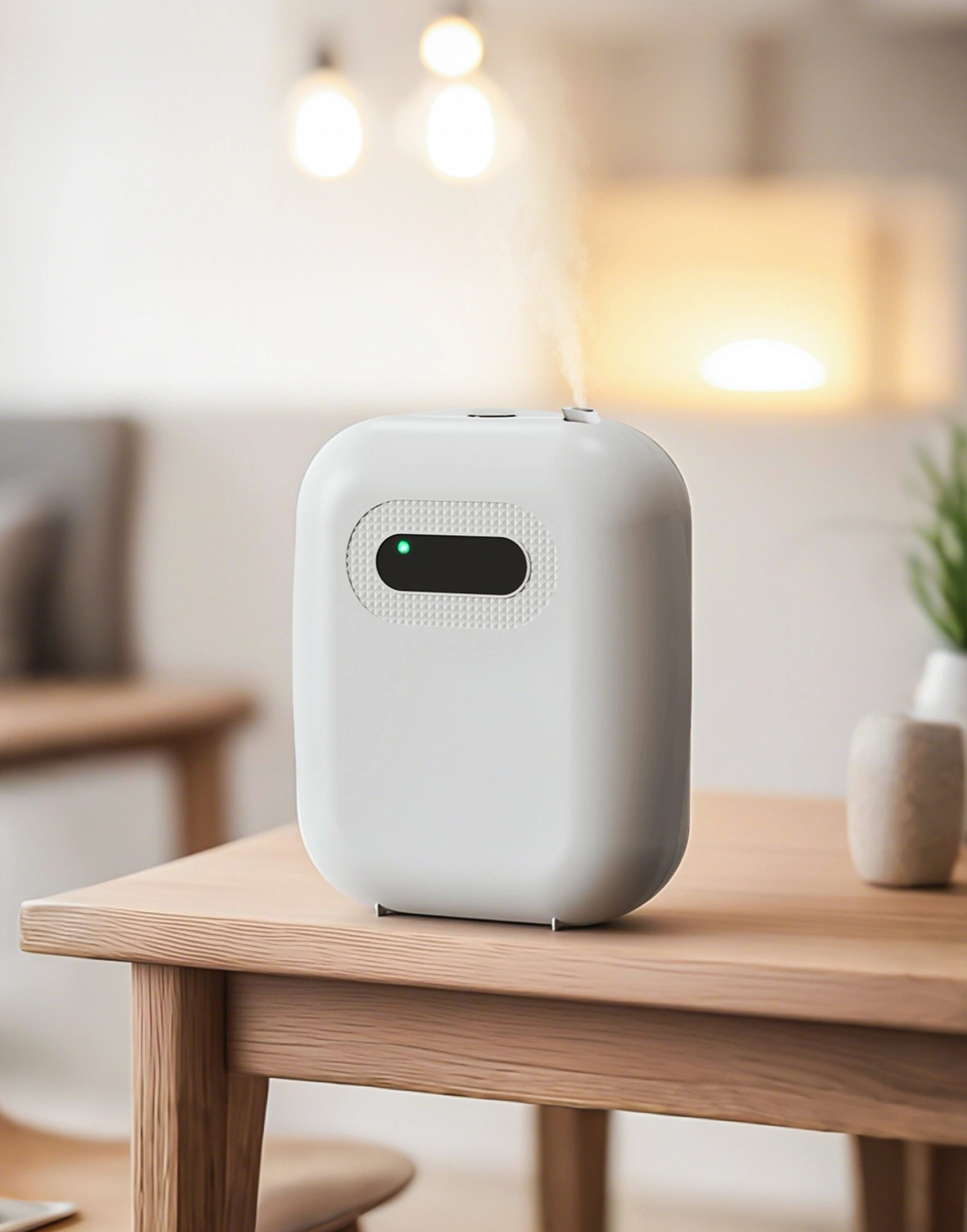
Third, clarify whether you need standalone units or HVAC integration. This decision affects the entire specification chain — power supply, mounting hardware, fragrance consumption rate, and installation labor. A wall-mounted HVAC system covering 3,000 cubic meters requires a different power architecture (DC12V-2A with hardwired installation) than a desktop Bluetooth unit drawing DC5V-1.5A through a Type-C port. Getting this wrong at the inquiry stage means the quote you receive may not reflect what you actually need to install.
How to Evaluate a Manufacturer’s Technical Depth
Price comparison is the easiest part of supplier evaluation, and the least informative. After a decade working with diffuser engineering teams, I have developed a three-question test that reveals more about a factory’s capability than any ISO certificate displayed on their website.
| Evaluation Question | What a Strong Answer Includes | Red Flags |
|---|---|---|
| What atomization technology do you use, and what is the rated particle size? | Specific micron range (typically 0.5–5µm for cold-air diffusion), explanation of how particle size affects suspension time | Vague answers like “advanced technology” or “fine mist” |
| What is your pump’s rated continuous duty cycle, and what testing standard confirms it? | Stated runtime hours with test methodology reference, differentiation between intermittent and continuous rating | No distinction between intermittent and continuous duty, or quoting a number without explaining how it was tested |
| Can you provide a bill of materials for the atomizer assembly, including seal material specifications? | Specific elastomer grades, compatibility data with fragrance oil chemistries | “Standard materials” without naming specific compounds or resistance ratings |
The reason I ask about seal materials specifically is that this is where most mid-range diffusers eventually fail. Fragrance oils contain solvents that degrade certain elastomers. A nitrile seal may perform adequately with water-based solutions but will swell and leak within weeks when exposed to the solvent carriers used in concentrated fragrance oils. Manufacturers who understand this will specify fluorocarbon or EPDM seals and will have data to back up their material selection. Those who have never thought about seal compatibility will look at you blankly, and that silence is worth more than a hundred five-star Alibaba reviews.
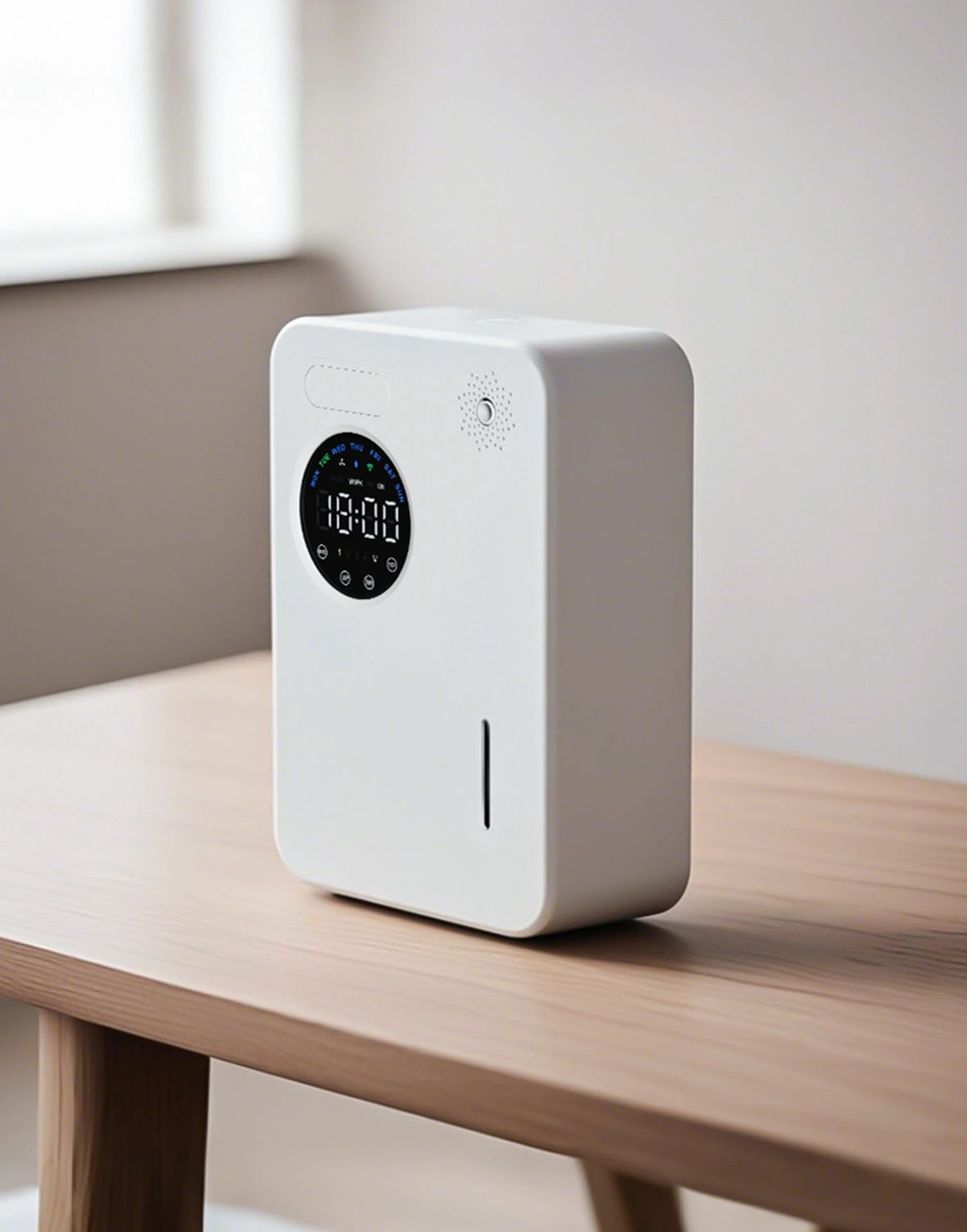 Another signal I pay attention to is whether the factory designs their own pump control firmware. Diffusers that rely on generic microcontroller boards with fixed duty cycles will always over- or under-deliver scent relative to the actual space conditions. Our Bluetooth APP-controlled units, for instance, allow adjustment of atomization intervals and fan speeds based on time-of-day programming — not because the hardware is exotic, but because we write the firmware in-house to match the pump characteristics we specify. A factory that cannot describe their firmware architecture in detail is likely purchasing off-the-shelf control boards and has limited ability to tune output for your specific application.
Specifications That Determine Long-Term Reliability
Beyond the pump and atomizer, several specifications rarely appear on a product listing but dominate the maintenance experience once diffusers are deployed.
Bottle material and volume. Commercial diffusers using 150ml plastic bottles are common at the entry level, but for installations exceeding 1,000 cubic meters, aluminum bottles in 500ml to 5-liter capacities reduce the refill frequency from weekly to monthly. More critically, HDPE bottles are compatible with a wider range of fragrance oil chemistries than some polycarbonate alternatives, which can become brittle after prolonged exposure to certain ester-based aroma compounds. Our HVAC systems ship with 1-liter aluminum bottles as standard for this reason — not because aluminum looks premium, but because it eliminates the material compatibility variable entirely.
Power supply redundancy. Battery-backed units like our wall-mount dispenser running on three D-cell batteries with DC5V backup solve a real operational problem: in a hotel corridor where a power outage means the scent experience cuts out, a unit that automatically switches to battery power maintains brand consistency without anyone needing to reset anything. For battery-only portable units, the capacity figure matters less than the low-battery behavior — does the unit stop atomizing cleanly, or does it sputter and release uneven bursts of fragrance before dying? The latter creates a worse sensory experience than no scent at all.
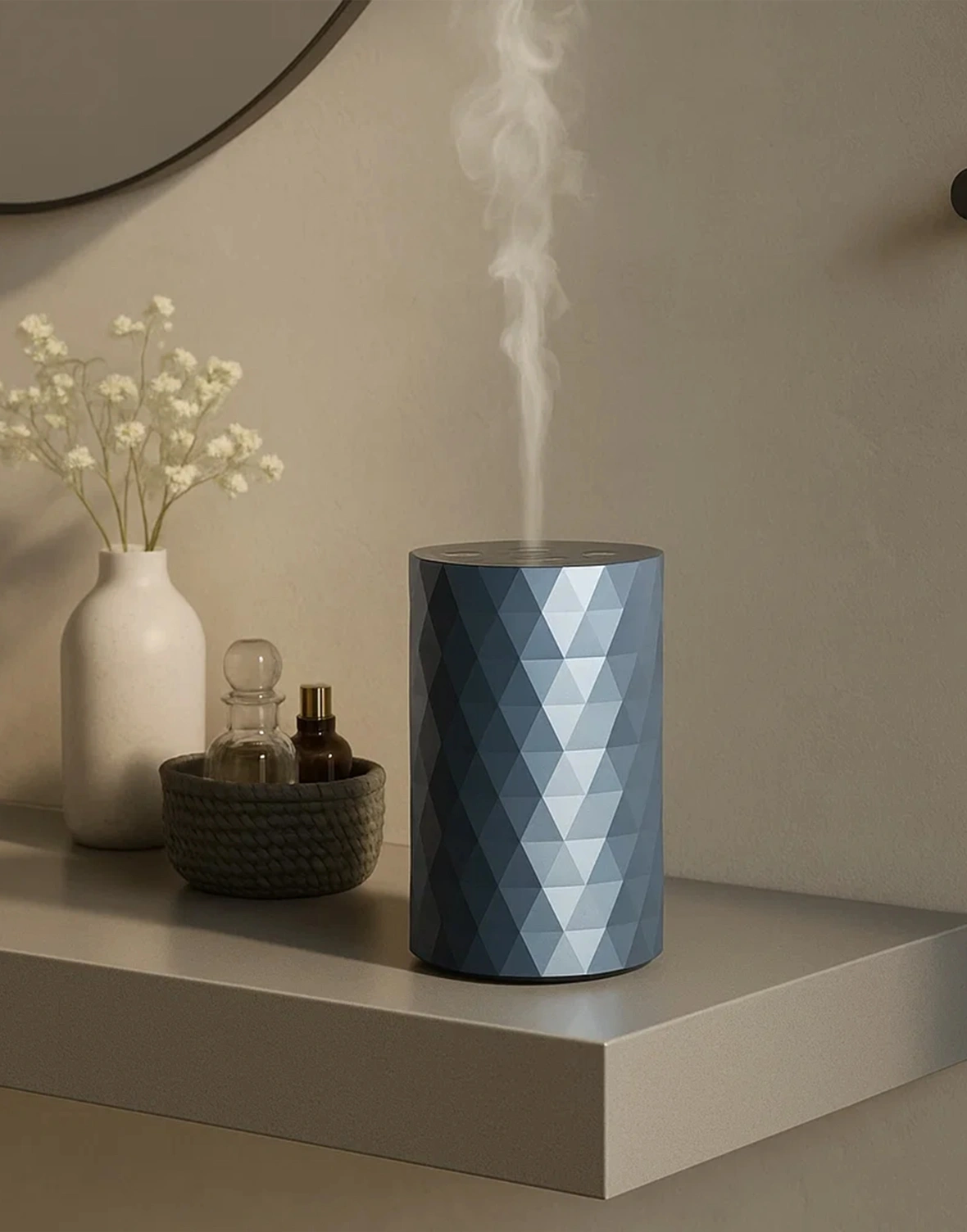
Noise rating under load. A diffuser rated at less than 35 dBa on a specification sheet was measured with the fan at minimum speed and no fragrance in the atomizer. Under full fragrance load with the fan at operational speed, the same unit might register 42 dBa — barely noticeable in a retail store, intrusive in a spa treatment room. I recommend asking the manufacturer for noise measurements under three conditions: idle, minimum fragrance output, and maximum output. If they cannot produce this data, assume the single published figure represents the best-case scenario.
Atomizer maintenance interval. Every cold-air atomizer accumulates residue from fragrance oil constituents over time. The question is how long it takes before atomization efficiency drops below 80% of the initial output. Quality atomizers with accessible cleaning ports can be maintained in under ten minutes by on-site staff; poorly designed atomizers require disassembly and factory servicing. I have supported hotel chains where the difference between these two designs translated to a 40% reduction in annual maintenance labor hours across a 200-room property — not because the hardware was fundamentally different, but because the atomizer head was designed to be replaced without tools.
Shipping, Customs, and Managing the Logistics Chain
Once the technical evaluation is complete, logistics become the pacing factor. Aroma diffusers fall under general electrical appliance HS codes in most jurisdictions, but fragrance oils — if you are importing them alongside the hardware — are classified differently and may require separate documentation for customs clearance. If your order includes both diffusers and fragrance oils, split the commercial invoice into two line-item categories with distinct HS codes to avoid the entire shipment being held because of a classification issue on the consumables.
Sea freight for a pallet or LCL (less than container load) shipment of diffusers from Guangzhou or Shenzhen to major European or North American ports typically runs four to six weeks depending on the destination and carrier route. Air freight cuts that to five to eight days but multiplies the cost by a factor of three to five. For a first trial order of fifty to one hundred units, the air freight premium is often worth paying because it accelerates the real-world testing phase. You will learn more about the diffusers’ performance in four weeks of field use than in months of specification review, and the sooner that feedback loop starts, the faster you reach a stable procurement specification.
Incoterms deserve a brief mention here because they shift risk at specific points in the journey. FOB (Free on Board) means the factory is responsible until the goods clear the ship’s rail at the port of origin; CIF (Cost, Insurance, Freight) extends the factory’s responsibility to the destination port. For a first order, CIF offers more protection, but the insurance coverage included in standard CIF terms is minimal. I recommend purchasing separate cargo insurance with coverage for damage during handling — diffusers with internal pumps and delicate atomizer assemblies do not respond well to being dropped during container unloading.
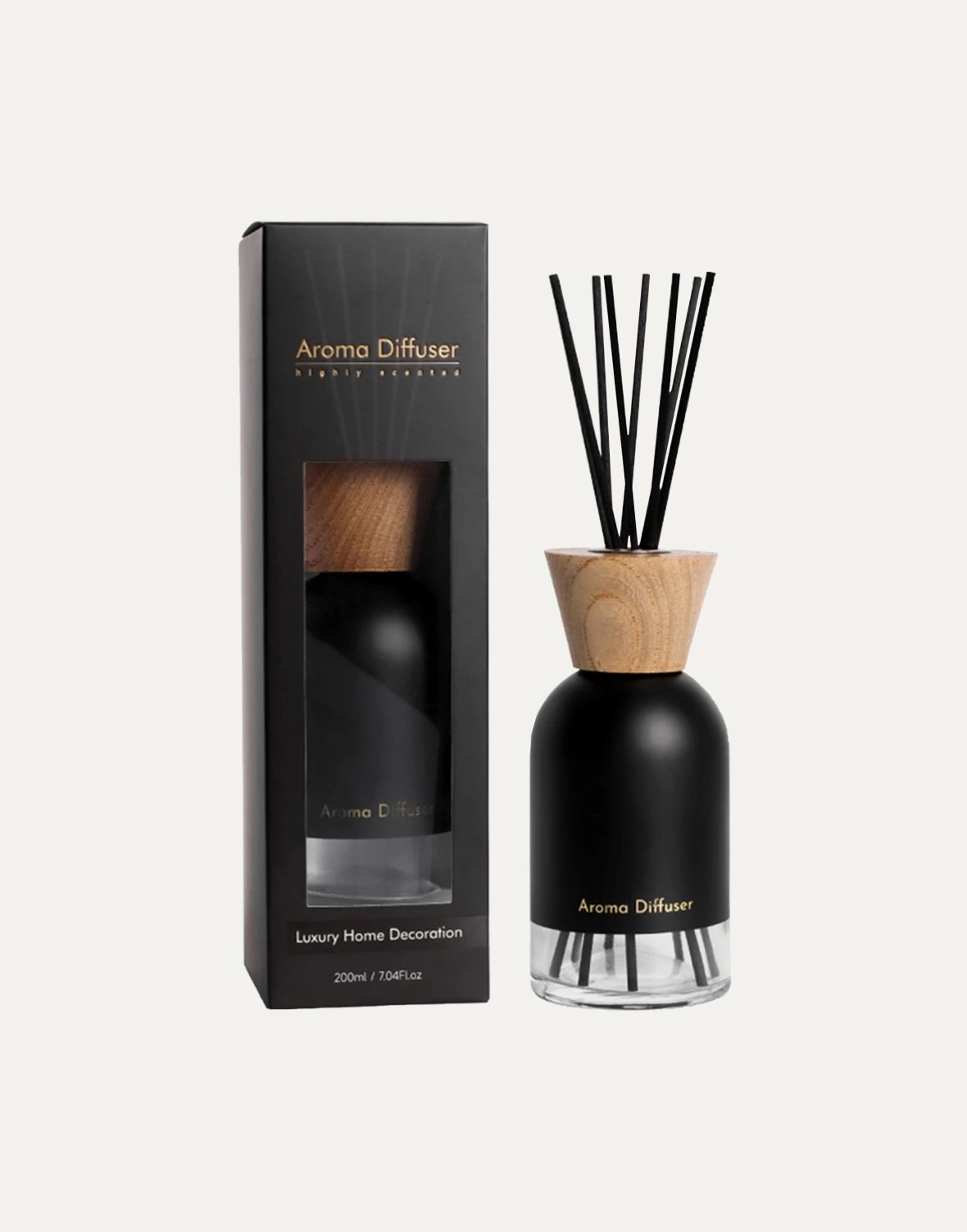
If your program involves multi-country deployment across regions with different electrical standards, confirm the power supply specifications per destination before you finalize the order. A DC12V-1A unit with a universal (100–240V) input adapter covers most markets, but units designed for wall plug-in use on a specific regional voltage are not easily converted. I have handled cases where a client ordered 500 units with EU-standard plugs and then expanded to a UK market mid-production — the cost and delay of reworking the power supplies exceeded the original order margin. Specify per-region SKUs at the purchase order stage and confirm the manufacturer’s production lot tracking so that the correct variants ship to the correct destinations.
What to Inspect When Your Shipment Arrives
The first container arrival is the moment of truth, and a structured inspection in the first forty-eight hours will surface issues before they reach your end customers.
Open at least 10% of the cartons, distributed across the top, middle, and bottom layers of the pallet. If the shipment arrived by sea freight, pay particular attention to cartons from the bottom layer — these absorb any moisture that condenses inside the container during transit, and packaging that looks dry on the outside can hide corroded contacts or swollen circuit boards inside.
For each sampled unit, run a functional test that matches the actual deployment scenario. Plug the unit into the correct power supply, fill the bottle with the fragrance oil you intend to use (not a water-only test, because oil viscosity affects pump behavior), set the unit to its maximum output, and let it run for at least four continuous hours. Measure the fragrance output by weight — weigh the filled bottle before and after the test period and compare the consumption rate to the manufacturer’s specification. Units deviating by more than 15% from the specified consumption rate may have pump calibration issues that affect scent consistency in the field.

Document everything with photos timestamped against the packing slip. If a defect rate exceeds 3% of the sampled units, put the full shipment on hold and request the manufacturer’s corrective action report before distributing any units. A responsive manufacturer will provide a root cause analysis and a remediation plan within five business days. A manufacturer who deflects or delays is revealing their post-sale support philosophy, and that information is as valuable as the inspection results themselves.
Common Questions About Importing Aroma Diffusers from China
What is a realistic MOQ for a first trial order of commercial diffusers?
It depends on whether you are ordering standard catalog models or custom-configured units. For off-the-shelf commercial diffusers like our Bluetooth APP-controlled 300m³ desktop units, a trial order of twenty to fifty units is typical. Customizations — branded faceplates, specific voltage configurations, private-label packaging — usually push the MOQ to one hundred to two hundred units because the production line setup costs need to be amortized across a larger run. If the manufacturer quotes an MOQ below twenty units for a customized product, question whether the customization is genuine or merely a sticker on a generic unit.
How do I know if the fragrance oil I plan to use is compatible with the diffuser’s pump and seals?
This is the compatibility question that can be answered only with specific material data. Ask the manufacturer for the seal material specification (as discussed above) and cross-reference it with the solvent system in your fragrance oil. If your oil uses dipropylene glycol as the primary carrier, most fluorocarbon and EPDM seals will perform adequately. If your formulation includes higher concentrations of isopropyl myristate or other ester solvents, request accelerated aging data — a competent manufacturer will have tested their seals in representative solvent baths at elevated temperatures to simulate long-term exposure. In programs we have supported, a simple thirty-day soak test with the actual fragrance formulation has prevented field failures that would have affected hundreds of installed units.
Do I need separate certification for the diffusers and the fragrance oils?
Yes, and the certification pathways are different. Diffusers fall under electrical safety and electromagnetic compatibility regulations — CE marking for Europe, FCC for the United States, and equivalent local standards for other markets. Fragrance oils are regulated as chemical substances and may require REACH compliance documentation for European imports, IFRA conformity certificates for safety, and Safety Data Sheets (SDS) for customs clearance. The manufacturer should provide the diffuser certifications as part of the commercial documentation package. For fragrance oils, the supplier should supply batch-specific SDS and any applicable allergen declaration sheets. If your program spans regions with different regulatory requirements, share those requirements with your suppliers before the order is placed so that documentation gaps do not emerge at the port of entry.
What is the most common reason diffusers fail within the first year, and can it be prevented?
In my experience across hundreds of commercial installations, the leading cause of premature failure is pump seal degradation from incompatible fragrance chemistry, followed by power supply capacitor failure in units that use low-cost AC-DC adapters. Both are preventable at the procurement stage. The seal issue is addressed through material compatibility verification as described above. The power supply issue is addressed by specifying the adapter brand and rating in the purchase order — generic unbranded adapters are the weakest link in an otherwise well-built diffuser. If your order quantity justifies it, request that the manufacturer source power supplies from a named, traceable supplier rather than the lowest-cost option available in the Shenzhen component market on the day of production. The incremental cost is typically less than two dollars per unit, and it buys you a significant reduction in field failure rate. For specific compatibility questions about your fragrance formulation and our diffuser hardware, share your requirements and we will confirm what testing data we have available — reach us at [email protected] or call +86 185 6557 5758.
If you’re interested, check out these related articles:
