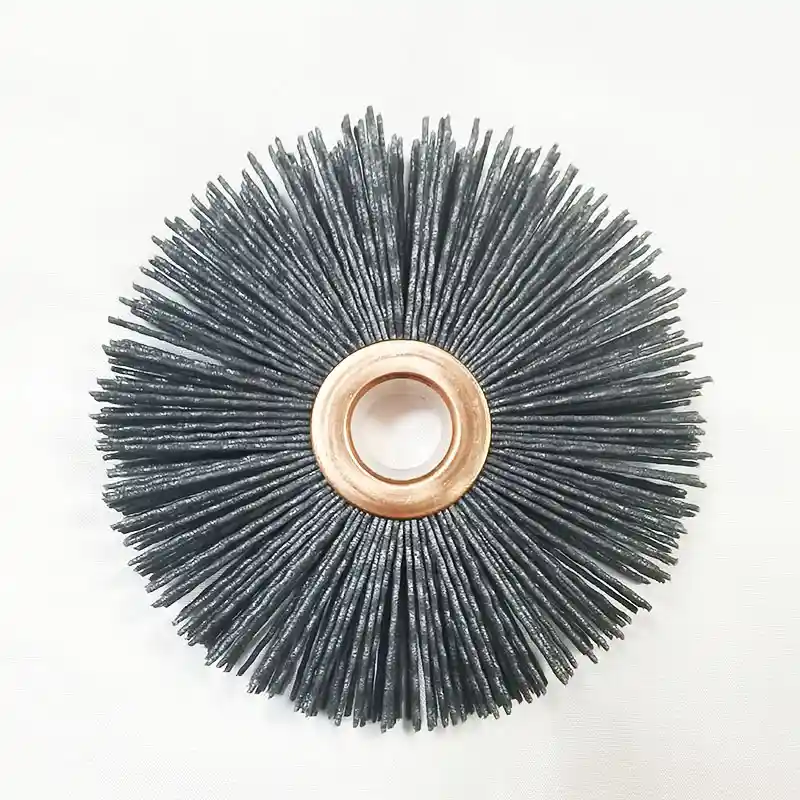

Nylon wheel brushes are marketed as the go-to tool for gentle polishing, but achieving a scratch-free finish depends on far more than the material name. In over fifteen years of supplying customized industrial brushes, I’ve seen that the filament type, grit loading, brush density, and operating parameters all determine whether the brush polishes cleanly or leaves visible marks on the workpiece. Selecting the right nylon wheel brush means matching these variables to your part material, surface finish target, and production environment. This article breaks down the technical factors that actually prevent scratching, so you can make an informed spec decision rather than ending up with a generic brush that underperforms.
When Nylon Wheel Brushes Are the Right Tool
Nylon wheel brushes are best suited for light deburring, edge blending, and finishing operations where maintaining the base dimension is critical. Unlike wire wheels that cut aggressively, nylon filaments flex under pressure and conform to complex profiles without removing significant stock. This makes them ideal for parts with tight tolerances or delicate surface treatments, such as machined aluminum housings, coated metal parts, and formed sheet metal edges. In these applications, a wire brush would almost certainly leave scratches, but a nylon brush with the right specs delivers a consistent, mark-free finish.
How to Pick the Right Nylon Filament to Avoid Scratches
The polishing performance depends on which filament is used. Two key variations dominate: plain nylon filaments and abrasive-impregnated nylon filaments.
Grit-Impregnated vs Plain Nylon Filaments
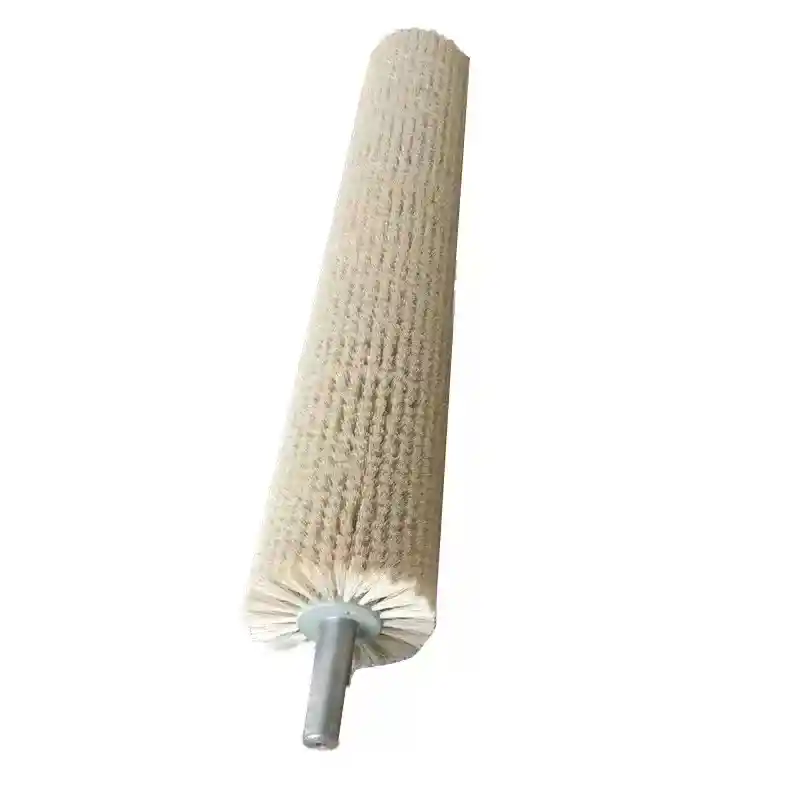
Plain nylon filaments have no cutting action; they rely on friction and conformability to wipe away light residues or burnish surfaces. For any meaningful material removal or scratch refinement, abrasive filaments are required. These filaments carry uniformly dispersed abrasive particles—silicon carbide (SiC) or aluminum oxide (Al₂O₃)—bonded into the nylon matrix. As the brush wears, fresh abrasive is continually exposed, maintaining a consistent cut rate. For aluminum and brass workpieces, SiC-loaded filaments produce a bright, clean finish without embedding particles into the soft metal. For harder metals like stainless steel, aluminum oxide offers better durability.
| Attribute | Plain Nylon Filament | Abrasive Nylon Filament |
|---|---|---|
| Cutting action | None | Continuous (SiC, Al₂O₃) |
| Best for | Burnishing, light cleaning | Deburring, blending, surface refinement |
| Material removal per pass | Negligible | Approx. 0.005–0.02 mm |
| Scratch risk | Low if clean; may drag particles | Low with proper density and grit |
The Role of Filament Diameter in Scratch Prevention
Filament diameter is often overlooked, but it has a direct impact on scratch risk. Thicker filaments, typically 0.5 mm and above, are stiffer and can create uneven pressure points, especially on contoured or thin-walled parts. This leads to isolated scratch lines. Thinner filaments, around 0.3 mm, flex more easily and distribute force more evenly across the surface. For final finishing of painted or sensitive surfaces, we typically recommend finer filaments. Too fine a diameter can reduce the brush’s cutting speed if stock removal is also required. The relationship between filament diameter and desired outcome is something we routinely calibrate when developing custom brushes for clients.
Customizing Your Nylon Wheel Brush for Scratch-Free Results
Here is where off-the-shelf brushes often fall short: a standard brush with generic density and trim length may work well on flat plates but fail on complex geometries. Customization is not a luxury; it is the most direct way to eliminate scratching at the specification stage.
Tailoring Brush Density for Surface Finish
Brush density—the number of filaments per square inch—directly affects the number of abrasive contact points. A low-density brush with sparse filaments applies pressure on fewer points, increasing the risk of localized scratching. High-density brushes provide more cutting edges but may clog if soft material loads the filaments. For most polishing applications, a medium-to-high density, calibrated to the workpiece shape, yields the most uniform finish. In one recent project, a customer experiencing scratch marks on curved aluminum housings switched to a denser, shorter-trim brush we designed, and the issue disappeared. The extra filaments filled the curve better, distributing the force.
Matching Trim Length to Workpiece Geometry
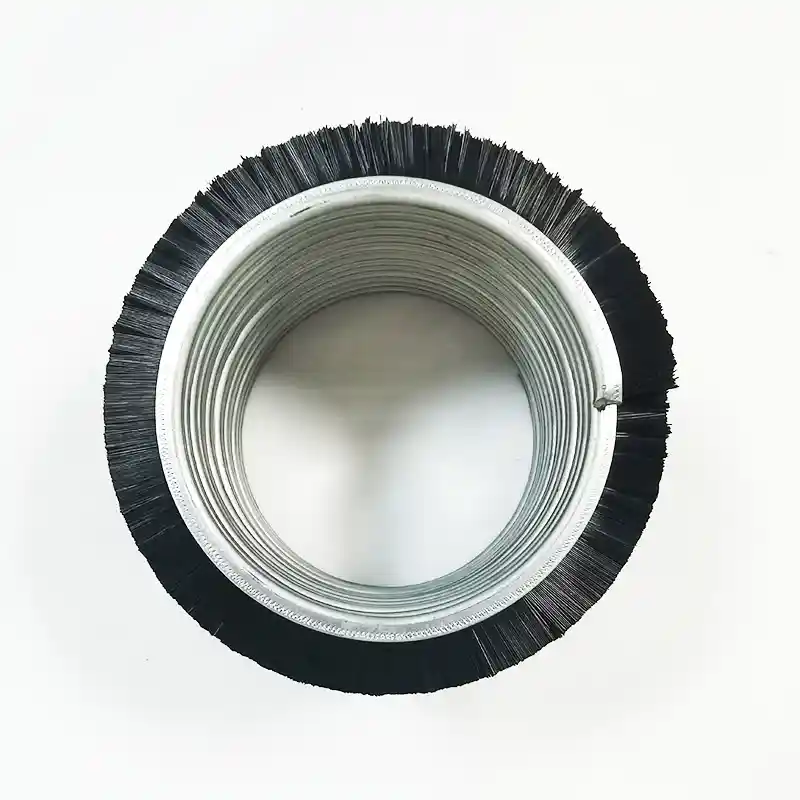
Trim length is the free length of filament extending from the hub. A long trim provides more flexibility and wrap-around, good for irregular surfaces but may reduce stiffness and allow filaments to whip, creating inconsistent contact. Shorter trim increases stiffness and is better for flat or slightly curved surfaces. Selecting the right trim length requires balancing flexibility with pressure consistency. For parts with deep recesses or holes, a longer trim combined with thinner filaments may be needed. For flat surfaces where precise edge blending is critical, a short, dense trim delivers a sharper cut.
If your part involves deep recesses or a mix of flat and curved surfaces, dialing in the right brush density and trim length becomes a trial-and-error process if you don’t have test data. It is worth confirming the specification with a brush manufacturer who has run similar parts before. Reach out at [email protected] to discuss your part geometry.
Operating Parameters That Prevent Scratching
Even the best-specified brush will cause scratching if the operating conditions are wrong. RPM and pressure are the two variables that most often cause good brushes to fail.
Why RPM and Pressure Matter
Nylon filaments generate friction heat. Running a brush at excessive RPM causes the nylon to soften or melt, changing the filament behavior completely. A melted filament tip becomes a hard, irregular point that digs into the workpiece rather than polishing. Manufacturers typically provide a maximum safe RPM, but practical experience shows that staying well below that limit and adjusting pressure is more effective for consistent finishing. In our testing, we’ve seen that when brush tip temperature exceeds roughly 230°C, the nylon filament loses its mechanical properties within seconds, permanently deforming into a glazed, rock-hard point that scratches the workpiece even though the rest of the brush remains intact. Keeping surface speeds under 2,000 m/min for nylon brushes loaded with SiC yields the best results without excessive heat. Light, consistent pressure—just enough to maintain contact—prevents filament collapse and ensures abrasive particles engage the surface properly.
Cooling and Compound Use with Nylon Brushes
For lengthy polishing cycles or harder materials, a water-based coolant or light oil can dramatically reduce heat buildup and improve surface finish. The coolant also helps flush away swarf, preventing filament loading. We’ve found that many scratches attributed to the brush actually result from dragged particles trapped in the filaments. A mist coolant or periodic rinse can solve this. When compounds are used, ensure they are compatible with nylon—some solvents can degrade the filament—and avoid pastes that cake onto the brush, reducing flexibility.
Sourcing Reliable Nylon Wheel Brushes for Your Production
Once you have defined the brush specification that meets your scratch-free polishing requirement, the next step is finding a supplier who can deliver it consistently batch after batch. Variation in filament quality, grit loading uniformity, and assembly tension all affect performance. A supplier with in-house filament extrusion and brush manufacturing control can dial in the exact parameters needed and repeat them. This is especially important for OEM and high-volume production, where a single bad batch can trigger rejects.
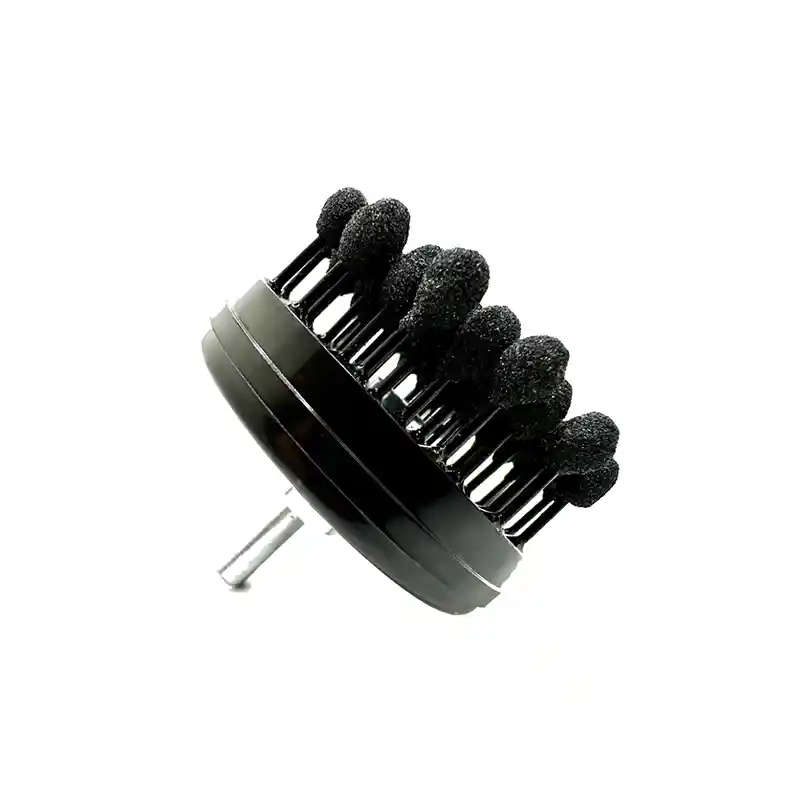
At Huixi Brush, we’ve spent 16 years refining the production of custom industrial brushes, including nylon wheel brushes for polishing and finishing applications across three continents. Customers often come to us after trying generic brushes that produced inconsistent results. By working from a customer’s workpiece sample and finish specification, we can recommend—and test—a brush configuration that removes the guesswork.
If your current nylon wheel brush is leaving scratches, or if you are designing a new finishing process, the most reliable step is to involve the brush supplier early. Send your part details, material, and surface finish requirement to [email protected] or call +86 1580 0932 713. We can provide a free sample based on your production parameters so you can validate the result before ordering.
Common Questions About Nylon Wheel Brush Polishing
Can a nylon wheel brush really polish metal without leaving marks?
Yes, because the abrasive particles in the filament strip create thousands of tiny cutting points that refine the surface rather than gouge it. But if the brush density is too low, these points cluster and cause scratch lines. The key is eliminating localized pressure points that concentrate force on a tiny area. This is why customization matters: a mass-produced brush with uneven filament distribution is more likely to leave marks than one built to your part’s geometry.
What is the difference between plain nylon and abrasive nylon filaments?
For any job requiring material removal or surface refinement, abrasive filaments are essential; plain nylon only burnshes and wipes. Abrasive filaments have hard particles such as silicon carbide or aluminum oxide bonded throughout the nylon matrix. As the nylon wears during use, new sharp particles are exposed, providing continuous cutting action. When specifying a brush for polishing, always confirm the filament type listed in the manufacturer’s data sheet.
How do I know if my RPM is too high for a nylon wheel brush?
If you notice the brush tip becoming glossy, melted, or deformed, the RPM is too high or dwell time too long. Nylon has a melting point typically around 200–250°C, and friction can quickly push the filament temperature past that threshold. Most industrial nylon wheel brushes come with a maximum RPM rating from the manufacturer, but as a rule of thumb, keep surface speed below 2,000 m/min and monitor filament condition regularly. If the process requires higher speeds, consider adding coolant to manage heat.
Can nylon wheel brushes be used on delicate surfaces like aluminum or painted parts?
Yes, and they are often the preferred choice precisely for those materials. The conformable filaments gently polish without gouging, and when abrasive filaments with fine grit are used, they can produce a satin or matte finish on aluminum without cutting through anodizing. On painted surfaces, nylon brushes can remove light orange peel or dust nibs without damaging the base coat. Always test a small area first and confirm filament compatibility to avoid any chemical reaction with the paint.
What should I look for in a nylon wheel brush supplier?
Look for a supplier that controls filament production internally, not just assembly. Filament quality—uniformity of filament diameter, consistent abrasive distribution, and proper curing—is the single biggest factor in reliable polishing. The supplier should be willing to provide samples based on your application and have the capacity to adjust specs for your specific part. A good supplier will also offer technical support in determining the right brush configuration, not just push a standard catalog item. If your part geometry requires a non-standard brush size or filament blend, share your specs and production volume to get a custom solution tailored to your process. Contact Huixi Brush at [email protected] or call +86 1580 0932 713 to discuss your requirements and receive a free evaluation sample.
If you’re interested, check out these related articles:
brushes for steel wire industries cleaning descaling derusting polishing
advantage of hx cylindrical sanding brushes