Most commercial scent machine buyers start with fragrance selection, then realize the hardware cannot cover their ceiling height or HVAC layout. The machine choice should follow the space first: coverage area, airflow, oil capacity, and daily maintenance access. In my work across 68 countries, I have seen the same pattern in hotel lobbies, retail floors, and office corridors. A diffuser placed without checking airflow wastes oil and creates hot spots. This guide sets the purchase sequence I use with clients: confirm space requirements before comparing hardware, then match scent formulation to the delivery method.
Coverage Area Determines Which Commercial Scent Machine Type Fits
Before you compare fragrance notes, measure the actual breathing space. A commercial scent machine rated for 300 cubic meters will not hold a hotel atrium, and an 8,000 cubic meter HVAC system is overkill for a single consultation room. The ceiling height matters more than floor area because fragrance disperses through volume, not square footage. A two-story lobby with an open staircase behaves differently from a standard eight-foot retail ceiling.
The table below reflects the models I most often specify when clients share site plans with mixed zones.
| Model | Coverage | Power Supply | Oil Capacity | Best Fit |
|---|---|---|---|---|
| Commercial Scent Oil Diffuser (Bluetooth APP) | 300 m³ / 1,000 sq ft | DC12V-1A | 150ml | Small lobby, boutique retail |
| Battery Aroma Oil Dispenser Wall Mount Diffuser | 200 m³ / 750 sq ft | 3×D batteries or DC5V-1.5A | 150ml | Restrooms, compact service zones |
| Hotel Scent Oil Diffuser Tower (Commercial) | 3,000 m³ / 11,000 sq ft | DC12V-2A | 500ml/1L aluminum | Large lobby, atrium |
| Commercial HVAC Scent Diffuser Aroma Dispenser System | 8,000 m³ / 30,000 sq ft | DC12V-3A | 1L/2.5L/5L aluminum | Full-building HVAC |
| Dual-System HVAC Scent Diffuser | 5,000-15,000 m³ / 15,000-55,000 sq ft | DC12V-3A | 1L/2.5L/5L ×2 systems | Multi-zone facilities |
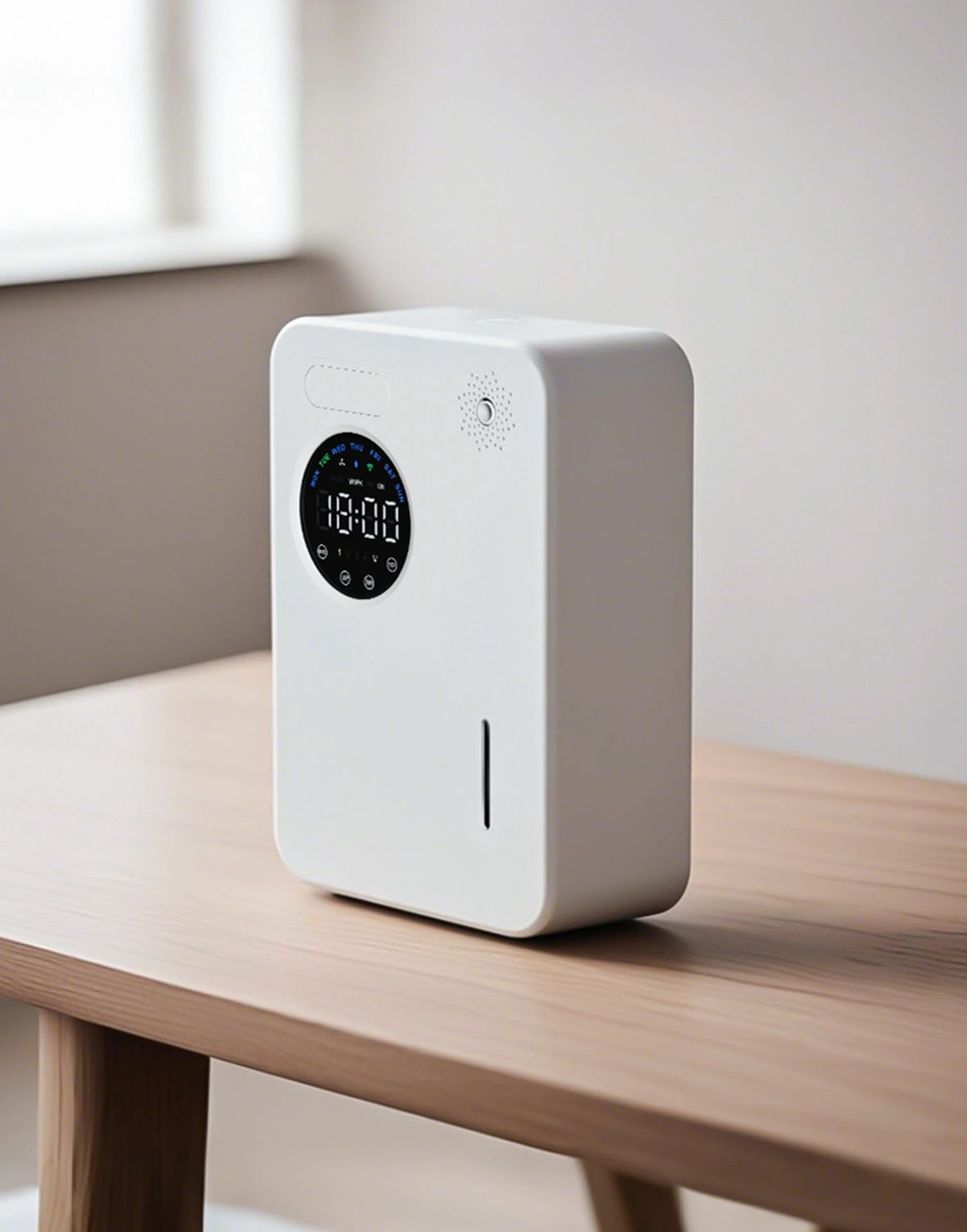 A common mistake in commercial scent machine selection is treating coverage as a static number. Airflow changes it. A 300 m³ unit placed near an open door will pull fragrance toward the exit. A tower unit placed beside a strong air curtain will diffuse unevenly. I ask clients to mark return-air vents, open stairwells, and high-traffic entryways before we choose a model. When the space has multiple zones, the correct commercial scent machine count is usually higher than one unit but lower than the client expects. One well-placed machine per defined zone beats three units fighting the same air current.
Diffusion Method Changes Maintenance and Scent Intensity
A commercial scent machine delivers fragrance through one of a few physical methods, and that choice affects how the scent reads inside the space. Standalone fan-based cold air diffusion pulls oil into the air as fine particles. It is simple to install, quiet, and easy to move. Waterless atomization delivers the oil without dilution, so the scent character stays close to the formulated profile. HVAC integration ties the diffuser into the building air handler and provides the most even distribution across large or multi-room spaces.
In hotel corridors I have worked on, waterless units held intensity better across long operating hours than diluted systems. The difference showed up most clearly at the far end of the corridor, where a waterless commercial scent machine maintained a subtle presence while other units faded by mid-afternoon. That experience changed how I think about the initial hardware choice: the diffusion method determines not just installation cost but also the consistency a guest actually perceives.
For a boutique store, a standalone Bluetooth-enabled diffuser is usually enough. For a resort with a lobby, spa, and conference wing, HVAC integration is the cleaner long-term answer. The main tradeoff is service access. A wall-mount commercial scent machine can be opened and refilled in seconds. An HVAC unit hidden above the ceiling will require a technician or at least scheduled access. That maintenance reality should be part of the buying decision, not an afterthought.
Oil Capacity and Refill Frequency Affect Long Term Running Cost
A 10ml portable bottle is a different commercial scent machine purchase logic than a 5L HVAC reservoir. The larger the oil capacity, the less often the team must refill, but the more important it becomes to match the bottle to the fragrance rotation. If a hotel wants to change scents seasonally, a 500ml or 1L bottle is easier to swap than a five-liter reservoir half full of last quarter’s fragrance.
Refill frequency depends on operating hours, fan speed, and fragrance intensity. A unit running 24/7 at high intensity will consume oil far faster than the same unit scheduled for business hours. I usually ask clients to estimate monthly oil spend from the setting they will actually use, not from the most conservative program. The savings from choosing a slightly larger tank evaporate if the staff cannot reach the unit without a ladder.
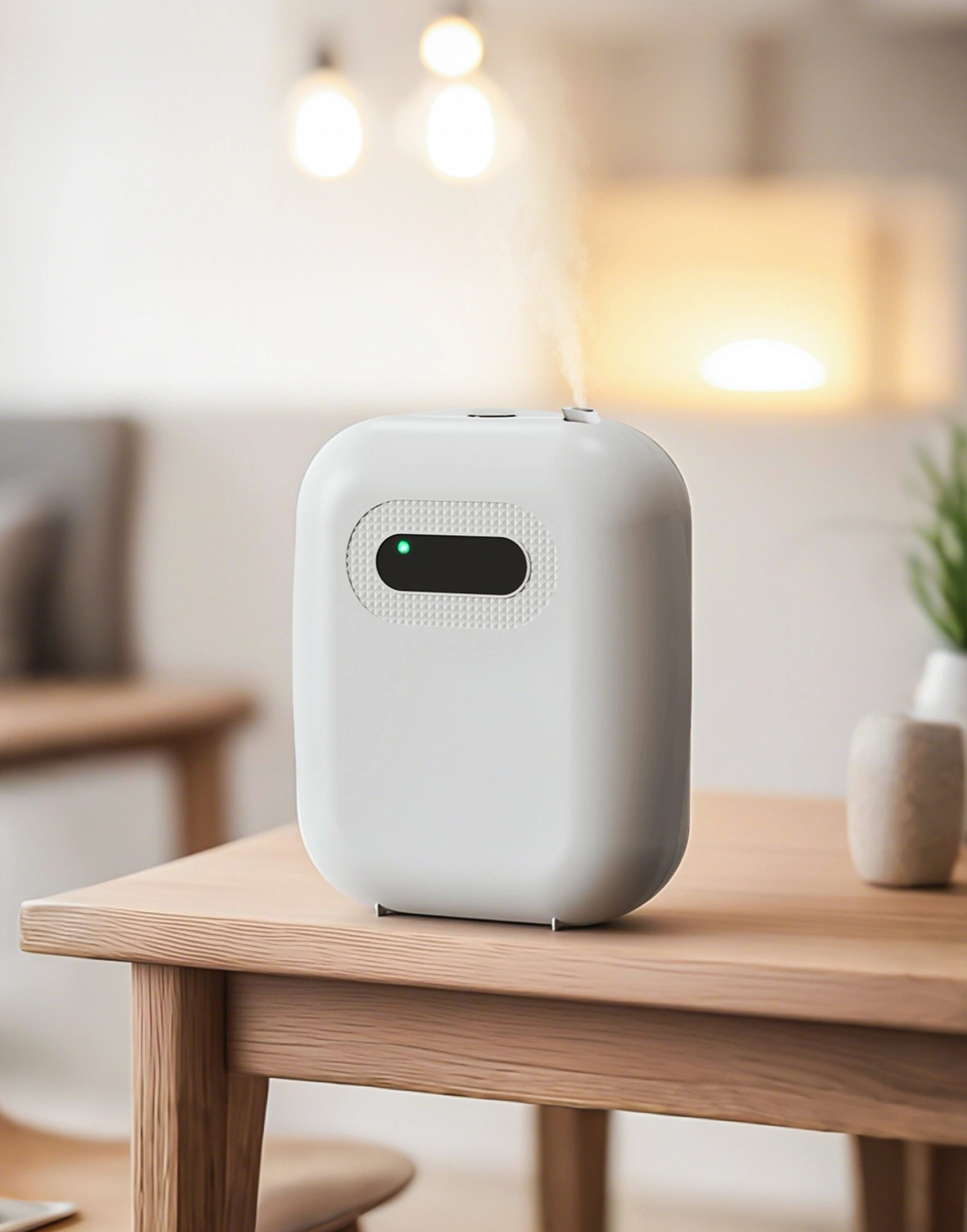
For spaces with no nearby power outlet, the Battery Aroma Oil Dispenser Wall Mount Diffuser gives flexibility with a 150ml bottle. Its dual supply means the team is not tied to a single electrical point. But battery capacity adds another refill rhythm. A commercial scent machine that runs on batteries may go through power on a different schedule than oil. If the battery dies first, the room goes unscented even with a full bottle. That is why I recommend battery units for targeted zones with regular staff presence, not for unattended 24-hour operation.
If your site has mixed spaces, a single model rarely covers every room. That is the point where I ask clients to split the order by zone instead of forcing one machine type. If your program includes multi-location consistency or after-hours scheduling, confirm the control protocol before finalizing the BOM. Send your site list and ceiling heights to [email protected] and we can confirm which diffuser control set will work.
Control and Connectivity Features Decide Daily Operations
The hardware inside a commercial scent machine matters less than who can operate it. A touch-control timer works well in a single office where one person manages the unit. A Bluetooth APP with programmable settings becomes necessary when the machine sits in a locked ceiling mount or when the schedule changes across weekdays and weekends. For a hotel chain, app-based control across multiple units prevents a housekeeping team from guessing at intensity levels.
The product library includes units with Bluetooth APP control, radar sensor activation, liquid level detection, and anti-theft locks. Each feature answers an operational question. Radar sensing saves oil in intermittent spaces such as private offices or restrooms. Liquid level detection prevents a room from silently losing fragrance. An anti-theft lock matters when the unit is mounted in a public corridor. None of these features should be treated as decorative additions. They determine whether the scent program stays consistent without constant staff oversight.
A wall-mounted unit with no manual buttons may be ideal for a building manager who wants to lock the schedule and prevent tampering. A freestanding tower with touch control suits a front desk team that adjusts scent strength before events. The wrong control set makes the fragrance experience inconsistent, which costs more than the hardware over time. I have yet to see a multi-location account succeed with equipment that each site operates differently.
Confirm Your Commercial Scent Machine Fit Before You Order
The most expensive mistake I see is not a bad fragrance choice. It is a commercial scent machine ordered from a specification sheet without checking the actual air movement, ceiling access, or operating hours. When that happens, the unit under-delivers, the oil burn rate climbs, and the client replaces hardware within a year.
Instead, share your floor plan, estimated ceiling height, HVAC setup, and target scent intensity. I will confirm the appropriate coverage, diffusion method, and oil capacity from the available models, then quote the configuration that matches your zones. Send those details to [email protected] or call +86 185 6557 5758 / +86 134 2048 5758.
Common Questions About Commercial Scent Machines
How do I know if I need HVAC scenting or a standalone commercial scent machine?
A standalone commercial scent machine fits most single-floor spaces up to roughly 1,000 square feet with standard ceiling heights. HVAC scenting becomes the better choice when coverage exceeds 10,000 square feet, when ceiling cavities are accessible, or when you want invisible delivery through existing air handlers. The decision turns on air distribution, not fragrance. If your lobby has a high ceiling but no ceiling HVAC access, a tower unit may be simpler to maintain. Share your floor plan and ceiling type, and I can confirm which route avoids hot spots.
Is a waterless commercial scent machine automatically cleaner or easier to maintain?
Waterless does not mean maintenance free. A waterless commercial scent machine removes the risk of standing water and mineral buildup, which is useful in humid or dust-prone spaces, but the atomizer and fan still require cleaning. The real advantage is that the oil is delivered without dilution, so scent character stays closer to the formulated profile. In hotel corridors I have worked on, waterless units held intensity better across long operating hours. If air quality or cleaning access is a concern, ask for the maintenance schedule before ordering.
How much fragrance oil will my commercial scent machine use each month?
It depends on runtime, concentration, and fan speed. A small 10ml portable unit may run for a few days, while a 1L commercial system on a 12-hour daily schedule might last several weeks. Oil consumption rises when you increase diffusion intensity or run 24/7. I usually ask clients to base refill budgets on intensity level, not bottle volume alone. For your space, share the operating hours and the fragrance intensity you want, and we can estimate monthly oil use.
What maintenance should I plan for after installation?
In hotel corridors I have worked on, the most common service issue is not the pump or fan but the oil pickup tube when fragrance residue dries inside it. Plan for monthly visual checks, bottle swaps, and quarterly atomizer cleaning for uninterrupted operation. Units with clear bottle windows and liquid level detection reduce surprise downtime. The maintenance burden matters more than the initial purchase price because a forgotten refill creates an off-brand moment for guests. If you are setting up multiple sites, share your location list and we can prepare a shared service checklist.
If you’re interested, check out these related articles: