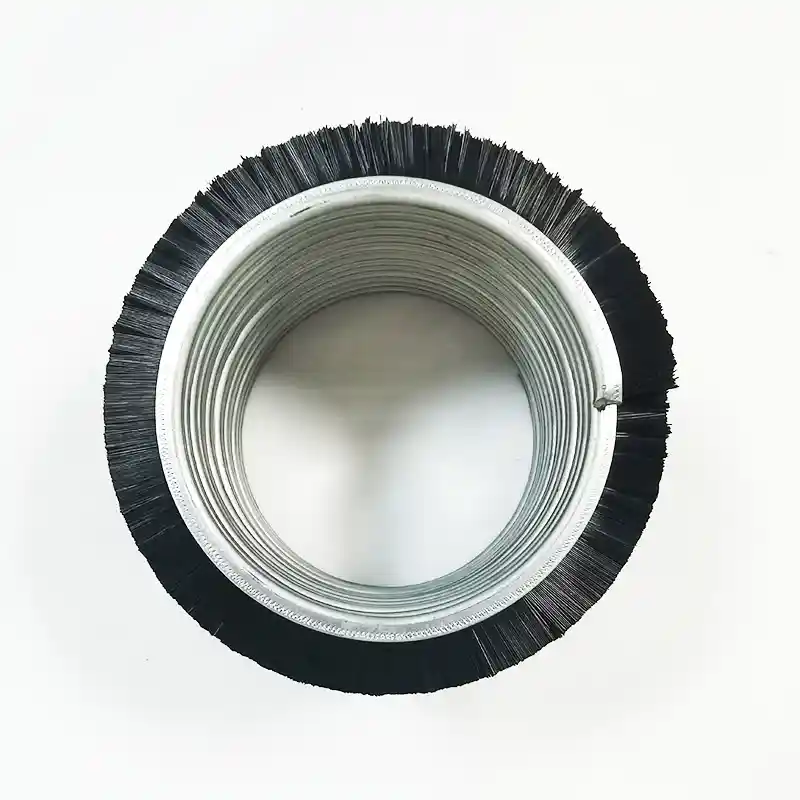

Cylindrical spiral brushes solve a specific production line problem: they put continuous rotary cleaning onto a shaft without requiring a separate station or manual step. The mistake I see most often in new inquiries is that the brush is treated as a standard wear part before the spiral direction, fill density, and line speed have been matched. A brush that performs well on one conveyor can throw debris sideways or wear unevenly on another. That is why I start with the operating conditions rather than a drawing alone. Cylindrical spiral brushes work in conveyor sweeping, scale removal, deburring, and surface preparation, but the result depends on the working parameters.
What Keeps Cylindrical Spiral Brushes Reliable in Production Cleaning?
A cylindrical spiral brush is not simply a roller brush with a different outer pattern. The filament is wound in a continuous spiral around the core, so the cleaning face presents a moving contact line instead of isolated tufts. On an automated line, that structure matters. The brush clears debris as it rotates, which reduces material wrap around the shaft and keeps contact pressure more consistent. For conveyor belts, sheet lines, and pipe or profile handling, the spiral winding also pushes material to one side or toward the center, depending on the direction. That controlled movement is what makes the brush useful for more than cosmetic dusting. It can carry away light scale, wipe off fluid residue, or work the edge of a formed part without stopping the line.
The most common failure I have seen is not that the bristles wear out. It is that the cylindrical spiral brush was ordered with the wrong spiral direction for the debris path the line needed. The brush still cleans, but it cleans the wrong side or pushes waste back into the next station. That creates a maintenance issue that looks like a brush quality problem but is actually a specification problem.
How Do Rotation Direction and Speed Change Cleaning Results?
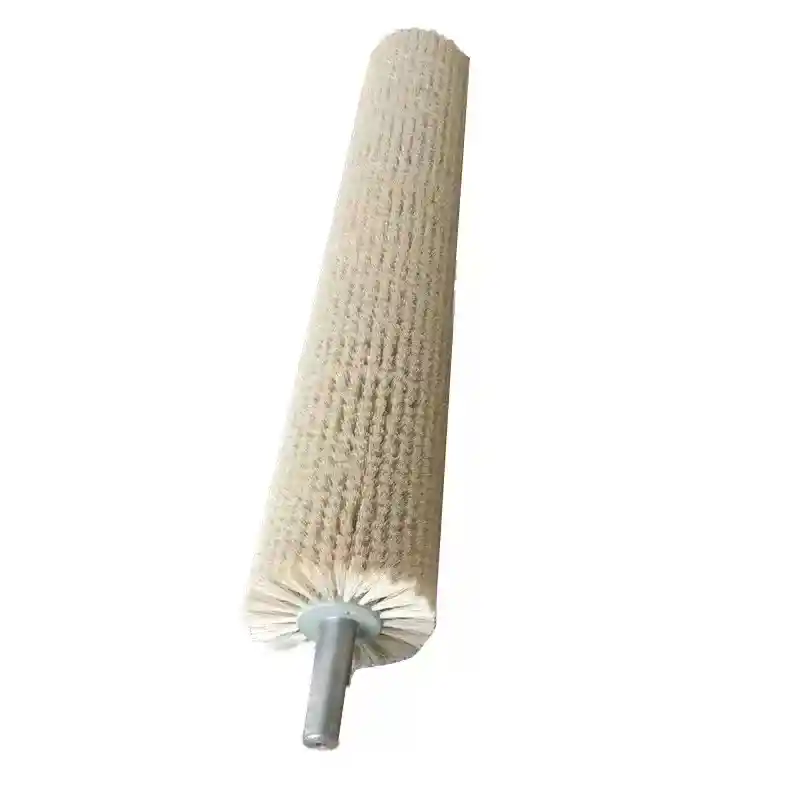
Rotation direction controls where the brush sends what it removes. An inward spiral draws material toward the center of the brush face. An outward spiral sends it toward the shaft ends. The correct choice follows the machine layout and the discharge path. If the discharge hopper sits on one side, the spiral needs to match that side. If the brush is positioned over a narrow gap, an inward spiral may keep debris from being thrown into the neighboring lane.
Spiral direction is rarely shown on a general arrangement drawing, but it changes the cleaning pattern and the debris flow. <the differences between inward and outward spiral brush> covers how inward and outward windings move material toward or away from the brush center, which matters when the brush runs over a narrow conveyor gap.
Speed changes the working pressure at the filament tip. As rotation increases, a wire filament straightens further under centrifugal force and the brush face becomes effectively stiffer. A nylon filament may begin to flex too much and lose contact. The right speed is not a fixed number. It depends on outside diameter and the material being moved. On larger diameter brushes, even moderate rpm creates high tip speed. That is why I ask for the motor speed and the brush diameter at the same time. A small difference in diameter can shift tip speed enough to alter wear.
Stainless wire spiral brushes handle wet and chemical cleaning demands differently from carbon steel fills. <where stainless wire spiral brush can be used> covers application zones where stainless wire holds up against moisture and mild corrosion while keeping aggressive contact on rust and scale.
Which Fill Density and Trim Length Should You Specify?
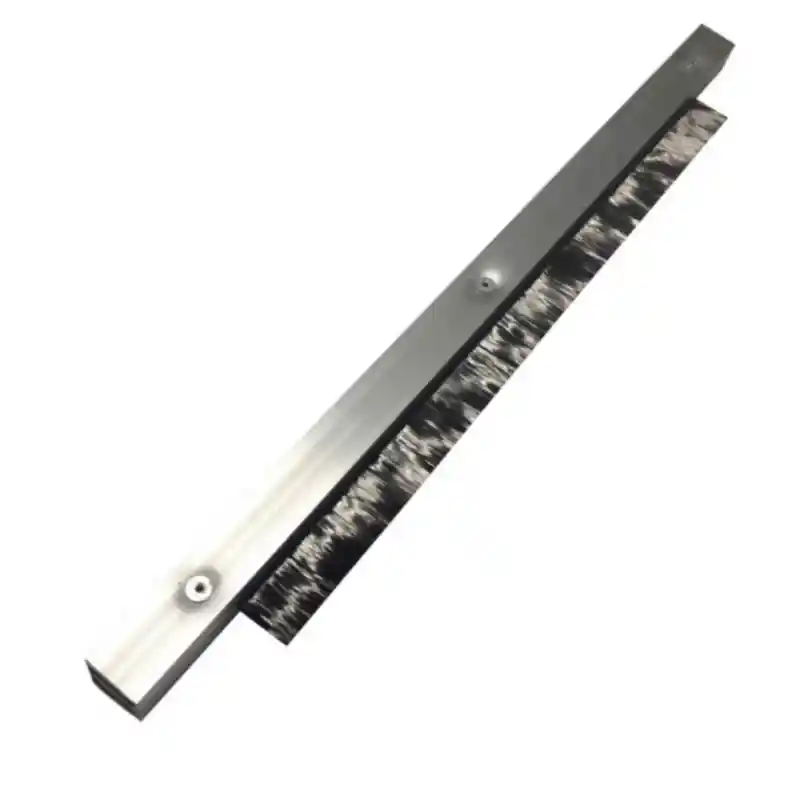
Wire diameter, fill density, and trim length are the real specification decisions. A buyer will often state the outside diameter and face length and stop there. Those dimensions define whether the cylindrical spiral brush fits the machine, but they do not define how it contacts the part. A short trim length makes the brush face firmer because the filament has less room to flex. A longer trim gives the brush more ability to follow a contoured or irregular workpiece. On flat stock or conveyor belts, that may not be necessary and can reduce the scrubbing force.
| Fill material | Production use | What to watch |
|---|---|---|
| Stainless steel wire | Wet and chemical lines, scale and oxide removal | Choose the right alloy for the process fluid; wire diameter changes stiffness |
| Carbon steel wire | General rust and scale removal in dry areas | Lower cost, but corrodes if moisture remains on the line |
| Nylon filament | Lighter wiping, dust removal, and gentle contact | Specify filament diameter and crimp if debris is sticky |
| Abrasive nylon | Light deburring and surface conditioning | Abrasive grit wears; check replacement interval against process tolerance |
Density also controls how many individual filaments reach the surface. A dense fill lasts longer in abrasive conditions because the load is shared across more contact points. But it also builds more heat and can pack with debris if the process produces heavy particles. A slightly more open fill may clean better because the gaps let material escape. The choice should follow the waste type, not just the brush face width.
Nylon cylindrical brushes create a different contact behavior than wire when the surface is finished or coated. <advantage of hx cylindrical nylon brushes> covers where filament flexibility reduces marking while the brush maintains enough cleaning action for lighter production lines.
If your line includes coolant, fine dust, or parts with close tolerances, confirm the wire alloy, shaft sealing, and trim length against the actual process before finalizing the BOM. Send the conveyor speed, brush face length, and part material to [email protected] and we can check whether the current specification fits the load.
What Mounting Dimensions Must You Confirm Before Ordering?
The most avoidable delay in a cylindrical spiral brush order is missing mounting data. A brush cannot be built to replace an existing part unless the shaft or bore is clear. We need the inside diameter and fit style, not just the outside diameter. Common mounting styles include a keyway with set screw, a pin or cross bolt, or a through shaft for a roller core. The drawing should show the bore depth, keyway width, and any shoulder or flange that retains the brush.
Balanced rotation also depends on how the brush is mounted. A brush with a bore slightly off center can run acceptably at low speed and then vibrate at production speed. We check the symmetry of the fill and the straightness of the core on custom builds. When the brush uses a replaceable shaft, the interface matters as much as the brush face. If the fit is loose from the beginning, the brush will wear the bore and the shaft together, and the replacement will not seat the way the original did.
What Should You Send to Get an Accurate Cylindrical Spiral Brush Quote?
A quote is only as accurate as the information the buyer supplies. The common pain point is a drawing that shows the brush outline but not the mounting detail, or a photo without dimensions. When I receive an inquiry with the outer diameter, face length, bore, surface speed, and process environment, I can return a firm recommendation quickly. When any of those values is missing, the quote becomes an estimate and the risk moves to the production line.
To build the right brush, send:
- Brush outside diameter and face length
- Bore or shaft diameter with keyway, pin, or thread detail
- Spiral direction or the desired debris discharge path
- Rotation speed and line speed
- Material and surface condition of the workpiece
- Process environment, including moisture, heat, or chemical exposure
Send those details to [email protected] or call +86 1580 0932 713. We can confirm whether a standard spiral brush already fits the line or recommend a custom fill and trim. This is the point where the specification gets locked, and it is cheaper to correct a drawing now than to adjust a brush after trial installation.
Which Cylindrical Spiral Brush Questions Come Up Most Often?
How do I know whether I need a wire fill or a nylon fill?
Choose wire when the line has to remove rust, scale, weld debris, or a hard contaminant. Choose nylon when the workpiece surface, coating, or process zone limits how aggressive the contact can be. A wire fill cuts and scrapes more, while a nylon fill wipes and flexes more. If the line is dry and the part is steel and already heavily scaled, carbon or stainless steel wire makes sense. If the part is anodized, painted, or thin-walled, nylon or abrasive nylon is usually the lower risk starting point. The final call depends on the surface finish allowance and the contamination type.
Can one cylindrical spiral brush handle both wet and dry production areas?
It depends on the wire alloy and the shaft construction. Stainless steel wire resists corrosion far better than carbon steel, but the shaft and core also need to be considered. A wet area can trap moisture inside the brush body if the core is a plain steel tube. Stainless wire on an unprotected carbon steel shaft may still rust from the inside. If the brush moves between wet and dry zones, specify stainless wire, a sealed or stainless core, and a mounting design that drains easily. That combination costs more at the start and usually lasts longer in mixed conditions.
What is the difference between a spiral brush and an ordinary cylindrical roller brush?
They look similar, but the spiral brush is not simply a roller brush with a different outer shape. An ordinary cylindrical brush may use tufts or straight fill packed around the core. A spiral brush winds the filament in continuous strips around the shaft, so the cleaning face is more continuous and the brush channels debris in a set direction. That spiral channel becomes important on conveyors and process lines where waste must move toward a discharge point. The two types share many core and shaft options, but the spiral winding changes both the cleaning pattern and the way the brush clears itself.
How long should a cylindrical spiral brush last?
In the programs I have assessed, service life tracks the shaft speed, fill material, and contamination load more than calendar time. A stainless wire brush on light dust may run for months, while the same brush on heavy scale may need replacement much sooner. I look for uneven narrowing of the brush face, bent or flattened filaments, or a change in the debris path as signs that replacement is near. Rather than guessing from a generic hour rating, compare the worn brush against the original face length and diameter. If your brushes are losing shape before the planned maintenance window, send a photo and your line speed to [email protected] so we can check whether the fill and trim length are correct.
If you’re interested, check out these related articles:
wire wheel brush the right assistant for industrial cleaning and polishing
brushes for steel wire industries cleaning descaling derusting polishing
what you know about brass wire brush strip
the differences between knotted wire wheel brush and crimped wire wheel brush
descaling spiral brush an innovative tool and generalist in the field of industrial cleaning