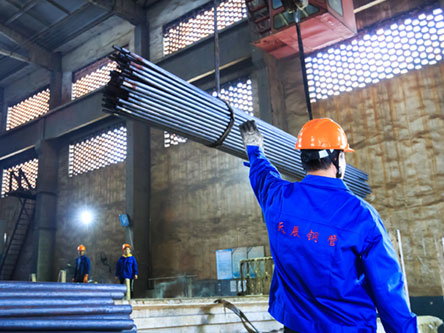

The internal surface of a hydraulic cylinder tube determines far more than most engineers initially expect. After years of working with precision tubing, the relationship between surface finish and system longevity becomes impossible to ignore. A tube that measures correctly on paper can still fail prematurely if the honing parameters miss their targets by seemingly small margins. This piece walks through the surface finish standards that separate reliable hydraulic systems from those headed toward early maintenance cycles.
Surface Finish Parameters That Actually Matter
The internal surface of a honed hydraulic cylinder tube gets defined by several measurable characteristics. Each one plays a distinct role in how the finished tube performs under real operating conditions.
Average Roughness (Ra) gives the arithmetic mean of profile deviations from the center line. Lower Ra values mean smoother surfaces, which translates directly to reduced friction against seals. Most hydraulic applications target Ra values between 0.05 and 0.4 µm.
Mean Peak-to-Valley Height (Rz) captures the average distance between the highest peaks and lowest valleys across a sampling length. This measurement reveals abrasive wear potential that Ra alone might miss. Typical hydraulic specifications call for Rz values between 0.4 and 3.0 µm.
Reduced Peak Height (Rpk) measures how much material protrudes above the core roughness profile. High Rpk values cause accelerated seal wear during break-in periods. Controlling this parameter during honing prevents the sharp peaks that damage seals in the first hours of operation.
Reduced Valley Depth (Rvk) represents the average depth of valleys below the core profile. These valleys serve as lubricant reservoirs, maintaining the fluid film that keeps seals from running dry. Target values typically fall between 0.2 and 1.0 µm.
Core Roughness Depth (Rk) defines the functional portion of the surface that carries load over time. This parameter influences long-term wear patterns more than initial performance.
Bearing Ratio Curve provides the complete picture of material distribution at different surface depths. This curve shows both load-bearing capacity and lubrication retention characteristics in a single visualization.
| Parameter | Typical Hydraulic Range (µm) | Significance for Performance |
|---|---|---|
| Ra | 0.05 – 0.4 | Reduced friction, seal wear |
| Rz | 0.4 – 3.0 | Abrasive wear potential |
| Rpk | 0.05 – 0.3 | Initial seal wear |
| Rvk | 0.2 – 1.0 | Lubrication retention |
Advanced profilometers capture these measurements with precision that manual inspection cannot match. The data drives manufacturing decisions that determine whether a tube meets specifications or gets rejected.
What Honing Actually Does to Cylinder Performance
Honing creates more than a smooth bore. The process generates a specific cross-hatched pattern on the internal surface that serves multiple functions simultaneously.
The cross-hatch angle holds lubricating fluid in place while allowing controlled flow along the cylinder length. Too steep an angle and fluid drains away. Too shallow and the pattern provides insufficient retention. The intersection of these angled scratches creates the micro-reservoirs that keep seals lubricated through millions of cycles.
Friction reduction comes from minimizing the actual contact area between piston seals and cylinder walls. A properly honed surface touches seals only at controlled points rather than across the entire circumference. Less contact means less heat generation and lower power consumption.
Seal longevity depends heavily on maintaining that fluid film between rubber and steel. The Rvk valleys hold just enough oil to prevent dry running without creating excessive leakage paths. Seals that run against properly honed surfaces routinely last three to five times longer than those against inadequately finished bores.
Corrosion resistance improves because the consistent surface eliminates the microscopic pits and crevices where moisture accumulates. Corrosion typically starts at surface irregularities, so removing them delays degradation even in humid or chemically aggressive environments.
Fatigue life benefits from the uniform stress distribution that honing creates. Surface imperfections act as stress concentrators that initiate cracks under cyclic loading. Removing these weak points allows the base material to perform closer to its theoretical limits.
Wear resistance stems from the even load distribution across the bearing surface. Without honing, localized high spots carry disproportionate loads and wear rapidly. The resulting uneven surface accelerates further wear in a destructive cycle.
Standards That Define Acceptable Quality
International standards provide the common language for specifying and verifying honed hydraulic cylinder tube quality. Different regions developed their own frameworks, but the underlying requirements share significant overlap.
ASTM A519 covers seamless carbon and alloy steel mechanical tubing manufactured in North America. The standard specifies multiple grades and heat treatment conditions suitable for subsequent honing operations. Material meeting this specification provides the consistent base properties that precision finishing requires.
EN 10305-1 addresses seamless cold-drawn steel tubes for precision applications across European markets. Dimensional tolerances and surface condition requirements align with hydraulic cylinder manufacturing needs. Tubes produced to 《EN10305-1 Steel Pipe》 specifications meet the starting requirements for high-quality honed products.
JIS G3445 establishes Japanese requirements for carbon steel tubes intended for machine structural purposes. Surface finish and mechanical property specifications support hydraulic component manufacturing. Products meeting 《JIS G3445 Steel Pipe》 standards satisfy Asian market requirements.
DIN 2391 defines German standards for seamless precision steel tubes with tight dimensional control and excellent surface quality. The emphasis on precision makes 《DIN 2391 Steel Pipe》 products particularly suitable for demanding honed applications.
ISO 9001 certification addresses the quality management system rather than product specifications directly. Certified manufacturers demonstrate systematic control over their processes, which translates to consistent product quality across production runs.
These standards establish minimum acceptable requirements for material composition, dimensional accuracy, and surface characteristics. Meeting them represents the baseline rather than exceptional performance.
What Ra Values Work for Hydraulic Cylinders
Acceptable Ra values for hydraulic cylinder tubes range from 0.05 µm to 0.4 µm depending on application demands and seal selection. Standard hydraulic cylinders typically specify Ra between 0.2 and 0.3 µm as a practical balance between manufacturing cost and performance. High-performance systems or those using specialized seal materials may require finer finishes approaching 0.05 µm. Seal manufacturers publish compatibility charts that match their products to specific surface finish ranges.
Which Standards Apply to Honed Surface Quality
Multiple international standards govern honed hydraulic cylinder tube surface quality. ASTM A519, EN 10305-1, and JIS G3445 address material, dimensional, and surface requirements for precision steel tubes. EN 10305-2 and ASTM A513 Type 5 cover welded precision tubes that may also undergo honing. These standards ensure that tubes from different manufacturers can be specified and verified using consistent criteria.
Material Selection Sets the Foundation
Superior honed tubes start with appropriate material selection. The base steel determines what surface finish the honing process can achieve and how that finish holds up under operating conditions.
Carbon steel grades provide adequate performance for many hydraulic applications at reasonable cost. The material machines predictably and accepts honing well when properly prepared. Cold drawing before honing improves both dimensional accuracy and surface consistency.
Alloy steels like 《4140 Steel Pipe》 or 《25CrMo4 Steel Pipe》 offer enhanced strength and wear resistance for demanding applications. The alloying elements improve fatigue life and allow operation at higher pressures or temperatures. These materials cost more but justify the premium in critical systems.
Cold drawn seamless tubing provides the best starting point for precision honing. The drawing process refines grain structure, improves concentricity, and creates a consistent surface for subsequent finishing. Starting with quality material makes achieving tight specifications significantly easier.
Custom geometries including square, rectangular, and hexagonal profiles address specialized OEM requirements. Non-round hydraulic components serve specific packaging or functional needs that standard round tubes cannot meet.
Quality Control That Catches Problems Early
Reliable honed hydraulic tubes require inspection at multiple manufacturing stages. Catching deviations early prevents wasted processing on material that cannot meet final specifications.
Dimensional verification confirms that outer diameter, wall thickness, and length fall within tolerances before honing begins. Starting with out-of-spec material wastes honing time and produces scrap.
Surface finish inspection uses profilometers to measure Ra, Rz, Rpk, and Rvk values after honing. Visual examination supplements instrument readings by detecting macroscopic defects that numbers might miss.
Non-destructive testing identifies internal flaws that could cause failure under pressure. Eddy current and ultrasonic methods reveal subsurface discontinuities without damaging the tube.
Positive material identification confirms chemical composition matches specifications. PMI prevents material mix-ups that could put the wrong alloy into a critical application.
Hardness testing verifies mechanical properties meet requirements. Hardness correlates with wear resistance and load-carrying capacity.
Hydrostatic testing subjects tubes to pressures exceeding normal operating levels. Tubes that pass confirm their ability to contain hydraulic fluid safely.
Integrating these checks throughout manufacturing catches problems when correction remains possible. Finding defects at final inspection means scrapping completed work.
Why Specifications Exist Beyond Paperwork
Honing specifications exist because deviations cause real operational problems. The numbers in standards represent accumulated experience with what works and what fails.
Surfaces that finish too rough accelerate seal wear. The peaks on a rough surface act like microscopic cutting tools against seal material. Seals that should last years fail in months when running against inadequately finished bores.
Surfaces that finish too smooth create different problems. Without sufficient valley depth to retain lubricant, seals run dry during portions of each stroke. Dry running generates heat and causes stick-slip motion that damages both seals and cylinder walls.
The cross-hatch pattern matters beyond simple roughness numbers. Honing creates directional texture that guides lubricant flow and distributes wear evenly. Random scratches from improper finishing cannot replicate these functional characteristics.
Meeting specifications costs money during manufacturing but saves far more during operation. Cylinders that meet proper honing standards require less maintenance, consume less power, and last longer before replacement. The economics favor precision even when initial costs run higher.
Working with Tenjan on Precision Tubing
Changzhou Tenjan Steel Tube Co., Ltd has manufactured precision honed hydraulic cylinder tubes since 2004. Vertical integration from raw material through finished product provides control over every manufacturing stage. Compliance with ASTM, EN, DIN, and JIS standards ensures products meet international requirements.
For applications requiring specific material grades, dimensional tolerances, or surface finish parameters, technical consultation helps match tube specifications to system requirements. Contact information: Email: [email protected] | Tel: +86 51988789990 | WhatsApp: +86 13401309791
FAQ
What advantages do honed tubes provide over standard tubes?
Honed hydraulic cylinder tubes deliver internal surface finishes that standard tubes cannot match. The precision finish reduces friction between pistons and cylinder walls, extends seal service life, and improves overall system efficiency. The controlled surface texture maintains fluid film lubrication that prevents metal-to-metal contact during operation. These benefits compound over time through reduced maintenance requirements and longer component life.
How does Tenjan verify surface quality on honed tubes?
Manufacturing starts with material verification through PMI testing to confirm correct alloy composition. In-process dimensional checks ensure tubes remain within tolerance through each operation. Surface finish measurement using calibrated profilometers confirms Ra, Rz, Rpk, and Rvk values meet specifications. Non-destructive testing identifies any internal discontinuities that could compromise performance. This systematic approach catches deviations before they reach customers.
Can Tenjan produce custom honed tubes for specialized applications?
Custom manufacturing addresses applications where standard products fall short. Non-round geometries including square, rectangular, and hexagonal profiles serve specific design requirements. Material grade selection matches mechanical properties to operating conditions. Dimensional tolerances and surface finish parameters adjust to meet particular seal compatibility or performance targets. Engineering support helps translate application requirements into manufacturable specifications.