
Finding reliable flower suppliers at IFEX requires observing export readiness indicators that separate serious exporters from unprepared growers. After fifteen years of industry analysis and exhibition planning in Kunming, I have seen buyers make the same costly mistake: they mistake a warm smile and a beautiful display for supply capability. At IFEX, reliability is rarely declared—it is demonstrated through the operational details a grower or exporter presents on the booth and their ability to answer specific compliance questions. This article lays out a step‑by‑step approach to supplier screening that goes beyond generic questioning, drawing on real exhibitor behaviors observed across multiple exhibition seasons.
Pre-Show Supplier Research Using IFEX Resources
Most buyers arrive at IFEX with a list of target varieties, but the strongest sourcing outcomes start weeks before the event. The official exhibitor directory, available through the IFEX matchmaking platform, allows you to filter potential partners by product category, export experience, and production scale. Spend time on this before your flight; a focused shortlist prevents the “walking the aisles hoping to spot something” approach that burns the first day.
| IFEX Resource | What to Check | Why It Matters |
|---|---|---|
| Exhibitor directory | Years of export experience, certifications listed | Signals regulatory compliance and market exposure |
| Product catalog preview | Specific flower varieties with HS codes | Confirms the supplier handles your exact product category |
| Matchmaking platform | Requested buyer profile, inquiry response speed | Reflects commercial readiness and English-language capability |
| Floor plan | Booth size and location | Larger raw‑space booths often indicate investment in export branding |
The exhibitor directory is a screening tool, not a final list. Export experience “since 2019” means something different for a grower shipping to Japan than for one selling domestically. Cross‑reference this with the show floor plan; a 36 sqm booth in the main hall with branded cold‑chain messaging suggests a supplier who has already invested in buyer visibility.
Reading the Booth: Visual Cues of a Reliable Flower Supplier
On show days, I recommend one rule: spend the first hour scanning booths, not talking. A supplier’s readiness is usually visible before you exchange a word. Look for three signals in particular.
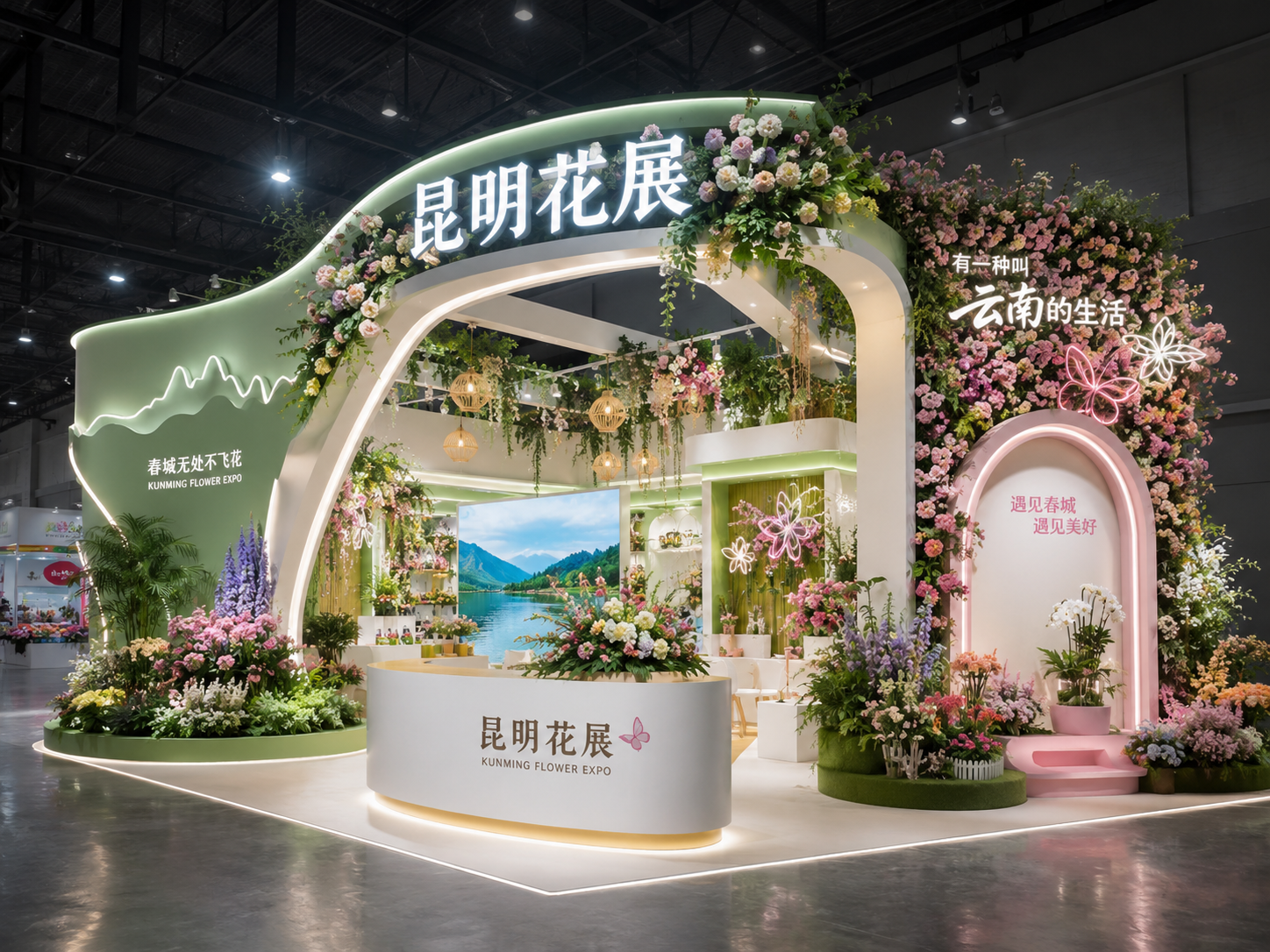
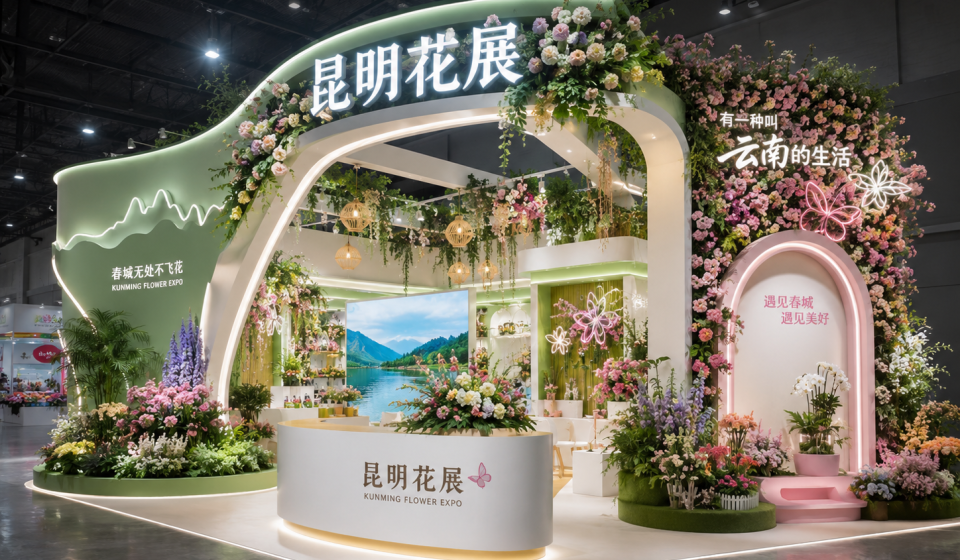
First, sample presentation. Reliable exporters bring enough cut‑flower samples to demonstrate multiple maturity stages and packaging styles. A booth with only a few stems in consumer‑style wrapping is a red flag; commercial samples should be packed in export sleeves, with bunches separated by variety and labeled with grade information. Second, documentation accessibility. The booth table should carry laminated copies of phytosanitary certificates, MPS certification records, or recent fumigation logs, not just a product brochure. Exporters who have them ready are accustomed to buyer scrutiny. Third, booth personnel. If the person at the desk cannot name the cold‑chain partner or the typical transit time to Rotterdam in precise hours, you are speaking with a sales representative without logistics authority. Ask for the export manager directly.
Beyond the Pitch: Vet Suppliers with These Questions
Once you have identified booths that pass the visual check, move to a structured conversation. This is where most buyers lose rigor. The typical opening round of “What’s your price for 40‑cm roses?” generates a number, not a supplier evaluation.
Ask questions that force the supplier to describe their operational process. For example, “Walk me through your cool chain from harvest to airport handover” reveals whether the supplier tracks temperature continuously or simply loads a reefer truck. One Dutch buyer I observed at IFEX 2025 used a simple test: he asked to see a photograph of the farm’s packing hall taken that morning. The exhibitor who immediately opened a phone gallery was far more credible than the one who said “I can send it later.” Similarly, inquire about minimum order quantities not as a figure but as a scenario: “If my first trial order is 200 stems per variety, what freight consolidation options are possible?” The answer exposes whether the supplier is flexible or rigidly tied to a single logistics provider.
Other operational questions include: “What is your procedure if a shipment arrives with 5% Botrytis damage?” and “On a shipment to Dubai, what temperature deviation triggers an alert in your data logger?” Reliable suppliers answer these in the same tone they use for pricing; unreliable ones pause and pivot to general assurances.
Direct Sourcing from Yunnan Growers at IFEX
One structural advantage IFEX offers that many international shows cannot match is direct access to Yunnan’s growers, not just trading companies. Because Kunming sits in the center of China’s largest cut‑flower production zone, farms from Tonghai, Yuxi, and Dounan attend with full‑time production staff on the booth.
This changes the sourcing dynamic. When you speak with a grower who manages their own greenhouse, the conversation shifts from “we can source that” to “our block B2 harvested that variety last week, and here is the brix test result.” For a buyer, the difference matters: direct grower relationships shorten the feedback loop for variety trials, allow you to specify harvest stage tolerances, and often reduce cost by removing one layer of margin.
During the show, identify grower‑owned operations by checking the exhibitor profile for the phrase “production base” or “种植基地.” Ask to see farm registration documents and acreage counts. An operation with 20 hectares of roses and a tissue‑culture lab is in a different reliability category from a two‑hectare poly‑tunnel grower. Both can be viable depending on your channel, but you need to know which you are dealing with.
From Handshake to Contract: Post‑Show Supplier Follow‑Up
The suppliers you shortlist during the show should receive a structured follow‑up within 72 hours. Send a one‑page document summarizing the varieties discussed, target order volumes, and your quality specifications. Request a pro‑forma invoice that includes the Incoterm you agreed on, packing charges, and the estimated air‑freight cost per kilogram.
This is also the moment to move from booth promises to documented proof. Request recent third‑party lab reports, a packing video, and a customer reference in a market similar to yours. I have seen buyers shorten their trial order cycle by six weeks simply because they asked for a reference call before the first shipment, not after a problem arises.
If you negotiated with multiple suppliers, manage the comparison phase diligently. Track each supplier’s response time, the completeness of their documentation, and their willingness to accept a small trial order on standard payment terms. A supplier who pushes for 50% prepayment on a first order while offering no third‑party inspection option is signaling higher risk, regardless of how impressive the booth looked.
What Procurement Teams Ask About Evaluating IFEX Suppliers
How do I verify a supplier’s export experience on the spot?
Ask for the specific country names and the third‑party logistics provider they work with there. A supplier who says “we export to the Middle East” is less useful than one who says “three containers a month to Dubai via Emirates SkyCargo, with Al‑Farida Cargo Services as our consignee agent.” The latter is a verifiable statement.
What if the supplier cannot provide phytosanitary certificates immediately?
This is not automatically disqualifying, but it changes your timeline. A reputable grower will have a recent certificate for a previous shipment and can walk you through the fumigation protocol they use. If they cannot name the local CIQ office or the usual processing time, prioritize other booths.
Should I visit the farm after the show?
Absolutely, if your budget allows an extra two days. Farms within an hour of Kunming can be visited, and they often expect post‑show buyers. A farm visit reveals irrigation consistency, worker discipline, and actual cold‑storage practices in a way no booth conversation can. IFEX exhibitors from Yunnan are accustomed to farm visits; raise the possibility during the booth meeting and gauge enthusiasm.
Is it safe to place a trial order directly at the show?
Booth‑day orders are common for returning buyers, but for a first order I recommend finalizing terms after the show when you have had time to compare offers and receive reference documentation. The booth meeting is for qualification and alignment; the contract follows once documentation is cross‑checked. Protect your position by using a letter of credit or a purchase order with clear quality‑claim terms.
What is the single most reliable indicator of a supplier’s long‑term capability?
The specificity with which they discuss failure. A supplier who can describe a past shipment that went wrong, the root cause, and the corrective action taken is demonstrating process maturity. A supplier who insists “we never have problems” is either lying or has too little experience to have learned anything. If your next sourcing visit depends on finding that kind of transparency, share your requirements with our team at [email protected] or call +86 10 5933 9349—we can connect you with exhibitors who match your quality threshold.