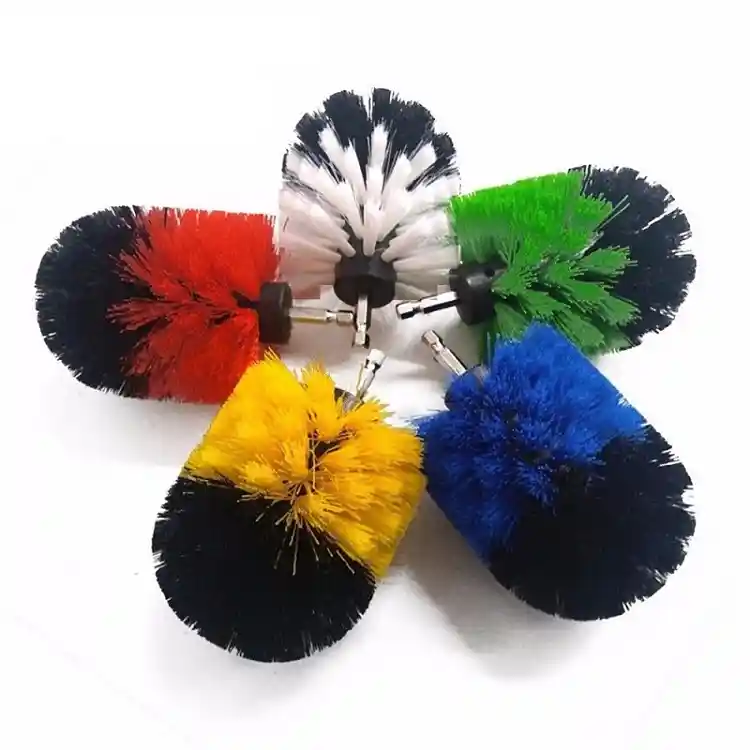

Manual scrubbing of tile, grout, or car upholstery is slow work that rarely delivers a deep clean. A drill brush changes the equation by mounting onto a cordless drill and delivering hundreds of rapid rotations per minute, stripping away grime that hand scrubbing cannot touch. The result is faster, more uniform cleaning across large surfaces. But the real difference between a satisfying clean and scratched surfaces or broken stems lies in brush design, not just speed. I’ve spent over fifteen years in industrial brush manufacturing, and in that time I’ve seen how small changes in filament material, density, and stem construction separate a tool that works once from one that lasts.
What Makes a Drill Brush So Effective for Deep Cleaning?
A drill brush’s effectiveness comes from turning a power tool’s rotation into scrubbing action, but several design factors determine whether it cleans well or just spins in place. First, bristle stiffness needs to match the soil type. Soft nylon filaments work on delicate surfaces like car paint or polished stone, while medium-density nylon with abrasive grit cuts through baked-on grime. Second, brush density affects how many filaments contact the surface per rotation. A densely packed brush head covers more area and cleans faster than a sparse one. Third, the stem design influences stability. We’ve seen cheap brushes with undersized hex shanks slip in the drill chuck, causing uneven cleaning and even breaking under torque. A properly engineered drill brush maintains consistent rotation at drill speeds up to 2,500 RPM without wobbling.
How Do You Choose the Right Drill Brush for Your Surface?
The wrong bristle can scratch glass or soften paint. Match the brush to your cleaning job before you start.
| Bristle Material | Best for Cleaning | Surface Compatibility | Note |
|---|---|---|---|
| Nylon (general) | Light soil, everyday cleaning | Tile, plastic, sealed stone | Softer option, minimal risk of scratching |
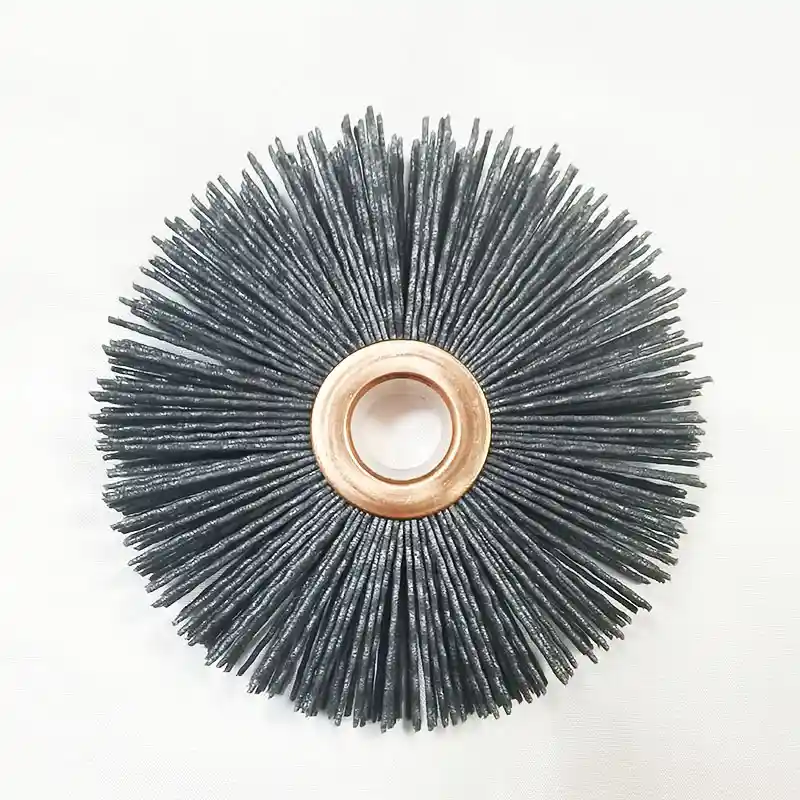
| Abrasive nylon | Heavy grime, rust, scaling | Concrete, metal, tough grout | Contains silicon carbide grit for extra scrubbing power |
| Brass-coated steel | Stubborn deposits on metal | Steel, cast iron | Avoid on softer metals like aluminum |
| Stainless steel | Rust removal, weld cleaning | Stainless steel, hard alloys | Will scratch coated surfaces |
Beyond material, brush shape matters. Flat disc-style drill brushes provide even coverage on large, flat surfaces like floors and walls. Cone or dome-shaped brushes reach into corners and curved contours. The stem diameter must match your drill’s chuck. Most common are 1/4-inch hex shanks, but always verify before buying.
If your cleaning application involves aggressive chemicals or high-speed polishing, the filament material becomes critical. Share your requirements with us and we can recommend a grade that won’t degrade prematurely.
How Can You Use a Drill Brush Without Damaging Surfaces?
Use the right speed and pressure and a drill brush will clean efficiently without leaving scratch marks.
- Test on an inconspicuous area. Run the brush over a small hidden spot to check surface reaction before tackling the whole area.
- Use light pressure. Let the bristle tips do the work; pressing too hard bends filaments and reduces scrubbing action while increasing friction.
- Keep the brush moving. Holding the brush in one spot generates heat that can warp plastic or remove coating.
- Match drill speed to material. For delicate surfaces like painted walls or polished stone, stay below 600 RPM. For hard surfaces, 1,500–2,000 RPM is safe.
- Rinse the brush frequently. Accumulated debris trapped in bristles can act like a sanding paste and scratch the surface.
Why Does Industrial-Grade Construction Matter in a Drill Brush?
Most retail drill brushes are built to a price point, using lower-grade nylon and simple stem inserts. In contrast, an industrial brush, even a small-diameter drill brush, benefits from production methods developed for heavy-duty applications. We use filament that is properly heat-set and trimmed to uniform length. That prevents the uneven bristle wear that causes some brush heads to leave streaks. The stem connection, often a crimped ferrule or bonded insert, must withstand the side load when you clean at an angle. I’ve examined returned brushes where a poorly bonded stem spun free inside the body after only a few uses. That failure mode doesn’t happen when the stem is mechanically anchored and tested to specific torque values.
How to Get a Drill Brush That Matches Your Cleaning Requirements
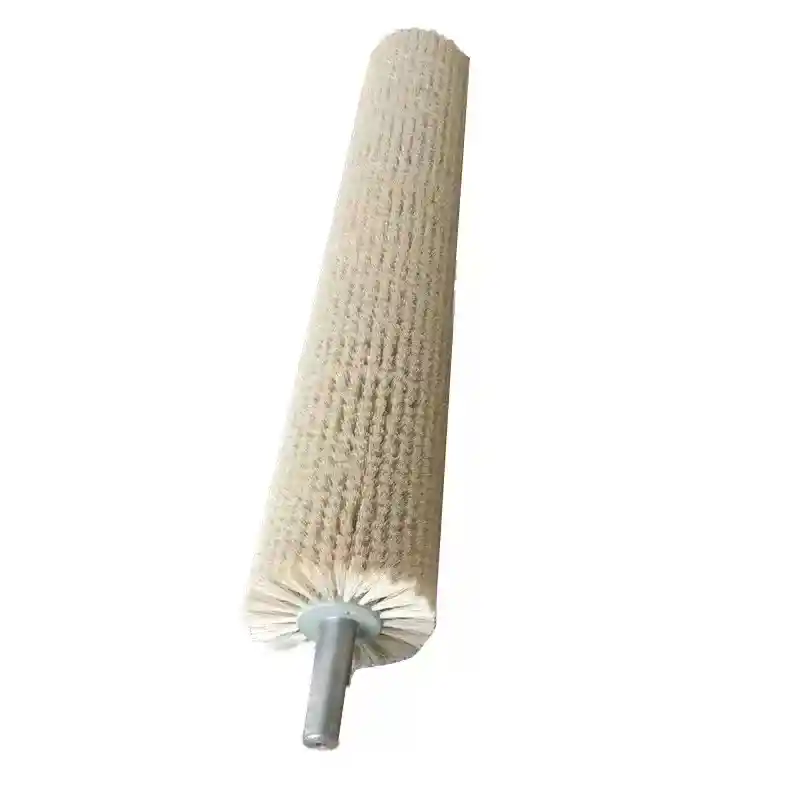
Standard drill brushes from hardware stores work for simple home cleaning, but if your job involves chemicals, high temperatures, or repeated daily use, a purpose-built brush pays for itself in durability and time saved. At Huixi Brush, we design drill brushes with filament and stem specifications matched to your exact job. Whether you need an FDA-approved nylon for food equipment or an abrasive brush for paint prep, we can manufacture to your drawing or sample. Contact our engineering team at [email protected] or call +86 1580 0932 713 with your brush diameter, stem size, and preferred filament type. We’ll provide a recommendation and a sample for evaluation before you commit to production.
Common Questions About Drill Brush Cleaning
How long does a drill brush last?
A well-made drill brush with industrial-grade nylon filament typically lasts through 20–30 deep cleaning sessions before showing noticeable wear, assuming you clean it and let it dry between uses. Wire brushes may last longer but are used for heavier tasks, so their service life depends more on the pressure applied and the surface hardness.
Can I use a drill brush on car paint safely?
Many people assume any brush scratches paint, but soft nylon drill brushes used at low speed with plenty of soapy water can clean wheels and engine bays without damage. They should never touch clear coat or interior dash plastics. For car exteriors, stick to microfiber pads.
Do I need a specific drill for a drill brush?
It depends on your project. Any cordless drill with a 3/8-inch chuck will work for light scrubbing. For heavy-duty descaling or rust removal, you’ll want a drill with higher torque and a side handle for control. A variable-speed trigger is essential to avoid accidental high-speed starts.
In our work with customers, we often see people buying wire drill brushes for tile and regretting it.
Wire bristles are aggressive and can scratch ceramic glaze. Unless you’re removing rust from metal, stick to abrasive nylon for tile and grout. The embedded silicon carbide grit in abrasive nylon gives the cutting power without the risk of gouging.
What’s the advantage of a custom drill brush over off-the-shelf?
Standard brushes suit general tasks, but if your cleaning process involves chemical exposure, repeated use, or very tight spaces, a custom brush with chemical-resistant filament and a tailored stem size will outlast any generic alternative. If you’re buying for a business or a specialty application, share your part number and expected quantity and we can advise on the right construction.
If you’re interested, check out these related articles:
advantage of hx boiler tube brush
advantage of hx cylindrical sanding brushes
brushes for steel wire industries cleaning descaling derusting polishing
where stainless wire spiral brush can be used
the differences between inward and outward spiral brush