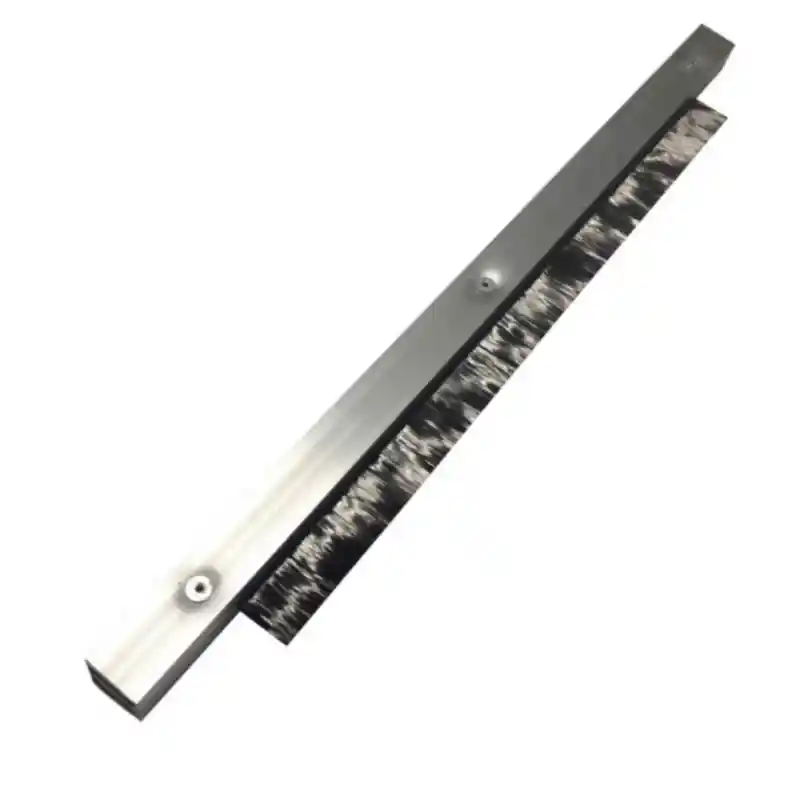

Brass strip brushes solve a specific problem that harder materials cannot: they clean, seal, and finish soft metals without leaving marks. After working with these tools across hundreds of applications, the pattern becomes clear—when aluminum, copper, or brass components need surface treatment, the brush material matters as much as the technique.
How Brass Strip Brushes Actually Work
A brass strip brush consists of brass wire bristles crimped into a metal channel, forming a continuous strip that can be cut, bent, or mounted to fit specific equipment. The brass wire itself is the critical element. Brass sits lower on the hardness scale than steel, which means the bristles yield slightly when they contact a surface rather than gouging into it.
This softness is not a weakness. For delicate finishing work, it is precisely what prevents scratching on surfaces that would be damaged by more aggressive materials. The strip brush construction allows manufacturers to control filament diameter, density, and trim length—each variable shifting how the brush behaves during operation. A denser brush with shorter bristles applies more pressure per square inch. A lighter configuration with longer filaments flexes more and touches surfaces gently.
The metal channel backing, typically galvanized or stainless steel, determines how well the brush holds up in different environments. Stainless steel backings resist corrosion in wet or chemically exposed settings, while galvanized steel works well for standard industrial conditions.
## Brass Strip Brushes Outperform Steel on Soft Metals
Steel brushes work aggressively. That aggression is useful for removing rust, scale, or heavy contamination from hard metals. But run a steel brush across an aluminum panel or a copper connector, and the surface shows it immediately—scratches, embedded particles, and a finish that requires additional work to correct.
Brass strip brushes avoid this damage entirely. The bristles clean and condition without removing base material or leaving visible marks. This matters in applications where surface appearance affects function, such as electrical contacts that need clean metal-to-metal connections or decorative components where scratches are unacceptable.
Brass also resists corrosion better than plain steel. In environments with humidity, chemical exposure, or temperature cycling, brass bristles maintain their integrity longer. This resistance prevents contamination transfer—the brush does not shed rust particles onto the workpiece.
| Feature | Brass Brushes | Steel Brushes |
|---|---|---|
| Abrasiveness | Low (non-scratch) | High (aggressive) |
| Material Hardness | Softer | Harder |
| Corrosion Resistance | Excellent | Good (stainless steel better) |
| Application | Soft metals, delicate surfaces | Hard metals, heavy-duty cleaning |
| Surface Finish | Smooth, polished | Rougher, more aggressive removal |
Where Brass Strip Brushes Perform Best
Sealing applications rely on the brush’s ability to conform to irregular gaps while blocking contaminants. A brass strip brush mounted along a conveyor opening flexes against moving parts, preventing dust and debris from entering enclosed machinery. The bristles compress and recover repeatedly without losing their shape or shedding. Cleanroom environments use these brushes at entry points and around equipment enclosures where particle control is critical.
Finishing applications take advantage of the non-marring contact. Deburring soft metal stampings, conditioning surfaces before coating, and polishing components for assembly all benefit from brass bristles. Electronics manufacturing uses brass strip brushes for circuit board cleaning—removing flux residue and particulates without damaging traces or pads. Aerospace component finishing requires surface treatments that do not compromise material integrity, making brass brushes a standard choice.
Static control adds another dimension. Brass conducts electricity, allowing brushes to dissipate static charges that accumulate on moving materials. This property proves valuable in printing, packaging, and electronics assembly where static discharge can damage products or create handling problems.
Soft Metals That Work Well with Brass Brushes
Aluminum, copper, and brass alloys respond well to brass strip brush treatment. These metals share relatively low hardness ratings compared to steels, making them susceptible to scratching from harder brush materials. Brass bristles match or fall below the hardness of these workpiece materials, preventing the brush from cutting into the surface.
Precious metals—gold, silver, platinum—also benefit from brass brush treatment when cleaning or surface preparation is needed. The gentle action removes contamination without affecting the base material, which matters when working with expensive or irreplaceable components.
Getting the Brush Specifications Right
Selecting a brass strip brush involves matching the brush characteristics to the application requirements. Filament diameter affects stiffness—thicker wires provide more aggressive action, while finer wires flex more readily for delicate work. Density determines how many bristles contact the surface simultaneously, influencing both cleaning effectiveness and the pressure applied to the workpiece.
Trim length, the distance from the channel to the bristle tips, controls flexibility and reach. Longer trim lengths allow bristles to enter recesses and conform to contours. Shorter trim lengths create stiffer brushes that apply more consistent pressure across flat surfaces.
The backing material choice depends on the operating environment. Galvanized steel channels work for most dry industrial settings. Stainless steel backings resist corrosion in wet environments, chemical exposure, or applications requiring frequent washdown. Aluminum channels reduce weight when that matters for equipment design.
Filament Density and What It Changes
Higher filament density packs more bristles into each inch of brush length. This configuration increases the contact area and distributes pressure across more points, which improves sealing effectiveness and provides more thorough surface coverage during cleaning operations. Dense brushes also last longer because the wear distributes across more individual bristles.
Lower density brushes touch surfaces more lightly. This matters for polishing operations where minimal pressure prevents heat buildup or surface distortion. The reduced density also allows debris to escape from between bristles rather than accumulating in the brush face.
For sealing applications, density directly affects how well the brush blocks contaminants. A high-density brass strip brush creates a more complete barrier, filling gaps more thoroughly than a sparse configuration.
Custom Configurations for Specific Applications
Standard brass strip brush configurations cover many common applications, but specialized requirements often need custom solutions. Brush manufacturers can adjust filament specifications, backing materials, and overall dimensions to match specific machinery or process requirements.
Shanghai Huixi Trading Co., Ltd. provides ODM and OEM manufacturing for brass strip brushes, drawing on 16 years of production experience. Custom designs address challenges that off-the-shelf products cannot solve—unusual mounting configurations, specific filament blends, or dimensional requirements that standard products do not offer.
Brass Strip Brush Development Continues
Material science advances continue improving brass strip brush performance. New alloy formulations offer enhanced durability or specialized properties for demanding environments. Manufacturing processes are incorporating more sustainable practices, reducing waste and environmental impact while maintaining product quality.
Automation drives much of the current development. Robotic finishing systems require brushes that perform consistently over extended production runs. Brass strip brushes integrated into automated equipment must maintain their specifications through thousands of cycles without degradation that affects process quality.
Frequently Asked Questions About Brass Strip Brushes
What makes brass strip brushes ideal for soft metal deburring and finishing?
Brass wire bristles are softer than the metals they treat, which prevents the brush from scratching or gouging the workpiece surface. This allows effective burr removal and surface conditioning without the damage that harder brush materials would cause. The corrosion resistance of brass also prevents contamination transfer to the finished component.
How do industrial brass strip brushes contribute to effective sealing solutions?
The flexible bristles conform to irregular surfaces and fill gaps that rigid seals cannot address. Dense brass filament arrangements block dust, debris, and light while allowing controlled contact with moving parts. The material’s durability maintains sealing effectiveness over extended service periods without significant bristle degradation.
What are the common applications for brass strip brushes in metal surface treatment?
Electronics manufacturing uses brass strip brushes for circuit board cleaning and static control. Aerospace and automotive industries rely on them for component finishing where surface integrity is critical. General manufacturing applications include deburring stamped parts, conditioning surfaces before coating, and polishing components for assembly.
Partner with Huixi for Superior Brush Solutions
Shanghai Huixi Trading Co., Ltd. manufactures precision brass strip brushes backed by 16 years of production experience. Contact our technical team for application guidance, competitive pricing, and free samples. Reach us at [email protected] or +86 1580 0932 713.