
The difference between an abrasive nylon brush and a wire brush matters more than most people realize until they’ve ruined a surface or watched a wire fragment fly past their face shield. I’ve seen both happen, and neither is something you forget. These two brush types solve fundamentally different problems, and picking the wrong one costs time, material, and sometimes skin.
What Actually Makes These Brushes Different
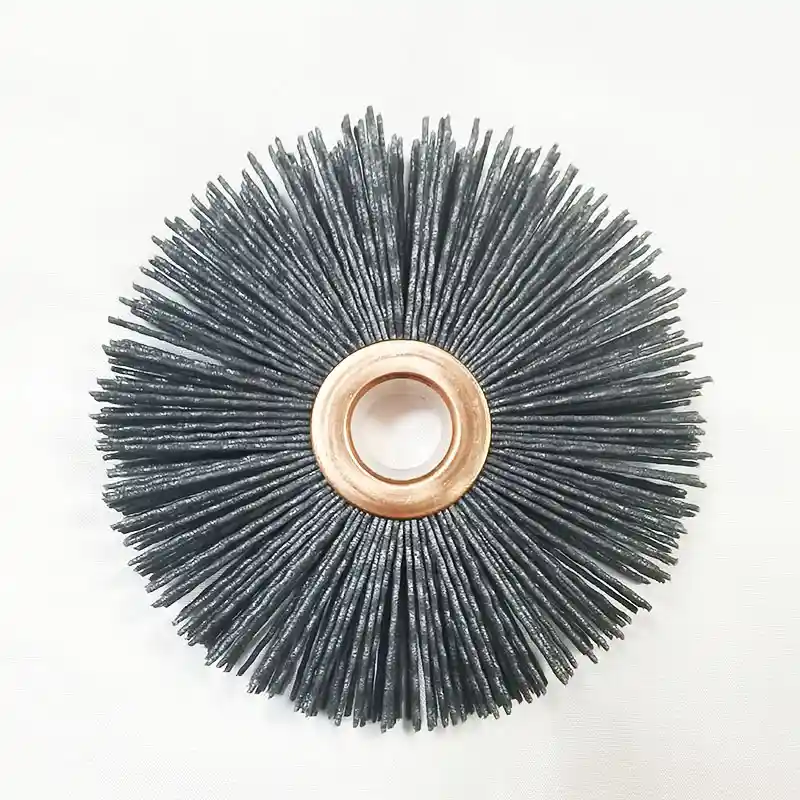
An abrasive nylon brush uses synthetic filaments—usually nylon—with abrasive particles embedded throughout the material. The grit is typically silicon carbide grit or aluminum oxide, distributed evenly so the brush wears down gradually while maintaining consistent cutting action. You can adjust how aggressive the brush behaves by changing the filament density, diameter, and grit size. The result is a tool that flexes around contours while still removing material in a controlled way.
Wire brushes take a completely different approach. Metal filaments do the work, and the metal you choose determines what the brush can handle. Carbon steel wire cuts aggressively and works well for general cleaning and rust removal on steel parts. Stainless steel wire brush options prevent contamination and after-rust on aluminum or stainless workpieces. Brass wire brush versions are softer, useful when you need to avoid sparks or when working on surfaces that scratch easily. Beyond material, the wire configuration matters—crimped wires flex and conform, while knotted configurations hit harder and last longer under heavy use. Huixi Brush manufactures both types across multiple formats: cylindrical brushes, spiral brushes, strip brushes, wheel brushes, tube brushes, disc brushes, drill brushes, and wire scratch brushes, each configured for specific industrial requirements.
| Feature | Abrasive Nylon Brushes | Wire Brushes |
|---|---|---|
| Filament Material | Nylon, often impregnated with silicon carbide or AO grit | Carbon steel, stainless steel, brass |
| Flexibility | High, conforming to contours | Moderate to low, depending on wire type and diameter |
| Aggressiveness | Mild to moderate, non-sparking | Moderate to high, can be very aggressive |
| Surface Impact | Polishing, light deburring, surface conditioning | Heavy cleaning, rust/scale removal, weld cleaning |
| Heat Generation | Lower | Higher, especially with aggressive applications |
Keeping Operators Safe With Each Brush Type
Safety requirements diverge sharply between these two brush categories, and treating them the same is a mistake.
Abrasive nylon brushes generate dust and release fine abrasive particles during use. Eye protection and respiratory equipment are necessary, and ventilation systems should capture airborne material before it accumulates. The good news is that these brushes don’t spark, which simplifies their use around flammable materials or in environments where ignition sources create problems.
Wire brushes demand more caution. Individual wires fatigue and break during operation, sometimes launching at velocities high enough to penetrate skin or eyes. Face shields—not just safety glasses—are appropriate for aggressive wire brushing. Spark generation is constant when wire contacts metal, ruling out use near combustibles without additional precautions. Extended use also transmits vibration through the tool, and operators working full shifts with wire brushes should use anti-vibration gloves to reduce long-term injury risk. Training matters here more than with abrasive nylon; operators need to understand tool speed limits, proper approach angles, and the warning signs of a brush that’s wearing unevenly.
What are the key safety differences when using abrasive nylon brushes versus wire brushes?
Abrasive nylon brushes present lower overall risk because they don’t spark and their filaments don’t detach with the same force as metal wires. Dust control and respiratory protection remain important, but the failure mode is less dramatic. Wire brushes require comprehensive protection: face shields for wire expulsion hazards, spark-resistant work areas, and attention to vibration exposure over time. Both brush types benefit from operator training, but wire brush training should specifically cover speed limits, proper pressure, and recognition of worn or damaged brushes before they fail.
How Surface Finish Changes With Brush Selection
The brush you choose writes its signature on the workpiece, and that signature looks very different depending on whether nylon or wire made contact.
Abrasive nylon brushes leave a controlled, uniform texture. The embedded grit creates consistent scratch patterns—often a cross-hatch that improves coating adhesion—without removing excessive material. This makes them effective for surface conditioning before painting, light deburring process work, and edge radiusing where you need a smooth transition rather than a sharp corner. Material removal rates stay low, which protects dimensional tolerances on precision parts.
Wire brushes remove material faster and leave coarser textures. For rust removal, paint stripping, or cleaning weld spatter, that aggressiveness is exactly what you need. The tradeoff is deeper scratch patterns and the potential for surface deformation if pressure or speed gets out of control. Weld preparation benefits from wire’s ability to cut through scale and oxidation, but the same cutting action can damage softer substrates or create stress risers on fatigue-critical parts.
| Characteristic | Abrasive Nylon Brushes | Wire Brushes |
|---|---|---|
| Material Removal | Low to moderate | Moderate to high |
| Surface Texture | Smooth, uniform, cross-hatch pattern | Textured, can create deeper scratch patterns |
| Edge Effect | Gentle edge radiusing, minimal material deformation | Aggressive edge cleaning, potential for sharp edges |
| Polishing | Excellent for light polishing and blending | Less suitable for fine polishing, more for aggressive cleaning |
| Heat Impact | Minimal heat buildup on workpiece | Significant heat buildup possible |
How does the surface finish achieved by abrasive nylon brushes compare to wire brushes on different materials?
Abrasive nylon brushes produce finer, more uniform finishes with predictable scratch patterns. On aluminum finishing applications, they clean and condition without the gouging that wire can cause. Steel deburring with abrasive nylon removes burrs while maintaining surface quality suitable for coating or assembly. Wire brushes work faster on heavy contamination but leave rougher textures. On softer materials—aluminum, brass, plastics—wire can remove too much material or embed fragments into the surface. The choice depends on whether you need aggressive cleaning or controlled conditioning.
Matching the Brush to the Job
Application requirements should drive brush selection, not habit or whatever happens to be on the shelf.
Abrasive nylon brushes fit applications where control matters more than speed. Light deburring solutions on machined parts, blending tool marks, preparing surfaces for adhesive bonding, and cleaning without altering dimensions—these tasks favor nylon’s gentler action. The flexibility of nylon filaments also helps on complex geometries where a rigid brush would miss recesses or damage raised features. Precision finishing on aerospace components, medical devices, or optical equipment typically calls for abrasive nylon.
Wire brushes handle the heavy work. Rust and mill scale removal, stripping old coatings, cleaning weld joints, and preparing structural steel for fabrication all benefit from wire’s aggressive cutting. Wire wheel brush and cup brushes excel at weld cleaning, reaching into joints and removing slag efficiently. Knotted wire wheel brush configurations provide maximum aggression for the worst contamination, while crimped wire wheel brush options offer more control when you need to clean without excessive material removal.
When should I choose an abrasive nylon brush over a wire brush for industrial deburring or cleaning?
Choose abrasive nylon when the workpiece material is soft, when dimensional control matters, when you need a specific surface texture for coating adhesion, or when spark-free operation is required. Delicate surface cleaning on aluminum, brass, or plastic parts; light deburring where burr removal shouldn’t affect part geometry; and surface conditioning before painting or bonding all favor abrasive nylon. The material compatibility of nylon with softer substrates prevents the damage that wire brushes would cause.
Getting Better Results From Either Brush Type
Performance optimization involves the same basic principles for both brush categories, though the specific parameters differ.
Rotational speed affects everything. Too slow, and the brush doesn’t cut effectively. Too fast, and filaments overheat, wear prematurely, or—with wire—break off more frequently. Manufacturers specify maximum operating speeds for a reason, and exceeding them shortens brush life while increasing safety risks. Applied pressure also matters more than most operators realize. Moderate, consistent pressure outperforms heavy force, which deforms filaments and accelerates wear without proportionally increasing material removal.
For abrasive nylon brushes, grit size selection determines the balance between aggression and finish quality. Coarser grits remove material faster but leave rougher surfaces; finer grits polish but work slowly. Filament diameter affects stiffness and conformability. For wire brushes, wire diameter, brush density, and filament configuration (crimped versus knotted) control how the brush behaves. Regular inspection catches wear before it causes problems—uneven wear patterns indicate improper technique or wrong brush selection for the application.
Working With Huixi on Your Brush Requirements
Selecting the right industrial brush affects safety, efficiency, and the quality of finished work. Huixi Brush brings 16 years of manufacturing experience to brush design and production, offering customized brushes across the full range of industrial formats: cylindrical brushes, spiral brushes, strip brushes, wheel brushes, tube brushes, disc brushes, drill brushes, and wire scratch brushes. Our technical support helps match brush specifications to application requirements, and our ODM/OEM services accommodate specific design needs. Contact us to discuss what you’re trying to accomplish.
Email: [email protected]
Phone: +86 1580 0932 713