
When a hotel chain wants guests to remember the lobby before they remember the room number, or a retail brand wants customers to linger longer without knowing why, the answer sits in a bottle of fragrance oil. Custom fragrance development turns that answer into a repeatable, production-ready product, but only when the process is understood as manufacturing rather than magic. I have spent more than ten years in fragrance R&D and production across 68 countries, and the projects that succeed are the ones where the brand brings a clear brief and realistic expectations about iteration and compliance. The formulation itself is methodical. What derails timelines is almost always the gap between what the buyer pictures and what they put on paper.
What You Need Before Starting Custom Fragrance Development
A fragrance manufacturer can formulate almost anything, but it cannot read minds. The single most valuable document in a custom fragrance project is a well-written fragrance brief. Without it, the formulator works blind, guessing at notes and intensity based on vague adjectives like “fresh” or “luxurious.”
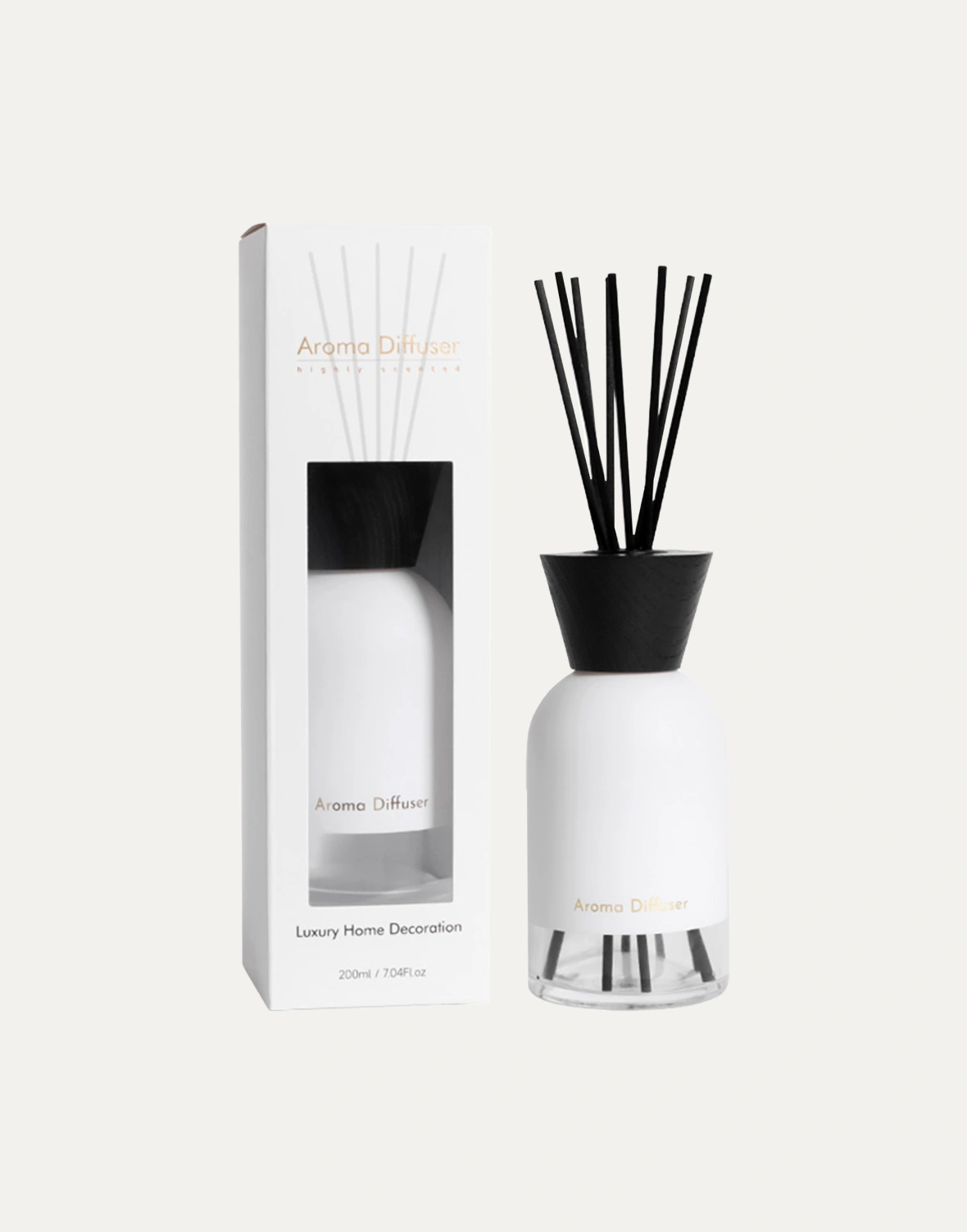
A useful brief covers at least four areas. The application environment comes first: is the fragrance going into an HVAC scent diffuser covering 3,000 square meters, or into a 150ml reed diffuser bottle on a retail shelf? The formulation changes dramatically. HVAC-compatible fragrance oils need different volatility profiles and solvent systems than reed diffuser oils, and getting this wrong means the scent either evaporates too fast or never reaches the target intensity.
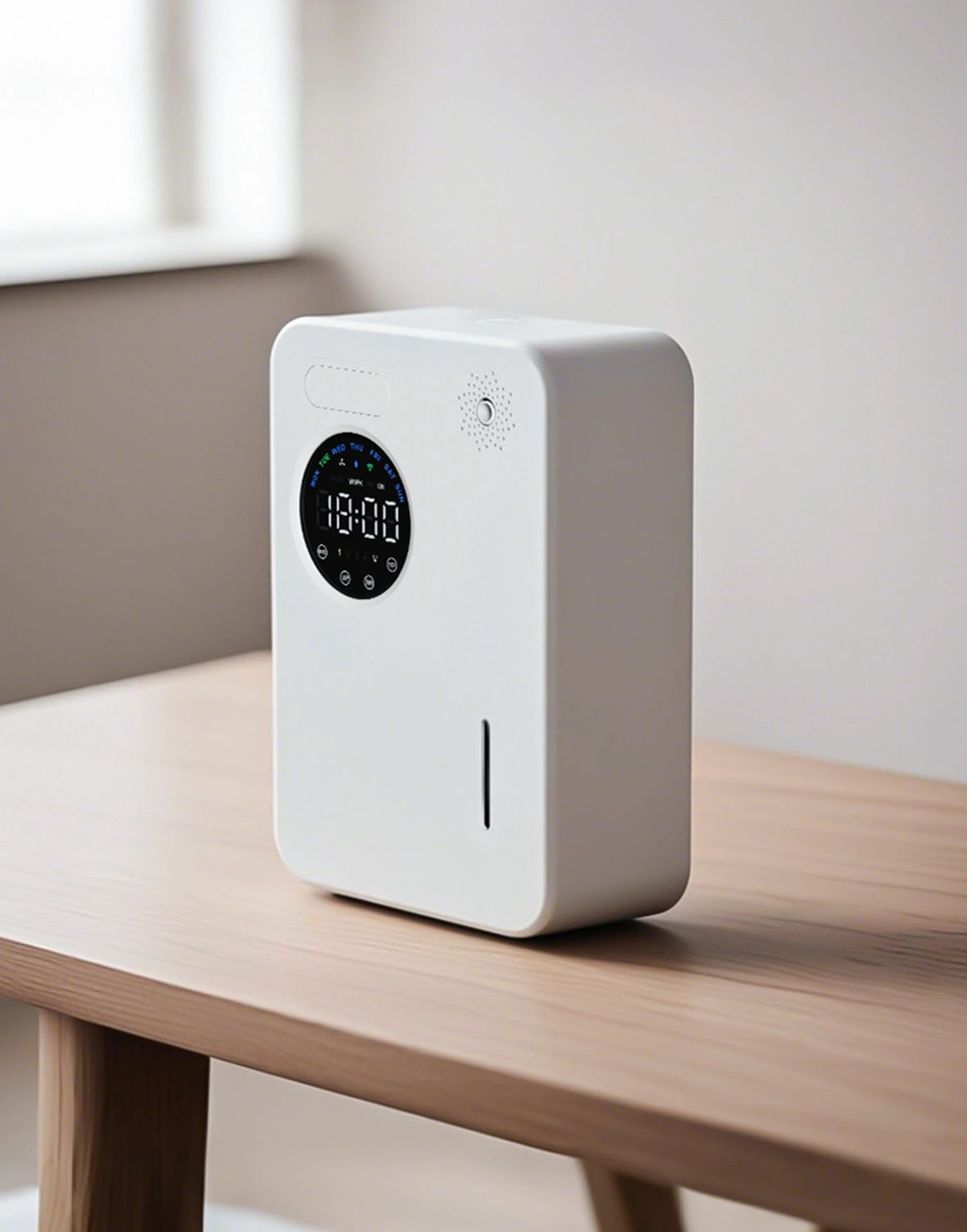 Scent direction forms the second pillar. Reference fragrances, competitor scents, or even non-fragrance references like “cut grass after rain” or “old leather library” give the formulator a target. The third item is intensity profile: do you want strong initial impact or subtle background presence? Different diffusion technologies deliver different experiences. A cold-air diffuser pushing fragrance through a 200-square-meter retail space behaves differently from a passive reed diffuser on a countertop. Fourth, flag any regulatory constraints. Markets like the EU require REACH compliance documentation, and some Middle Eastern countries have ingredient restrictions that limit formulation options.
We have received briefs that were three sentences long and briefs that ran five pages with GC-MS reports attached. Length does not determine quality. Specificity does. “Something like the Westin lobby but warmer” is more actionable than three paragraphs of abstract brand values.
| Application Type | Typical Coverage | Formulation Consideration | Recommended Diffuser Type |
|---|---|---|---|
| Hotel lobby | 500–3,000 m² | Medium volatility, warm base notes, consistent throw | HVAC or standalone tower |
| Retail store | 200–800 m² | Moderate intensity, brand-aligned character | Wall-mounted or ceiling |
| Office workspace | 300–1,000 m² | Low intensity, clean profile, non-intrusive | Desktop or HVAC |
| Luxury boutique | 100–300 m² | High complexity, signature character, precise dosing | Bluetooth APP-controlled |
How the Custom Fragrance Formulation Process Works
Once the brief is in hand, the actual formulation begins. This is where the gap between creative description and chemical reality becomes visible, and where most timeline expectations need adjustment.
The first stage is fragrance direction selection. Using the brief as a reference, the formulator selects three to five existing fragrances from a library — we maintain over 300 — that match the described scent direction. These serve as modification starting points. Building every project from individual raw materials is slower and more expensive than modifying an existing accord, and the results are rarely better. The brand evaluates these directions and provides feedback: too floral, not woody enough, the citrus top note disappears too quickly.
The second stage is iterative modification. Based on feedback, the formulator adjusts the formula: increasing the concentration of certain notes, adjusting fixatives for longevity, or rebuilding the top-note accord entirely. Each modification produces a new lab sample. Across hundreds of projects, I can count on one hand the number of times a first-round sample hit the target exactly. Two to three rounds of modification is typical. Complex briefs with very specific reference scents can take four or five rounds.
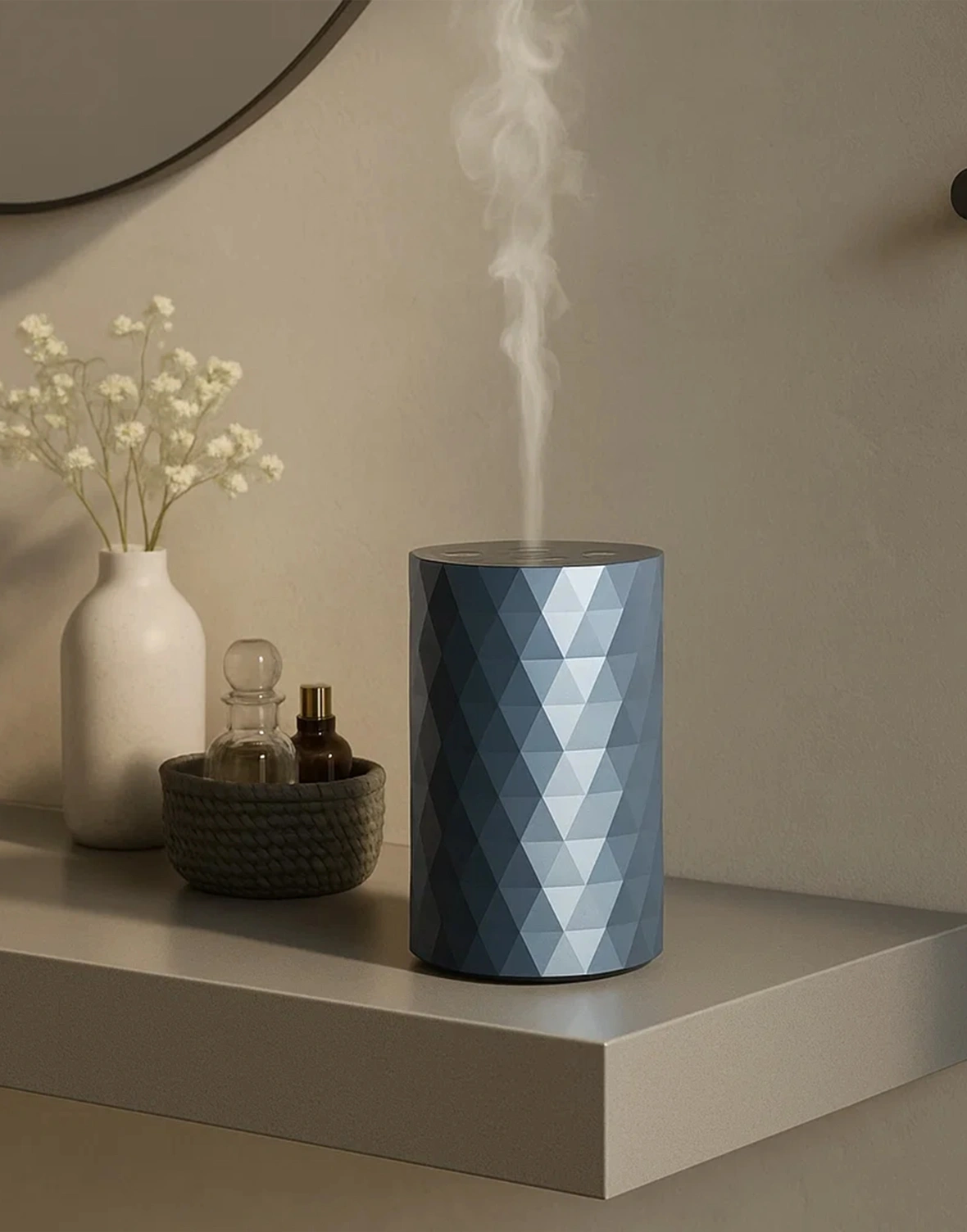
The third stage is stability and compatibility testing. A fragrance that smells perfect in a lab beaker can behave differently in a diffusion system. We test each finalized formulation in the target delivery method — cold-air diffuser, HVAC atomizer, or reed diffuser — to confirm consistent performance over time and verify the fragrance does not separate or degrade in the carrier. This step is non-negotiable for commercial scenting projects but is often skipped by manufacturers who focus only on the oil itself.
If your project involves HVAC integration or multi-location scent programs, confirming compatibility between your fragrance formulation and diffusion hardware before finalizing the formula saves costly reformulation later. Reach out at [email protected] with your application details and we can advise on formulation parameters early in the process.
Compliance and Documentation in Fragrance Development
A fragrance that smells right but lacks documentation is not production-ready. Compliance paperwork is part of the development deliverable, not an afterthought.
IFRA (International Fragrance Association) standards form the baseline for fragrance safety. IFRA publishes usage limits for hundreds of fragrance materials based on toxicological assessment. A formulation that exceeds IFRA limits for a given application category may be unsellable in markets that follow IFRA guidelines. Most commercial buyers need the fragrance to come with an IFRA certificate of compliance as a standard deliverable. We include this from the first formulation round of every custom development project, not retroactively.
For the European market, REACH compliance is mandatory. A custom fragrance exported to the EU must be composed of REACH-registered substances, and the manufacturer must provide documentation tracing each ingredient. This is not a formality. Customs authorities in major EU ports can and do hold shipments pending REACH documentation, and resolving a hold after the container has arrived costs far more than having the paperwork ready before shipping.
Safety Data Sheets are another standard requirement. An SDS covers handling, storage, and emergency response information. For commercial fragrance buyers importing by sea or air freight, the SDS is often required by the shipping company before cargo is accepted. If you plan to ship internationally, confirm that your manufacturer provides SDS documentation in both English and your destination country’s language. Some freight forwarders will reject cargo with documentation only in the origin country’s language.
From Lab Sample to Production-Ready Fragrance
Approving a final lab sample triggers the transition from R&D to production. This step involves more than just scaling the formula.
The approved formula is converted into a master production batch record specifying every raw material, its CAS number, its exact weight or volume, and the blending sequence and conditions — temperature, mixing time, resting periods. A 100-gram lab sample and a 100-kilogram production batch should smell identical, but achieving that consistency requires disciplined batching procedures. Ask your supplier about their batch-to-batch consistency protocol before placing a production order. Not every manufacturer has one.
Minimum order quantities vary by manufacturer and by fragrance complexity. Simple formulations using common raw materials may have MOQs as low as 5 to 10 kilograms. Fragrances built around rare or expensive ingredients — certain natural absolutes, for example — may require larger minimums because the manufacturer must procure specialty materials in economic quantities. We typically quote MOQs during the development phase so there are no surprises at production time.
Lead time from approved sample to finished production ranges from 15 to 30 working days, depending on raw material availability and production queue. Rush orders are possible but often incur a surcharge. If your project has a fixed launch date or seasonal deadline, communicate this during the brief stage so the manufacturer can plan backward from your deadline rather than scrambling against it.
Choosing a Fragrance Manufacturer for Custom Development
Not every fragrance supplier is set up for custom development. Some resell pre-formulated oils and relabel them. Others are production houses that blend purchased formulations but lack in-house R&D. For a genuine custom fragrance, you need a manufacturer with internal formulation capability.
Look for three markers. The first is an in-house fragrance library: a manufacturer that has invested in maintaining hundreds of reference fragrances and accords has the raw material for efficient modification-based development. The second is application-specific testing capability: can they test the fragrance in the actual diffusion hardware you intend to use? The third is compliance documentation as a standard deliverable. If IFRA certificates and SDS documents are treated as optional extras or billable line items, that signals a supplier who views compliance as an inconvenience rather than a core responsibility.
We have worked with brands across 68 countries, from hotel groups needing consistent lobby scents across multiple properties to retailers building signature scent programs for flagship stores. The common thread in successful projects is early, honest communication about timelines, budgets, and technical requirements. A good manufacturer will tell you when your requested timeline is unrealistic or when your target price point conflicts with your ingredient wish list — not after three rounds of sampling, but before the first lab hour is spent.
Creating a custom fragrance is an investment in brand identity. The right manufacturer partner makes the difference between a smooth development process and months of back-and-forth with inconsistent results. If you are ready to start a custom fragrance project, send your brief or initial requirements to [email protected] or call +86 185 6557 5758. We can provide a preliminary assessment of feasibility, timeline, and budget within a few working days.
Common Questions About Custom Fragrance Development
How long does custom fragrance development typically take?
From receiving a complete brief to approving a final lab sample, most projects take 4 to 8 weeks. Each round of formulation and shipping adds time — if your project requires international sample shipping, budget extra days for customs clearance at both ends. After sample approval, production lead time adds another 2 to 4 weeks. A realistic total timeline from first contact to delivered product is 8 to 12 weeks for straightforward projects. Complex formulations, projects requiring rare raw materials, or brands that need extensive iteration may take longer.
What is the minimum order quantity for a custom fragrance?
It depends on the formulation complexity and raw material costs. For most custom fragrance projects using our standard fragrance oil library as a starting point, MOQs begin at 10 to 25 kilograms. Formulations built around premium naturals or rare synthetics may require 50 kilograms or more. We confirm the MOQ during the development phase so it is factored into your decision before any production commitment. If your initial needs are smaller, ask about phased production agreements — splitting the MOQ across multiple shipments sometimes works.
Can I modify an existing fragrance instead of starting from scratch?
Yes, and this is actually how most custom fragrance projects work. Modifying an existing fragrance from our library of over 300 scents is faster and more cost-effective than building a formula from individual raw materials. You might select a sandalwood-amber base and ask us to add more citrus top notes, or take a fresh floral accord and deepen it with woody undertones. The modification approach typically cuts development time by 30 to 50 percent compared to a fully bespoke formulation while still producing a scent unique to your brand.
In programs we have supported, the first-round sample rarely matches the brief perfectly — should I be concerned?
No. A mismatch between the first sample and the brief is normal, not a red flag. Fragrance communication has inherent ambiguity: “fresh” can mean citrus, aquatic, green, or aldehydic depending on context, and the formulator picks the interpretation that best matches the rest of the brief. When a first round misses, the solution is almost always a more detailed conversation rather than a new formulator. We schedule a call or video meeting to discuss specific reference scents and narrow the language gap. Rarely does a project require a complete restart; more commonly, one focused conversation resolves the mismatch in a single additional round.
What documentation will I receive with a custom fragrance order?
Every custom fragrance we develop comes with an IFRA certificate of compliance confirming all ingredients are within IFRA usage limits for the intended application category, a Safety Data Sheet covering handling and storage, and a certificate of analysis for the production batch. For EU-bound shipments, we provide REACH compliance documentation tracing each substance. If your market has additional requirements beyond these standards, share those constraints during the brief stage so we can confirm documentation coverage before any formulation work begins. Send your requirements to [email protected] and we will clarify what is feasible.
If you’re interested, check out these related articles:
