
Global brands like KUKKO and Avron don’t walk CIHS looking for the cheapest booth. They walk the halls with a shortlist, a documentation checklist, and a qualification scorecard — and they use the scale of the show to run more verification in three days than most buyers complete in three months.
CIHS makes that pace possible. The event covers 120,000 square meters across hand tools, power tools, fasteners, garden and outdoor tools, personal protective equipment (PPE), and smart locking systems. The most recent edition recorded 2,977 exhibitors and 77,016 professional visitors from 123 countries and regions [1]. That density is exactly what a structured buying team wants: enough options to compare, and enough density to audit efficiently.
In this article, we break down the non-negotiables global brands apply in the aisles — and how you can use the same filters, whether you buy one container a year or fifty.
What “Global Brand” Sourcing Really Means
For a local distributor, sourcing can be transactional: find the product, agree on price, place the order. For a global brand, sourcing is a qualification process.
A global brand sends a sourcing decision through more than one desk. A product manager sets the specification. A quality or compliance reviewer checks certifications. A supply-chain manager assesses capacity and lead time. Finance reviews payment terms. That internal sign-off chain changes what a buyer can accept in a first meeting — and what a prepared supplier shows first.
We call this vendor qualification: proving a supplier can hold the spec, the schedule, and the compliance record before the first order is placed, not after.
For buying teams like KUKKO and Avron, this means CIHS is not just a discovery stop. It is a documentation-verification stop. They arrive knowing which supplier categories they need, and they test whether a booth can clear the first qualification gate inside a 20-minute meeting.
The Four Checks Global Buyers Run at Every Booth
In the aisles, global-brand buyers compress verification into four predictable checks. Prepared suppliers answer them without scrambling.
| What the buyer checks | What they’re really testing | What a prepared supplier shows |
|---|---|---|
| Certification documents on site | Whether compliance can be verified now, not promised later | CE marking files, ISO 9001 certificate, REACH/RoHS declarations |
| Production capability evidence | Whether output and lead time match the sales pitch | Factory video, line capacity, recent export records |
| Export compliance awareness | Whether the supplier understands destination-market rules | Test reports, past shipments to your region, label compliance |
| Response discipline | Whether the team communicates like a business partner | Named contact, English documentation, clear follow-up time |
The certification check is where most booths separate themselves. A global buyer expects a supplier to show quality-management evidence against ISO (International Organization for Standardization) 9001:2015 [2]. If the product touches the European Union, they ask about REACH (Registration, Evaluation, Authorisation and Restriction of Chemicals) [3] and, for electrical or electronic tools, RoHS (Restriction of Hazardous Substances) [4]. For safety and protective products, they expect alignment with the PPE Regulation (EU) 2016/425 [5].
None of this is exotic. It is the baseline a professional buyer uses to decide whether a meeting deserves a second hour.
How the KUKKO and Avron Profile Differs From a First-Time Buyer
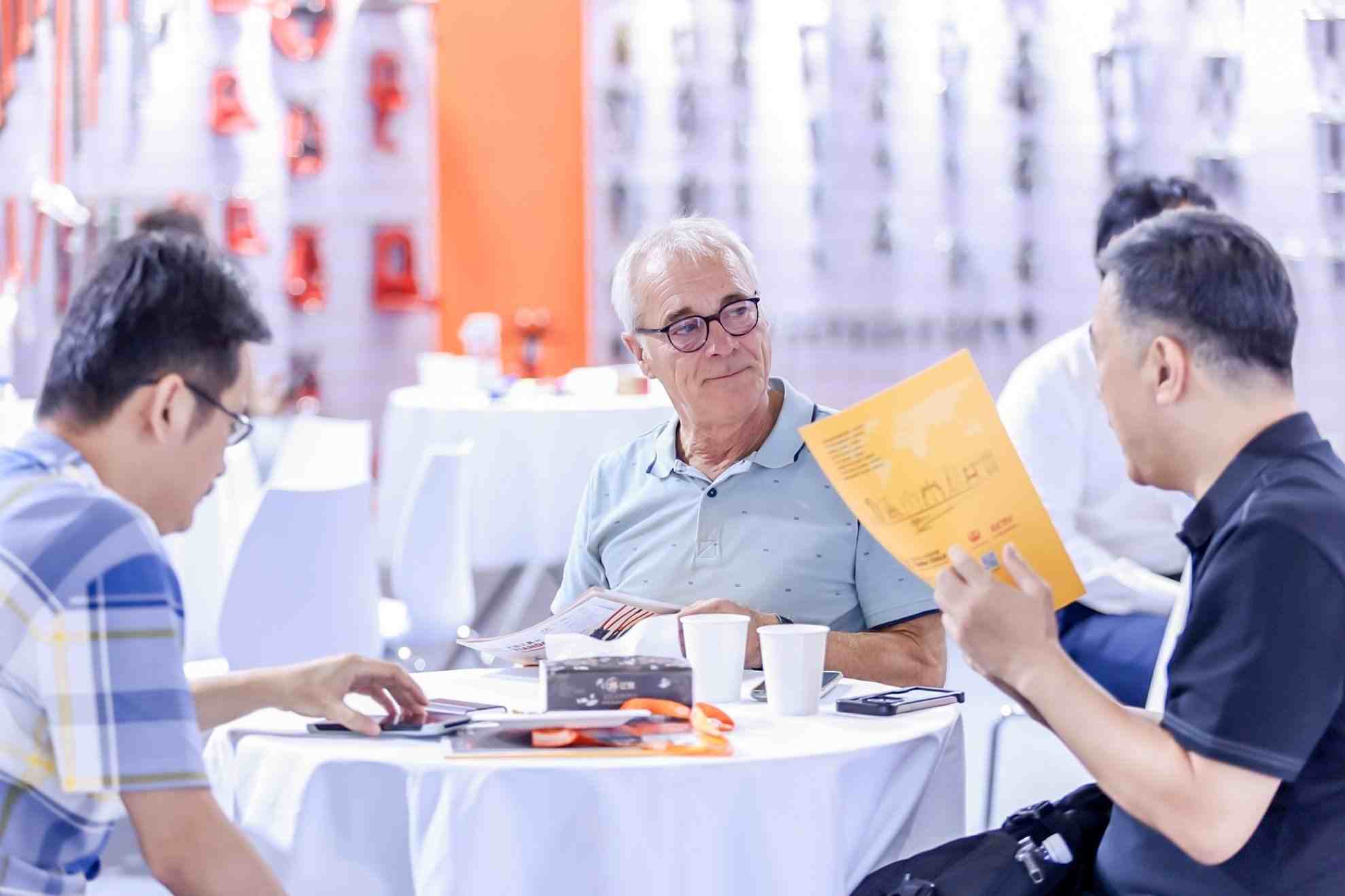
KUKKO — the German specialist in pullers and extraction tools — and Avron bring a different operating rhythm to CIHS than a first-time visitor.
| Behavior | First-time buyer | Global-brand team |
|---|---|---|
| Visit length | Two days of browsing | Three to five scheduled days |
| Who attends | Owner or single buyer | Product, quality, and supply-chain roles |
| First question | “What’s your price?” | “Can I see your certifications and test reports?” |
| Documentation | Collected in a folder | Logged against a qualification scorecard |
| Follow-up | Replies to a few booths | Runs a structured second-round shortlist |
That structure is why global brands can cover a 120,000-square-meter event without getting lost. They pre-build a shortlist, then use the halls to verify — not to wander.
We see the same discipline in organized delegations. At CIHS 2025, a Turkish delegation of 38 buyers moved through the show as a coordinated group [1]. The matchmaking conference alone reported intent deals topping $80 million [1]. These are not browsing sessions. They are pre-planned sourcing operations.
Documentation Before Price: The Global-Brand Shortlist
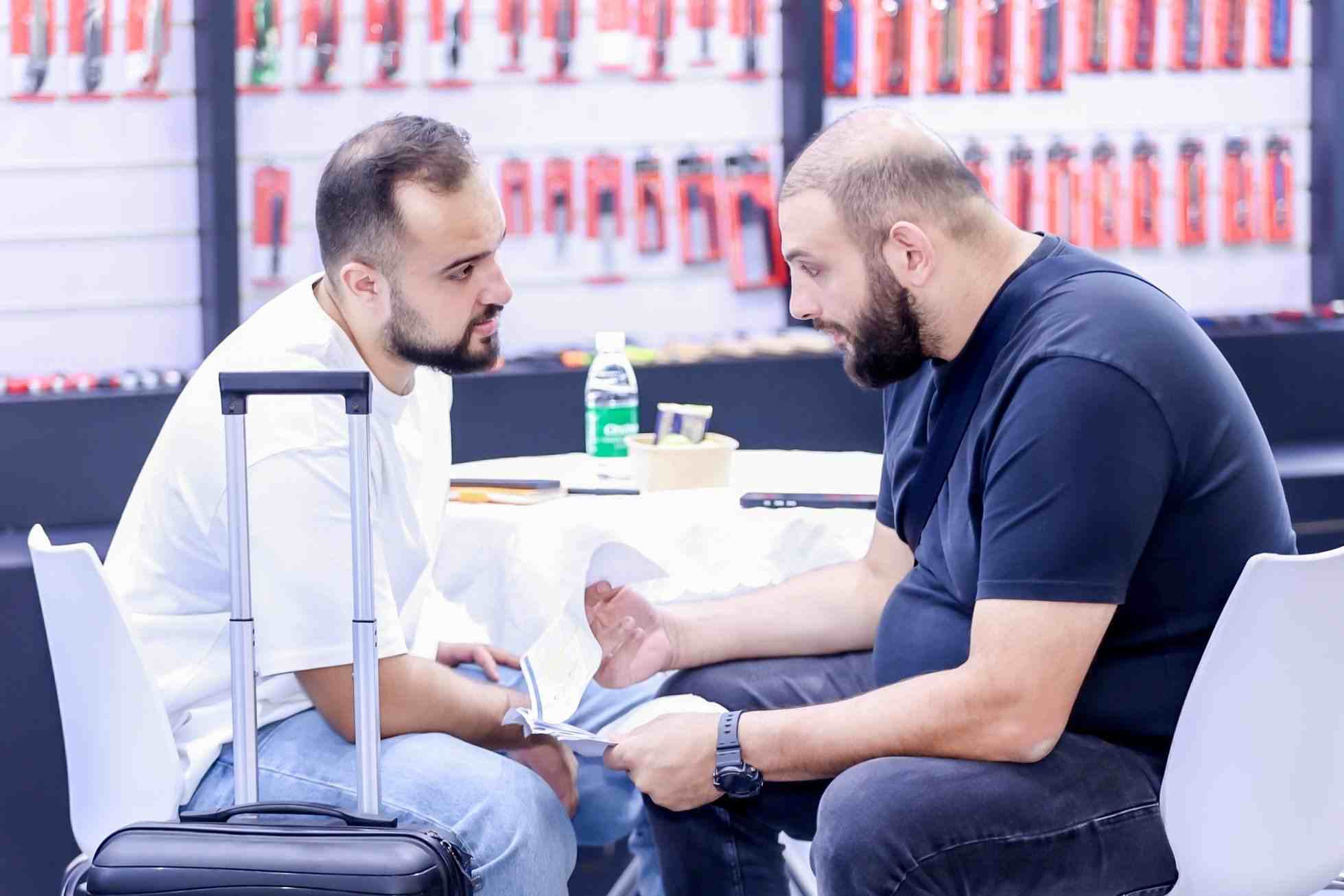
If you want to sell to a global brand — or source like one — flip the usual order. Most first-time buyers compare price first and documentation later. Global brands filter documentation first and negotiate price only after a supplier clears the compliance gate.
The basic packet includes:
- CE marking technical file for the European Union market
- ISO 9001:2015 quality-management certificate [2]
- REACH and RoHS declarations for applicable products [3][4]
- PPE Regulation (EU) 2016/425 conformity documentation for safety products [5]
- Third-party test reports, for example from TÜV, SGS, or Intertek
- Reference export records for the destinations you serve
We recommend building a one-page supplier scorecard before you fly. Columns for certification status, MOQ (minimum order quantity), lead time, sample availability, and communication quality. Fill in one row per booth. After three days, your second-round meetings become obvious.
This documentation-first habit also protects buyers from a real friction of sourcing from China: a supplier can look strong in a brochure and weak under a compliance audit. Asking for the file on the spot closes that gap quickly — and experienced suppliers expect the ask.
Turning the Same Visit Into a Shorter Supplier List
The practical benefit of CIHS is compression. Instead of flying to five factory clusters over two weeks, a buyer can compare suppliers category by category under one roof, then follow up with factory visits only for the shortlist.
That compression is strongest when the homework happens before the plane lands. The CIHS online showroom lets you preview exhibitors, filter by product category, and send inquiries before the fair. A buyer who arrives with 15 pre-screened names spends the first day auditing, not introducing.
If you want help converting your requirements into that kind of pre-built shortlist, email [email protected] or call +86 21 6390 6161-832. Our Buyer Services Team can route your category, target market, and certification needs to the right supplier groups before registration closes.
One note from the aisles: the most efficient global-brand meetings we see are short and specific — 20 minutes, two or three questions, documentation on the table. The least efficient are 45-minute tours of a brochure. Smart buyers run the meeting; they do not get run by the pitch.
Plan Your Sourcing With the CIHS Buyer Services Team
Start from the same standard global brands use. Prepare your documentation checklist, build a shortlist from the online showroom, and schedule your verification meetings before you land in Shanghai.
Contact the CIHS Buyer Services Team to move that plan from notes to a schedule:
- Email: [email protected]
- Tel: +86 21 6390 6161-832
One clear next step: send us your product category and target market this week. We will help you turn it into a pre-fair shortlist — the same discipline KUKKO and Avron apply, scaled to your budget.
Frequently Asked Questions
What makes a supplier “global-brand ready”?
A supplier who is global-brand ready can show compliance documents at the first meeting, confirm capacity and lead time in writing, and communicate through a named contact who understands export requirements — not just negotiation.
Do I need to bring an engineer or interpreter to CIHS?
An engineer helps for technical categories such as power tools, abrasives, and smart locks. An interpreter helps at booths without English-speaking staff, although many exporters and pavilion organizers provide language support. For complex specifications, bring both.
How do I verify certifications at the booth without wasting meetings?
Ask for the certificate number and issuing body, then check the certificate against the supplier’s company name and scope. For EU-bound products, ask to see the CE technical file structure and REACH/RoHS declarations. Keep your checklist open during the meeting so the conversation stays on evidence.
Is CIHS only for large buyers?
No. The same verification habits scale down. A small buyer can use the same scorecard and documentation checks on a shorter list. The sourcing discipline is the same; only the order volume changes.
How far in advance should I shortlist suppliers?
Build your preliminary list six to eight weeks before the fair. Use the online showroom to filter by category, send inquiries, and confirm which booths deserve a scheduled meeting. This is the routine global brands follow, and it works at any volume.
References
[1] China International Hardware Show, “2025 Post-Show Report: Facts and Figures,” cihs.com.cn, accessed 2026.
[2] International Organization for Standardization, “Quality management systems — Requirements,” ISO 9001:2015, 2015.
[3] European Union, “Regulation (EC) No 1907/2006 concerning the Registration, Evaluation, Authorisation and Restriction of Chemicals (REACH),” Official Journal of the European Union, 2006.
[4] European Union, “Directive 2011/65/EU on the restriction of the use of certain hazardous substances in electrical and electronic equipment (RoHS),” Official Journal of the European Union, 2011.
[5] European Union, “Regulation (EU) 2016/425 on personal protective equipment,” Official Journal of the European Union, 2016.
