If you are sourcing hardware in 2026, the short answer is this: China is still the core for most buyers, Vietnam is the strongest second source for labor-intensive items, and the smartest strategy is usually both, not either/or.
In 2026, the winning sourcing strategy is not China versus Vietnam. It is China plus Vietnam, with the mix set by product category, tariff exposure, and how much supplier management you can handle.
This guide breaks down the comparison by cost, quality, supply chain depth, certifications, product fit, and practical verification.
2026 Landscape at a Glance
| Factor | China | Vietnam |
|---|---|---|
| Scale and supply chain depth | Full clusters, deep component networks | Growing but thinner, many inputs imported |
| Labor cost | Higher and rising | Lower and rising |
| Skilled workforce | Deep, multi-generation tooling talent | Young, improving, fewer precision specialists |
| Raw material access | Strong domestic steel, alloys, components | Reliant on imports, often from China |
| Export logistics | World-class ports and freight networks | Good but smaller capacity |
| Certification infrastructure | Mature labs, fast testing | Fewer accredited labs, longer turnaround |
| Lead times | Short for standard and complex items | Longer for complex or component-heavy items |
| Best product fit | Full range, from fasteners to smart locks | Labor-intensive, simpler metal products |
Where China Still Leads
China’s edge is no longer cheap labor. It is cluster speed.
When you source hand tools from Yongkang, fasteners from the Ningbo-Haining belt, power tools from Qidong, or cutting tools from Danyang, you are buying from an ecosystem where plating, heat treatment, packaging, and shipping can be handled within a single region. That reduces communication loops, lowers logistics cost, and shortens lead times.
For complex products — brushless power tools, smart locks, welding equipment, precision fasteners, abrasives, and multi-component building hardware — no other Asian market offers the same depth. A Chinese factory can usually pull in motors, battery cells, electronic controls, and packaging without long import delays.
Certification support is another practical advantage. Chinese export factories are familiar with CE, GS, UKCA, UL, ETL, REACH, and RoHS documentation. Many have in-house or partner labs and can handle third-party testing faster than factories in newer sourcing markets.
Where Vietnam Is Gaining Ground
Vietnam’s sweet spot in 2026 is labor-intensive assembly and simpler metal products: basic hand tools, garden implements, stamped brackets, furniture hardware, and some wiring accessories.
Two forces are driving interest: rising labor costs in China and shifting tariff exposure in the US and EU. Vietnam’s trade agreements and lower wage base make it a useful second country of origin for buyers who need to reduce dependence on one source.
But Vietnam is not a one-for-one replacement. Many Vietnamese factories still buy steel, components, or semi-finished parts from China. That means true lead times can be longer than they first appear, and rules of origin require real transformation — not repackaging — to qualify for preferential tariffs.
Cost and Lead Time: The Real Comparison
Direct labor is often cheaper in Vietnam, but the total landed cost may not be.
China’s costs are higher on labor, but its supply chain density often reduces total cost: less inbound freight, shorter production cycles, faster tooling changes, and fewer delays waiting for imported components. Vietnam can show a lower unit price for simple items, but you may pay more for raw materials, quality control visits, and longer inventory.
A practical way to compare is to ask for a full cost breakdown from both markets: unit price, tooling, inbound materials, inspection, freight, duties, and financing. Do not compare FOB prices alone.
Quality, Certifications, and Compliance
Neither country is automatically better on quality. Both have excellent factories and weak factories.
China has a wider range, which means more choice but also more need for filtering. Vietnam has a smaller pool of export-grade manufacturers, which can make audits simpler but limits fallback options.
In both markets, verify before you commit:
- Ask for mass-production samples, not just pre-production samples.
- Check the factory’s export license and bank details against the contract.
- Confirm product certifications with certificate numbers, not just logos.
- Request a short video call to see the production line.
- Use a third-party audit for first orders if the order size justifies it.
- Visit in person when possible. At CIHS, you can meet hundreds of factories in one place and compare quality directly.
Product Fit: Where Each Market Wins
Use this as a rule of thumb:
Vietnam often works for: simple stampings and brackets, basic hand tools, garden hand tools, furniture hardware, wire/cable accessories, and labor-intensive assembly.
China often works for: power tools, smart locks, welding equipment, fasteners with tight tolerances, abrasives, safety equipment, complex mechanical or electronic hardware, and OEM/ODM lines with rapid iteration.
The best strategy is not to replace China with Vietnam. It is to keep China as the core for complex or high-value SKUs and use Vietnam for tariff-sensitive or labor-heavy products where qualification is straightforward.
How to Build a Dual-Market Sourcing Plan
Start with your product list, not the country.
- Sort SKUs by complexity, margin, and tariff exposure.
- Identify which items Vietnam can realistically produce to your standard.
- Keep China for items that need tight tolerances, fast iteration, or deep component access.
- Run a small pilot order in Vietnam before shifting volume.
- Keep at least two approved sources for your top SKUs.
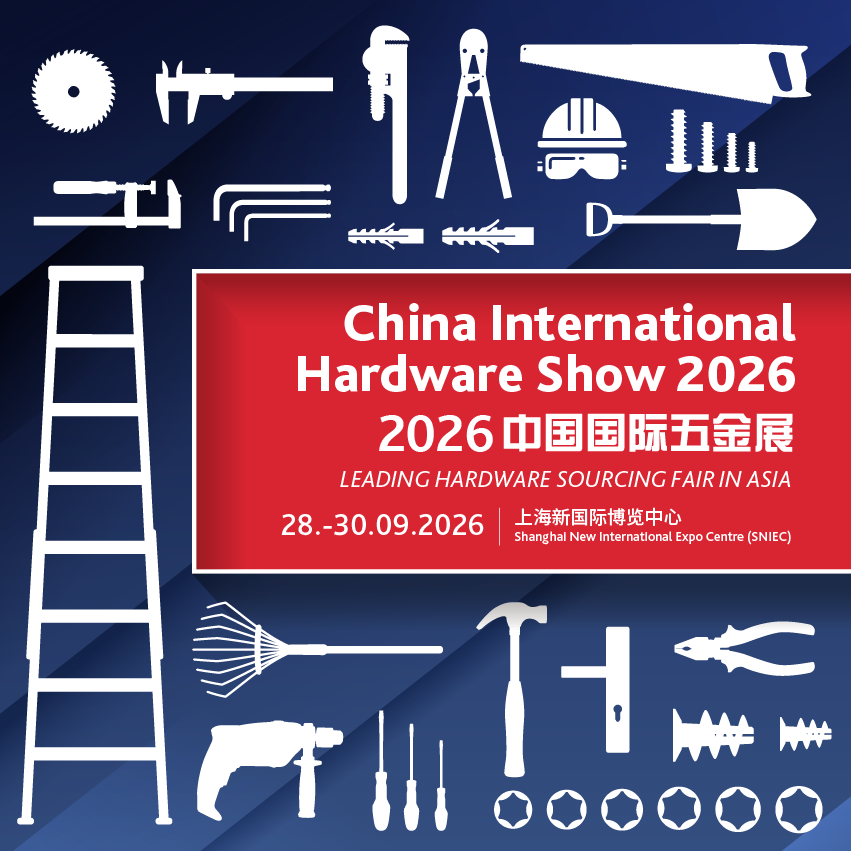
A trade fair like CIHS helps you shortlist Chinese factories quickly. The show brings together nearly 3,000 exhibitors across hand tools, power tools, fasteners, building hardware, garden tools, abrasives, welding, PPE, and smart locks in one venue. The most recent edition drew 77,016 professional buyers from 123 countries and regions across 120,000 square meters of exhibition space [1].
Final CTA
Ready to compare China’s hardware manufacturers side by side? Register for CIHS 2026 and plan your sourcing trip. For buyer registration and matchmaking questions, contact the CIHS Buyer Services Team at [email protected] or +86 21 6390 6161-832.
FAQ
Is Vietnam cheaper than China for hardware manufacturing in 2026?
For simple labor-intensive products, direct labor is often cheaper in Vietnam. But total landed cost may not be lower once you add imported raw materials, longer lead times, smaller supplier options, and quality management. For complex products, China often remains more cost-efficient overall.
Can Vietnam replace China for power tools?
Not fully. Power tools require motors, battery platforms, electronic controls, and strict safety certifications. China’s supply chain for brushless motors and lithium-ion battery packs is far deeper. Vietnam can handle some assembly and simpler corded tools, but you will likely still depend on Chinese components.
What product categories are best to source from Vietnam vs China?
Vietnam is stronger for basic hand tools, stamped brackets, furniture hardware, garden implements, and labor-intensive assembly. China is stronger for power tools, smart locks, welding equipment, precision fasteners, abrasives, PPE, and complex OEM/ODM products.
How do tariffs affect the China vs Vietnam decision in 2026?
Tariff exposure varies by destination, product, and trade agreement. Some buyers use Vietnam to reduce US or EU tariff costs, but preferential treatment requires real transformation and valid origin documentation. Always confirm HS codes and rules of origin before shifting volume.
Should I attend CIHS if I am also considering Vietnam?
Yes. CIHS gives you a concentrated view of China’s hardware clusters and thousands of export-ready factories. It also gives you a benchmark for quality and pricing, which makes your Vietnam comparisons more informed. Many exhibitors can explain their own Vietnam or regional operations.
References
[1] Koelnmesse (Beijing) Co., Ltd., “China International Hardware Show 2026 official show data,” 2026.