
Sourcing flowers from China can cut unit costs and widen variety access, but it concentrates risk in three places: supplier claims, cold chain handoffs, and export documentation. A buyer who treats a catalog or an email quote as the full picture often learns the real constraints only after an order is already in motion. I have spent fifteen years watching international buyers hit this same gap. The pattern is consistent: most failures are not caused by bad growers; they come from incomplete verification before the order. IFEX shortens that verification window because it puts buyers, planters, and logistics providers in the same room.
What Are the Common Risks When Sourcing Flowers from China?
Most sourcing failures I see fall into five groups: inconsistent grading, cold chain breaks, documentation gaps, supplier identity risk, and contract ambiguity. In inconsistent grading, the sample shown online may not match the lot that ships, because grading standards vary by farm and by province. Cold chain breaks usually happen at the handoff between farm truck, consolidation warehouse, and airline or sea freight pallet. Documentation gaps involve phytosanitary certificates, import permits, and commercial invoice details that do not align with the receiving country’s rules. Supplier identity risk comes from trading companies that present as growers but buy from multiple farms. Contract ambiguity covers quality tolerances, claim windows, and payment terms that are not written with enough precision.
| Risk | How it shows up | What IFEX changes |
|---|---|---|
| Inconsistent grading | Sample and shipped lot differ | Buyers compare physical samples from multiple stalls in one day |
| Cold chain break | Rose heads arrive dull or botrytis appears | Logistics providers and cold chain exhibitors explain handoff protocols face-to-face |
| Documentation gap | Shipment held at import inspection | On-site sessions with export specialists and planters clarify phytosanitary requirements |
| Supplier identity risk | Trader claims to be a grower | Buyers meet planting teams, not only sales agents |
| Contract ambiguity | Disputes over tolerances or lead times | Buyers write clearer terms after direct negotiation with the supplying company |
Why Do Remote Supplier Checks Miss the Risks That Matter?
Remote checks work best for confirming that a company exists, not for confirming how it handles a live order. A website can show greenhouses, a certificate can be reused, and a video call can be staged from a display bench. What a buyer cannot see remotely is how the team reacts to a quality complaint, how the packhouse handles a temperature spike, or how quickly the export manager corrects a document error. Those behaviors become visible in person, often within the first twenty minutes of a booth conversation.
Many buyer checklists stop at company registration and product photos. Those checks are necessary but not sufficient. A registration number does not tell you whether the cooling room is maintained at the right temperature during September volume weeks. Product photos do not show how many stems were rejected in the last consolidation. When I attend exhibitions alongside buyers, the questions shift from “do you have this variety” to “what was your reject rate on this variety last season and how did you fix the cause.”
If your program involves cold chain sensitive varieties such as roses or cut orchids, confirm the cold room transfer protocol and temperature tolerance windows before finalizing a trial order. Send your target varieties and destination market to [email protected] and the team can match you with exhibitors who have documented export experience for those lanes.
How Does IFEX Reduce Quality and Cold Chain Risks When Sourcing Flowers from China?
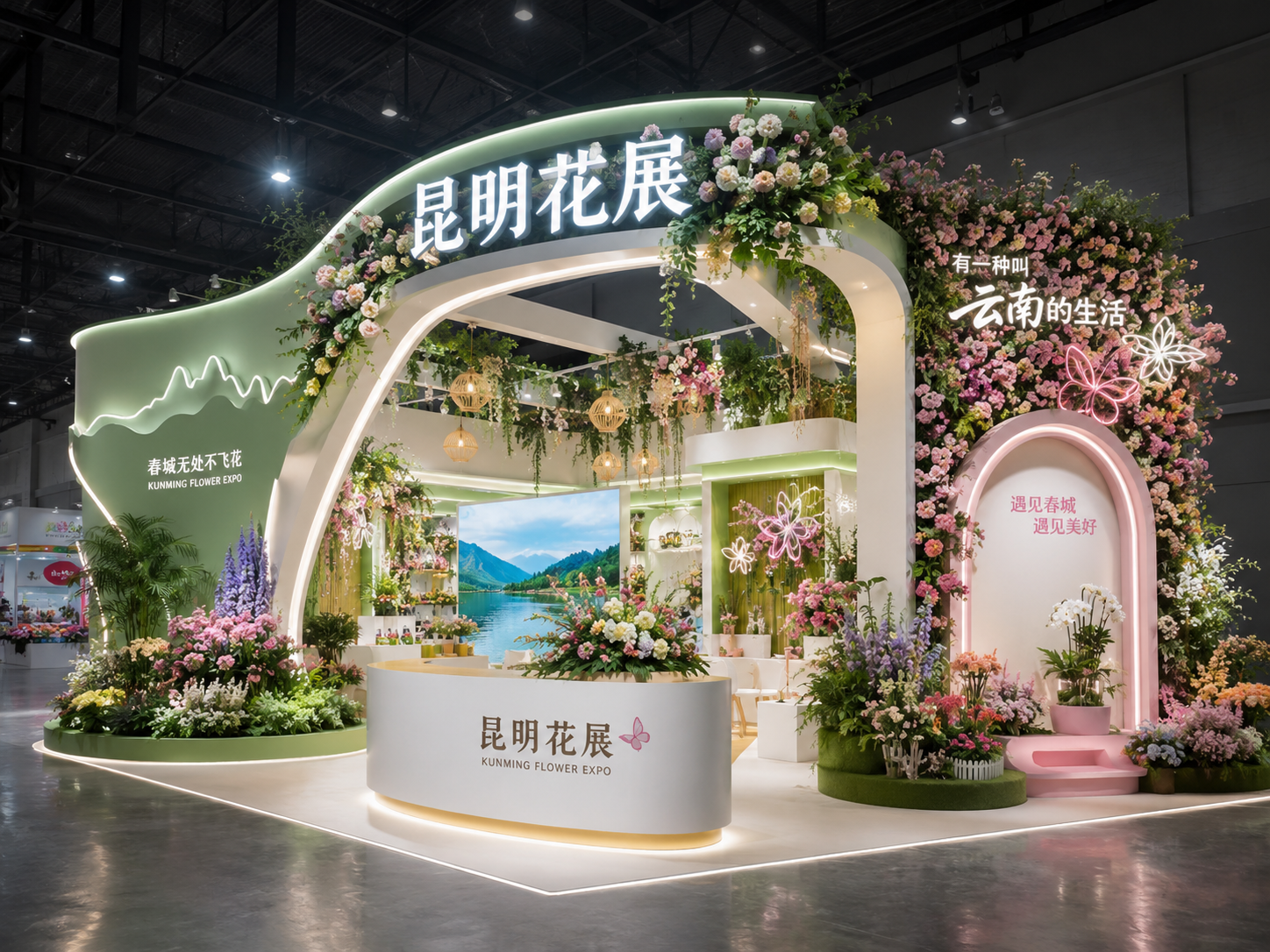
The show compresses the supply chain into one hall in Kunming, the largest cut flower production and distribution center in China. The exhibition covers 50,000 square meters and is expected to draw more than 30,000 distributors, wholesalers, traders, floral retailers, and e-commerce players. That concentration matters because a buyer can compare growing regions, cold chain practices, and pricing without arranging separate farm visits across Yunnan. In a single day you can see the same variety from multiple suppliers and ask each of them how they handle the same operational problem.
Kunming’s position also changes the nature of supplier claims. When a booth is twenty minutes from the actual growing area, it is harder to hide behind a trading identity. Many exhibitors bring planting teams or technical staff, not only export sales people. The matchmaking platform connects supply and demand across the full floral industry chain, from planters and breeders to retailers and e-commerce buyers. For a buyer, this turns supplier screening into direct comparison rather than back-and-forth email verification.
Forums and activity sessions add another layer. Planters, trade visitors, experts, and floral masters discuss supply development and trend direction in the same building where orders are discussed. That setting lets a buyer test a supplier’s technical language before leaving the hall.
What Should Buyers Do to Turn a Kunming Visit into a Reliable Supply Chain?
Before the show, I tell buyers to prepare three documents: a variety list with target stem lengths and counts, a cold chain requirement sheet, and a destination market import checklist. At the show, work in this order.
- Shortlist exhibitors by growing region and export license before the floor opens.
- Compare physical samples at the booth and ask for the specific greenhouse or plot location.
- Request a documented reject rate or quality tolerance example from the last shipment.
- Agree on a small trial order with written grading, packing, and claim terms before leaving.
- After the show, send a recap email that names the agreed specifications and asks the supplier to confirm in writing.
This order matters because it moves the buyer from discovery to written confirmation while the details are still fresh. Buyers who skip the trial order and move straight to volume often discover that the sample quality did not scale. The trial order is not a cautious extra step; it is the cheapest way to test whether the supplier’s operational behavior matches the booth conversation.
What Should You Do Next to Reduce Sourcing Risk?
Sourcing flowers from China becomes less risky when the verification happens before the contract, not after the shipment. If you are tired of sorting through remote supplier claims and want a clearer shortlist, IFEX gives you the most concentrated opportunity to compare planters, exporters, and logistics partners in one visit. Send your target varieties, volume range, and destination market to [email protected], or call +86 10 5933 9349 to confirm buyer registration and the exhibitor list before you plan your trip.
What Do International Buyers Ask Before Attending IFEX?
Do I need a Chinese business license to source flowers at the show?
No. International buyers attend with a passport and buyer registration, not a local business license. The show is designed for overseas distributors, wholesalers, retailers, and e-commerce players to meet Chinese planters and exporters directly. You will still need an import license or equivalent authorization in your own destination market, because that is where customs clearance happens. Confirm your country’s phytosanitary and import permit requirements before the event so that on-site conversations can focus on variety, volume, and shipping terms instead of paperwork surprises.
Is it safe to place a first order with a supplier I meet once at the show?
The common assumption is that one face-to-face meeting makes a supplier safe. It does not. A show meeting reduces identity risk because you can see the planting team, samples, and export staff. It does not by itself remove contract risk. Use a small trial order with written grading standards, packing requirements, claim windows, and payment milestones. If the supplier refuses to put quality tolerances in writing, that is a more reliable warning sign than any missed email before the show. The meeting gives you a stronger basis to judge; the contract gives you a remedy if something goes wrong.
How soon can I get flowers shipped after the show?
It depends on whether you order from existing stock or booked production. Some standard varieties with established export documentation can move within a few weeks if cold chain and phytosanitary certificates are ready. New variety introductions or large programmed volumes often follow the grower’s harvest and packing schedule, which can stretch several months. In practice I advise buyers to separate the trial order from the programmed volume. The trial order tests the export lane and the supplier’s documentation. The larger order then rides a lane that has already been proven, which removes much of the schedule uncertainty.
Do I need to speak Mandarin to negotiate at the show?
In programs I have supported, English has been workable among larger exporters and trading companies, but the practical difference comes from preparing the right technical questions in advance: stem length, head size, vase life expectation, packing temperature, and phytosanitary certificate. Many booths have English-speaking export staff, and the show brings together trade visitors and experts who work across international markets. For smaller regional growers, a printed checklist with both English and Chinese terms speeds up the conversation. Send your variety and market requirements to [email protected] before the event and the team can match you with a focused supplier shortlist.