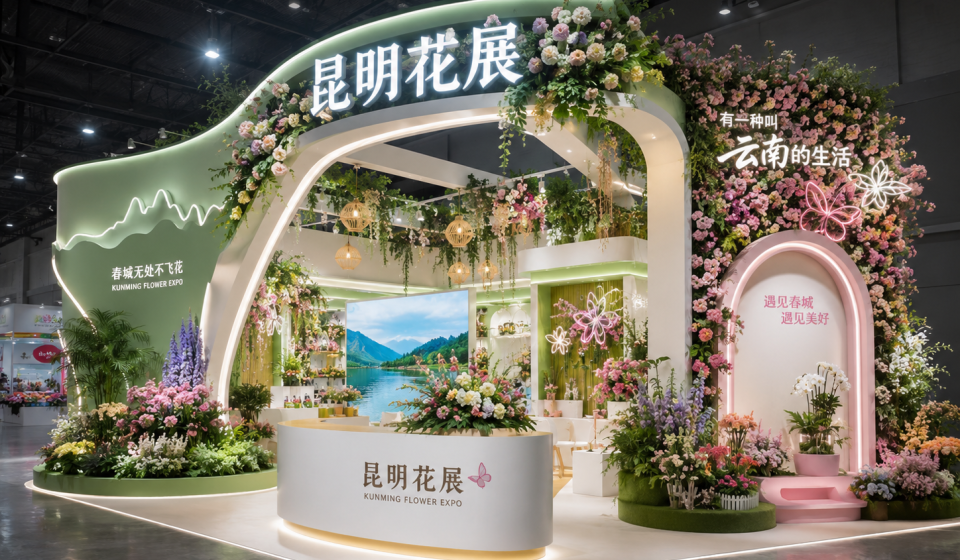

Walking a trade show floor like IFEX Kunming, you could shake hands with fifty growers in a day. But a handshake means nothing if you cannot separate a genuine, export-ready cut flower farm from a broker who will vanish after your payment clears. Verifying a flower supplier’s credentials on the spot requires more than a business card; it demands a quick, practiced eye for legal documents, production depth, and behavioral signals that reveal real capability. In my fifteen years analyzing the global floriculture supply chain and the thousands of supplier interactions I have observed at IFEX, I have found that reliable suppliers leave a consistent trail of evidence — you just need to know where to look. This guide walks you through that process step by step.
What to Observe Before You Speak: Booth Signals and Team Demeanor
At a busy fair like IFEX, a supplier’s booth layout, product display, and staff behavior often tell you more about their operational maturity than the first three minutes of conversation. A grower who exports regularly will show you flower varieties arranged by cold chain compatibility, not just by color. They will have a designated person handling English inquiries, not an intern called over from the shipping desk. Look for labeled samples with lot numbers, not anonymous buckets of roses. And note the difference between a booth that looks expensive and one that looks organized — the second matters more.
From my years at IFEX, I have observed that genuine Yunnan growers often display certificates at eye level near the sales desk, while middlemen hide them in folders under the table. If a company claims to have 50 hectares of production but cannot produce a single photo of their own farm, treat that as a red flag that requires document follow-up.
Key Documents to Request and Inspect During the Meeting
A credible flower supplier should be able to produce several documents immediately, or at least digital copies on a tablet. Ask to see their business license that lists “flower planting” as their core activity, not “trading” or “import/export” alone. Request a copy of their most recent phytosanitary certificate for a consignment shipped to your region — if they have never shipped to your continent, ask for certificates from their largest export market. Certifications like MPS (from MPS-A to MPS-GAP) and GlobalG.A.P. signal adherence to sustainability and quality protocols, but verify that the certification covers the specific crop you are sourcing; an MPS certificate for pot plants does not apply to cut roses.
| Document | What to Look For | Red Flag |
|---|---|---|
| Business License (营业执照) | Scope of business includes planting, not only trading | Only trading or logistics listed |
| Export Registration | Valid export code for fresh flowers | Missing or expired |
| Phytosanitary Certificate | Issued within three months for export to your target market | Always “processing” when asked |
| Farm Certification (MPS, GlobalG.A.P.) | Crop-specific, not generic; valid dates | Certificate from unrelated crop or expired |
| Company Profile with Farm Photos | Geotagged images of packing lines, greenhouses | Stock photos or blurred images |
If your program involves sensitive phytosanitary requirements for markets like Japan or the EU, it is worth confirming the supplier’s documentation with IFEX’s buyer support team before committing to a trial order — reach out at [email protected] to connect with our sourcing advisors.
Questions That Distinguish Real Growers from Middlemen
Middlemen often speak in generalities, while genuine growers cite specifics: harvest windows by variety, grade standards, and packing line throughput. Ask these questions and listen carefully to the answers:
- “Can you name three specific cultivars you trialed this year and why they succeeded or failed?” A grower will mention field performance, vase life, or disease pressure. A middleman will talk about market popularity.
- “How do you handle cold chain breaks between your packing house and Kunming airport?” Look for detailed answers about pre-cooling, reefer truck protocols, and temperature data loggers.
- “Who handles your phytosanitary inspections — your own staff or a third party? Can I see the name of your inspector agency?” A transparent operation has no issue naming its compliance partner.
Even if a supplier answers smoothly, observe whether their technical staff are present to support the conversation. A grower who sends only a sales representative to IFEX is unlikely to have the technical depth to solve quality problems later.
Leveraging IFEX Resources to Validate Supplier Claims
Trade show organizers like IFEX run buyer verification programs that many international attendees overlook. The organizer’s buyer service desk can quickly confirm whether a company has exhibited before, whether there are complaints on file, and whether their badging matches the category they registered under. I have seen buyers approach the organizer’s office with a supplier’s booth number and walk away with a clearer picture of that company’s exhibition history in five minutes.
The show also hosts industry associations, regional government agricultural offices, and logistics providers. A visit to the Yunnan Flower Association booth or the Kunming Customs desk can surface informal intelligence: who consistently ships quality, who has been blacklisted by freight forwarders for payment issues, and which new cooperatives are gaining a reputation for good secondary-grade product.
After the Meeting: Capturing Notes and Verifying Details
At the end of each meeting, take a photo of the supplier’s business card next to their booth number sign — this links identity to location and prevents mix-ups later. Write down three concrete promises made (price range, lead time, minimum order quantity) and ask the supplier to send them by email before the show ends. A supplier who refuses or delays this simple task often cannot commit to written terms.
Use your hotel Wi-Fi at night to run a quick check on the company’s export records using online customs data platforms, if available, or simply search the company’s name in English and Chinese with words like “scam” or “dispute.” A pattern of complaints, even if not definitive, warrants a more cautious sourcing approach.
Common Questions About Supplier Credential Verification
Why can’t I just rely on business cards and a good conversation?
A polished conversation masks many things. Business cards are easily printed; a credible document trail — licenses, certificates, and shipment records — is much harder to fabricate. A supplier who cannot show export documentation for the past twelve months is likely not exporting at the volume they claim.
How reliable are online inspection reports for flower farms?
Inspection reports are useful if they are crop-specific, dated within six months, and issued by a recognized body such as an auditing firm or a major retailer’s compliance team. Generic reports that claim “excellent quality control” without naming specific protocols or physical plant parameters are marketing material, not verification.
What is the most common credential mistake buyers make at trade shows?
They accept a business license that lists “import/export” as sufficient proof of production capability. A flower exporter does not have to own a farm; they may only be a trading company. If you want direct sourcing from a grower, demand documentation that explicitly links the company’s name to farmland use rights, planting records, or a processing facility address that can be visited.
If your import requirements call for consistent year-round supply and certified compliance, it is time to move beyond tabletop vetting. Share your product specifications with IFEX’s buyer matchmaking team at [email protected] or call +86 10 5933 9349 to access pre-qualified growers before your next sourcing trip.