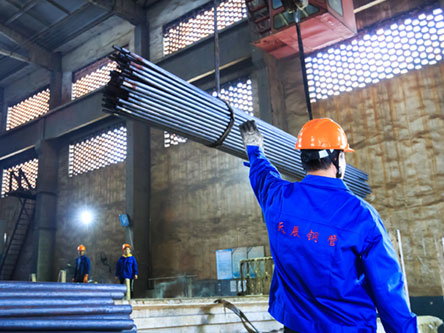

Steel tube manufacturing capacity goes far beyond counting how many meters roll off the line each day. It’s the sum of how well equipment runs, how smoothly materials flow, and how reliably a facility can scale when orders surge. After years of refining our production systems, we’ve learned that true capacity lives in the details—machine uptime, operator skill, and the ability to pivot between product types without losing precision. That understanding shapes how we engineer our lines to serve global demand for high-precision tubing across industries that can’t afford inconsistency.
Steel Tube Manufacturing Capacity Reflects More Than Factory Size
Manufacturing capacity in the steel tube industry describes the maximum production volume a facility can achieve within a given period. It’s not simply about the size of a factory footprint; it encompasses the efficiency of manufacturing processes, the utilization rate of equipment, and overall throughput. Every stage matters, from raw material handling to final product delivery, and each one gets analyzed to optimize production planning. This holistic view allows for measuring true scalability and ensuring consistent order fulfillment for global clientele.
The ability to produce diverse products like precision seamless tubes and cold-drawn profiles depends heavily on flexible machinery and skilled operators. Operational bottlenecks get continuous assessment, ensuring production can ramp up without compromising quality. Capacity is a dynamic metric, constantly refined to meet evolving market needs. It reflects the capability to handle large-scale projects and urgent demands efficiently. Factors like machine uptime, maintenance schedules, and labor availability all feed into the equation. Effective production planning integrates these elements to maximize output while minimizing downtime. This strategic approach maintains a competitive edge and ensures delivery on commitments. Without careful management, insufficient capacity leads to missed deadlines and lost opportunities.
How Steel Tube Manufacturing Capacity Gets Measured
Capacity measurement relies on various key performance indicators. These include total production volume per shift or month, average throughput rates, and equipment utilization percentages. Lead times and cycle times for different product types receive close monitoring. A critical metric is Overall Equipment Effectiveness (OEE), which combines availability, performance, and quality into a single figure. This helps identify areas for improvement with precision. Accurate production forecasting further refines understanding of potential output. These production metrics provide a clear, data-driven picture of operational capabilities.
Core Technologies That Drive Production Efficiency
Engineering for global demand relies heavily on advanced core technologies. Precision steel tubing production employs sophisticated processes for seamless tubes and cold-drawn profiles manufacturing. This achieves exceptional dimensional accuracy and superior surface finishes. Cold drawn welded tube technology further expands the product range, offering robust solutions for various applications. Specialized products include those with complex geometries like Hexagonal Steel Pipes&Tubes and Oval Steel Pipes&Tubes. These cater to unique OEM requirements that standard shapes can’t satisfy.
Automation sits at the center of efficiency gains. Advanced machinery includes state-of-the-art cold drawing benches and rolling mills. Integrated process control systems monitor every parameter, from temperature to tension, ensuring consistent quality throughout each run. This minimizes human error and maximizes throughput. Material integrity testing through non-destructive testing (NDT) runs continuously during production. CNC machining handles precise finishing operations. Robotic welding enhances speed and consistency for specific product lines.
These technologies collectively boost production output and expand customization capabilities. The ability to produce EN10305-1 Steel Pipe with exceptional precision results directly from these technological investments. The same advancements apply to products like ASTM A519 Steel Pipe and DIN 2391 Steel Pipe, ensuring they meet stringent mechanical and dimensional specifications. Advanced drawing dies and lubrication systems prove critical for achieving the tight tolerances required for Precision Pipe&tube. Equipment upgrades happen continuously to stay at the forefront of the industry. This technological edge provides a competitive advantage in a demanding global market.
How Advanced Technology Optimizes Steel Tube Production
Advanced technology optimizes production by enhancing precision and reducing waste simultaneously. Non-destructive testing methods like eddy current and ultrasonic inspections identify flaws early, preventing costly rework downstream. Metallurgical analysis ensures material composition meets exact specifications, which proves crucial for products like 41Cr4 Alloy Pipe or SCM440 Steel Pipe. Predictive maintenance schedules for machinery minimize unexpected downtime and maximize equipment utilization. This proactive approach improves energy efficiency across manufacturing operations. Technology increases production speed, improves dimensional accuracy, and ensures consistent product quality throughout high-volume runs.
Vertical Integration and Quality Control Shape Capacity
As a vertically integrated manufacturer since 2004, full process oversight extends from raw material sourcing to finished product. This integration proves crucial for manufacturing capacity. It provides unparalleled control over every production stage, directly impacting material integrity and consistent output. ISO certification underpins commitment to global standards. Rigorous quality assurance protocols include PMI (Positive Material Identification) inspections and NDT inspections. These checks ensure that every tube, whether a Seamless Carbon Steel Tubes or a Seamless Alloy Steel Tubes, meets exact specifications.
Vertical integration enhances supply chain resilience by reducing reliance on external suppliers for critical components. This minimizes delays and mitigates production risks. Complete material traceability allows tracking each batch from its origin. This level of control proves vital for high-stakes applications where failure isn’t an option.
Adherence to international standards like ASTM, EN, DIN, and JIS is non-negotiable. Production includes ASTM A179 Steel Pipe for heat exchangers and DIN 17175 Steel Pipe for high-temperature applications, strictly following their respective requirements. This meticulous approach to quality control prevents bottlenecks caused by non-conforming products. It ensures high-capacity production always results in reliable, market-ready steel tubes. The integrated model allows quick response to market changes while maintaining consistent quality across all product lines. This comprehensive control system forms a cornerstone of the ability to deliver high volumes of precision tubing without compromise. It also streamlines operations, leading to greater cost efficiency and improved production flexibility for custom solutions.
Why Vertically Integrated Manufacturing Matters for Capacity
Vertical integration provides superior supply chain control, which directly translates to enhanced capacity. Greater cost efficiency comes from managing raw material sourcing internally. This reduces external dependencies and minimizes price volatility that can disrupt production schedules. Lead time reduction is significant because the entire production schedule stays under one roof. The integrated approach ensures robust quality assurance at every step, preventing production delays from quality issues. This also offers greater production flexibility, allowing for rapid custom solutions development. Quick adaptation to client specifications for Special-Shaped Carbon Steel Tubes or Special-Shaped Alloy Steel Tubes becomes possible without lengthy supplier negotiations.
How Quality Standards Impact Steel Tube Manufacturing Output
Adherence to stringent quality standards directly impacts manufacturing output by ensuring product reliability from the start. Compliance with international standards like ASTM, EN, DIN, and JIS proves essential for market access and regulatory compliance. This focus on material specifications and product performance standards prevents defects and reduces rework. Producing JIS G3445 Steel Pipe or JIS G3461 Steel Pipe requires strict adherence to Japanese specifications. By preventing quality issues early, production bottlenecks get avoided, maintaining consistent and high-volume output.
Meeting Diverse Industry Demands Through Scalable Capacity
Robust manufacturing capacity allows meeting the diverse and exacting demands of global industries. A wide range of alloy steel tubes and carbon steel tubes gets produced, each engineered for specific applications. From automotive components requiring precision to high-pressure boilers needing exceptional durability, tubing solutions prove critical across sectors. Construction machinery manufacturers receive robust structural elements. Tubes serve essential roles in hydraulics components, ensuring reliable fluid transport systems. Numerous OEM supply needs get met while supporting complex engineering projects worldwide.
The ability to provide tailored tubing solutions, including custom solutions with various cross-sections like Shaped Steel Pipes&Tubes, demonstrates scalable production in action. Sophisticated demand forecasting anticipates market needs, enhancing market responsiveness. This proactive approach ensures a stable global supply chain for partners. Specialized tubes regularly ship for agricultural machinery and petroleum cracking units. Capacity ensures handling both large-volume standard orders and intricate, low-volume custom requests.
Consistent quality and tight schedules matter for critical applications, such as ASTM A106 Gr.B Steel Pipe for high-temperature service. This adaptability proves key to continued success in a dynamic global market, supporting everything from heavy industry to precision mechanics.
Benefits of High-Capacity Steel Tube Production
High-capacity production offers significant benefits to clients. Reliable supply prevents project delays and maintains operational continuity. Reduced lead times enable faster project completion. Economies of scale lead to greater cost-effectiveness, providing competitive pricing without sacrificing quality. Robust capacity supports project scalability, accommodating growth and expansion plans. Custom orders fulfillment happens efficiently, delivering specialized solutions promptly. Market responsiveness and the ability to meet demand provide a distinct competitive advantage for partners.
Strategic Capacity Planning for Future Global Markets
Commitment extends beyond current demands through strategic capacity planning for future global markets. Continuous monitoring of global market trends anticipates shifts in demand for specific steel tube types, such as those used in emerging renewable energy sectors. Supply chain optimization remains a priority, ensuring efficient material flow and distribution worldwide. Advanced inventory management strategies balance stock levels with just-in-time delivery requirements. This proactive approach proves vital for risk mitigation in manufacturing, safeguarding against unforeseen disruptions.
Active investment in sustainable manufacturing practices integrates energy-efficient processes and waste reduction initiatives. Digital transformation in steel production, including the adoption of Industry 4.0 principles, enhances operational intelligence. This involves leveraging data analytics for better decision-making and predictive maintenance. Expertise in international logistics ensures seamless delivery to any corner of the globe. Planning for future expansion considers new technologies and evolving material science, like advanced alloys for extreme conditions. This forward-looking strategy positions the operation as a reliable, long-term partner in the global steel tube market, ready to meet tomorrow’s engineering challenges.
Key Steel Tube Product Specifications
A diverse range of precision steel tubes gets offered, tailored to meet various industrial requirements. Manufacturing capabilities ensure high accuracy and material integrity across all products.
| Product Name | Key Feature | Outer Diameter (mm) | Wall Thickness (mm) | Materials |
|---|---|---|---|---|
| Precision Pipe & Tube | Superior dimensional accuracy, customizable | 10-108 | 1-20 | Carbon Steel, Alloy Steel |
| Special-Shaped Alloy Steel Tubes | Custom cross-sectional profiles | 10-108 | 1-20 | Carbon Steel, Alloy Steel |
| ASTM A179 Steel Pipe | Seamless cold-drawn, for heat exchangers | 10-108 | 1-20 | Carbon Steel, Alloy Steel |
| EN10305-1 Steel Pipe | Precision cold-drawn, exceptional surface quality | 10-108 | 1-20 | Carbon Steel, Alloy Steel |
| Cold-Drawn Welded Tube | Excellent dimensional accuracy, surface quality | 20-108 | 1-6 | Carbon Steel, Alloy Steel |
Frequently Asked Questions About Steel Tube Manufacturing Capacity
What types of steel tubes does Tenjan Steel Tube specialize in producing?
Changzhou Tenjan Steel Tube specializes in precision seamless tubes, cold-drawn profiles, cold drawn welded tubes, and custom-shaped steel tubes including square, rectangular, hexagonal, and complex geometries. All products are manufactured to stringent international standards such as ASTM, EN, DIN, and JIS, ensuring high-quality and reliable supply for diverse applications.
How does Tenjan Steel Tube ensure the quality and integrity of its products?
With ISO-certified quality control and full process oversight, Tenjan Steel Tube maintains material integrity from raw material to finished product. Rigorous PMI (Positive Material Identification) and NDT (Non-Destructive Testing) inspections ensure every high-precision tube meets exact specifications and performance requirements.
Which industries benefit from Tenjan Steel Tube’s manufacturing capacity?
Robust manufacturing capacity and expertise in alloy and carbon steel tubes serve critical applications across diverse sectors. These include automotive, high-pressure boilers, construction machinery, hydraulics, and various OEM and engineering projects globally, all requiring tailored, high-precision tubing solutions and a reliable supply chain.
Partner with Tenjan Steel Tube for Your Precision Tubing Needs
As a vertically integrated manufacturer since 2004, Changzhou Tenjan Steel Tube Co.,Ltd combines precision engineering with robust capacity to deliver high-quality, custom steel tubing for critical global applications. Partner with us for reliable supply, unparalleled quality, and tailored solutions compliant with ASTM, EN, DIN, and JIS standards. Contact our experts today to discuss your project requirements and optimize your supply chain. Email: [email protected] | Tel:+86 51988789990 | Phone:+86 13401309791 | WhatsApp:+86 13401309791