Working with recombinant salmon basic Fibroblast Growth Factor changed how I think about growth factor sourcing. The first time I ran a side-by-side comparison against human-derived bFGF, the consistency surprised me. Not just in bioactivity numbers, but in how predictable the results became across batches. That predictability matters when you’re scaling up cell culture work or developing therapeutic formulations where variability can derail months of progress.
What Makes Recombinant Salmon bFGF Different from Mammalian Sources
Basic Fibroblast Growth Factor, also known as FGF-2, drives cell proliferation, differentiation, and tissue regeneration. As a GFs in the fibroblast growth factor:FGFs family, FGF-2 binds to specific cell surface receptors and triggers downstream signaling cascades that influence everything from wound healing to stem cell maintenance.
The recombinant salmon variant brings something mammalian sources cannot. Because it originates from a non-human species, the risk of human pathogen transmission drops to essentially zero. Advanced protein expression systems produce this 17 kDa protein at purity levels of 95% or higher, eliminating xenogeneic contaminants that complicate sensitive applications. For labs working under strict biosafety protocols or developing products headed toward clinical use, that distinction carries real weight.
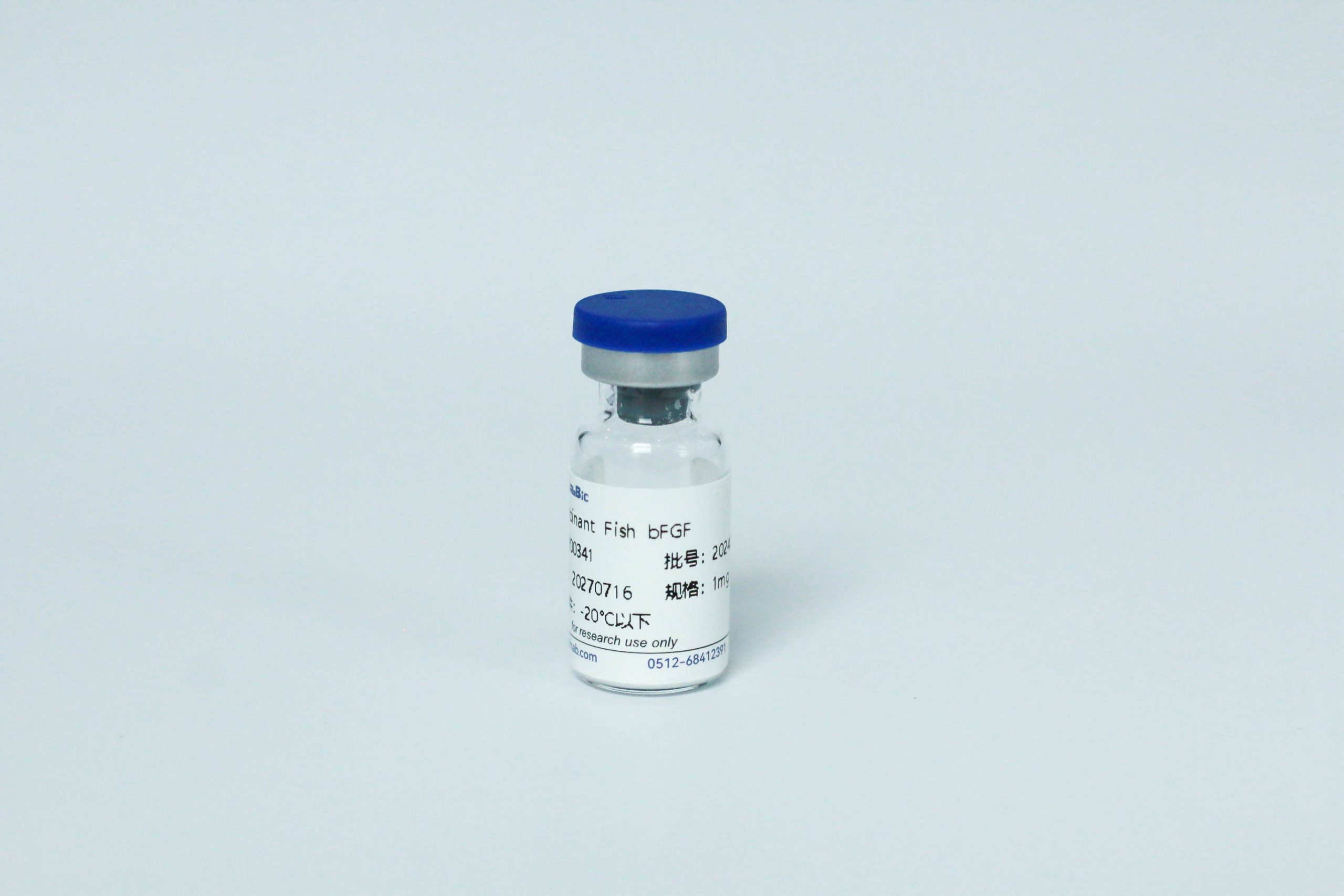
Cell Culture Performance with High-Purity Salmon bFGF
Serum-free and animal-free media formulations demand growth factors that perform without introducing variables. Recombinant salmon bFGF meets that requirement with enhanced stability and consistent bioactivity across production lots.
The numbers tell the story. Recombinant salmon bFGF expressed in E. coli demonstrates an ED₅₀ of 2.0 ng/mL or lower in NIH3T3 cell proliferation assays. That potency level matches or exceeds human-derived alternatives while offering the safety advantages of non-human origin. Stem cell researchers, regenerative medicine developers, and bioprocessing teams running large-scale bioreactors all benefit from this combination of efficacy and reliability.
Batch-to-batch consistency deserves emphasis here. When your experimental protocol depends on precise growth factor concentrations, variability between lots can mask real biological effects or create false positives. High-purity recombinant salmon bFGF minimizes that noise.
How does recombinant salmon bFGF compare to human-derived bFGF for cell culture?
Recombinant salmon bFGF eliminates immunogenicity concerns and ethical complications tied to human-derived materials. The non-human origin means no risk of human pathogen carryover, which simplifies regulatory pathways for products headed toward clinical applications. Performance data shows ED₅₀ values equivalent to human FGF-2/bFGF, so you’re not trading efficacy for safety. For most cell culture applications, salmon bFGF delivers the same proliferation and differentiation support without the sourcing complications.
Therapeutic and Diagnostic Uses Expanding
Wound healing formulations increasingly incorporate recombinant salmon bFGF because the protein accelerates cellular repair and supports tissue regeneration. The mechanism involves stimulating fibroblast migration and proliferation at injury sites, promoting collagen synthesis, and enhancing angiogenesis to improve blood supply to healing tissues.
Tissue engineering applications rely on recombinant salmon bFGF as a scaffold component. The growth factor provides signals that guide cell attachment, proliferation, and integration into three-dimensional structures. Without these signals, engineered tissues often fail to develop the cellular organization needed for functional outcomes.
Diagnostic kit development represents another growth area. Advanced IVD diagnostic kits require reagents with documented stability and consistent performance. Recombinant salmon bFGF produced under GMP-like standards meets those requirements while offering cost advantages over human-derived alternatives. Biopharmaceutical manufacturers appreciate the regulatory documentation that accompanies properly characterized recombinant proteins.
Production Standards That Matter for Industrial Applications
Quality control determines whether a recombinant protein performs reliably across applications. Recombinant salmon bFGF from established manufacturers typically shows purity of 95% or higher and endotoxin levels of 200 EU/mg or lower. These specifications matter most for research grade and industrial applications where contamination can compromise results or trigger immune responses in cell-based systems.
Bioactivity testing confirms that purified protein retains functional activity. A high-purity product with no biological function serves no purpose, so reputable suppliers verify performance through standardized cell proliferation assays before release.
Scalable production capabilities address the practical reality that research projects grow into development programs, and development programs become commercial operations. Starting with a supplier who can scale alongside your needs prevents the disruption of qualifying new sources mid-project.
What quality control standards are critical for recombinant bFGF used in therapeutic applications?
Therapeutic applications demand the highest quality standards. ISO 9001 certification and GMP-like production environments establish the foundation. Specific testing requirements include endotoxin levels below 0.1 EU/µg, purity exceeding 98% as confirmed by HPLC and SDS-PAGE, and comprehensive bioactivity assays demonstrating functional integrity. These measures support regulatory submissions and ensure patient safety. Cutting corners on quality control creates problems that surface at the worst possible times during clinical development.
Where Recombinant Growth Factors Are Heading
Cultivated meat production represents one of the most interesting emerging applications for recombinant salmon bFGF. The industry needs growth factors that support muscle cell proliferation without animal-derived components, and salmon bFGF fits that requirement perfectly. As production scales and costs decrease, this application could drive significant demand growth.
Organoid development relies on precise growth factor combinations to guide tissue self-organization. Recombinant salmon bFGF provides the FGF signaling component needed for many organoid protocols, supporting complex tissue modeling for drug screening and disease research.
Cosmetic ingredients and biomaterials represent additional market opportunities. Consumer demand for animal-free products extends into skincare, where growth factors support skin cell renewal and wound healing. High-purity recombinant proteins meet both performance and sourcing requirements for this market segment.
Working with East-Mab on Your Growth Factor Needs
Jiangsu East-Mab Biomedical Technology Co., Ltd. maintains a world-class platform for recombinant protein research, validation, and production. Their recombinant salmon bFGF and related products support applications across IVD development, cell culture optimization, and regenerative medicine research. Reach their team at +86-400-998-0106 or [email protected] to discuss specific requirements and explore how their capabilities align with your project goals.
What are the primary applications of recombinant salmon bFGF in biotechnology?
Cell culture media formulation tops the list, where recombinant salmon bFGF promotes proliferation and differentiation of stem cells and primary cells. Regenerative medicine applications include tissue engineering scaffolds and wound healing formulations. Diagnostic reagent development benefits from the consistent quality and documented stability. Cultivated meat production is emerging as a significant application, leveraging the animal-free sourcing and reliable bioactivity that recombinant salmon bFGF provides.
Why choose recombinant salmon bFGF over other bFGF sources for research?
High purity and batch-to-batch consistency reduce experimental variability. Animal-free production eliminates xenogeneic contamination risks that complicate sensitive applications. Bioactivity matches or exceeds human-derived alternatives, so performance doesn’t suffer. Ethical sourcing simplifies institutional review and aligns with growing preferences for non-animal-derived research materials. For most applications, recombinant salmon bFGF delivers equivalent results with fewer complications.
How does East-Mab ensure the quality and bioactivity of its recombinant salmon bFGF?
East-Mab operates a comprehensive quality system covering protein purification, bioactivity verification, endotoxin testing, and production environment controls. Their platform supports both research-grade and industrial-scale production while maintaining GMP-like standards throughout. Documentation packages support regulatory submissions for products headed toward clinical or commercial use. This combination of technical capability and quality infrastructure makes them a reliable partner for critical biopharmaceutical and diagnostic applications.