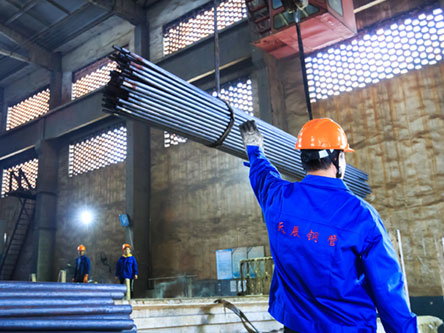

Steel pipes don’t announce themselves. They sit inside machines, run beneath floors, and hold up structures without fanfare. But anyone who’s worked in manufacturing knows the difference a good pipe makes—the hydraulic system that never leaks, the boiler tube that survives another decade, the chassis component that holds its tolerance after a million cycles. These aren’t glamorous parts, but they’re the ones that keep everything else running.
Why Steel Pipes Matter More Than Most People Realize
Steel pipes carry fluids, bear loads, and transfer force across nearly every industrial sector. The automotive plant floor, the construction site, the power station—all depend on tubing that performs under pressure, temperature swings, and corrosive conditions. When a pipe fails, production stops. When it holds, nobody notices. That’s the nature of infrastructure.
The material choice matters enormously. STKM11A Steel Pipes and STKM13A Steel Tubes show up in automotive chassis and engine assemblies where dimensional precision can’t slip. Construction machinery leans on ST52 Steel Pipe and Q355B Steel Pipe for frames that absorb shock and carry heavy loads day after day. Fluid transport systems—especially those handling high-pressure gas or corrosive liquids—rely on ASTM A106 Gr.B Steel Pipe and ASTM A179 Steel Pipe to maintain integrity over years of service.
These aren’t interchangeable commodities. Each grade exists because engineers needed something specific: a particular yield strength, a certain corrosion resistance, a wall thickness that holds under cyclic loading. The durability of steel components directly affects maintenance schedules and operational costs. Understanding steel tube applications means understanding why one specification works and another doesn’t.
How Manufacturing Methods Shape Performance
Not all steel tubes are made the same way, and the differences matter more than most spec sheets suggest.
Seamless steel pipes form from solid billets, pierced and rolled without any welding. The absence of a seam eliminates a potential weak point, which is why seamless tubes dominate in high-pressure and high-temperature applications. There’s no weld zone to fail under stress, no heat-affected area with altered grain structure.
Cold drawing takes this further. The process pulls the tube through a die at room temperature, which does several things at once: it tightens dimensional tolerances, refines the grain structure, and increases tensile strength. The surface comes out smoother. The wall thickness becomes more uniform. Products like EN10305-1 Steel Pipe and Precision Pipe&tube go through this process specifically because their applications demand that level of control.
Cold Finished (Hard) Pipe & Tube represents the high end of this spectrum—tubes with enhanced hardness and dimensional stability for components where even small variations cause problems.
Welded tubing has its place too. For applications where extreme pressure resistance isn’t critical, welded tubes offer cost advantages without sacrificing basic performance. The key is matching the manufacturing method to the actual service conditions.
What are the advantages of seamless steel tubes over welded tubes in manufacturing?
Seamless tubes handle pressure better because there’s no weld seam to act as a stress concentrator. Under high internal pressure or cyclic loading, welded seams can become failure points. Seamless construction also provides more uniform wall thickness and eliminates the possibility of seam corrosion. For hydraulic systems, high-pressure boilers, and similar applications, these advantages justify the higher cost.
Making Sense of International Standards
Steel tube standards exist because global manufacturing requires predictability. A tube made in China to EN10305-1 should perform identically to one made in Germany to the same standard. That’s the theory, anyway—and it works when suppliers actually follow the specifications.
ASTM, EN, DIN, JIS, and GOST each approach standardization differently, but they all define the same basic parameters: chemical composition, mechanical properties, dimensional tolerances, and testing requirements. ASTM A519 Steel Pipe covers seamless carbon and alloy mechanical tubing for North American markets. DIN 17175 Steel Pipe specifies tubes for elevated-temperature service in boilers and pressure vessels. Japanese standards like JIS G3445 Steel Pipe and JIS G3461 Steel Pipe address machine structural applications and heat exchanger service respectively.
The practical question is always: which standard fits the application? A tube that meets ASTM requirements might not satisfy EN specifications for the same general use, because the standards prioritize different properties or test methods.
| Standard | Material Type | Key Application |
|---|---|---|
| ASTM A519 | Carbon/Alloy Steel | Mechanical Tubing |
| EN10305-1 | Precision Cold-Drawn | Automotive, Hydraulics |
| DIN 17175 | Carbon/Alloy Steel | High-Temp Boilers |
| JIS G3445 | Carbon Steel | Machine Structures |
| GOST 8733 | Carbon/Alloy Steel | General Industrial |
Material verification matters as much as the standard itself. PMI (Positive Material Identification) confirms that the alloy composition matches the specification—a critical check when material mix-ups can lead to field failures. NDT (Non-Destructive Testing) catches internal defects and surface flaws before the tube ships. These inspections verify that carbon steel tubes and alloy steel tubes actually deliver the corrosion resistance and mechanical performance their specifications promise.
How do different steel pipe standards impact industrial applications? The standard determines what you can expect from the material. ASTM standards tend to define specific product forms with detailed testing protocols common in North American industry. EN standards provide broader technical delivery conditions used across European markets. A tube certified to one standard may not automatically qualify under another, even if the underlying material is similar. This affects procurement, quality documentation, and liability—particularly for applications where regulatory compliance is mandatory.
When Standard Shapes Aren’t Enough
Round tubes work for most applications, but not all. Sometimes the geometry itself becomes a design constraint.
Special-Shaped Alloy Steel Tubes and Special-Shaped Carbon Steel Tubes address applications where round profiles don’t fit—literally or functionally. Square and rectangular tubes provide flat bearing surfaces for structural connections. Hexagonal steel pipes & tubes offer wrench flats for mechanical assemblies. Oval Steel Pipes&Tubes reduce drag in fluid flow applications or fit into tight spaces. Even Triangle Lemon Steel Pipes&Tubes serve specific agricultural and mechanical functions where the profile shape matters.
Automotive lightweighting programs increasingly specify custom tube geometries that optimize strength-to-weight ratios. A shaped tube can provide the same structural performance as a heavier round section while fitting into constrained packaging spaces.
High-pressure boiler tubes face different challenges. Materials like 25CrMo4 Steel Pipe and 4130 Seamless Pipe combine high-temperature strength with resistance to thermal fatigue. These tubes survive repeated heating and cooling cycles that would crack lesser materials.
Construction machinery hydraulics demand tubes like ST35 Seamless Pipe and S355JR Steel Pipe that handle pressure spikes and vibration without developing leaks. The pipe strength requirements for these OEM steel solutions leave little margin for error.
What Quality Control Actually Looks Like
Quality certifications mean something only when the underlying processes support them. ISO 9001 provides a framework, but the real work happens in material testing, dimensional inspection, and process control.
PMI inspection catches material substitutions before they become problems. A tube labeled as one alloy but actually made from another can fail catastrophically in service. PMI testing uses portable spectrometers to verify chemical composition on the production floor—not just on test coupons, but on actual product.
NDT inspection goes deeper. Ultrasonic testing finds internal voids and inclusions that surface inspection misses. Eddy current testing detects surface cracks and seam defects in welded tubes. These methods verify material integrity without destroying the product being tested.
Dimensional inspection confirms that precision steel tubing actually meets its tolerances. For cold-drawn tubes, this means checking diameter, wall thickness, straightness, and surface finish against specifications that may allow only hundredths of a millimeter variation.
The combination of these controls—applied consistently across production—separates reliable suppliers from those who ship problems.
How does cold drawing enhance the performance of steel pipes for industrial use?
Cold drawing increases tensile strength and yield strength while improving surface finish and dimensional accuracy. The process work-hardens the material, which raises hardness but reduces ductility. For precision applications, the tighter tolerances and smoother surfaces reduce machining requirements and improve fit. Custom-shaped steel tubes often require cold drawing to achieve the dimensional control their applications demand.
What quality certifications should I look for in a steel tube supplier for critical applications?
ISO 9001 certification indicates a documented quality management system, but look beyond the certificate. Ask about PMI testing protocols, NDT methods, and dimensional inspection procedures. Verify compliance with the specific standards your application requires—ASTM, EN, DIN, or JIS. For critical applications, request test reports and material certificates that trace back to specific production lots.
What are the advantages of seamless steel tubes over welded tubes in manufacturing?
Seamless tubes eliminate the welded seam that can fail under pressure or corrode preferentially. They provide uniform wall thickness and consistent mechanical properties around the entire circumference. For high-pressure service, high-temperature applications, and cyclic loading conditions, seamless construction offers reliability that welded tubes cannot match.
Partner with Tenjan for Precision Steel Tube Solutions
Changzhou Tenjan Steel Tube Co.,Ltd has manufactured precision steel tubing since 2004, with vertically integrated production of seamless, cold-drawn, and custom-shaped tubes. Our products meet global standards including ASTM, EN, DIN, and JIS specifications. Contact us for technical consultation and quotes tailored to your application requirements.
Email: [email protected] | Tel: +86 51988789990 | WhatsApp: +86 13401309791