
The fragrance industry moves faster than most people realize. What worked two years ago in scent development often feels dated now, and the brands that thrive are the ones paying close attention to where consumer tastes are heading. For companies considering OEM fragrance partnerships, the question isn’t just about production capacity anymore. It’s about understanding which market segments are growing, what consumers actually want from their scent experiences, and how to position products that stand out in an increasingly crowded space.
Where the OEM Fragrance Market Is Actually Growing
The OEM fragrance market has picked up momentum in ways that surprised even industry veterans. Private label beauty products are no longer seen as budget alternatives. Many now compete directly with established brands on quality and appeal. Asia-Pacific markets are driving much of this expansion, with rising disposable incomes creating demand for both everyday fragrances and premium scent experiences.
Market projections point to continued growth over the next five to seven years. This isn’t just optimism. The numbers reflect real shifts in how consumers discover and purchase fragrances. Scent-Share has tracked this trajectory across a decade of global scent experience, watching demand diversify from traditional personal care applications into ambient scenting, home fragrance, and specialty products. The company’s one-stop solution approach emerged directly from observing how brands struggle to coordinate multiple suppliers for different fragrance needs.
What Actually Influences OEM Fragrance Purchasing Decisions
Consumer preferences in the OEM fragrance market have become harder to predict using traditional demographic models. Gen Z buyers approach fragrance differently than millennials did at the same age. They research ingredients, question sourcing practices, and often prefer scents that feel personal rather than mass-market.
Luxury buyers present another pattern entirely. Many will pay significantly more for custom fragrances or products with clear sustainability credentials. This willingness to spend on differentiation creates opportunities for OEM partners who can deliver genuine personalization rather than superficial customization.
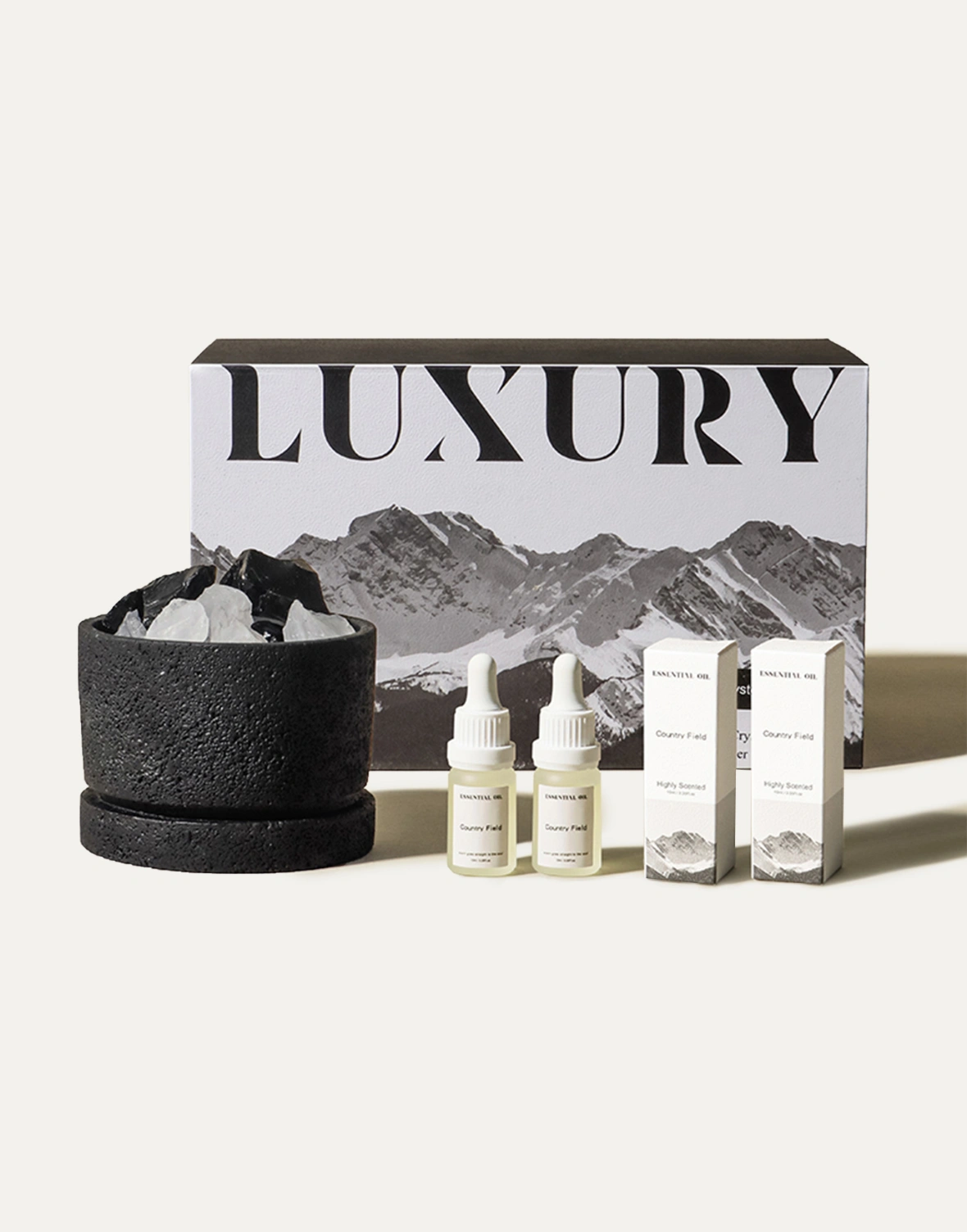
Scent-Share maintains over 300 scent types specifically because fragrance market segmentation has become so granular. A single product line might need variations for different regional markets, each with distinct preferences. The Natural Crystal Raw Aromatherapy Stone Gift (Model RD0002-B) illustrates this approach. It offers scents like Wildness (Green) and Isle Dawn (Yellow) through natural, heat-free diffusion. Products like this appeal to consumers seeking alternatives to traditional fragrance delivery methods.
Building Reliable OEM Fragrance Market Research
Effective OEM fragrance market research requires both qualitative depth and quantitative breadth. Focus groups reveal emotional responses to scents that surveys simply cannot capture. Someone might describe a fragrance as “clean” in a questionnaire but explain in conversation that it reminds them of a specific childhood memory. These details matter for positioning.
Online surveys provide the scale needed to identify purchasing patterns and price sensitivity across different segments. When combined with trend analysis tools, this data helps predict which scent innovations will gain traction and which niche fragrance markets are worth entering.
The research process should happen continuously, not just at project launch. Consumer insights in fragrance shift quickly, and custom fragrance development works best when informed by current data rather than assumptions from previous projects.
Regulatory Requirements and Ethical Sourcing Realities
Regulatory compliance in fragrance production isn’t optional, and the requirements vary significantly by region. IFRA standards provide a baseline for ingredient safety, but EU regulations impose additional restrictions that affect formulation choices. FDA requirements differ again for products sold in the United States. Brands entering multiple markets need OEM partners who understand these variations and can adjust formulations accordingly.
Sustainable sourcing has moved from marketing advantage to baseline expectation for many consumer segments. A significant percentage of fragrance buyers now consider sustainability claims when making purchasing decisions. This creates pressure throughout the supply chain, from fragrance ingredient sourcing to final packaging.
Scent-Share approaches ethical fragrance production as a quality control issue, not just a marketing consideration. Rigorous fragrance quality control extends to verifying supplier practices and maintaining documentation that supports transparency claims.
Choosing an OEM Partner That Actually Delivers
The gap between fragrance concept and market-ready product is where many projects stall. An OEM partnership works when the partner has genuine R&D capabilities and supply chain management that can handle real-world complications. Ingredient shortages happen. Packaging delays occur. The partner’s response to these challenges determines whether launch timelines hold.
Experience with the full fragrance manufacturing process matters more than impressive facilities. A partner who has guided products through formulation, testing, regulatory approval, and production scaling can anticipate problems before they become expensive. The Home Essential Oil Diffuser Aroma Dispenser Machine represents the kind of finished product that emerges from this comprehensive approach.
Time-to-market affects everything from competitive positioning to fragrance R&D investment returns. Partners who streamline the fragrance product lifecycle without cutting corners on quality create measurable value.
Why Private Label Perfumes Need Serious Market Analysis
Market analysis for private label perfume strategy isn’t about confirming assumptions. It’s about finding the gaps and risks that aren’t obvious from surface-level research. Competitive analysis reveals positioning opportunities. Consumer research identifies unmet needs. Together, they point toward unique selling propositions that support fragrance brand differentiation.
Brands that skip thorough analysis often discover problems after launch, when fixing them costs significantly more. A solid market entry strategy for fragrance products builds on research that tests assumptions before committing resources.
Understanding the Real Costs of OEM Fragrance Development
Cost analysis for OEM fragrance ventures needs to account for every component that affects final margins. Raw materials represent the most variable expense, with fragrance oil quality and sourcing significantly impacting both cost and product positioning. Packaging decisions affect perceived value and shipping economics. Manufacturing costs depend on order volumes and production complexity.
R&D investment often gets underestimated in initial projections. Formulation development, stability testing, and regulatory compliance work require time and expertise. Cutting corners here creates problems that surface later in product performance or market access.
Successful private label fragrance brands achieve healthy margins through strategic decisions at every stage. Fragrance packaging design affects shelf appeal and shipping costs simultaneously. Distribution channel choices determine which margins are realistic. Marketing strategy decisions influence customer acquisition costs and repeat purchase rates.
The Scent-Share Battery Aroma Oil Dispenser Wall Mount Diffuser demonstrates how product design affects operational economics. Its energy-saving design reduces ongoing costs for commercial applications, a consideration that influences purchasing decisions for business buyers.
| Cost Component | Description | Impact on ROI |
|---|---|---|
| Raw Materials | Fragrance oils, alcohol, water, etc. | High |
| Packaging | Bottles, caps, boxes, labels | Moderate |
| Manufacturing | Production, filling, assembly | Moderate |
| R&D | Formulation, testing, stability | High |
| Marketing | Promotion, advertising, distribution | High |
Working with Scent-Share on Your Next Fragrance Project
Turning an OEM fragrance concept into a product that performs in the market requires more than manufacturing capacity. It requires a partner who understands how all the pieces fit together. Scent-Share Technology (Guangzhou) Co., LTD brings a decade of global scent experience to these challenges, combining innovative R&D with practical production capabilities.
The company’s one-stop solution addresses the coordination problems that slow down fragrance development. From initial concept through market launch, having a single partner who handles formulation, testing, production, and packaging simplifies decision-making and reduces the communication gaps that cause delays.
Reach out to discuss how this approach might work for your brand’s specific needs.
Email: [email protected]
Phone: +86 185 6557 5758 / +86 134 2048 5758
Frequently Asked Questions About OEM Fragrance Market Demand
What are the typical lead times for OEM fragrance production?
Most new OEM fragrance formulations require three to six months from concept to finished product. This timeline covers R&D work, stability testing, regulatory review, and manufacturing. Established private label fragrance lines with existing formulations move faster since the development phase is already complete. Order volume and ingredient availability also affect scheduling.
How can small businesses compete in the OEM fragrance market?
Small businesses often succeed in the OEM fragrance market by targeting specific niches rather than competing broadly. A focused brand story and distinctive positioning matter more than production scale. Partnering with a flexible fragrance contract manufacturing provider gives access to diverse scent libraries and R&D capabilities without requiring large upfront investments. Scent-Share works with brands at various scales, providing the technical support that enables competitive fragrance brand differentiation.
What are the legal considerations for launching a new fragrance brand?
Legal requirements for new fragrance brands span several areas. Intellectual property protection means trademarking brand names and potentially scent names. Regulatory compliance varies by market, with IFRA, FDA, and EU regulations each imposing different requirements on ingredients and labeling. Understanding these requirements early prevents costly reformulation or market access problems later. Working with an OEM partner experienced in multiple regulatory environments simplifies navigation of these requirements.
