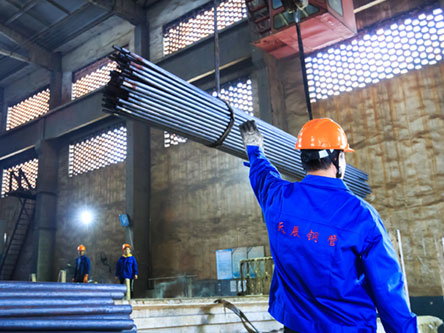

Industrial steel tubes carry weight most people never think about. They hold pressure in boilers, transfer hydraulic force in excavators, and form the skeleton of machines that run around the clock. When one fails, the consequences ripple outward—production stops, costs climb, sometimes worse. I’ve spent enough time around these components to know that the difference between a tube that lasts and one that doesn’t often comes down to decisions made long before installation: material grade, manufacturing process, dimensional tolerance. Getting those right matters more than any specification sheet can convey.
How Manufacturing Process Shapes Industrial Steel Tube Performance
Since 2004, Changzhou Tenjan Steel Tube Co.,Ltd has built its reputation on controlling what happens to steel from the moment raw material arrives until finished tubes ship out. This vertical integration isn’t just operational efficiency—it’s quality insurance. When you manage every step in-house, you catch problems early and maintain consistency that fragmented supply chains struggle to match.
The production methods matter enormously for industrial steel tubes. Cold drawing pulls steel through dies to achieve tight tolerances and smooth internal surfaces. Cold rolling compresses the material to refine its grain structure. Both processes create precision steel tubing with the dimensional accuracy that hydraulic systems and mechanical assemblies demand. Without this level of control, you’re gambling on whether the tube will actually fit and function as designed.
The product range reflects real engineering needs. Seamless tubes handle high-pressure applications where weld seams would create weak points. Cold-drawn profiles serve structural requirements with specific cross-sectional shapes. Cold drawn welded tube combines the economy of welded production with the precision of cold finishing for mechanical components. Beyond standard rounds, custom-shaped steel tubes—square steel tubes, rectangular steel tubes, hexagonal steel tubes, and complex geometries—address the reality that not every application fits a circular hole.
Why Vertical Integration Delivers Consistent Material Integrity
Managing production end-to-end means raw material sourcing follows strict criteria before steel ever enters the manufacturing line. Heat treatment parameters stay consistent batch to batch. Surface finishing meets the same standards whether you’re ordering ten tubes or ten thousand.
This in-house control enables continuous quality assurance rather than spot-checking at receiving docks. Process optimization happens in real time because the people making adjustments understand the entire production flow. The result is industrial steel tubes with guaranteed material integrity—fewer defects, more predictable performance, and the kind of reliability that critical applications require.
Where Industrial Steel Tubes Face Their Toughest Tests
The applications that depend on industrial steel tubes share a common characteristic: failure creates serious problems. These aren’t decorative components or easily replaced parts. They’re load-bearing, pressure-containing, precision-fitted elements in systems where downtime costs money and safety margins exist for good reason.
Automotive components use these tubes for structural members and fluid transfer lines. The tubes need to absorb vibration, resist fatigue, and maintain dimensional stability through temperature swings. High-pressure boilers push tubes to their thermal and mechanical limits—products like ASTM A192 Steel Pipe and JIS G3461 Steel Pipe exist specifically because standard tubes can’t handle the combination of elevated temperatures and sustained pressure.
Construction machinery and hydraulic systems present different challenges. Here, industrial steel tubes face impact loads, cyclical stress, and contamination from harsh operating environments. Grades like 4140 Steel Pipe and EN10305-1 Steel Pipe get specified because their alloy compositions deliver the fatigue strength and surface quality these applications demand. The tubes in an excavator’s hydraulic arm might cycle thousands of times daily—each cycle testing the material’s ability to flex without cracking.
Matching Steel Tube Specifications to Application Requirements
Selecting the right industrial steel tube starts with understanding what the application will actually demand. Material selection comes first because strength, ductility, and corrosion resistance vary dramatically between grades. Seamless Carbon Steel Tubes work well for general purposes, but applications requiring enhanced mechanical properties often need Seamless Alloy Steel Tubes like 25CrMo4 Steel Pipe.
Temperature and pressure ratings require honest assessment. A tube rated for moderate conditions will fail when pushed beyond its design envelope. Environmental factors—exposure to moisture, chemicals, or abrasive particles—influence whether standard carbon steel suffices or alloy grades become necessary. Stress analysis should account for both static loads and the dynamic forces that accumulate over operating cycles.
Dimensional precision matters more than many engineers initially expect. A tube that’s slightly oversized won’t fit its housing. One with inconsistent wall thickness creates stress concentrations. Surface finish affects seal performance in hydraulic applications and flow characteristics in fluid systems.
| Industrial Application | Key Steel Tube Properties Required | Example Tenjan Product |
|---|---|---|
| Automotive Components | High strength, fatigue resistance | 4140 Steel Pipe |
| High-Pressure Boilers | High-temperature strength, creep resistance | ASTM A192 Steel Pipe |
| Construction Machinery | Impact resistance, weldability | S355JR Steel Pipe |
| Hydraulic Systems | Precision, smooth internal surface | EN10305-1 Steel Pipe |
Testing and Standards That Verify Industrial Steel Tube Quality
Material integrity isn’t something you assume—it’s something you verify. Our ISO-certified manufacturing processes build quality control into every production stage rather than treating inspection as a final checkpoint.
PMI inspection (Positive Material Identification) confirms that the steel actually contains what the specification says it should. This matters because material mix-ups happen in supply chains, and installing the wrong alloy in a critical application creates risks that might not become apparent until failure occurs. NDT inspections using ultrasonic and eddy current methods detect internal flaws and surface defects without destroying the tube being tested.
Adherence to ASTM standards, EN standards, DIN standards, and JIS standards provides a common language for material compliance. These frameworks define chemical composition ranges, mechanical property requirements, and testing protocols that ensure industrial steel tubes perform predictably regardless of where they’re manufactured or installed.
Full traceability means every tube can be tracked back to its raw material source and production batch. Metallurgical testing confirms grain structure and heat treatment effectiveness. This documentation isn’t bureaucratic overhead—it’s the evidence that supports warranty claims, satisfies regulatory requirements, and enables root cause analysis if problems ever arise.
How International Standards Guide Industrial Steel Tube Selection
International standards serve as technical shorthand between manufacturers and users. When a specification calls for an ASTM-grade tube, both parties understand the material specifications, including acceptable ranges for chemical composition and mechanical properties like tensile strength, yield strength, and impact resistance.
This standardization directly supports safety. Engineers can design systems knowing that tubes meeting specific standards will behave within predicted parameters. The standards also enable global market compatibility—a tube manufactured to EN specifications can integrate into projects worldwide without requiring custom testing to verify basic properties.
| Standard Body | Primary Focus | Common Applications |
|---|---|---|
| ASTM (USA) | Materials for specific applications | Pressure piping, mechanical tubing, structural |
| EN (Europe) | Technical delivery conditions | General engineering, pressure purposes, structural |
| DIN (Germany) | Product dimensions, material grades | Precision tubes, seamless tubes, structural |
| JIS (Japan) | Machine structural, pressure services | Boilers, heat exchangers, mechanical structures |
Engineering Custom Industrial Steel Tubes for Non-Standard Requirements
Standard catalog products solve most problems, but some engineering challenges require tubes that don’t exist until someone makes them. Custom steel tubes address the gap between what’s readily available and what a specific application actually needs.
The process starts with collaboration. Our engineering team works with clients to understand not just the dimensions they want, but the conditions the tube will face. This context shapes decisions about material grade, manufacturing process, and quality testing protocols. The goal is developing products that meet precise OEM requirements rather than forcing designs to accommodate available stock.
Production capabilities extend well beyond round tubes. Special-Shaped Alloy Steel Tubes and Special-Shaped Carbon Steel Tubes include Oval Steel Pipes&Tubes, Octagonal Steel Pipes&Tubes, and Triangle Lemon Steel Pipes&Tubes. These complex geometries serve applications where round tubes would waste space, create interference issues, or simply not fit the design intent.
Prototyping capabilities allow testing before committing to production volumes. This reduces risk when developing new products or entering unfamiliar applications. The combination of design flexibility and manufacturing expertise transforms concepts into functional industrial steel tubes that perform exactly as intended.
Quality Control Protocols for Industrial Steel Tube Reliability
Reliability in industrial steel tubing comes from systematic verification rather than optimistic assumptions. Non-destructive testing methods form the foundation—ultrasonic testing reveals internal flaws that visual inspection would miss, while eddy current testing identifies surface defects that could initiate cracks under stress.
Positive material identification confirms alloy composition matches specifications. Dimensional inspection verifies that outer diameter, wall thickness, and length fall within acceptable tolerances. Surface integrity checks ensure finishes meet requirements for applications where roughness affects performance.
Hydrostatic testing subjects tubes to pressures exceeding their rated operating conditions, confirming leak-tightness and structural adequacy. Tubes that pass this test have demonstrated their ability to handle the forces they’ll encounter in service. These combined measures create confidence that industrial steel tubes will perform reliably when installed in demanding applications.
Frequently Asked Questions About Industrial Steel Tubes
What material grades work best for different industrial steel tube applications?
Material grade selection depends heavily on what the tube will actually experience. For general structural and mechanical uses where extreme conditions aren’t expected, 1020 Steel Pipe (low-carbon) and S45C Steel Tubes (medium-carbon) offer good weldability and machinability at reasonable cost. Applications demanding higher strength and toughness typically specify 4130 Seamless Pipe (chromium-molybdenum alloy) or S355JR Steel Pipe (European structural steel). The right choice balances mechanical requirements against factors like operating temperature, pressure exposure, and environmental conditions—there’s rarely a single “best” grade without knowing the specific application context.
How does precision manufacturing affect industrial steel tube service life?
Precision manufacturing extends service life through several mechanisms. Tighter tolerances ensure proper fitment in assemblies, eliminating the stress concentrations that loose or forced fits create. Superior surface finishes reduce friction in fluid systems and minimize wear where tubes contact other components. Uniform wall thickness distributes stress evenly rather than concentrating it at thin spots. These factors combine to improve fatigue resistance under cyclical loading—the kind of repeated stress that eventually causes failures in industrial steel tubes used in hydraulics, automotive systems, and rotating machinery. The upfront investment in precision pays dividends through reduced maintenance and longer replacement intervals.
Does Tenjan manufacture custom industrial steel tubes for specialized projects?
Yes, custom manufacturing is a core capability rather than an exception. Available options include square steel tubes, rectangular steel tubes, hexagonal steel tubes, and other complex geometries beyond standard round profiles. Dimensions—outer diameter, wall thickness, length—can be tailored to exact specifications. Engineering support helps translate project requirements into manufacturable designs, ensuring that custom industrial steel tubes deliver the precise fit and function that specialized applications demand. This flexibility serves OEMs developing new products and project teams facing unique constraints that standard catalog items can’t address.
Partner with Tenjan for Advanced Steel Tube Solutions
For OEMs and engineering projects globally, precision and reliability in steel tubing are non-negotiable. Partner with Changzhou Tenjan Steel Tube Co.,Ltd for vertically integrated manufacturing expertise, ISO-certified quality, and custom solutions tailored to your most demanding industrial applications. Contact us today to discuss your project requirements and discover how our advanced steel tubes drive superior performance. Email: [email protected] | Tel:+86 51988789990 | WhatsApp:+86 13401309791