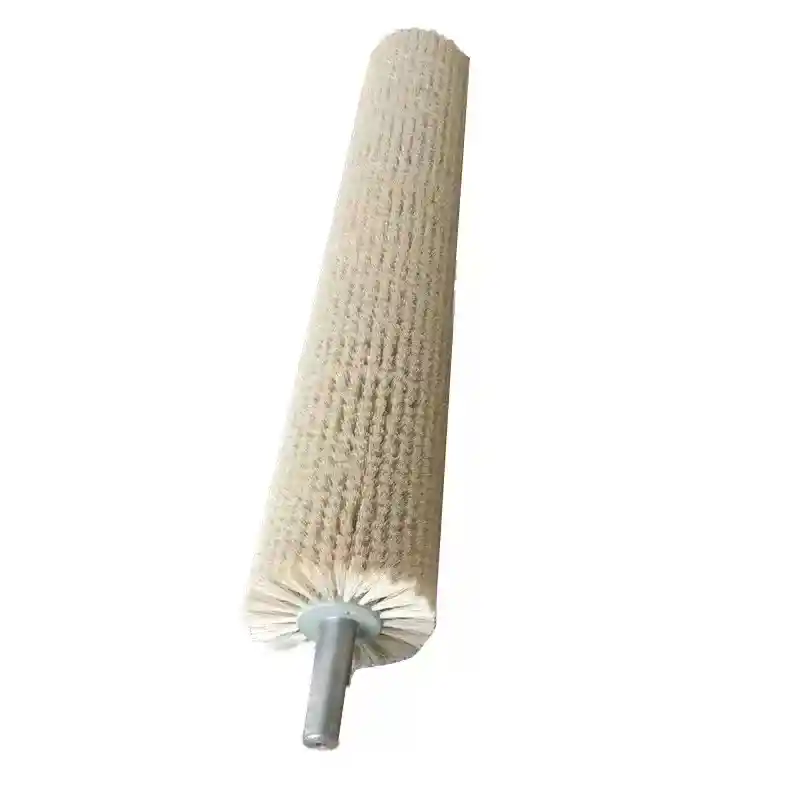

Industrial end brush selection directly determines deburring consistency and inner surface quality in automated production. With fifteen years in brush manufacturing, I’ve seen too many lines slow down because the brush filament couldn’t reach the root of a thread or the wire gauge was too stiff for a polished bore. This article breaks down the factors that decide whether an end brush removes burrs cleanly or undercuts the surrounding surface. We’ll cover filament material, trim length, and mounting options that procurement teams rarely see discussed in generic catalog descriptions.
Understanding Industrial End Brush Construction
An end brush mounts on a right-angle tool or CNC spindle to reach the end of a bore, the inside of a cross hole, or the shoulder of a stepped part. The assembly looks simple but the interaction between hub design, filament fill pattern, and trim geometry makes the difference between a brush that works and one that leaves secondary burrs.
The hub holds the filament bundle. Standard hubs are steel or stainless steel, sized to match a collet, quick-change arbor, or threaded shank. Filaments are packed radially or in a cup configuration. Fill density matters: a low-density fill allows each wire to flex independently, improving conformity to irregular surfaces. A high-density fill provides more cutting edges per revolution and removes stock faster but generates more heat in the filament tips.
Wire diameter and filament material are the first-order variables. Carbon steel wire with a diameter between 0.005 inch (0.13 mm) and 0.020 inch (0.50 mm) covers most metalworking deburring. The finer diameters polish; the thicker diameters break heavy burrs. Stainless steel wire prevents rust contamination on parts destined for medical, food, or marine applications. In nonferrous and soft-metal work, nylon or abrasive nylon filaments avoid embedding iron particles into aluminum or brass surfaces.
Filament Selection for Deburring: Steel, Stainless, Nylon, Abrasive
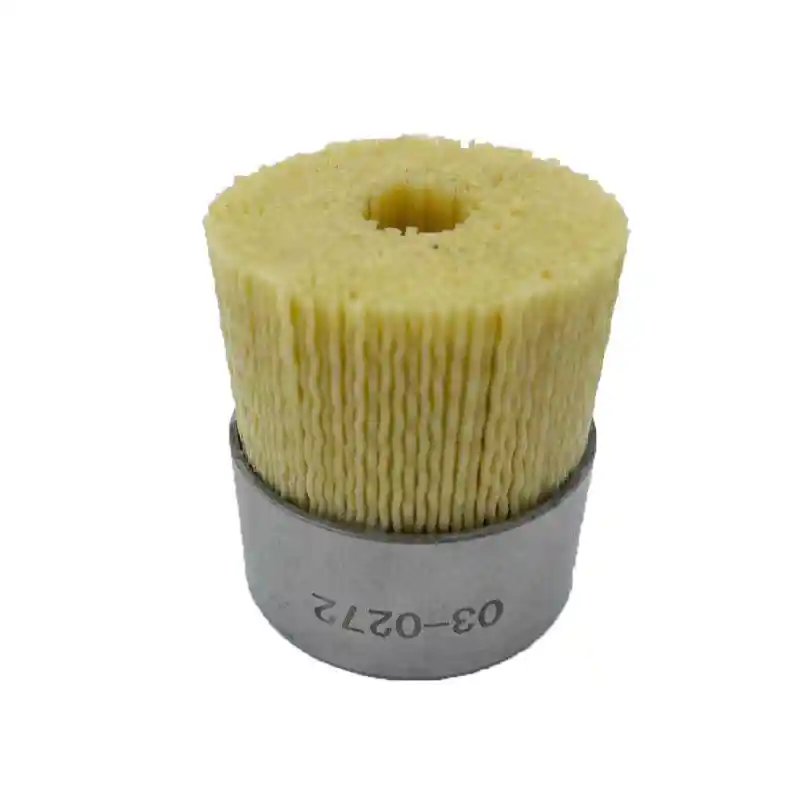
Filament choice controls the balance between material removal rate and surface roughness. I often see shops default to carbon steel for every job, then wonder why aluminum manifolds end up with embedded iron particles that corrode after anodizing. The table below summarizes the primary options.
| Filament Type | Hardness / Abrasiveness | Best For | When to Avoid |
|---|---|---|---|
| Carbon Steel Wire | Medium to high | Steel and iron parts, medium-to-large burrs | Any workpiece where iron contamination is unacceptable |
| Stainless Steel Wire | Medium | Stainless steel and corrosion-sensitive parts | Very heavy burrs where cutting speed is critical |
| Nylon Filament | Low to medium | Aluminum, brass, plastic, deburring without dimension change | Large burrs that require wire stiffness |
| Abrasive Nylon | Low to medium with abrasive grain | Light deburring and surface refinement, blending tool marks | Deep, heavy burrs or where loose grit is a concern |
For inner surface polishing, abrasive nylon with silicon carbide or aluminum oxide grain removes the microscopic peaks left by machining without cutting into the base metal. I’ve seen the right abrasive nylon end brush take a cylinder bore from a 63 microinch finish down to 32 microinch in a single automated pass, when paired with the correct speed and feed.
Wire diameter also influences stiffness and access. A 0.010-inch (0.25 mm) carbon steel wire end brush reaches into a 1/8-inch (3 mm) cross hole easily. For a 0.040-inch (1 mm) bore, 0.005-inch (0.13 mm) wire may be the only option that won’t damage the thread profile.
Matching Brush Geometry to Inner Surface Polishing Tasks
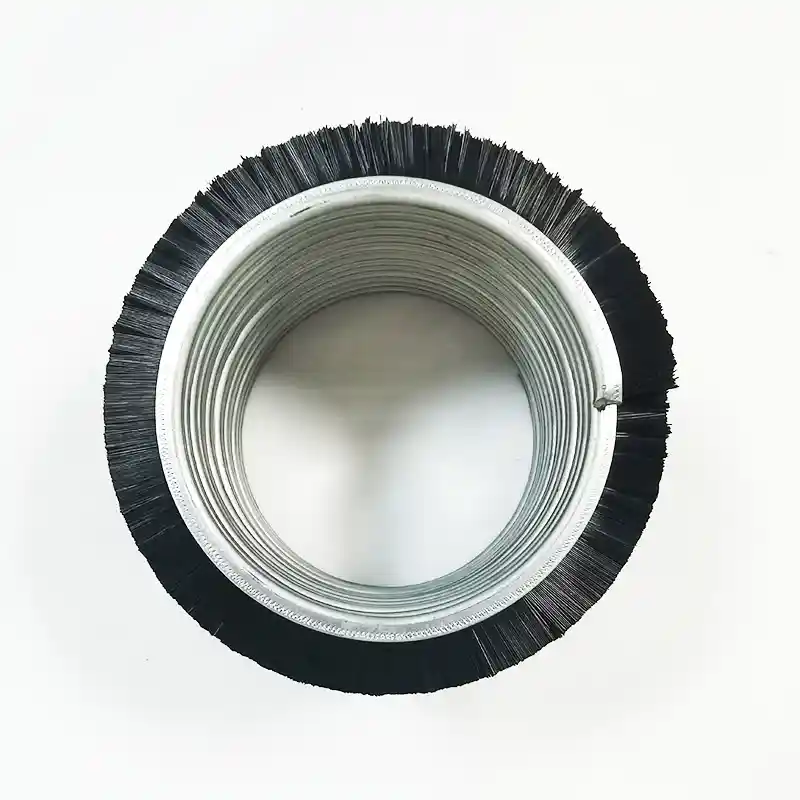
The shape of the brush face and the length of the trim determine how far the filaments reach and how uniformly they contact the surface. Most end brushes are either cup-shaped or flat-faced. A cup shape concentrates the filament tips at the perimeter, useful for chamfers, shoulders, and the intersection of a bore with a flat face. A flat face distributes pressure across the full diameter, better for the bottom of a blind hole or a flat inner surface.
Trim length, the distance from the hub face to the trimmed tip, controls filament stiffness and reach. Short trim lengths, typically half the brush diameter, produce a stiff brush for heavy deburring. Long trim lengths provide more filament reach into recesses and undercuts, but at a cost in cutting force. For inner surface polishing of stepped bores, a custom trim profile that graduates from short at the root of the step to long at the mouth can be the difference between uniform finish and a visible ring at the step edge.
Diameter relative to bore size matters more than many shops realize. A brush that is exactly the bore diameter loads the filaments too evenly and leaves the center with reduced contact pressure. I usually recommend a brush 10–15% larger than the bore diameter to provide adequate wall pressure. When the bore includes a cross hole, offset the brush slightly from the centerline to avoid filament breakage at the hole edge.
Common Application Mistakes and How to Avoid Them
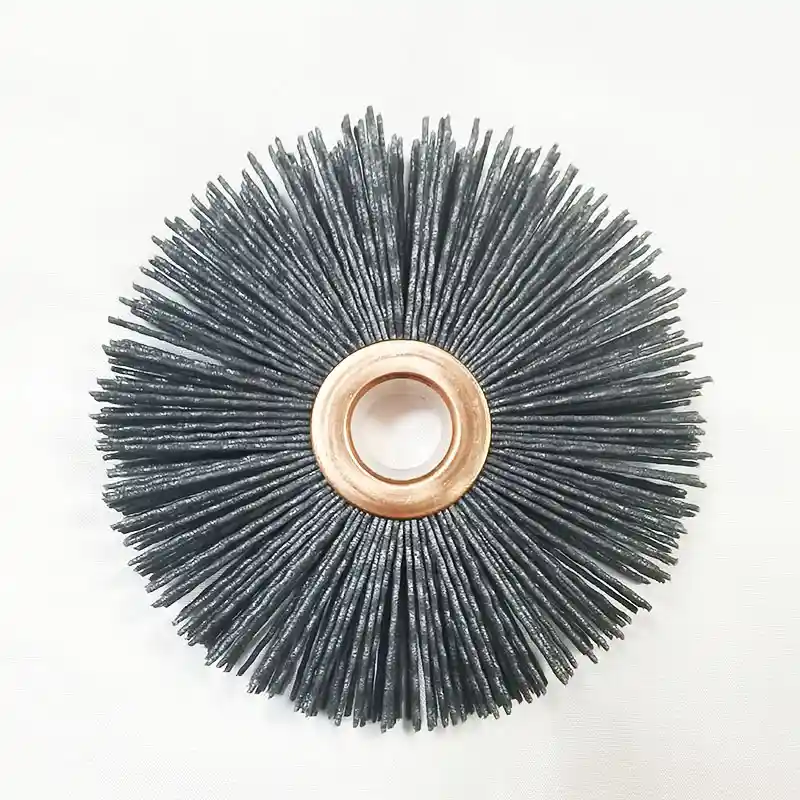
The most frequent error is running the brush too fast. Carbon steel wire end brushes have a safe operating speed printed on the packaging, usually 15,000–20,000 RPM for small diameters. Exceeding that speed not only risks wire fatigue and breakage but also overheats the tips and softens them, reducing cutting action. I’ve seen operators crank up the speed to compensate for a worn brush, which only accelerates wear and creates a bell-shaped profile at the bore entrance.
Another mistake is expecting one brush to handle both deburring and final polishing. The wire gauge and filament material that break a burr typically leave a comparatively rough surface. A two-step process, starting with a coarser wire end brush for heavy burrs and finishing with a softer or abrasive-impregnated brush, produces a more consistent result and extends brush life by preventing premature loading of the aggressive brush with fine particles.
Undersized trim length for the depth of the bore is a hidden productivity killer. If the filament tip barely contacts the back wall, the brush may ride on the hub rather than the wires, causing chatter and incomplete deburring. We often ask customers to measure the full depth from the face to the innermost burr location and add 15–20% to the stroke length, then select a trim that accommodates that stroke plus some compliance.
For programs involving tight tolerances or unusual bore geometries, there is no single catalog solution. At Huixi Brush, we frequently adjust wire diameter, trim profile, and hub configuration for a customer’s specific part drawing. If your application involves a step where the burr root is at a compound angle or the bore finish is critical, confirming filament selection and trim length before committing to a standard size can save months of trial on the production floor. Reach out at [email protected].
Customizing End Brushes for Specialized Production Needs
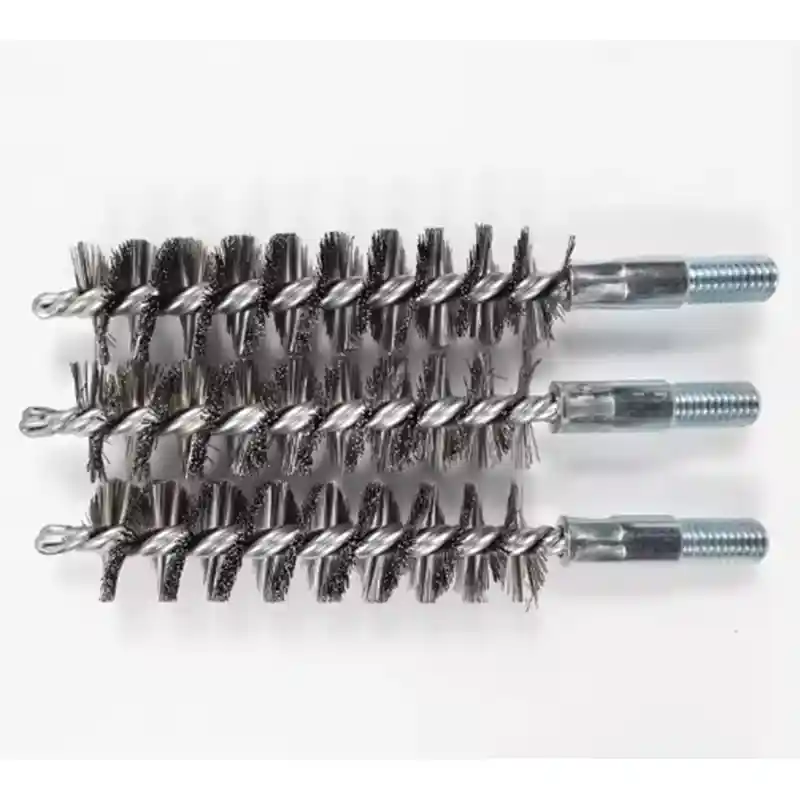
Standard end brushes cover many applications, but production lines with tight cycle times or demanding surface finish specs benefit from custom configurations. The most common customizations we produce are non-standard wire diameters, mixed-filament fills, and custom hub materials that match a specific machine arbor without adapters.
A mixed-filament brush combines, for example, carbon steel wires for burr removal with nylon or abrasive nylon filaments to blend the surface in the same pass. This is practical when the deburring and polishing stations are consolidated into one step. The brush design must distribute the two filament types evenly to avoid an uneven wear pattern that leaves some wires doing all the work while others just ride along.
Hub material is often overlooked. A stainless steel hub eliminates the risk of galvanic corrosion when the brush sits in a wet environment or when deionized water is used as a coolant. For automated cells, an aluminum hub reduces inertia, helping the spindle accelerate and decelerate faster. Both options require engineering the filament anchor to match the expansion coefficient of the hub material so the wires remain secure under thermal cycling.
We also supply end brushes with a radiused or chamfered flange to clear adjacent part features that a standard straight hub would interfere with. This is a detail that procurement teams may not think to specify until the first trial brush hits an obstruction. Sharing a cross-sectional drawing early in the sourcing process lets the brush manufacturer identify these interference points and design the hub accordingly.
Ensuring Consistent Quality in High-Volume Deburring
In high-volume production, brush-to-brush consistency is as important as the initial specification. A deviation in wire diameter of 0.001 inch (0.025 mm) changes cutting force by about 20–30%, based on our measurements. If the next batch of brushes has a slightly softer wire, the deburring station may leave a residual burr, triggering inspection rejects and downtime.
We control filament quality at the wire sourcing stage, not just at final inspection. Our standard production draws wire to a tolerance of ±0.0005 inch (0.013 mm) and verifies tensile strength on each incoming coil. During assembly, we trim and fill to a density that matches the approved sample, with a fill weight tolerance of ±3%. This may sound like overkill for a consumable tool, but the cost of scrapping a machined casting or a manifold far exceeds the cost of a consistent brush.
Periodic sampling on the production floor is worth the effort. We recommend pulling a brush from each new shipment and running it on a controlled test part, then comparing the deburring result and surface finish against a known good standard. This 10-minute check catches variations before they reach the production line.
Common Questions When Specifying Industrial End Brushes
Can one end brush deburr and polish in a single operation?
A combination brush with mixed filaments can handle light deburring and surface refinement in one pass, but the result is rarely equal to a dedicated two-step process. When a spec calls for a specific surface roughness after deburring, we find that a sequence of coarse wire followed by abrasive nylon produces a more repeatable finish and better control over Ra values.
Does wire diameter affect brush life more than speed?
Wire diameter and operating speed both matter, but wire diameter has the larger influence on fatigue life. A 0.010-inch (0.25 mm) carbon steel wire running at 15,000 RPM may last 50,000 cycles before wire breakage becomes visible, while a 0.005-inch (0.13 mm) wire under the same conditions may last 10,000 cycles. Speed multiplies the effect because wire fatigue is a function of the bending frequency and the stress amplitude. Reducing speed by 20% can extend brush life by roughly the same ratio, but only if the wire is not already past its yield point from a previous over-speed condition.
How do I know if the brush is cutting properly or just burnishing?
A proper cutting brush generates a fine, powdery swarf from the filament tips as they micro-machine the surface. A brush that is burnishing or smearing produces little to no swarf and may leave the surface shinier but with some burr roots still visible under magnification. If a 10x loupe shows the burr folded over rather than cleanly cut, the brush is either too soft, running too slow, or has reached the end of its useful life.
What information should I send to get the right end brush specified?
We typically need the part material, the minimum and maximum bore diameters, the depth to the burr, the geometry of the edge (sharp corner, chamfered, radiused), any surface finish requirement, and the tool speed available. This is enough to narrow down filament type, wire diameter, trim length, and hub shape. Share your requirements and we’ll confirm the best filament and trim for your part geometry. Send your drawing or a summary of these details to [email protected].
If you’re interested, check out these related articles:
rope cleaning brush for industrial use a key tool for maintaining safe production
main features and applications of hx nylon cylindrical brush
wire wheel brush the right assistant for industrial cleaning and polishing
brushes for steel wire industries cleaning descaling derusting polishing