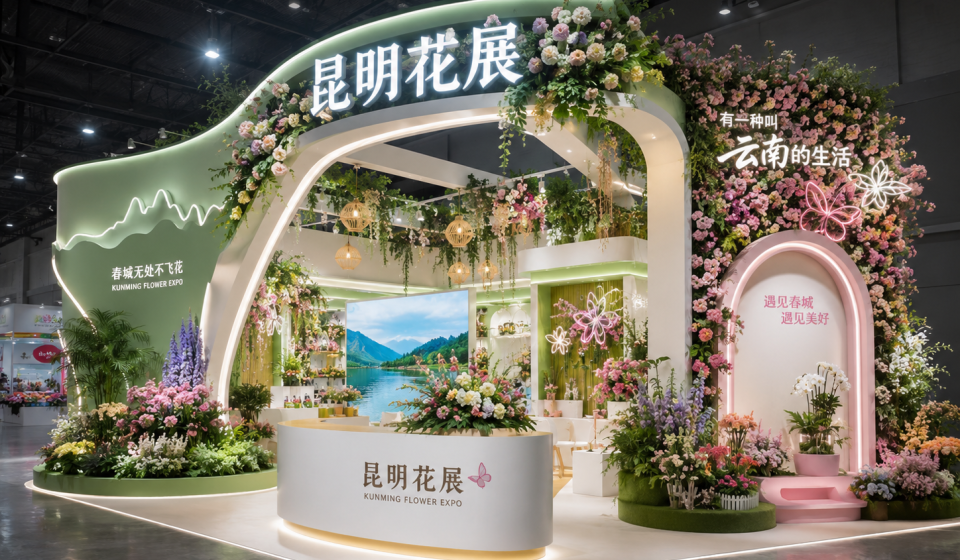

You’ve returned from Kunming with a thick stack of business cards, but the real work begins now. In my fifteen years supporting international buyers at IFEX, I’ve watched too many promising connections dissolve into silence. The gap between a productive booth conversation and a confirmed purchase order is rarely about price alone. Chinese flower suppliers, especially growers in Yunnan, evaluate follow-through and relationship before they commit production capacity. A disciplined, culturally aware follow-up process that uses the right tools can turn a brief handshake into a multi-year supply partnership. This article outlines the specific steps for converting IFEX meetings into orders, based on what I’ve seen work repeatedly for importers, wholesalers, and retail chains sourcing cut flowers, potted plants, and propagation material from Asia’s largest production hub.
Why Generic Trade Show Follow-Up Fails After IFEX
The usual advice about sending a personalized email within 48 hours is necessary but not sufficient when dealing with Yunnan’s flower industry. Growers and cooperatives around Kunming, Yuxi, and Tonghai often receive dozens of follow-up messages after a major exhibition. What makes yours stand out is not the speed alone but the channel and the cultural framing. Email is a common first step, but many Chinese suppliers prefer WeChat for ongoing business communication. Ignoring WeChat means you are invisible in the daily flow where samples are discussed, packing lists are confirmed, and shipment schedules are finalized. Additionally, a generic “nice to meet you” message fails to signal that you understand their production seasons, variety strengths, or export routes. Your follow-up must reference specifics from the booth meeting and demonstrate that you are ready to operate within the Asian supply chain rhythm, not just seeking a one-time trial order.
The Communication Stack That Works With Chinese Flower Suppliers
Choosing the right channel for each stage of follow-up increases response rates significantly. A layered approach that respects supplier preferences gives you the best chance of moving from introduction to confirmed order.
| Stage | Preferred Channel | Purpose |
|---|---|---|
| Initial re-engagement | Email with WeChat QR code invitation | Formal documentation of your company profile and sourcing intent |
| Ongoing negotiation | WeChat text and voice messages | Quick questions on varieties, pack sizes, and shipping windows |
| Sample confirmation | WeChat photo and short video | Visual verification of quality before shipment |
| Contract and payment terms | Email (formal documents), then WeChat for clarifications | Clear written record of agreed specifications and terms |
| Logistics coordination | WeChat with supporting documents via email | Real-time coordination on cold chain steps and paperwork |
Avoid relying solely on email if you have not also established a WeChat connection. I’ve seen buyers who sent three follow-up emails with no reply get a response within an hour after sending a WeChat message that simply said, “We met at IFEX at booth B12; I’m preparing my winter rose order and wanted to check availability.” The key is combining the formality of email with the immediacy and relationship texture of WeChat.
How to Write a Follow-Up Message That Gets an Actual Response
A message that leads to a conversation rather than the digital trash bin follows a clear structure. After IFEX, you have a narrow window of relevant context, so your first contact must restore that context immediately.
First, open with a specific reference: the supplier’s booth number, a distinctive variety you discussed, or a problem they mentioned solving for another market. This proves the message is not mass-produced. Second, state your sourcing intention clearly: “We are looking to place an initial order of 20,000 stems of ‘High Magic’ roses for trial shipment to Dubai in October.” Being precise about the variety, quantity, and timeline helps the grower assess fit and allocate capacity. Third, mention any relevant certifications or logistics requirements early. If your market requires MPS certification or a specific phytosanitary protocol, stating this upfront prevents wasted discussion later. Fourth, offer a concrete next step, such as a WeChat call or a request for a catalog with current pricing. Ambiguous phrases like “let’s stay in touch” do not move a deal forward. Suppliers respond to buyers who behave like they are ready to do business.
Moving From Conversation to Contract Without Losing Momentum
Once a supplier engages, many buyers make the mistake of slowing down the negotiation loop. In the flower trade, timing around harvest seasons and flight schedules is everything. If you received a promising response, aim to lock in product specifications and a trial order size within one week. This means being prepared before you even send the first follow-up message.
Have your target varieties, approximate order volumes, and destination port information ready. Know your market’s import requirements for cut flowers, including duty rates, quarantine rules, and labeling standards. When the supplier asks, “How many boxes per week,” you should already have a range. This speed signals that you are a serious buyer, not a market tourist. I’ve seen Japanese supermarket buyers secure dedicated production lines from Kunming growers simply because they could issue a detailed product brief within 24 hours of the first follow-up call. The supplier allocated the spring chrysanthemum capacity to that buyer immediately, even though other potential buyers were still “considering.” Speed and specificity create priority.
Sealing the Order: Documents, Payments, and Logistics Checks
The final step from meeting to order requires handling the formalities correctly, especially as a first-time buyer from a new supplier. The most common pitfalls I’ve encountered with international buyers involve payment terms and phytosanitary documentation.
For payment, discuss terms early. Many Chinese suppliers accept a 30% deposit with balance against shipping documents for trial orders, but it depends on the relationship. Never agree to full upfront payment unless it is a small sample order. Use T/T (telegraphic transfer) for the deposit and L/C (letter of credit) for larger ongoing orders if your bank relationship permits. Always clarify who is responsible for export clearance and documentation costs. As for logistics, confirm the cold chain break points: from farm to Kunming airport or seaport, then to your destination. Air freight is common for high-value fresh cuts; sea freight works for potted plants and dried flowers with longer shelf life. Most importantly, ensure the supplier can provide the phytosanitary certificate issued by China’s customs authority, exactly matching the plant species and quantities on the invoice. Without that certificate, your shipment will be held at your country’s border, and no relationship can save a spoiled consignment.
If your program involves importing a new variety not yet approved in your country, it is worth confirming the pest risk analysis requirements before finalizing your order. Reach out at [email protected] for guidance on connecting with accredited testing facilities or logistics partners that specialize in flower and plant exports from Yunnan.
Common Questions About Turning IFEX Meetings Into Orders
How soon should I follow up after IFEX?
Within three business days. The memories of your conversation are still fresh, and the supplier is still in exhibition mode. Waiting longer than a week significantly reduces response rates because the supplier’s attention has moved to other production tasks and other buyers who contacted them sooner. A quick email mentioning your booth visit, followed by a WeChat connection request, is the most effective pattern I’ve seen.
Should I negotiate pricing in the first follow-up message?
Only if you are ready to place an order. Quoting prices without a order context often leads to a generic price list that does not apply to your specific variety, grade, and pack specification. Instead, request a formal quotation for a defined product and volume. Once you have that, you can discuss pricing, but remember that in the Yunnan flower sector, price is often linked to stem length, bud size, and seasonal availability. Negotiate with the full specification in hand, not just a per-stem price.
What if a supplier does not use WeChat?
This is rare among professional flower exporters in Yunnan, but if it happens, email is the primary alternative. However, I recommend that you also connect through the IFEX buyer-supplier platform if available, which acts as a neutral intermediary for initial introductions. If email is the only channel, keep your messages concise and include a direct phone number for WhatsApp or a call. Suppliers often prefer voice communication once the relationship starts. Share your requirements and we’ll confirm the best contact method for specific suppliers you met at the show.