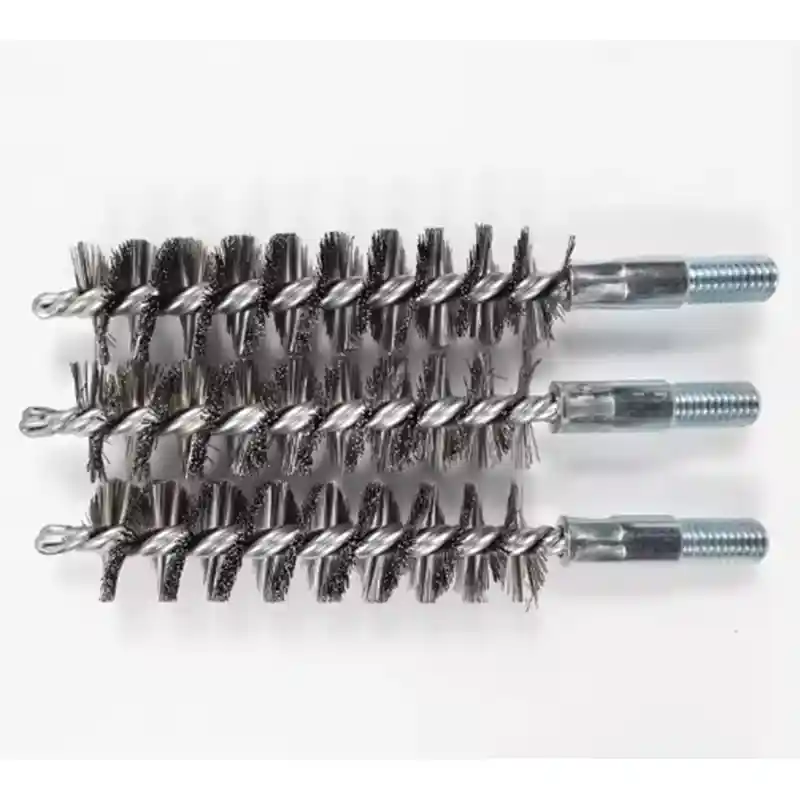

Rust and scale accumulation in industrial piping systems reduces flow capacity and leads to pressure drops and equipment wear. A wire pipe brush is the most direct mechanical solution for clearing these blockages, but its effectiveness depends entirely on selecting the right wire material, gauge, and brush design for the pipe material and scale type. In more than fifteen years of manufacturing industrial brushes, our team has repeatedly seen maintenance teams choose the wrong brush — one that either fails to remove heavy scale or leaves the pipe interior scored. This article explains how to match a wire pipe brush to your specific application so that rust and scale are removed efficiently without compromising pipe integrity.
What Causes Rust and Scale Buildup in Pipes
Moisture, oxygen, and dissolved minerals are present in most industrial fluid systems. Over time, iron and steel pipes develop an oxidation layer that progresses into flaking rust, while hard water deposits form mineral scale that clings to the pipe wall. This buildup does more than restrict flow; it accelerates under‑deposit corrosion and creates pressure differentials that stress pumps and valves. Chemical flushing can handle light deposits, but heavy rust and stubborn scale call for mechanical removal. A correctly specced wire pipe brush reaches the pipe interior and scrapes away deposits down to the base metal, restoring full inner diameter without the downtime and disposal issues of chemical methods.
Comparing Wire Materials for Pipe Cleaning Brushes
The wire material of a pipe brush determines its cutting aggressiveness, lifespan, and compatibility with different pipe substrates. Using the wrong material can either leave scale behind or gouge the pipe surface.
| Wire Material | Abrasiveness | Corrosion Resistance | Best Application |
|---|---|---|---|
| Carbon steel | High | Low (rusts if stored wet) | Heavy rust and mill scale on iron/steel pipes |
| Stainless steel | Medium | High | Corrosion‑sensitive systems; food‑grade, stainless pipes |
| Brass | Low | High | Soft metal pipes; non‑sparking environments |
| Nylon | Very low | Does not corrode | Light debris, plastic pipes, polishing after metal brushing |
Carbon steel wire with a diameter between 0.25 mm and 0.40 mm delivers aggressive scale removal on cast iron and schedule‑40 steel pipe. We have found that for pipes with decades of accumulated scale, a 0.35 mm carbon steel wire bristle cuts through mineral deposits without bending or wiping out after a single pass. Stainless steel wire, usually type 304 or 316, sacrifices some cutting aggressiveness for long‑term rust resistance. This makes it the better choice when pipes carry water continuously and the brush may be used frequently without thorough drying. Brass wire brushes are gentle enough for copper and thin‑wall tubing, and they eliminate spark risk in environments with flammable vapors. Nylon wire brushes work well as a secondary pass — they sweep out loose debris after the main wire cleaning without leaving metal transfer on the bore surface.
Brush Design Features That Affect Cleaning Performance
A wire pipe brush is not a simple twisted‑wire rod. Its construction directly controls how the bristles contact the pipe wall.
Spiral vs. Straight Wire Configuration
Spiral‑wound wire brushes produce a 360‑degree cleaning sweep as the brush is pushed and rotated through the pipe. The helix forces the bristles into continuous contact with the full circumference. Straight‑wire brushes, by contrast, rely on the operator’s rotation and provide less consistent coverage, often leaving strips of scale along the pipe wall. For any pipe with circumferential rust or scale, a spiral brush is the safer choice.
Stem Diameter and Flexibility
The stem must balance stiffness for pushing force with enough flex to follow pipe bends. A stem that is too rigid will jam in elbows; a stem that is too flexible will buckle under heavy resistance. Single‑stem construction works for straight runs up to about 1 meter. Double‑stem twisted construction increases column strength for longer pipes and higher torque applications, such as when the brush is driven by a drill. Stem diameter typically ranges from 3 mm to 12 mm, and selecting the right diameter depends on the pipe ID and the amount of debris that must pass around the stem during cleaning.
How to Use a Wire Pipe Brush for Effective Rust Removal
The way a wire pipe brush is deployed matters as much as the brush itself. Speed, pressure, and direction can mean the difference between a clean pipe and a damaged one.
Manual vs. Powered Cleaning
For pipes under 50 mm in diameter, manual push‑pull action often gives enough friction to remove light rust. Rotate the brush steadily in one direction to avoid breaking bristles, and pull back after each forward stroke to clear debris from the brush face. For pipes over 50 mm or heavy scale, a variable‑speed drill (typically 500–1500 RPM) accelerates cleaning. We recommend starting at low speed and working up, because excessive heat from high RPM friction can temper carbon steel bristles and reduce their cutting ability. Always work dry; water cools the bristles but promotes flash rust on the freshly exposed metal surface before you can assess the result.
If the pipe diameter or scale condition falls outside what off‑the‑shelf brushes can address, ordering a brush without confirming the correct specification will lead to wasted time and material. Reach out at [email protected] with your pipe dimensions and scale type, and we can confirm the right brush configuration before you place an order.
Custom Wire Pipe Brushes for Non‑Standard Applications
Standard wire pipe brushes are stocked in a range of diameters and lengths, but many industrial applications require exact dimensions. Pipe inner diameters that deviate from common schedules, pipelines with reduced‑bore sections, or specifications that demand a specific wire alloy and stem attachment can all push outside catalog offerings. Our manufacturing team regularly produces brushes with stem diameters from 2 mm, bristle OD from 6 mm, and overall lengths that match the client’s pipe run — no minimum order quantity beyond a small trial batch. The ability to specify wire material, gauge, bristle diameter, and stem end‑fitting means you receive a brush that fits the pipe exactly, eliminating the risk of an undersized brush that misses scale or an oversized brush that jams.
Getting the Right Wire Pipe Brush for Your Facility
Rust and scale cleaning looks straightforward until you factor in pipe material, wall thickness, bend radius, and the type of deposits you are dealing with. A brush that works for light surface rust on stainless steel will not perform on caked mill scale inside an iron pipe. For those who maintain industrial pipe systems, the single most important move is matching the wire material and brush construction to the actual conditions inside the pipes — not just the pipe size listed on the drawing.
Send your pipe material, inner diameter, and a description of the deposit type to [email protected] or call +86 1580 0932 713. We will recommend a wire pipe brush specification that suits your cleaning application and, if standard sizes do not fit, arrange a custom production run with lead times that align with your maintenance schedule.
Common Questions About Wire Pipe Brushes and Pipe Cleaning
Can a wire pipe brush scratch or damage soft metal pipes?
Yes, steel wire brushes will score copper, brass, and aluminum pipes. For these materials, a brass or nylon wire brush is the right tool. Brass wire hardness falls below that of copper alloys, so it removes deposits without tearing the pipe wall. In our experience, a brass spiral brush followed by a nylon sweep brush gives the best result on copper heat exchanger tubes. If the pipe material is unknown, testing with the gentlest brush first is safer than starting with carbon steel.
What diameter wire pipe brush should I use for a 2‑inch pipe?
The brush OD needs to be slightly larger than the pipe ID to maintain bristle pressure against the wall. For a nominal 2‑inch schedule‑40 steel pipe (actual ID about 2.067 inches, or 52.5 mm), a brush with a bristle diameter of 54–56 mm typically works. The bristles flex inward during insertion and spring outward once inside, providing firm contact. If the scale is particularly heavy, a slightly larger OD compensates for bristle wear during the first cleaning passes.
Is a twisted‑wire spiral brush always better than a straight‑wire brush for rust removal?
For most industrial pipe cleaning jobs, the spiral brush provides more uniform cleaning because the bristles are locked in a helical pattern that covers the entire circumference as you push and rotate. A straight‑wire brush can work on a short, straight pipe where the operator can deliberately rotate the brush, but it leaves gaps more easily. We use straight‑wire brushes mainly for spot deburring, not for full‑bore scale removal. The spiral construction adds a small cost premium but reduces rework.
How often should a wire pipe brush be replaced?
Replacement depends on the pipe material being cleaned, the scale hardness, and the number of passes. A carbon steel brush cleaning cast iron rust will show bristle wear after roughly 20–30 linear meters of pipe, with the bristle tips rounding and losing bite. Stainless steel brushes last longer when used dry but still wear. Replace the brush when the bristle OD drops below the pipe ID, because a loose‑fitting brush cleans only the high spots. If the process is critical, we recommend inspecting the brush OD with calipers after each maintenance cycle. Share your requirements and we’ll confirm a replacement schedule that keeps your cleaning consistent.
If you’re interested, check out these related articles:
abrasive disc brush an excellent industrial surface treatment tool
the differences between inward and outward spiral brush
rope cleaning brush for industrial use a key tool for maintaining safe production
descaling spiral brush an innovative tool and generalist in the field of industrial cleaning