A scent can make a customer slow down, breathe deeper, and stay longer — or it can push them toward the exit without them knowing why. Choosing the right fragrance for a luxury brand is not about picking something that smells expensive. It is about translating a brand’s identity into a sensory signal that customers trust the moment they walk in. In more than ten years of formulating and deploying commercial scents across 68 countries, I have seen the same pattern: the brands that get this right treat scent as part of their architecture, not as an afterthought. The ones that get it wrong usually copy a competitor or chase a trend that has nothing to do with who they are. This article covers how to make the first kind of decision — the one grounded in brand identity, spatial reality, and fragrance chemistry — so the scent in your space earns its place rather than just filling it.
The Scent Families That Define Luxury Spaces
When procurement teams or brand directors ask me where to start, I always tell them the same thing: forget about specific fragrance names for a moment and look at the architecture first. Every luxury scent draws from one of a handful of fragrance families, and the family you choose sets the emotional baseline before a single note is added.
Woody fragrances — sandalwood, cedar, oud — anchor a space with warmth and permanence. They are the most commonly requested family for luxury retail and hotel lobbies because they signal substance without shouting. In projects where the brand wants to project heritage or craftsmanship, I lean into this family first. Oriental compositions add spice, amber, and resinous depth. They read as opulent and are particularly effective in jewelry showrooms and private banking lounges where the environment needs to feel curated and slightly exclusive.
Floral scents bring freshness and approachability. A well-constructed floral — think white tea and jasmine rather than a single-note rose — softens a space without making it feel feminine or gendered. I have used this approach for high-end fashion boutiques that want their fitting rooms to feel personal rather than clinical. Fresh and citrus families do something different: they energize. Bergamot, grapefruit, and aquatic notes read as clean and contemporary. These work best in spaces with natural light, modern architecture, or brands that define luxury through minimalism rather than ornament.
The decision between these families is not about preference. It is about what the space and the brand already communicate visually and texturally. A fragrance that contradicts the visual language of a store creates a low-grade dissonance that customers feel without being able to name.
| Fragrance Family | Emotional Signal | Best Fit For |
|---|---|---|
| Woody | Warmth, heritage, permanence | Hotel lobbies, leather goods, luxury auto |
| Oriental | Opulence, exclusivity, depth | Jewelry, private banking, evening wear |
| Floral | Approachability, softness, personal connection | Fashion boutiques, spas, bridal |
| Fresh/Citrus | Energy, modernity, cleanliness | Contemporary retail, galleries, workspaces |
| Chypre | Sophistication, complexity, contrast | Heritage brands, tailored menswear, classic hotels |
Matching Fragrance Profiles to Brand Identity
Once the fragrance family is narrowed down, the next layer is specificity: the individual notes, the balance between top and base, and how the scent evolves over the hours a customer spends in the space. This is where brand identity drives formulation, and where generic recommendations fall apart.
A luxury brand that defines itself by artisanal craftsmanship needs a scent with texture — something that feels hand-built rather than machine-precise. That often means introducing a raw material note that reads as slightly unfinished: a leather accord with a smoky edge, a vetiver that has not been polished into sweetness. I have formulated for ateliers where the brief explicitly rejected anything that smelled “finished,” because the whole point of the brand was the visible hand of the maker.
For brands built on innovation — tech-forward luxury, contemporary design — the scent profile usually moves toward transparent, linear compositions. These fragrances do not evolve dramatically over time. They stay consistent, which mirrors the precision and repeatability the brand promises in its products. The technical challenge here is that transparent scents are harder to sustain at consistent intensity across large spaces. The diffusion system matters as much as the formula.
Then there are the heritage brands, where the scent needs to carry history without smelling like a museum. In these projects, I often build around a classic structure — a chypre or a fougère — and modernize it by stripping out the heavier base notes that read as dated. The goal is recognition, not nostalgia. A customer should feel the weight of the brand’s history without feeling like they walked into their grandfather’s study.
 ## How Hotel and Retail Leaders Deploy Signature Scents
The most instructive examples come from hotel groups and multi-location retailers, because they face a problem that single boutiques do not: consistency at scale. A scent that works beautifully in a London flagship must perform identically in a Dubai mall store, despite differences in ceiling height, HVAC design, ambient humidity, and local olfactory preferences.
In hotel projects I have supported, the scent is typically introduced at the lobby entrance and in corridors leading to guest rooms. The lobby scent sets the arrival experience — it should be the strongest single olfactory impression in the building, because it anchors memory. Guest room scents are softer, usually a stripped-down version of the lobby fragrance that reads as clean linens and quiet luxury rather than a statement.
Retail deployments are more zone-specific. A luxury department store might run one scent in the ground-floor cosmetics hall, another in the women’s ready-to-wear section, and a completely different profile in the menswear department — all while maintaining a recognizable brand thread. This is technically demanding. The diffusion systems need to be zoned independently, and the fragrance concentrations must be tuned so that the scents do not bleed into each other across open floor plans.
What I tell clients at this stage is straightforward: the fragrance is half the job. The hardware — diffuser placement, HVAC integration or standalone units, programmable scheduling — determines whether the scent lands as intended or becomes background noise. I have walked into flagship stores where the scent was beautiful in the briefing document and completely lost in the actual space because the diffusion coverage was miscalculated.
Diffusion Technology That Preserves Scent Integrity
A luxury fragrance oil degrades fast when it is pushed through the wrong hardware. I have seen brands invest months in custom scent development only to install a diffuser that overheats the oil, chops the top notes, or delivers inconsistent output across a single floor. The result is a scent that smells nothing like the approved sample — and a customer experience that falls flat.
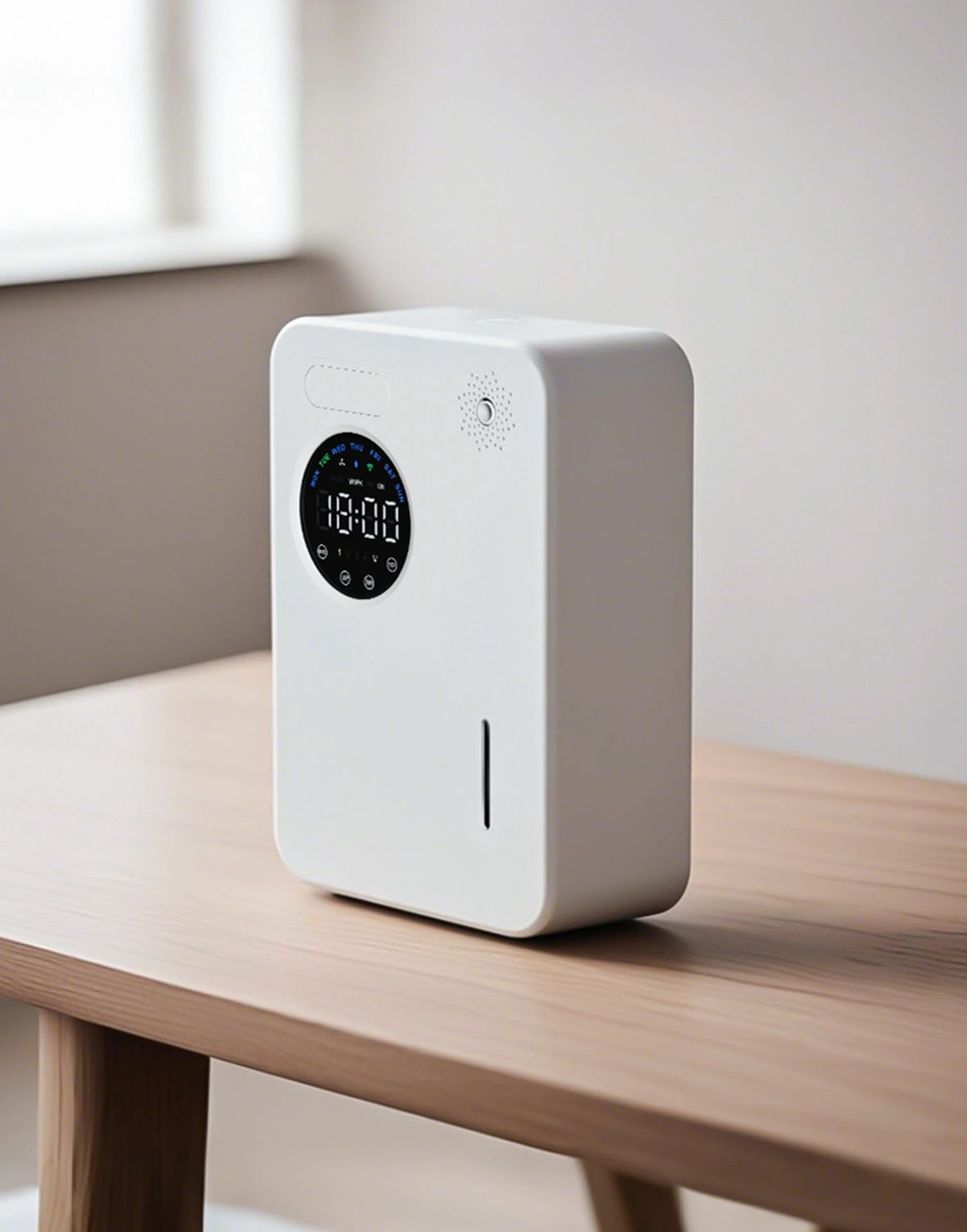
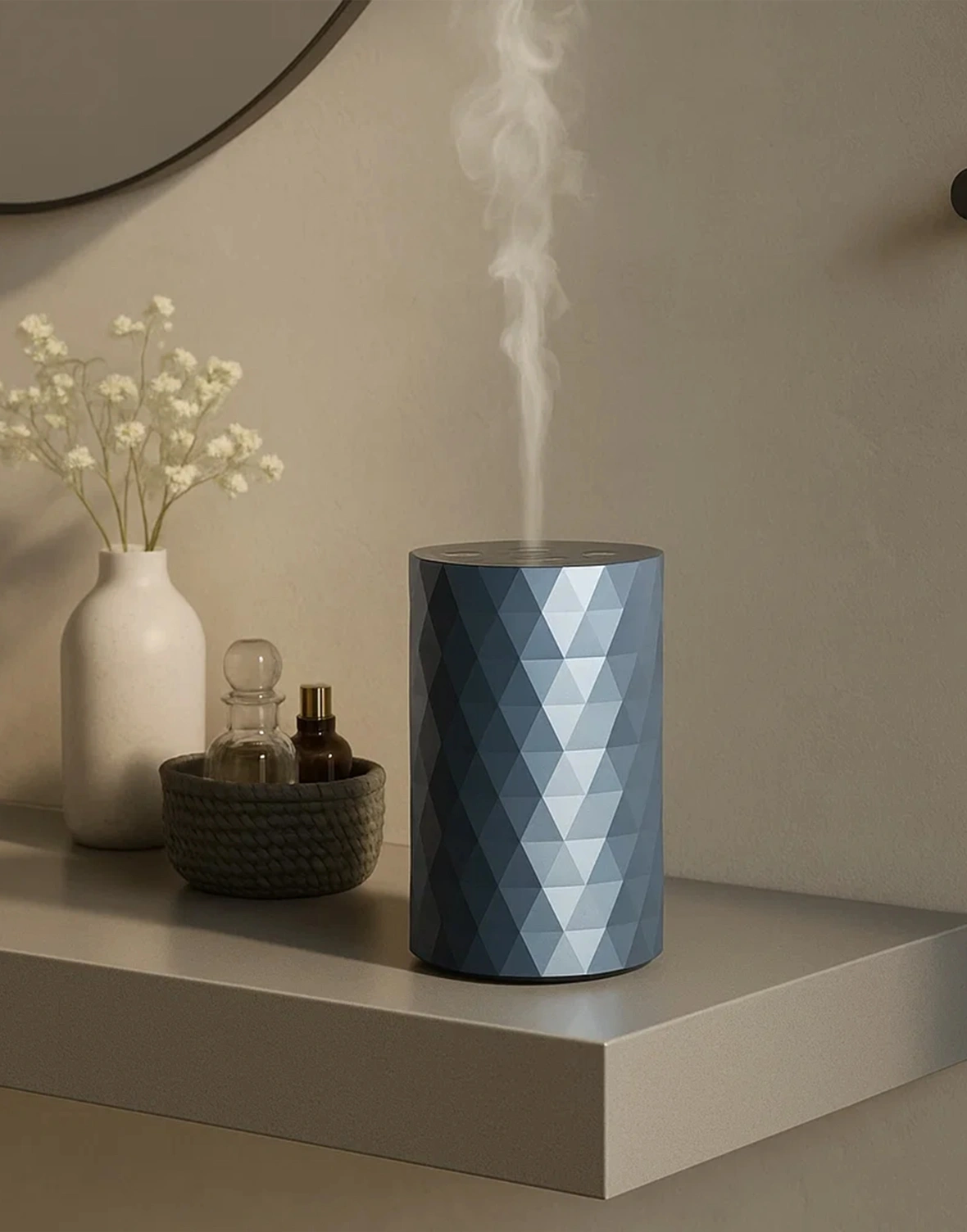
Cold air diffusion, which atomizes fragrance oil into a dry micro-mist using high-pressure air rather than heat or water, is the standard for luxury commercial scenting. It preserves the full fragrance structure and leaves no oily residue on surfaces. Ultrasonic diffusers, which use water and vibration, are more common in residential and small-space applications but tend to flatten complex fragrances and introduce a humidity signature that some luxury environments want to avoid. Nebulizing systems offer high output without dilution but require more frequent maintenance and can be loud, which rules them out for quiet retail or hospitality settings.
For larger deployments, HVAC-integrated scent systems deliver fragrance through existing ductwork, which solves the coverage problem but introduces a control challenge: the scent intensity must be calibrated per zone, and the fragrance oil must remain stable at the temperatures found inside air handling units. Not every formula survives this. When a client tells me they want HVAC scenting, I always recommend testing the candidate fragrance under system conditions before committing — because a formula that performs beautifully on a lab bench can oxidize into something unpleasant when it passes through ductwork at 24 degrees Celsius for eight hours a day.
Programmable control — Bluetooth app scheduling, zone-specific timers, and occupancy-based triggering — is no longer optional for luxury deployments. A scent that runs at full intensity in an empty store at 9 AM is a wasted operating cost and a sign of a system that was not thought through.
Avoiding the Most Common Luxury Scenting Mistakes
In my experience, the failures are more instructive than the successes, because they repeat predictably across markets and brand tiers. The first mistake is overcomplication. A luxury brand brief that lists fifteen fragrance notes, requires seasonal rotations, and demands different scents for weekdays and weekends is a brief that will never perform as intended. Complexity in the brief almost always translates to inconsistency in the space. The most memorable luxury scents I have encountered in the field are built around three to five notes, blended so tightly that customers describe them in a single word: warm, fresh, elegant.
The second mistake is ignoring the olfactory context of the space itself. A fine-dining restaurant already has kitchen odors, wine, and fresh bread in the air. Layering a heavy oriental fragrance on top of that creates a sensory collision, not a brand experience. Luxury grocery formats — which are increasingly using ambient scenting — need fragrances that complement food smells rather than competing with them. The scent should fill the gaps, not fight the environment.
The third mistake is the most expensive, and I see it every year: launching a scent program without a maintenance plan. Fragrance oil runs out. Diffuser atomizers clog. HVAC filters pick up residue. Scheduling drifts. Within six months of installation, a poorly maintained system delivers either nothing at all or a distorted version of the original scent. Both outcomes undermine the investment. The brands that succeed are the ones that treat scent operations the way they treat lighting or music: as a continuous program with scheduled replenishment, quarterly system checks, and someone accountable for the result.
Finding the Right Scent Solution Partner
Choosing a fragrance for a luxury space is a design decision, not a procurement checkbox. The brands that get the most from their scent investment are the ones that work with a partner who can handle both the creative formulation and the technical deployment — because those two things cannot be separated without compromising the result. A beautiful formula delivered through the wrong hardware, or a great diffuser pushing a generic oil, produces the same outcome: a forgettable experience.
When evaluating a scent partner, look past the fragrance library and ask about the technical support behind it. Can they recommend the right diffusion method for your ceiling height, foot traffic, and HVAC configuration? Can they supply the fragrance in consistent batches across multiple locations and seasons? Will they visit the site, measure the space, and adjust the program based on real-world performance rather than a spreadsheet estimate? These are the details that separate a supplier from a long-term solution provider.
At Scent-Share, we manufacture both the fragrance oils and the diffusion hardware, which means the formulation and the delivery system are developed alongside each other. This matters because it removes the finger-pointing that happens when a scent program underperforms and the oil supplier blames the diffuser while the diffuser manufacturer blames the oil. If your brand is ready to develop a signature scent that translates your identity into a genuine customer experience, reach out at [email protected] or call +86 185 6557 5758 to discuss your space, your objectives, and the fragrance profile that fits them.
Common Questions About Luxury Brand Scent Selection
What is the difference between a signature scent and an ambient scent?
A signature scent is a proprietary fragrance developed specifically for a single brand, often registered and protected as part of the brand’s intellectual property. It becomes an olfactory trademark — consistent across every location, instantly recognizable by returning customers. An ambient scent is a curated but non-exclusive fragrance selected to enhance a space without claiming brand ownership. Most luxury brands begin with an ambient scent from a professional fragrance library and graduate to a custom signature scent once they have validated the impact on customer experience.
Does a stronger scent create a more luxurious impression?
No — and this is one of the most common misconceptions I correct in client consultations. Luxury is conveyed through subtlety and precision, not volume. A scent that announces itself too aggressively reads as synthetic and cheap, regardless of the quality of the raw materials. The goal is discovery, not announcement: a customer should become aware of the scent gradually, and ideally only notice it consciously when they leave the scented zone and re-enter it. Over-diffusion is the fastest way to make a luxury space feel like an airport duty-free shop.
How long does it take to develop a custom scent for a luxury brand?
From initial brief to final approved formulation, a custom luxury scent typically takes six to twelve weeks. The timeline extends when the brief is complex, when multiple stakeholders need to sign off, or when the fragrance must be tested across different diffusion systems and spatial conditions. Rush timelines are possible, but I advise against them because the iterative process of adjusting top notes, dry-down, and diffusion behavior cannot be compressed without sacrificing quality. Allow at least two rounds of sampling and feedback.
Can one fragrance work across retail, hotel, and office spaces within the same brand?
A single fragrance identity can span different space types, but it usually requires concentration adjustments and format adaptations. The hotel lobby version might be an HVAC-delivered formulation at one concentration, while the office version is a lighter standalone diffuser variant of the same scent. The retail version might incorporate a slightly brighter top note to read well under halogen lighting and high foot traffic. The core identity remains recognizable, but the delivery is tuned to the context. This is where working with a manufacturer that controls both formulation and hardware becomes a real advantage.
What if our customers have fragrance sensitivities or allergies?
This is a legitimate concern, and it should be addressed in the formulation stage rather than as an afterthought. The fragrance oils we produce for commercial scenting comply with IFRA (International Fragrance Association) standards and, for European deployments, REACH regulations. We also offer hypoallergenic formulations that minimize the most common sensitizers while preserving the intended scent profile. The key is transparency: if your brand serves a customer base with known sensitivities — a wellness-focused hotel, a medical-adjacent luxury spa — disclose the scent program and, where appropriate, offer scent-free zones. For specific compliance documentation on the formulations relevant to your project, share your requirements at [email protected] and we will confirm the available options.
If you’re interested, check out these related articles: