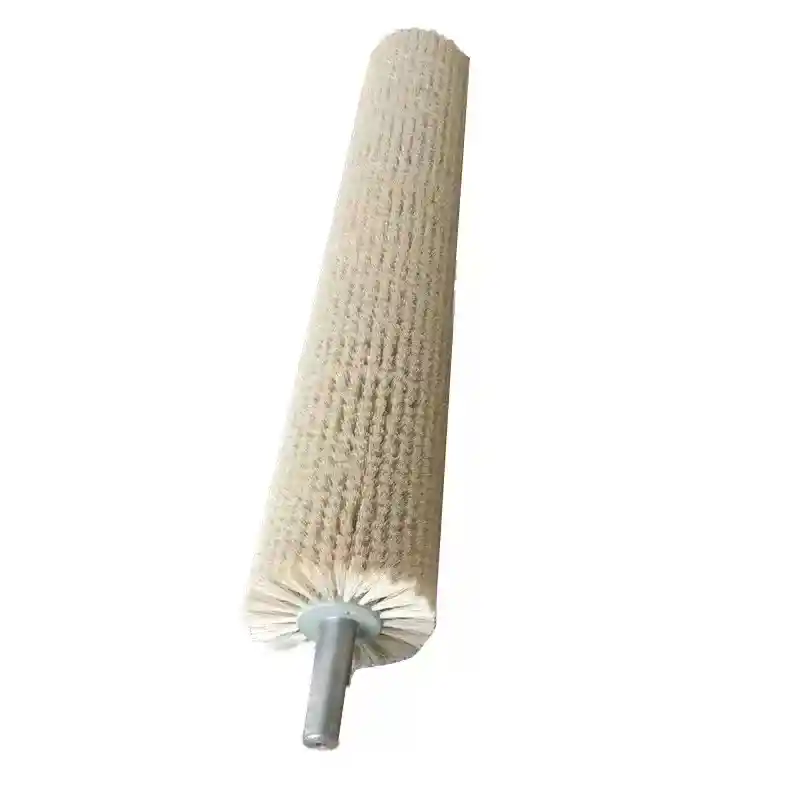

Selecting a solar panel cleaning brush is about more than bristle stiffness. For photovoltaic modules, the brush must lift fine dust, sand, and organic film from glass without scratching the anti-reflective coating. Soiling losses alone can reduce energy yield enough to change cleaning schedules, and the wrong filament geometry can create surface damage that worsens long-term output [1].
How PV Soiling and Contact Damage Affect Energy Yield
A dusty PV surface scatters and absorbs incoming irradiance, which lowers the module’s effective transmittance. The resulting energy loss depends on dust composition, tilt angle, rain frequency, and array location [1]. Routine performance monitoring compares measured output with the expected reference yield to separate soiling loss from inverter or degradation issues [2]. When cleaning is required, the brush becomes a maintenance tool that should restore transmittance without introducing micro-scratches.
Bristle Material Comparison: Soft Nylon vs PP
Soft nylon filaments are generally more flexible, have lower surface hardness in fine-diameter form, and absorb moisture more readily than PP. That flexibility helps bristle tips deflect across glass rather than dig into the surface. PP filaments are stiffer for the same diameter, resist moisture absorption, and are lighter per unit volume, which can reduce brush assembly weight. Both materials can be selected for PV cleaning, but the choice changes with contact pressure, water use, and module surface condition [3][4][5].
| Attribute | Soft Nylon | PP |
|---|---|---|
| Contact behavior | More compliant; bends before scratching | Stiffer for the same diameter |
| Water absorption | Higher; can soften slightly in wet cleaning | Lower; keeps stiffness in wet/dry cycles |
| Weight | Higher | Lower |
| Wear pattern | Predictable tip rounding | Can hold a sharper tip longer if coarse |
| Best use | Direct glass contact, low-pressure rotary or manual cleaning | Frame edges, channels, wet high-speed systems with controlled force |
Nylon filament construction determines how evenly a brush face contacts the glass. <Main Features and Applications of HX Nylon Cylindrical Brush> covers filament trim, density, and surface treatment choices for cylindrical cleaning tools.
How Bristle Diameter and Density Change Cleaning Performance
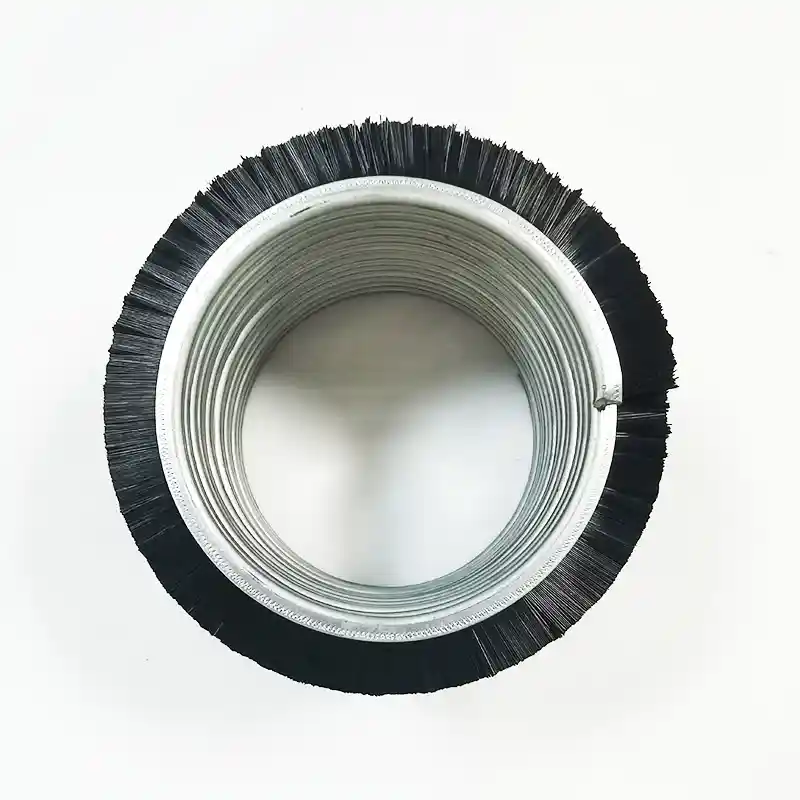
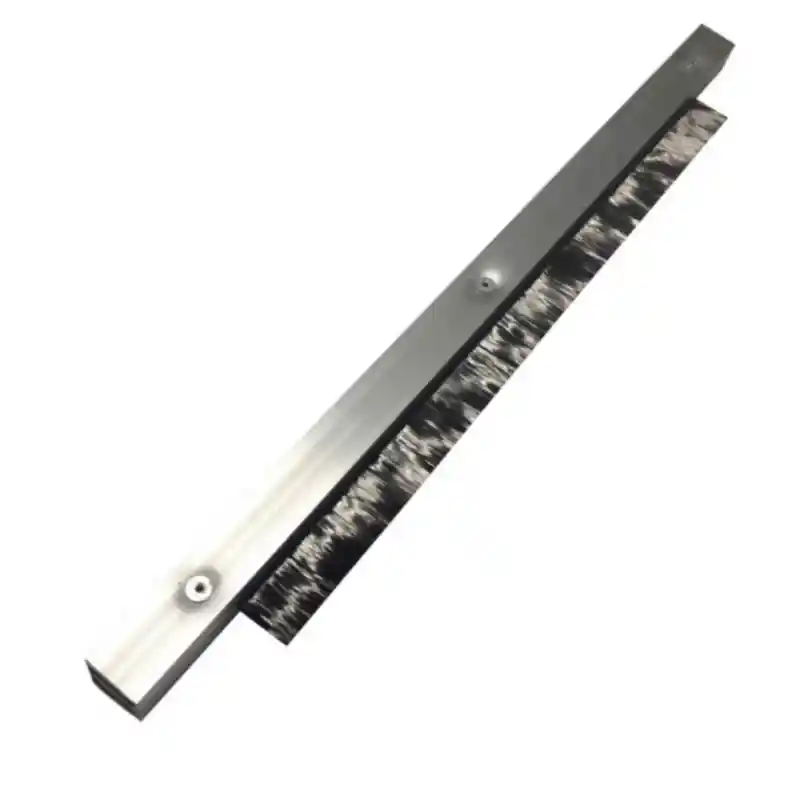
Fine-diameter filaments pack more tips per contact area and apply lower force per tip, which is useful for dust release without scratching. Dense brush faces can trap particles instead of sweeping them away if the working gap is too small. For wet cleaning, lower density and open channels help water carry debris out of the brush face. The same principle applies to strip brushes used along panel edges to dislodge accumulated dirt without pressing on the glass.
Selecting by Cleaning Method
Manual extension brushing works best with soft nylon, fine filament diameter, and medium density on a plastic or aluminum backing that will not contact the glass.
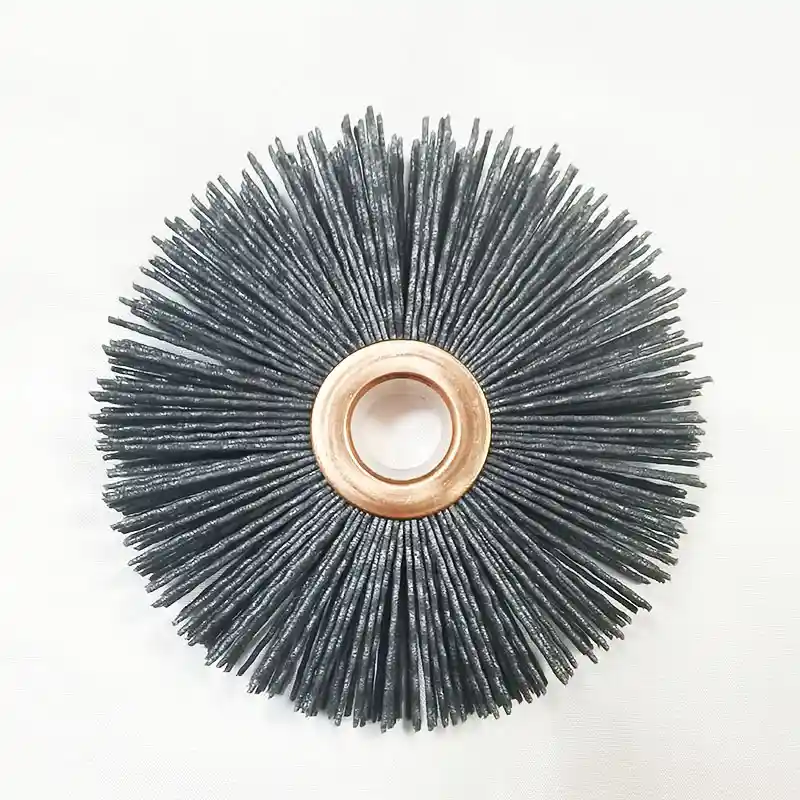
Rotary brush rollers should match bristle tip speed to module glass and use low contact pressure. Soft nylon is usually the safer starting point for direct module contact.
Water-fed systems can use PP because it retains stiffness in wet conditions, but the filament tips must be fine or flagged enough to avoid abrasion on anti-reflective glass.
For a brush matched to your cleaning head and PV support structure, send your panel dimensions, cleaning method, and operating speed to [email protected]. Huixi Brush can recommend a soft nylon or PP brush with the right filament diameter, density, and mounting style for your PV cleaning system.
Avoiding Micro-Scratches: Contact Pressure and Filament Tip Design
Abrasive particles trapped at the bristle tip can act like lapping media. Soft filaments reduce the normal force per tip, but they do not eliminate the need to flush or wash the brush face between cleaning passes. Choose rounded or flagged tips rather than sharply cut ends for direct glass contact, and avoid metal cores or metal strip channels that can contact the module frame during a stroke. Maintenance inspection should include visual checks for damaged bristles and embedded particles [6].
Surface-sensitive cleaning requires careful filament tip selection, not just a softer material. <Abrasive Disc Brush: An Efficient Tool for Many Applications> covers contact pressure, abrasive loading, and brush face design for light surface finishing.
A Simple Selection Sequence
- Confirm the module surface: glass with anti-reflective coating, textured glass, or frameless construction.
- Decide whether cleaning will be dry or water-fed.
- Select filament material: soft nylon for direct glass contact; PP for frame edges, channels, or high-water stiffness.
- Specify filament diameter and density: fine and medium-density for dust release; open face for wet debris removal.
- Choose the mounting style: T-slot, clip-on, or roller core matching the cleaning head.
- Validate on a test panel and inspect for micro-scratches before scaling to the full array.
Get a Solar Panel Cleaning Brush Matched to Your PV Array
Huixi Brush supplies customized solar panel cleaning brush configurations with soft nylon or PP bristles, selected for your cleaning head and module type. To get a recommendation, send the following details to [email protected] or call +86 1580 0932 713:
- Panel surface type and frame profile
- Cleaning method and working width
- Brush mounting requirement and shaft or core size
- Wet/dry operation and target cleaning speed
With these details, we can provide a brush specification that protects the module surface while removing dust efficiently.
Frequently Asked Questions
Is nylon always safer than PP for solar panel cleaning?
Generally yes for direct glass contact with fine-diameter filaments, because nylon is more compliant. But PP can be used on frames and channels or in high-speed wet systems where controlled contact pressure is maintained. The full specification matters more than the material name.
Can PP bristles scratch solar panels?
Any bristle can scratch if it carries embedded grit or if contact pressure is too high. PP is stiffer for the same diameter, so fine-diameter or flagged PP tips and a clean brush face are necessary. Avoid coarse PP on anti-reflective glass.
How often should PV modules be cleaned?
Cleaning frequency depends on soiling rate, seasonal dust, and rainfall. Monitoring the performance ratio can help identify when cleaning is economically justified [2].
Does a soft brush clean as effectively as a stiff brush?
For light dust and fine soil, a soft high-density brush often cleans well because it produces many gentle tip contacts. For baked-on or oily films, a water-fed system with a compliant brush face and appropriate cleaning agent may be better than simply increasing bristle stiffness.
What brush density should I choose?
Medium density with fine filaments works well for dust release, while open-channel density helps wet cleaning remove debris. The correct choice depends on working gap, brush speed, and whether water is used.
References
[1] National Renewable Energy Laboratory, Best Practices in Photovoltaic System Operations and Maintenance, 2nd ed., U.S. Department of Energy, 2018.
[2] IEC 61724-1:2021, Photovoltaic system performance — Part 1: Monitoring.
[3] ISO 527-2:2012, Plastics — Determination of tensile properties — Part 2: Test conditions for moulding and extrusion plastics.
[4] ISO 2039-2:1987, Plastics — Determination of hardness — Part 2: Rockwell hardness.
[5] ASTM D570-98(2018), Standard Test Method for Water Absorption of Plastics.
[6] IEC 62446-1:2016, Photovoltaic (PV) systems — Requirements for testing, documentation and maintenance — Part 1: Grid connected systems — Documentation, commissioning tests and inspection.
If you’re interested, check out these related articles:
advantage of hx boiler tube brush
brass brushes work perfectly for pipe cleaning
abrasive disc brush an efficient tool for many applications
how do you know about deburring brushes
what you know about brass wire brush strip