Facility managers who treat hospital scenting like retail scenting usually hit the same wall: a fragrance that smells clean in a showroom becomes cloying outside an MRI suite or recovery bay. The best scents for hospitals and clinics are not the strongest character or the heaviest concentration. They are low intensity, fast clearing, IFRA compliant fragrance oils tied to zoning and adjustable diffusion schedules. I have spent more than ten years developing these programs, and the most avoidable mistakes happen before a single diffuser is mounted, usually around scent strength, allergen risk, and staff acceptance.
Why Hospital Scenting Needs Different Rules Than Retail
Hospital air is different from retail air in one practical way: the same person stays in the space for hours. A patient in a waiting area, a nurse on a twelve hour shift, a technician at a desk, all experience a fragrance far longer than a shopper moving through a store. That changes the acceptable intensity. A scent that reads fresh for ten minutes becomes background noise, or worse, a headache trigger, by hour three.
Two more factors separate clinical scenting from hospitality. Hospitals and clinics hold people with respiratory sensitivities, compromised immunity, and open treatment areas. A fragrance oil must carry a clear IFRA certificate and, where European supply is involved, REACH compliant documentation. The building itself is also zoned. Patient intake, corridors, staff rooms, and treatment bays each have different air handling. If those zones do not match the diffusion schedule, the same oil can smell right in one wing and overwhelming in another.
I have seen this play out in clinic briefs that start with the phrase, “We want a clean hospital smell.” Clean is not a single scent. It is a combination of a low residue citrus or marine profile, a short burst pattern, and enough ventilation to clear the note between cycles. The failure mode in most programs is not the fragrance choice. It is the dose.
The Safest Fragrance Families for Hospitals and Clinical Spaces
Not every pleasant scent belongs in a hospital. Rich ambers, heavy vanillas, bakery notes, and spice heavy orientals sit too long in the air and read as perfume rather than hygiene. In a clinical setting, the safest profiles are the ones that clear quickly and stay below the threshold of conscious detection when set correctly.
From the fragrance briefs I review, the families that perform best are light citrus, marine or ozonic, white tea, soft green, and low detectability lavender alternatives. These profiles share three characteristics. They have a low residue curve, meaning the scent leaves the air shortly after the diffuser cycle ends. They avoid known high sensitization materials such as cinnamon, clove, and oakmoss at commercial concentrations. They also blend well with standard HVAC airflow without turning stale.
For hospitals, I usually steer away from any oil described as long lasting or high throw. Those are retail selling points, not clinical ones. What a hospital needs is repeatability: the same subtle note at the same intensity across every visit. That is why the fragrance and the delivery system matter together.
How to Plan Scent Zones in Hospitals and Clinics
Start with dwell time and square footage before looking at fragrance names. A waiting room keeps patients seated for thirty minutes or more. A corridor clears people in seconds. A treatment bay holds staff for hours. Those differences are what set the diffuser coverage, not the oil.
Small consultation rooms can work with a 300 m3 unit, while a large lobby or outpatient corridor usually needs a 3,000 m3 wall mounted system. Whole building programs often run through HVAC, and isolated treatment zones can use ceiling mounted units. The table below shows how we typically assign coverage.
| Facility Zone | Recommended Scent-Share Unit | Coverage | Control |
|---|---|---|---|
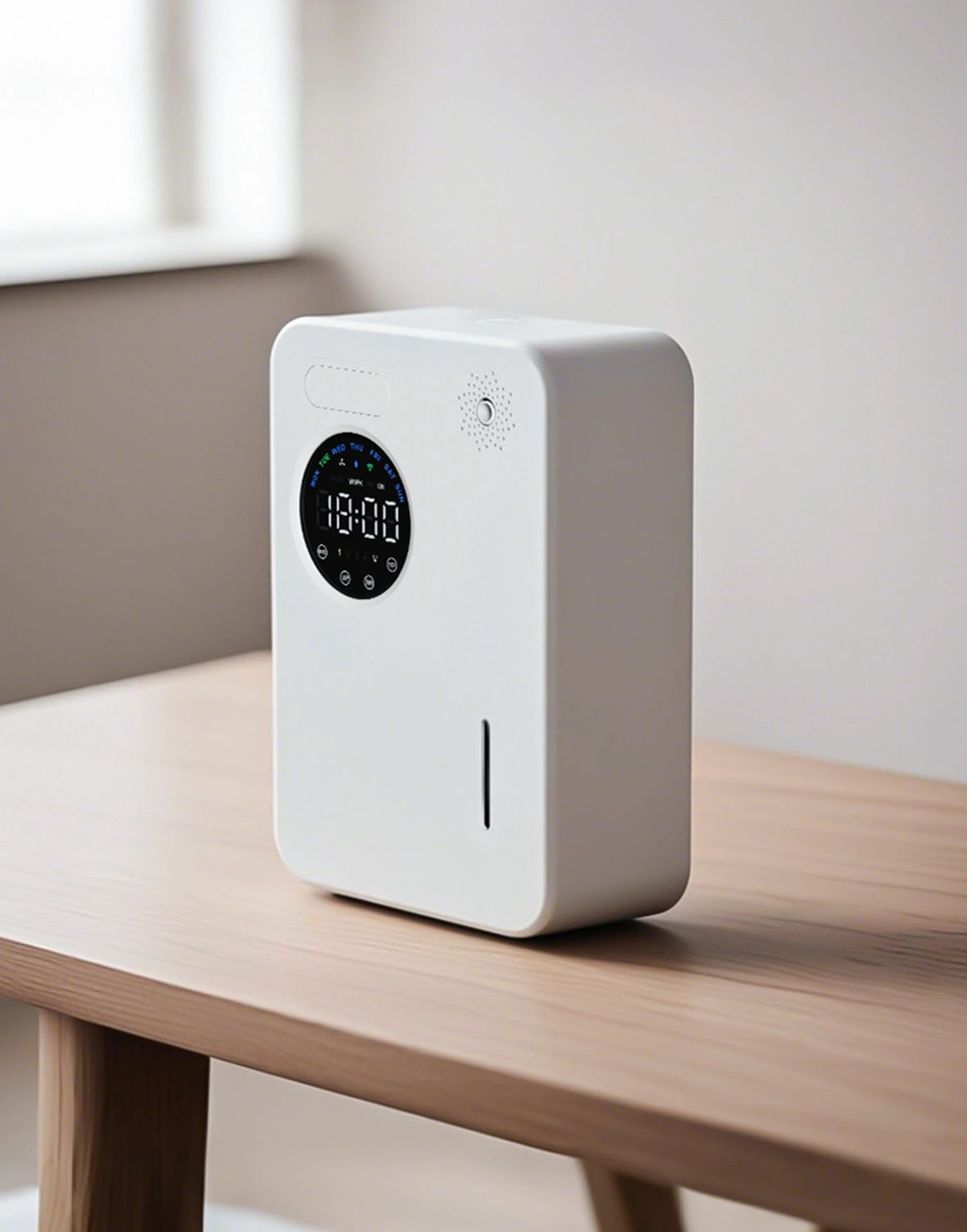
| Small waiting or consultation room | Commercial Scent Oil Diffuser (Bluetooth APP) | 300 m3 (1,000 sq ft) | Bluetooth APP, 24/7 |
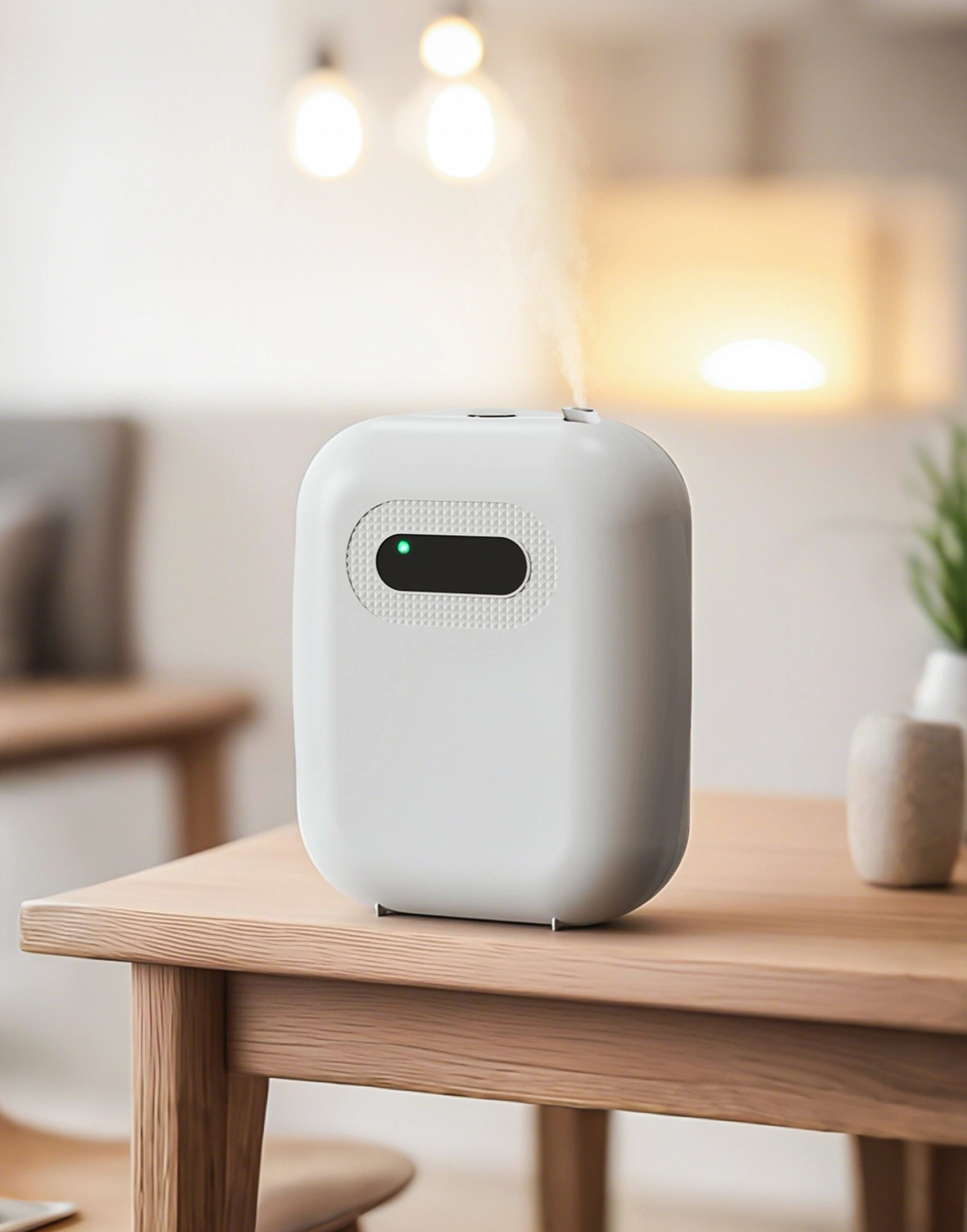
| Main lobby or outpatient corridor | Wall Mount Aroma Diffuser HVAC System | 3,000 m3 (10,000 sq ft) | Bluetooth APP, wall mount |
| Whole-building HVAC | Commercial HVAC Scent Diffuser Aroma Dispenser System | 8,000 m3 (30,000 sq ft) | HVAC integration, Bluetooth APP |
| Ceiling or track mounted treatment zones | Ceiling Diffuser Commercial Scent Machine (Round) | 600 m3 (2,000 sq ft) | Bluetooth APP, built-in fan |
Zoning matters because a waiting room keeps people in one place, while a corridor clears odor in seconds. We usually run waiting areas at shorter bursts and longer pauses, and corridors at low continuous output so the scent does not pool near HVAC returns.
If your facility has multiple wings, negative pressure areas, or isolation rooms, it is worth confirming airflow behavior before finalizing the fragrance schedule. Share your floor plan and patient flow with our team at [email protected] and we can recommend zone by zone output before you commit to oil volumes.
Five Scent Profiles That Work Across Waiting and Recovery Areas
Five scent families cover most hospital and clinic zones without forcing a choice between clean and calm. The best scents for hospitals and clinics all stay below the point of conscious detection when set correctly. The profiles below are starting points, not rigid formulas. A pediatric clinic may choose soft citrus to feel friendly, while an imaging suite may choose the lavender alternative to keep patients still during long scans.
| Scent Profile | Character | Best Clinical Zone | Why It Works |
|---|---|---|---|
| White tea | Clean, light, slightly green | Waiting rooms, clinics | Reads hygienic without smelling medicinal |
| Marine or ozonic | Fresh, airy, water-like | Entrances, corridors | Clears fast, low residue |
| Soft citrus | Light lemon or bergamot | Pediatric waiting, staff break | Uplifts without sharp acidity |
| Low detectability lavender | Calm, soft floral | Recovery, imaging suites | Eases tension when dosed below consciousness |
| Gentle cotton or linen | Neutral, airy | Examination rooms | Familiar and unobtrusive |
In every successful healthcare program I have worked on, the best feedback is not “this smells nice,” but “the room feels calmer, and I cannot tell where the scent is coming from.” That is the target. If the scent announces itself, the dose is too high for a clinical space.
Where to Start With a Hospital or Clinic Scent Program
Choosing a fragrance is the easy part. Getting it to feel right across a building with long patient stays, staff shifts, and variable airflow is where most programs stall. The most practical first step is to define zones and intensity before ordering oils. Send your facility square footage, room types, and operating hours to [email protected], or call +86 185 6557 5758. Our team can confirm which diffuser coverage and scent families fit your layout and supply a shortlist of IFRA compliant oils with a sample plan.
Common Questions About Hospital and Clinic Fragrance Programs
Are fragrance oils safe for patients with respiratory conditions?
A compliant fragrance oil can be safe, but only when it arrives with IFRA documentation and an allergen disclosure sheet. Safety in a clinical setting is not a single ingredient claim. It is the combination of a low dose, a controlled diffusion schedule, and oils formulated without known high sensitization materials at commercial strength. Some facilities ask for fragrance free behavior in treatment areas and scenting only in transition spaces such as lobbies and corridors. That split often works well because it gives patients stable air where they wait longest while keeping the entrance experience clean and welcoming.
How strong should a hospital scent be?
Most teams assume a hospital scent must be noticeable to be effective. The opposite is more accurate. If visitors can identify the fragrance within the first ten seconds, the dose is probably too high for a space where people sit for hours. We usually set waiting rooms so the note is just below conscious detection, with a short burst and a longer pause. Staff then stay comfortable through a full shift without scent fatigue. The right target is often described as a change in perceived air quality rather than a perfume in the room.
Can one scent work across an entire hospital?
It depends on how the building is zoned. If the whole facility runs on a single HVAC system, the same oil can work, but the schedule must differ by area. Open entrances can take a slightly higher output, while recovery and imaging areas need longer pauses and lower projection. If the hospital has separate air handlers, different scent profiles can be assigned without cross contamination. We usually do not recommend one strength for every space. The oil stays consistent, the dose changes.
What documentation should a clinic ask for before installation?
In healthcare projects our team has reviewed, the documentation review is where problems surface early. Ask for an IFRA certificate, a safety data sheet for the exact oil, and confirmation that the oil is formulated for cold air or HVAC diffusion, not just for reed or candle use. Also confirm whether the supplier has the capacity to supply the same oil in the volumes your facility will consume over a year. If your clinic has respiratory units or long stay wards, send those room types and your current air handling details to [email protected] and we can confirm what documentation applies to your program.
If you’re interested, check out these related articles: