A custom aroma diffuser program that should take eight weeks can quietly stretch to sixteen, and the extra time rarely comes from a single bottleneck. After ten years managing OEM production for scent delivery systems across sixty-eight countries, I have learned that lead time is a symptom more than a cause. It reflects how clearly the brief was written, how early component decisions were locked, and whether the sampling loop was designed to confirm or to explore. This article walks through where lead time is actually made or lost, from the first enquiry to the shipping date, so procurement teams and brand owners can tighten their timelines without sacrificing build quality or fragrance integrity.
Where Those Extra Weeks Really Come From
Most production schedules look efficient on a Gantt chart and then lose four to six weeks in gaps the chart does not name. The biggest single delay I see across projects is the back and forth after the first pre-production sample, when a buyer realises the diffuser housing finish does not match their brand palette, or the fragrance throw is weaker than expected in their space. That single revision loop can consume three weeks: one to document the change, one to rework the sample, and one to re-ship and re-approve.
A second common delay is less obvious: waiting for a single component that was not flagged as long-lead during quoting. For wall-mounted commercial units, the power supply module or a specific Bluetooth chipset can be the culprit. For fragrance oils, a single captive raw material that your supplier does not stock locally can push a four-week blending window to eight. These are not production failures. They are forecasting gaps, and they are almost always addressable before the purchase order is signed.
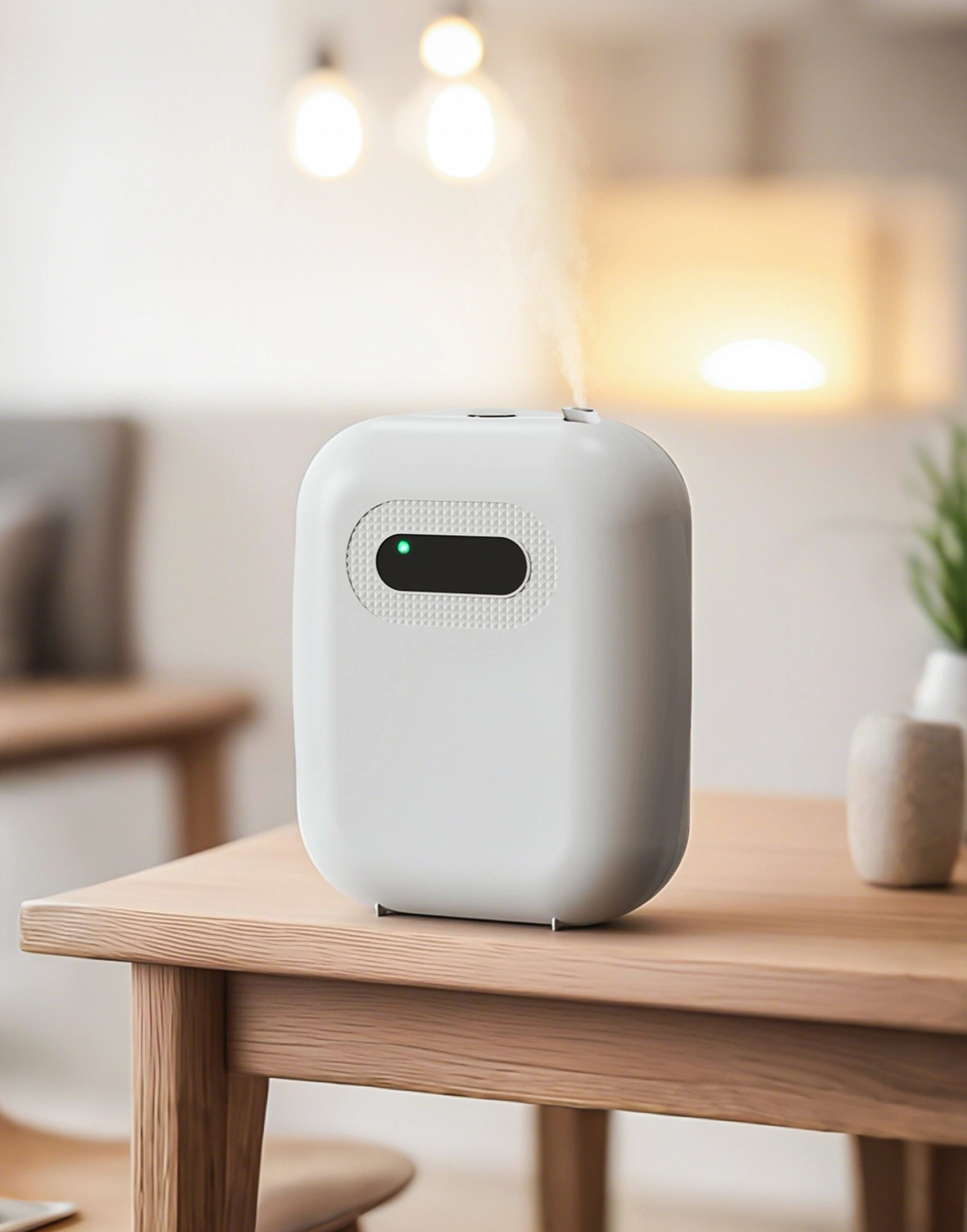
A third pattern we have seen repeatedly is the silent assumption that QC will catch everything at the end. When testing is back-loaded, a failed inspection resets the clock completely. The machines might be built, but if the atomiser output variance exceeds the agreed tolerance, the entire batch needs rework. Shifting a portion of that testing upstream, particularly on the pump and nebuliser subassemblies, has cut final inspection failure rates by more than half in projects we have overseen.
Locking the Specification Before the Clock Starts
The single most effective way to reduce OEM production lead time is to finalise the technical specification before the manufacturer begins procurement. This sounds obvious, yet in practice I have watched projects launch with a fifty-page brief that still leaves three critical questions open: the exact Pantone reference for the housing, the fragrance oil concentration for the intended coverage area, and whether the unit needs WiFi or only Bluetooth.
When those questions are answered after the order is placed, the manufacturer must pause, re-quote, and potentially re-order materials. The delay is not negotiable because it sits inside the component supply chain, not the assembly schedule.
| Spec Element | Decision Before PO | Risk If Deferred |
|---|---|---|
| Housing material and finish | Confirm ABS, PC, or aluminum; specify texture and color code | Tooling modification or re-anodising adds 2 to 3 weeks |
| Fragrance oil formulation | Approve full formula and concentration for target coverage volume | Reformulation and re-stability testing adds 3 to 4 weeks |
| Control method | Select Bluetooth, WiFi, or physical button only | PCB redesign and firmware adjustment adds 2 to 5 weeks |
| Bottle size and material | Lock 150 ml HDPE, 500 ml aluminum, or custom volume | Mould modification or new bottle tooling adds 3 to 6 weeks |
| Target coverage area | Confirm square meter or cubic meter requirement | Pump or fan resizing may require re-engineering the atomiser path |
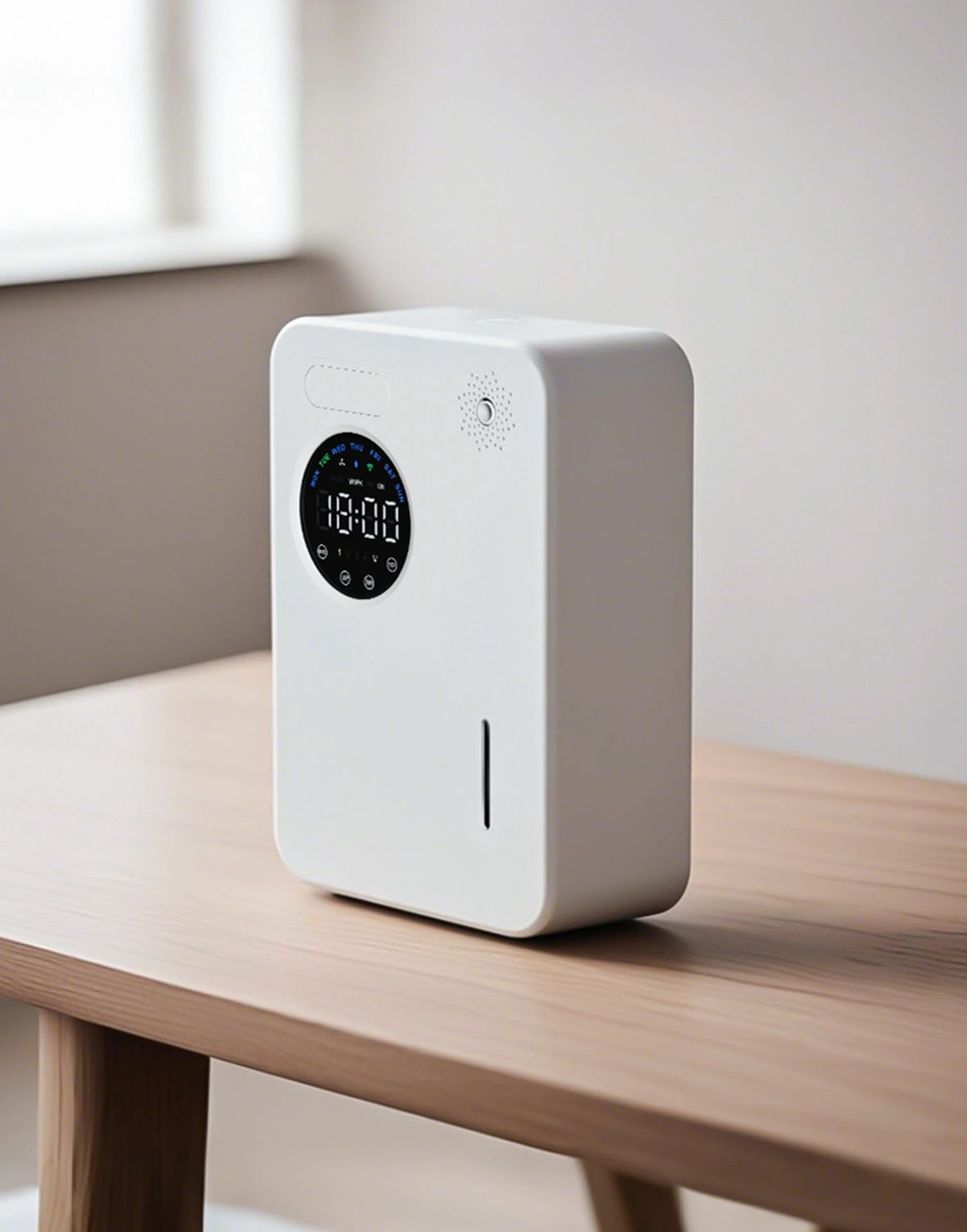 I always recommend sending physical reference samples alongside the specification document, even when the written brief is thorough. A colour swatch, a competitor unit whose build quality you want to match, or a fragrance blotter of the scent profile you are aiming for communicates details that words and PDFs often miss. This small step at the enquiry stage has prevented more revision loops than any contract clause ever has.
If your program involves a fragrance component that uses seasonal naturals or restricted raw materials under IFRA 51st Amendment limits, it is worth confirming the formula’s compliance status and raw material availability before locking the production timeline. Reach out at [email protected] with your scent profile and we can map the formulation window against your target date.
Component Pre-Sourcing and the Bill of Materials
One lever that brand owners often underestimate is the bill of materials pre-clearance. Every diffuser contains components with different lead times, and the production timeline is determined by the slowest one. A commercial HVAC scent system might have a three-week lead time on the atomiser assembly, a one-week lead on the housing, and a six-week lead on a custom PCB if it was not pre-ordered.
We address this by splitting the BOM into three categories at the quoting stage:
- Standard components with predictable lead times: generic power supplies, standard atomiser nozzles, common HDPE bottles
- Semi-custom components that require minor adaptation: housing colours outside the standard palette, silkscreen logos, custom packaging
- Long-lead custom components that must be ordered before the production slot is confirmed: custom PCBs, non-standard pump assemblies, bespoke glass vessels
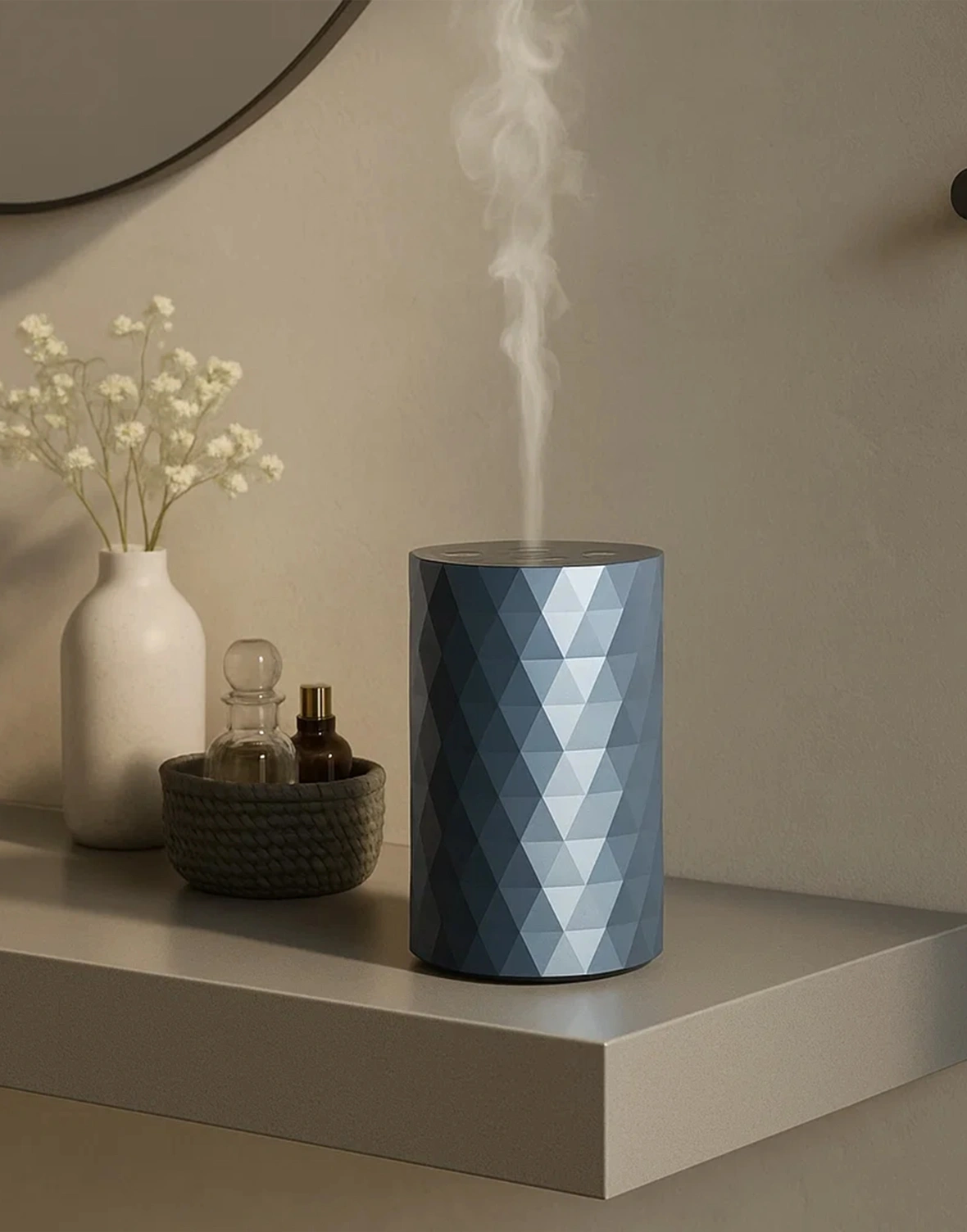
For standard components, we hold buffer stock across our most frequently specified models. This means that when a client places an order for a wall-mount Bluetooth diffuser in a standard white finish, the housing shells, pumps, and PCBs are typically already on the shelf, and production becomes an assembly and testing exercise rather than a full manufacturing cycle.
For long-lead items, I advise clients to authorise component procurement as a separate phase before the main purchase order is finalised. The component order, typically ten to fifteen percent of the total contract value, triggers the longest items in the BOM while the remaining specification details are being confirmed. This parallel processing structure, when managed clearly, can cut four to six weeks from the total timeline without adding risk, because the components are fungible across projects and can be reallocated if the order changes.
Production Scheduling That Matches Real Capacity
Once the specification is locked and components are in the pipeline, the production schedule itself can be tuned. The mistake I see most frequently is treating the factory’s quoted lead time as a fixed number rather than a variable that responds to order structure and communication cadence.
Three scheduling practices have consistently shortened timelines in the OEM programs I manage. First, batch your sampling and production in a single tooling setup where possible. If the pre-production sample and the first production run use the same mould configuration and the same assembly line setup, the transition from approval to production is measured in hours rather than weeks. This requires the sample to be produced on the actual production tooling, not on a prototype rig, which some factories resist because it ties up productive capacity. It is worth negotiating for, particularly on orders above five hundred units.
Second, align your approval turnaround with the factory’s production rhythm. Factories plan capacity in weekly blocks. If a sample arrives on a Wednesday and your team takes ten days to evaluate it, you have missed two production windows before a single piece of feedback is returned. I recommend agreeing an approval SLA internally before the sample ships: forty-eight hours for straightforward visual and functional checks, seventy-two hours if fragrance evaluation requires panel testing.
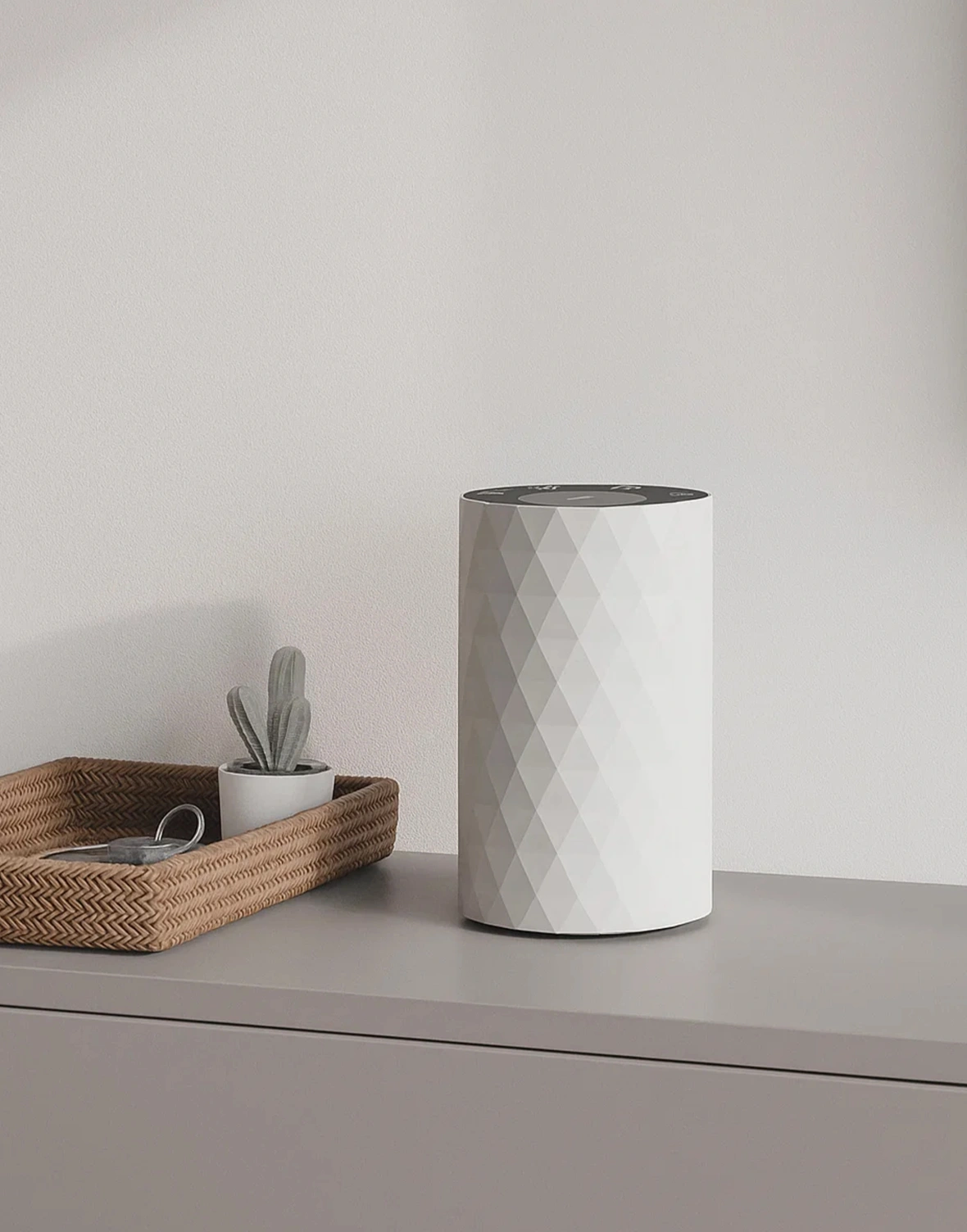 Third, separate the fragrance approval track from the hardware approval track. These two workstreams have fundamentally different timelines. Fragrance formulation and stability testing follows a chemical cadence that cannot be compressed, while hardware assembly and testing is a mechanical cadence that can be parallelised. Running them concurrently rather than sequentially, and accepting that the fragrance may be finalised two weeks after the hardware, prevents the entire project from stalling while a single top note is being adjusted. The final integration, filling the approved oil into the approved machine, takes one day. There is no reason for the hardware to wait.
Quality Gate Placement That Protects the Timeline
The tension between speed and quality is real, but I have found it is often misplaced. The question is not whether to inspect but where. When inspection is concentrated at the end of the line, failures restart the clock. When inspection is distributed across the production process, failures are caught when they are still cheap to fix.
For diffuser OEM production, we structure quality gates at three points. The first is incoming component inspection, where pump assemblies are flow-tested and PCB boards are powered up before they enter the assembly line. A defective pump caught at this stage costs the replacement part. A defective pump caught after the housing is sealed costs a teardown and reassembly.
The second gate is in-process, after the atomiser subassembly is complete but before the housing is closed. At this point, we verify that the nebuliser output rate falls within the specified tolerance for the target coverage area. This is the single most important functional check in the entire build, because the atomiser determines whether the fragrance throw matches what the client specified.
The third gate is the pre-shipment inspection, which covers cosmetics, accessory completeness, and packaging integrity. By this stage, the critical functional checks are already done, so the inspection is fast and rarely triggers a rework order.
| Quality Gate | Timing | What Is Checked | Typical Time |
|---|---|---|---|
| Incoming component | Before assembly | Pump flow rate, PCB power-up, housing surface defects | 4 hours per batch |
| In-process atomiser | Mid-assembly | Nebuliser output, fan speed, Bluetooth signal strength | 2 hours per batch |
| Pre-shipment | Before packing | Cosmetic finish, accessories, packaging, labelling | 3 hours per batch |
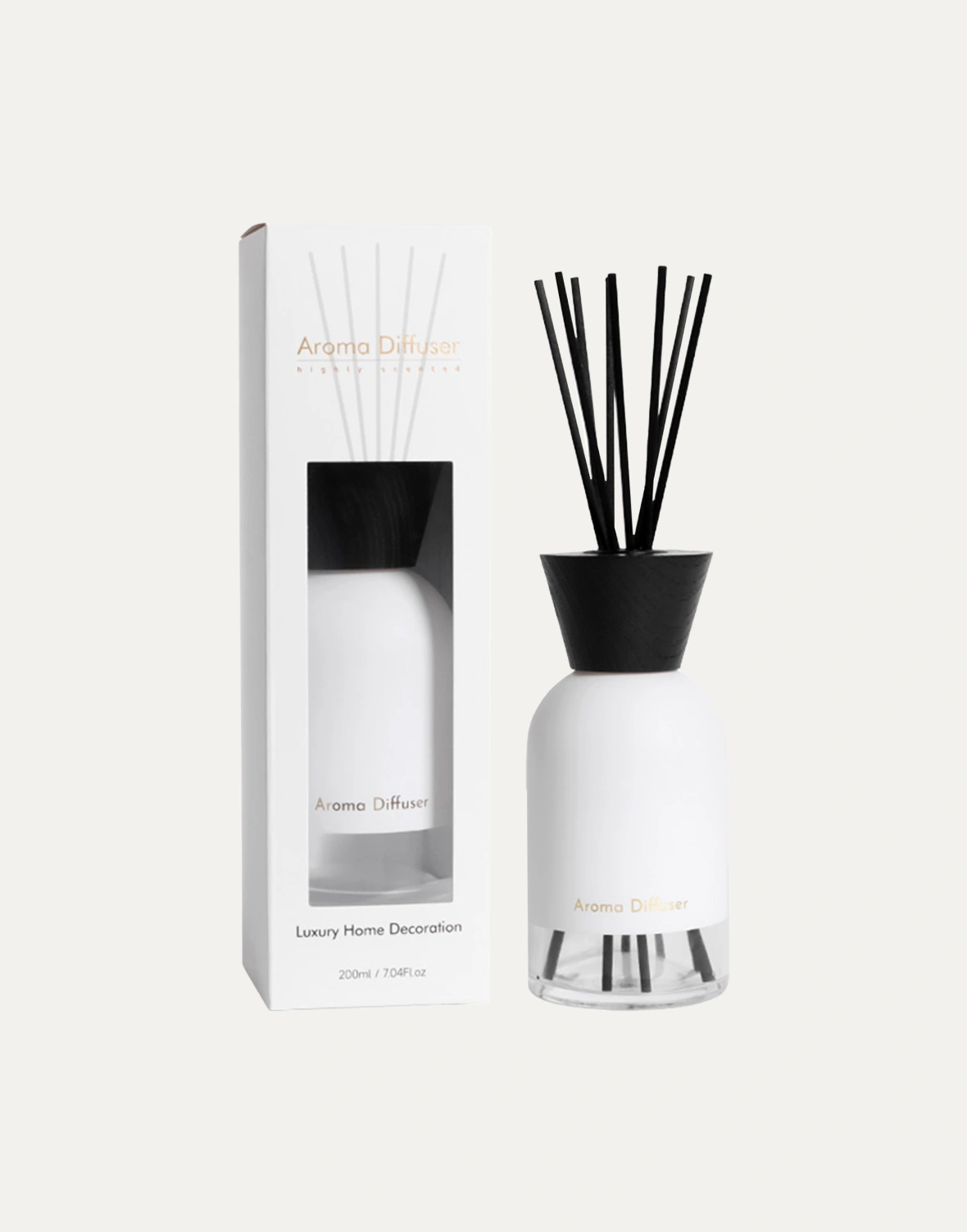
For fragrance oil production, we apply a similar layered approach. Raw materials are tested on arrival using gas chromatography to confirm purity and identity. The blend is sampled at three stages during compounding and compared against the reference standard. The filled oil undergoes accelerated stability testing at elevated temperature to catch any separation or oxidation tendencies before the batch is released.
This distribution of quality checks does not eliminate the final inspection. It makes the final inspection a formality, which is exactly what you want when the shipping date is approaching and there is no margin for a restart.
Common Questions About Custom Diffuser Lead Times
What is a realistic lead time for a custom branded diffuser?
For a standard commercial diffuser model with a custom silk-screen logo and branded packaging, eight to ten weeks from order confirmation to ex-works is realistic when components are in stock. If you are modifying the housing colour or finish, add two weeks. If you are developing a fully custom fragrance to pair with the unit, run the fragrance track concurrently and expect the combined program to land at ten to twelve weeks, assuming approval decisions are made promptly at each stage.
Can I shorten the timeline by using an existing fragrance from the supplier’s library?
Yes, and this is one of the highest-impact decisions you can make for speed. In our own library of over three hundred scents, most have already passed stability and compatibility testing with the diffuser models they are paired with. Selecting a library fragrance eliminates the formulation, IFRA compliance review, and stability testing phases entirely. The oil can go into production as soon as the bottle specification is confirmed, cutting four to six weeks from the fragrance side of the timeline.
What causes the longest delays in fragrance oil OEM production?
The longest delays are almost always tied to raw material availability. A small number of aroma chemicals and natural extracts have limited production windows or are sourced from single regions. If your formula depends on a specific jasmine absolute or a captive sandalwood replacer, the blending window is governed by when that material arrives, not by when the perfumer is ready. We flag these materials at the formulation stage and offer alternative accord options that preserve the scent character while using ingredients with predictable supply chains.
Does a larger order always take longer?
Not in a linear way. The setup time, tooling preparation, and first-article inspection are fixed costs that apply whether you order five hundred units or five thousand. The incremental production time per unit is small. A five-thousand-unit order typically takes only two to three weeks longer than a five-hundred-unit order on the same model, because the production line is already configured and the team is running at steady-state throughput. The more impactful variable is the production slot itself. A small order placed during a quiet period may ship faster than a large order placed during peak season, because the line is available immediately.
Is there a minimum order quantity that triggers priority scheduling?
Most manufacturers, ourselves included, do prioritise larger orders in production scheduling because the setup cost is amortised over more units. However, the relationship factor often matters more than the quantity. A client who communicates clearly, approves samples within the agreed window, and pays on schedule will reliably get faster turnaround, even on smaller orders, than a higher-volume client whose process adds friction to the manufacturer’s workflow. If your program involves a tight launch deadline, share your timeline constraints and we can confirm whether accelerated scheduling is feasible for your order volume. Reach out at [email protected] or call +86 185 6557 5758 to discuss your specific project window.
Practical Questions Buyers Ask Before Committing to an OEM Diffuser Program
How do I know if my brief is complete enough to start production?
A brief is ready when it answers five questions definitively: the target coverage area in square or cubic meters, the preferred control method, the housing material and colour, the fragrance profile or library reference, and the packaging format. If any of these five is described as “to be confirmed” or “we are still deciding,” the brief is not ready and the production clock should not start. Send your draft brief to [email protected] with your target timeline and we will review it for completeness before quoting.
What if my fragrance preference changes after the order is placed?
A formulation change after the oil has been compounded and stability-tested is effectively a restart for the fragrance track. The original blend is discarded, and the new formulation enters the full cycle: perfumer blending, client approval, IFRA review, stability testing, and bulk compounding. The hardware timeline is unaffected if it has been running in parallel, but the fragrance delivery date resets. This is why I strongly recommend finalising the fragrance before the purchase order is signed, even if the hardware specification is locked later.
Can I visit the factory during production to inspect progress?
Factory visits are welcome and can be structured to align with key production milestones rather than disrupting the line. The most useful moments to visit are during the pre-production sample review, where you can evaluate the unit in person before full production begins, and during the first batch assembly, where you can observe the quality gate process directly. Coordinate the timing with your project manager so the visit adds value without slowing the schedule.
How do I protect my custom design from being sold to other buyers?
This is a reasonable concern when investing in custom tooling, proprietary fragrance formulations, or unique housing designs. The protection mechanism should be established in the manufacturing agreement before the project begins. For fragrance formulas, we operate on the principle that client-developed scents remain the client’s intellectual property and are not offered to other buyers. For custom hardware designs, mould ownership and exclusivity terms are defined in the contract. Discuss your protection requirements during the quoting stage, because the legal framework takes time to draft and should not be an afterthought that delays the purchase order. Share your requirements at [email protected] and we can prepare the appropriate agreement alongside your quotation.
If you’re interested, check out these related articles: