Commercial scent diffusers for retail stores are rarely a single product decision. Store height, HVAC airflow, fitting rooms, checkout areas, and ceiling layout all shape which system will hold up over 12 months of daily use. In retail programs we have worked on, the most common mistake is choosing a machine by coverage rating alone and then discovering the refill schedule or noise level makes store staff turn it off. The sections below work through the decisions that matter before you commit to a retail scent system.
How Do You Match a Commercial Scent Diffuser to Your Retail Space?
Retail floors carry variable air speeds, display walls, and heat from lighting. A machine rated for an open plan can underdeliver in a narrow store with high shelving. We look at the service area in three parts: the entry zone, the main sales floor, and the cash wrap. The entry zone needs a distinct first impression. The main floor needs even diffusion without fogging mirrors or glass. The cash wrap benefits from a lower intensity because staff stand there for full shifts.
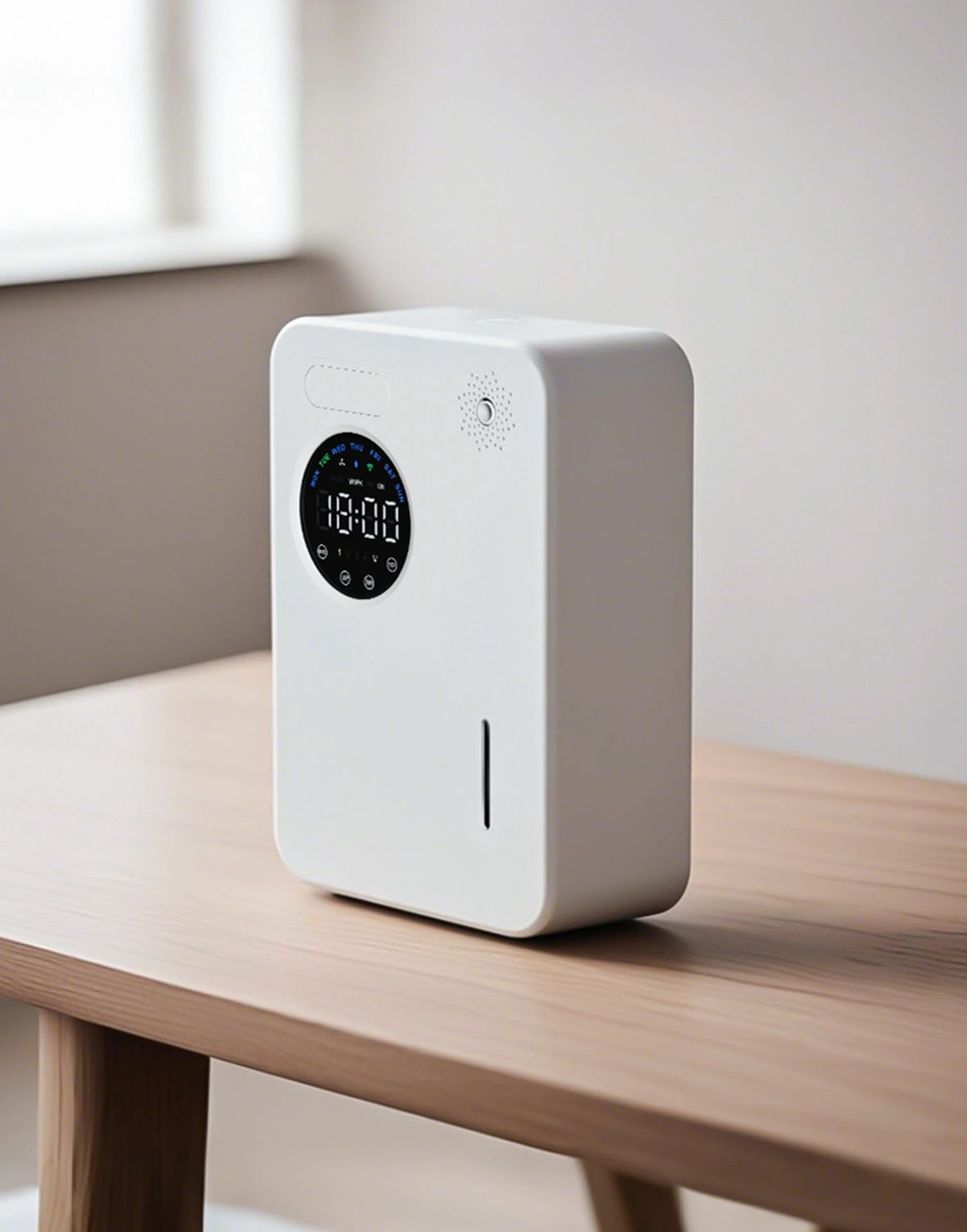
That is why a standalone cold-air diffuser with a built-in fan often fits single-level stores up to about 1,000 square feet. Our Commercial Scent Oil Diffuser with Bluetooth APP has a 300 cubic meter rating, a long-life pump, and 24/7 operation. For larger open formats, we move to HVAC integration because it treats conditioned air instead of relying on a single fan path.
What Coverage and Placement Factors Shape a Retail Scent System?
Square footage alone does not tell you enough. A 2,000 square foot store with 4 meter ceilings has twice the air volume of the same footprint with 2.5 meter ceilings. Air returns near fitting rooms or stockrooms also pull scent away from the sales floor. We plan coverage by air volume first, then adjust for display density and door traffic.
| Retail Area | Typical Layout | Equipment Fit | Main Constraint |
|---|---|---|---|
| Entry and cash wrap | 40 to 80 square meters | Desktop or wall-mounted cold-air unit | Keep the scent threshold subtle |
| Main sales floor | 100 to 300 square meters | Standalone or ceiling-mounted unit | Even diffusion around shelves |
| Multi-floor or large format | Over 300 square meters | HVAC scent system | Zoned control and return air paths |
| Fitting rooms and corridors | Small closed zones | Wall mount or passive system | Avoid buildup in low airflow |
The product range we work with covers both ends. A wall mount diffuser with a 750ml bottle serves up to about 3,000 cubic meters, while a commercial HVAC system can reach 8,000 cubic meters. In retail, the deciding factor is usually how many separate zones you can actually control. If one HVAC unit feeds both the sales floor and the stockroom, you cannot scent one without the other unless the diffuser sits in the supply duct upstream.
Which Operational Costs Should You Calculate for a Commercial Scent Diffuser?
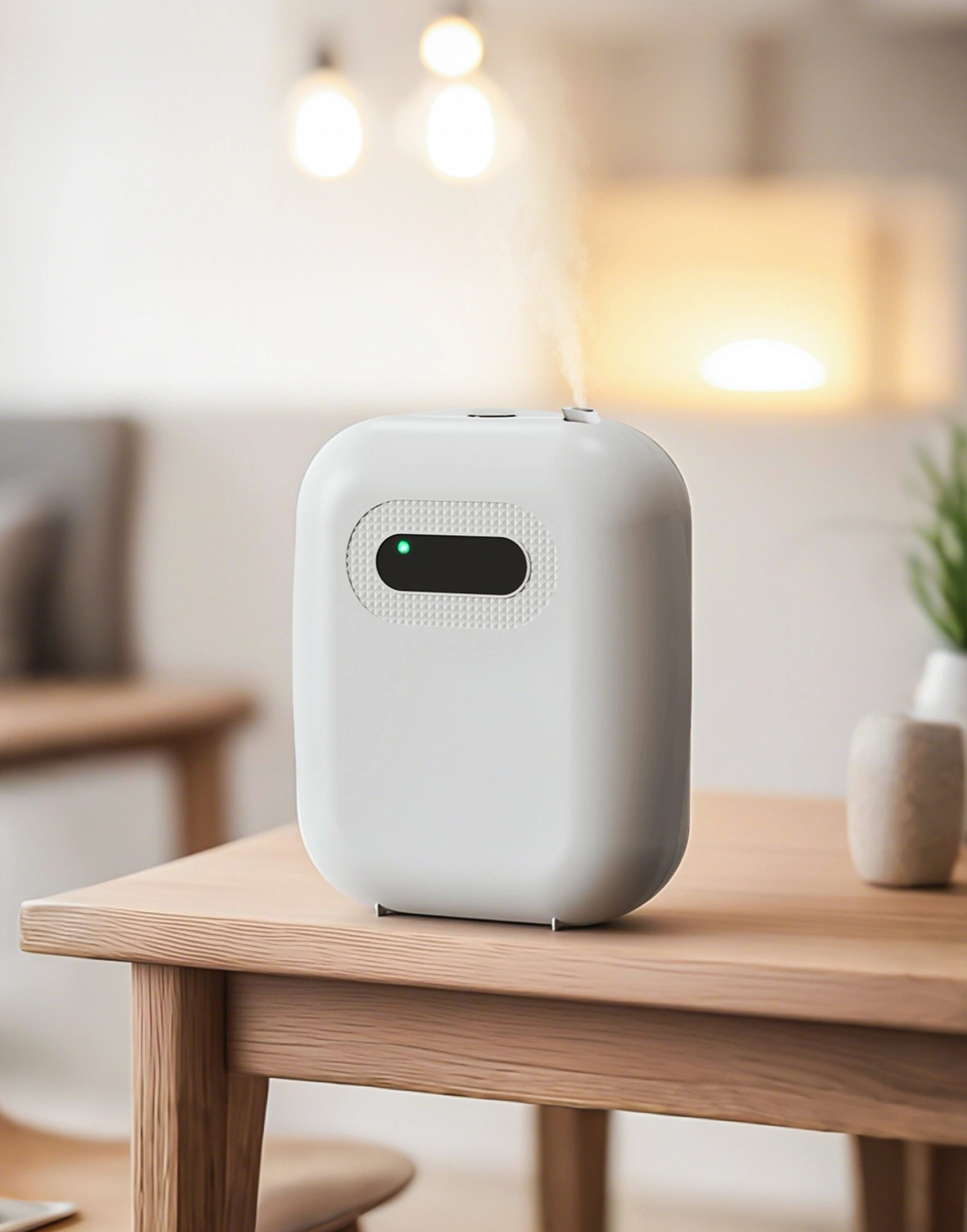
Machine price is the smallest part of a three-year retail scent budget. Fragrance oil, cleaning, and technician time repeat every month. A machine with a 150ml bottle running during opening hours can empty the bottle in less than two weeks at high intensity. A tower system with 500ml or 1L bottles extends the refill interval but costs more to install.
Consumable cost should be priced per operating hour, not per bottle. Ask the supplier for consumption data at three intensity settings. If they cannot give you those figures, you are guessing at the largest budget line. In our programs, we set modest intensity in the first week and increase only after store staff stop noticing the machine. That keeps refill spend under control and prevents scent fatigue.
Unscheduled maintenance follows the same pattern. Cold-air pumps and atomizers need periodic cleaning, especially with citrus or vanilla rich oils. A machine you can open and clean in five minutes costs less to operate than a sealed unit that has to go back for service. We prefer models with a removable bottle and simple pump access.
If your store operates across multiple HVAC zones or extended hours, confirm the consumption estimate before you finalize the budget. Share your operating schedule and floor area with us at [email protected] and we will confirm the refill cadence.
How Do You Compare Commercial Scent Diffuser Suppliers for Retail Stores?
Start with the scent, not the machine spec. A well-built diffuser delivering a poorly matched fragrance will not improve the store. We ask retail clients two questions before any equipment discussion: what range of fragrances does the supplier offer, and who develops the formula. A supplier that can adjust top notes, intensity, and base notes from an in-house team will be easier to scale across locations.
After scent, compare contract clarity. The quote should state coverage at your ceiling height, refill volume, power supply, and after-sales response. Vague coverage claims are the most common red flag. If a supplier says a single machine will cover 20,000 square feet without asking about ceiling height or air changes, the specification is not reliable.
Then look at control. Bluetooth or WiFi scheduling reduces staff work, but it should not replace manual access for cleaning. We have seen store teams turn off a machine because they could not adjust the schedule locally. A floor manager should be able to change intensity without a service ticket.
At Scent-Share, we quote machine and fragrance together because the scent formulation and pump delivery need to match. That shared view makes the rollout smoother when you move from a pilot store to a full retail chain.
How Do You Finalize a Retail Scent System Without Guesswork?
Retail scenting fails when the machine, fragrance, and store layout are specified in separate conversations. A coverage gap at the entryway, a fragrance that fades by midday, or a staff override that turns the system off quietly eats the return you built into the project. We narrow that risk by reviewing your floor plan, ceiling height, HVAC zones, and operating hours before quoting equipment.
Send your floor plan and expected daily traffic to [email protected], or call +86 185 6557 5758 and share the number of stores in your rollout. We will confirm the right diffuser type, scent loadout, and refill schedule for your retail spaces.
What Else Do Retail Buyers Ask About Commercial Scent Diffusers?
Do retail scent diffusers work with existing HVAC systems?
Yes, but the correct method is usually a diffuser mounted in the supply duct, not a standalone unit placed near a return. HVAC integration distributes fragrance through conditioned air and suits multi-zone stores above roughly 3,000 square feet. The system needs a controlled run schedule so the scent is not wasted overnight or during unoccupied periods. If your HVAC unit serves both sales and back-of-house areas, check whether those zones can be isolated. Without isolation, fragrance will follow the same airflow as heating and cooling.
How do I choose the right fragrance for a retail store?
It depends on the merchandise, the brand position, and the customer’s dwell time. Apparel and lifestyle stores often lean on fresh citrus, light floral, or clean cotton notes. Jewelry and premium retailers may prefer soft woods or amber based compositions. We start with a fragrance brief that includes your store category, customer age range, and regional preferences, then narrow to a small set of samples. Testing on site for at least one week is more useful than judging a bottle cap in an office. The final scent should feel like the store, not like a standalone perfume.
How loud are commercial scent diffusers in a retail space?
A common worry is that a commercial machine will be audible over store background music, but most standalone diffusers operate well below conversation level. Our desktop commercial diffuser runs under 32 dBa, which is quieter than a typical library. Noise becomes an issue when a fan runs at maximum speed in a small fitting room or a cash wrap. That is a placement problem, not a machine problem. A wall-mounted or ceiling unit positioned away from staff should be silent to customers. We test decibel output at installation during full HVAC operation, not in a quiet showroom.
What should I confirm before ordering a retail scent diffuser?
Before ordering, replace the broad question with three technical answers: coverage by air volume, refill cadence, and local control. Ask the supplier to confirm coverage at your ceiling height, not just the floor area. Request fragrance consumption rates at low, medium, and high intensity based on your operating hours. Finally, verify that store staff can adjust timing and intensity without a service call. If any of these answers comes back vague, the specification is incomplete. Share your requirements with us at [email protected] and we will confirm the machine and refill schedule before you commit.
If you’re interested, check out these related articles: