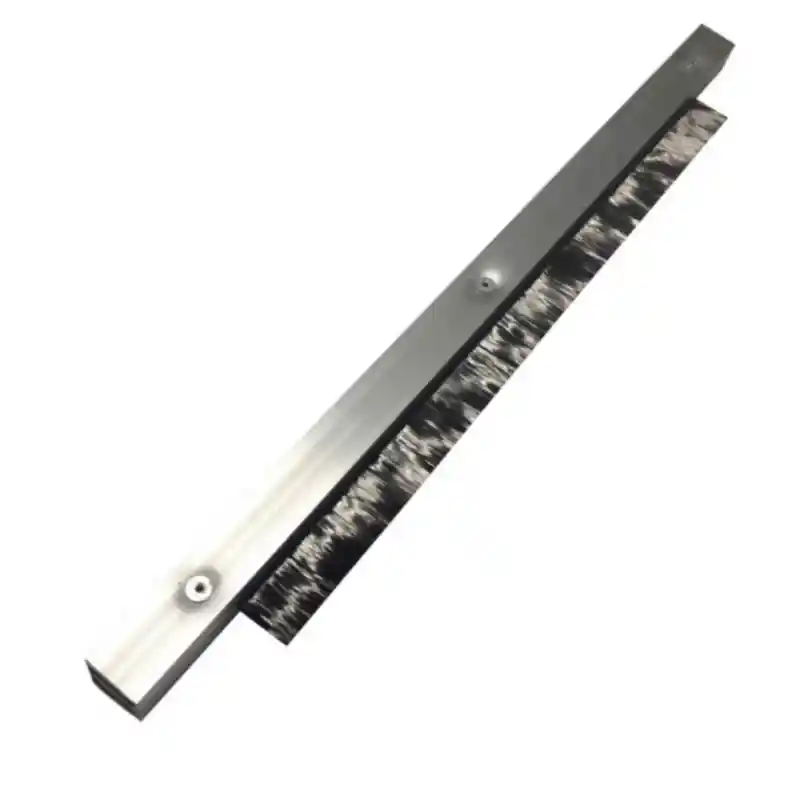

Flexible strip brush selection goes wrong when buyers treat the bristle material as the first decision. A brush that bends smoothly into a tight housing, wipes a curved edge, or follows an irregular slot without buckling depends more on backbone geometry, bend radius, and mounting than on fiber type. In production reviews at Huixi Brush, the contour brushes that need rework usually share one of three flaws: an over-bent metal backing, undersized bend allowance, or a mounting method that fights the curve. This article covers what we ask buyers to confirm before quoting, so the profile seals and cleans without pinching, skipping, or wearing through the backing.
Bendable Profiles Change How Flexible Strip Brushes Seal
A standard straight strip brush can fill a linear gap, but complex contour sealing depends on how the brush is bent and held. The bristles do not do the sealing by themselves; the backing strip sets the curve. If the backing is bent too sharply for its profile height, the inner radius compresses the bristles into a dense wall while the outer radius spreads them into gaps. The result is uneven density that leaks air, dust, or light along the inside of the curve.
We see this most often in machine enclosures and door channels where the brush must follow a radius instead of a straight run. In one review, a formed sealing brush with a narrow aluminum backing was bent around a 30 mm corner to clear a sliding panel. The outer edge opened up because the trim length was not reduced for the bend, leaving a visible gap. The fix was a shorter trim on the outer face and a more flexible polypropylene fill, not a tighter mounting.
The point is simple. Bendable strip brush construction works when the bend radius, backing profile, and trim length are treated as one system. If the brush can flex without kinking the backing, it can follow the contour. If it cannot, no bristle upgrade will recover the lost seal.
Buyers Need to Specify These Details Before Ordering Flexible Strip Brushes
The most useful drawing I receive includes three things beyond length and height: the exact curve radius, the bend direction, and how the brush will be secured. A missing bend radius is the most common source of a revised quotation.
- Measure the tightest radius in the installation, not the average curve. A brush may follow a 200 mm arc but fail at the 25 mm corner.
- Confirm the bend direction. Some profiles bend better in one plane than another; a profile bent against its narrow axis can twist and lift out of the channel.
- Define the mounting method. Adhesive tape, clips, or a slot channel all change how the backing behaves in the curve.
- State the bristle orientation and trim length. On a curved seal, the outer edge of the bend carries more movement than the inner edge, so trim length may need to be shorter on one side.
If the brush is for cleaning, we also ask about the part geometry and whether the brush runs dry, wet, or in contact with oil. Those conditions change bristle choice more than the curve itself.
Brushes specified for curved housings often share the same backing problems as brass wire strip profiles. <what you know about brass wire brush strip> covers how brass fill performs in wiping and light cleaning applications where a softer strip needs to hold shape without scratching the adjacent surface.
Backing Material and Bristle Grade Determine Bend Radius and Wear Life
The backing material decides how tight a curve the brush can hold; the bristle grade decides how much contact force and chemical resistance it carries. Buyers sometimes choose stainless steel backing for corrosion resistance and then discover it is too stiff for the bend. A galvanized steel backing may bend more readily but will not suit a washdown or chemical line.
| Backing material | Tightest practical bend | Best fit |
|---|---|---|
| Aluminum | Moderate bend capability, limited by profile height | Light duty enclosures and cover strips |
| Galvanized steel | Tighter bends without cracking, lower cost | General dust sealing and wiping |
| Stainless steel | Wider minimum radius, strong clamping | Corrosive wet or washdown environments |
| Plastic or nylon | Tightest repeated flexing | Light contact sealing and non-marring applications |
Bristle selection follows the same logic. Nylon and polypropylene bend without kinking and suit dust sealing or light contact. Brass wire strip fill adds wiping action and moderate heat tolerance. Stainless steel wire brings aggressive cleaning but reduces how sharply the backing can turn without stressing the fill face. Abrasive nylon works when the brush must remove a thin film or oxide while following an irregular surface.
When a flexible strip brush carries stainless steel wire for cleaning, the same descaling logic applies as in heavier industrial brush runs. <brushes for steel wire industries cleaning descaling derusting polishing> covers how wire fill selection changes the balance between aggressive material removal and surface finish on steel parts.
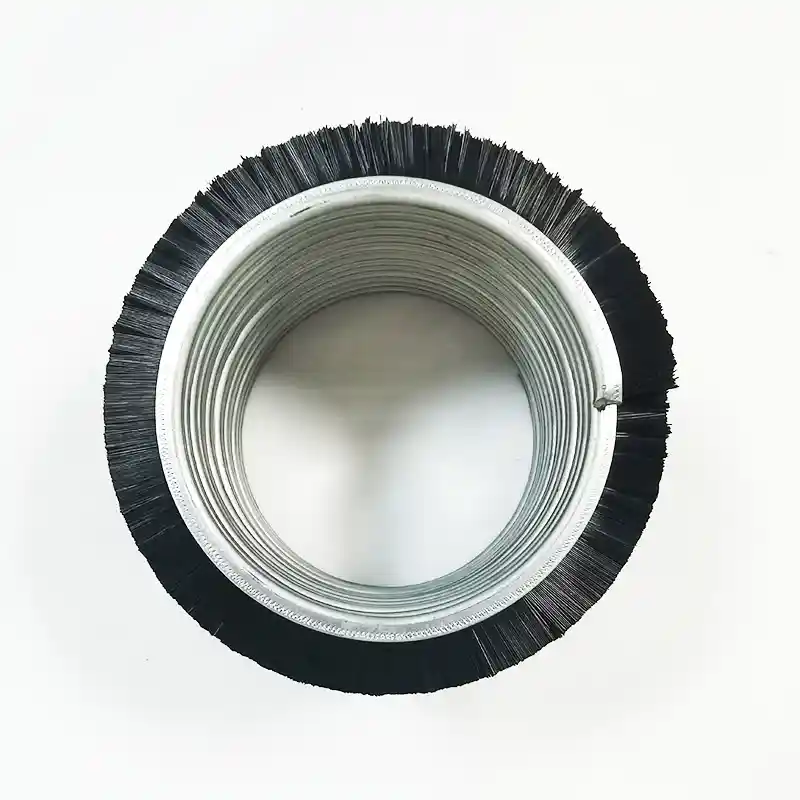
If your contour includes a radius below 40 mm or a wet washdown environment, confirm the backing and fill combination before finalizing the bill of materials. Send the tightest bend radius and part drawing to [email protected].
Mounting and Trimming Methods Keep Flexible Strip Brushes Following Irregular Contours
A flexible strip brush works best when the mounting system holds the backing without interrupting the bend. Slide-in channels tend to work better than point fasteners on curved runs because they distribute clamping along the full profile. Point fasteners can flatten the backing at each screw location, creating small gaps between fasteners.
We usually recommend a channel or clip that matches the backing width and leaves slight movement during installation. This is not loose mounting. It lets the brush settle into the curve without buckling. If the brush must wipe a moving part, the contact side should be trimmed so the tips touch with light interference, not heavy deflection.
For cleaning an irregular surface, trimming can produce a contoured brush face. Instead of forcing a straight trim to follow the curve, we cut the fill profile to match the part. That reduces uneven wear and prevents the outer bristles from doing all the work while the inner bristles float.
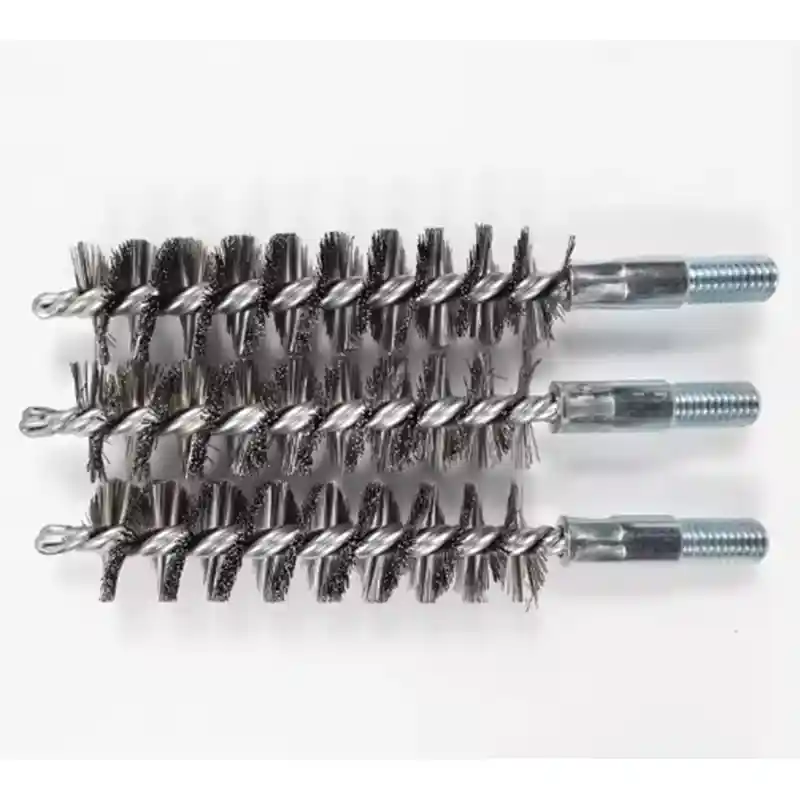
Some curved cleaning jobs move from flat strip contact into cylindrical bores or internal channels. <the differences between inward and outward spiral brush> covers how spiral fill direction changes chip ejection and contact pressure in those internal runs.
Sourcing Flexible Strip Brushes Starts With a Radius Drawing
The pattern behind most contour sealing failures is not inferior bristle material. It is a brush that was quoted without the bend geometry and mounting details. If your drawing includes the tightest radius, the bend direction, and the mounting channel, the quote will be closer to production the first time. That saves the rework cost of a brush that seals everywhere except the corner.
Send your drawing, part number, and quantity to [email protected] or call +86 1580 0932 713. We will confirm the backing profile, trim length, and bristle grade before cutting, and we will flag any radius that is too tight for the selected material before you commit to tooling.
Buyers Also Ask About Flexible Strip Brush Selection and Maintenance
What is the tightest bend radius a flexible strip brush can follow?
The tightest bend radius depends on the backing height and material rather than on the bristle type. A low profile aluminum or plastic backing can follow a tighter curve than a tall stainless steel channel. For a rough starting point, a 40 mm radius is usually safe for many standard strip brush profiles, but designs below that need to be checked against the selected backing and trim length. If the radius is very tight, a shorter trim on the outside of the bend keeps the profile from opening up.
Can flexible strip brushes be used for wet cleaning?
Wet cleaning does not automatically rule out a flexible strip brush, but it changes the backing and fill decision. Stainless steel backing holds up in washdown areas, while galvanized steel can corrode and lose clamping strength over time. For the fill, nylon handles water better than natural fiber, and stainless steel wire resists rust but may be too aggressive for soft surfaces. We ask whether the brush runs under continuous water spray, chemical exposure, or occasional rinse before recommending a material.
How do I prevent bristles from pinching inside a slot channel?
It depends on how the strip is mounted and where the wear is concentrated. Pinching usually means the channel is too narrow for the backing or the bend is pulling the strip against itself. A channel with a small amount of side clearance lets the brush settle without crushing the fill. If the strip is in a tight curve, slightly shorter fill on the inner radius reduces pressure at the base. Check the bend direction before increasing bristle density, because denser fill can make the pinching worse.
Why does the brush wear harder on one edge?
In the production runs we quote, uneven wear usually traces back to a trim problem or a mounting channel that is not matched to the backing width. The outer edge of a curved strip travels farther and takes more contact than the inner edge, so a straight trim can load the tips unevenly. We correct this by trimming the fill to follow the part profile and checking that the channel holds the backing parallel to the surface. If your brush is wearing harder on one edge, send a photo and the part geometry to [email protected] and we will confirm whether a profile adjustment or different fill is needed.
If you’re interested, check out these related articles:
introduction of our concrete block machine brushes
brushes for steel wire industries cleaning descaling derusting polishing
the differences between inward and outward spiral brush
abrasive disc brush an efficient tool for many applications