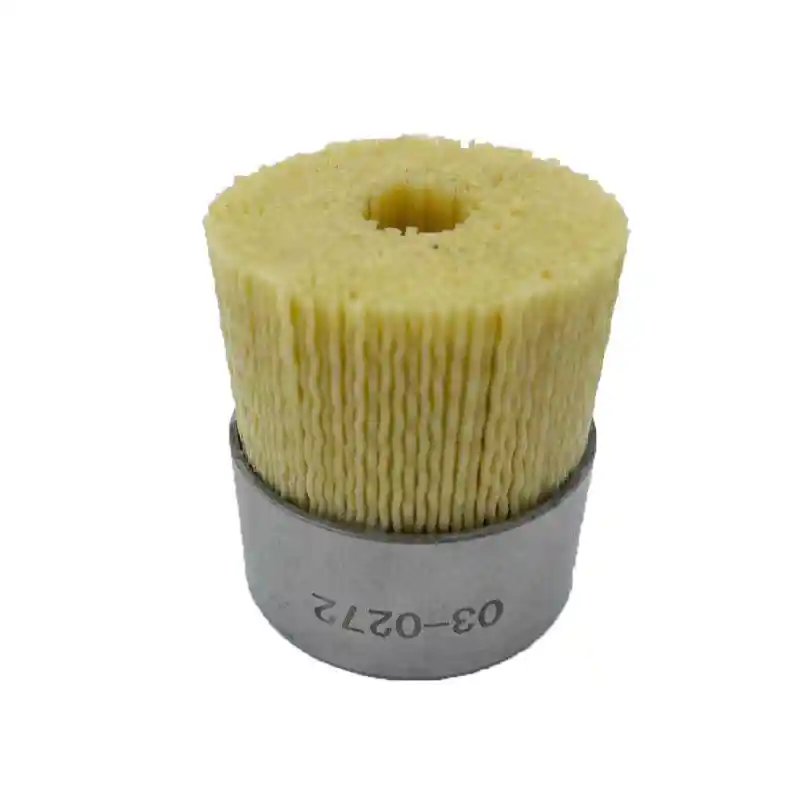

Many production engineers overlook one critical detail when integrating disc brushes into automated grinding cells: the brush‑matching parameters that determine whether a brush lasts 500 cycles or 5,000. A durable disc brush is not a one‑size‑fits‑all component. The key lies in aligning filament material, grit, density and arbor design with the machine’s spindle speed, contact pressure and workpiece geometry. This article examines how to specify a disc brush that performs consistently in an automatic grinding machine, drawn from over fifteen years of industrial brush application experience.
What Determines a Good Match Between Disc Brush and Grinding Machine?
The most common mismatch I encounter on plant audits is a brush that physically fits the machine’s arbor but fails within days because filament stiffness or brush diameter was never matched to the real operating parameters. Three variables demand attention: spindle RPM, arbor interface and brush diameter.
Automatic grinding machines typically run at spindle speeds between 1,500 and 3,600 RPM. A brush’s maximum safe operating speed must exceed the machine’s top RPM. If the MSOS is too low, centrifugal force causes filament breakage and rapid wear. Conversely, a brush rated for higher speed but run too slowly may not generate enough tip speed to effectively cut or finish the surface. Brush diameter directly affects tip speed, so pairing a smaller disc with a high‑speed spindle can compensate, but the contact area changes.
The arbor design is equally important. Many automatic grinding machines use quick‑change tool holders, and if the brush’s arbor hole diameter or keyway does not match the spindle interface exactly, vibration and runout will wear down the filament bundle unevenly. I’ve seen cases where a 0.2 mm discrepancy in arbor hole tolerance caused vibration that cut brush life by more than half. Always confirm the arbor specifications with the machine tool builder before ordering.
What spindle speed should a disc brush run at?
The safe speed depends on brush diameter and filament material. For a 150 mm diameter nylon‑abrasive disc brush, a typical maximum RPM is around 2,500. Exceeding that risks filament separation. A simple calculation: tip speed (m/s) = (π × diameter × RPM) / 60,000. Most abrasive nylon filaments perform best at tip speeds between 25 and 35 m/s. So for a given machine RPM, select a brush diameter that keeps the tip speed within that band. If your machine runs at a fixed speed, you may need a custom brush diameter to hit the optimal performance window.
How Does Filament Material and Grit Affect Disc Brush Durability?
Choosing the right filament for a disc brush determines how long it lasts and how it interacts with the workpiece. In grinding applications, the trade‑off is always between cut rate and wear rate.
| Filament Material | Abrasive Grit | Typical Application | Durability | Best RPM Range |
|---|---|---|---|---|
| Nylon with silicon carbide | 80–120 mesh | Deburring, edge radiusing | High | 2,000–3,000 |
| Nylon with aluminum oxide | 60–100 mesh | Surface blending, light grinding | Medium | 1,800–2,500 |
| Steel wire | N/A | Heavy scale removal | Very high | 1,200–1,800 |
Nylon‑abrasive filaments are self‑sharpening: as the nylon wears, new abrasive grains are exposed, maintaining consistent cutting action. This makes them a durable disc brush choice for automated lines because they degrade slowly and predictably.
Grit size controls the surface finish. Coarse grits (60–80 mesh) remove stock quickly but leave a rougher surface and wear faster under high pressure. Fine grits (120–240 mesh) produce smoother finishes but cut slower. For an automatic grinding machine that handles high‑volume production, specifying a grit that balances throughput and finish is critical. I typically recommend starting with a medium grit (100–120) and adjusting based on sample part evaluation.
Filament density also matters. Higher density packs more bristles into the disc, extending wear life but increasing stiffness. If the brush is too dense for the workpiece geometry, it will not conform to contoured surfaces, leading to uneven edge radiusing. Lower density provides better flexibility but shorter service life. The machine’s contact pressure setting determines which density works best.
If your program involves high‑speed grinding with specific workpiece materials, it is worth confirming the filament composition and grit size that will give you both the finish and the durability you need — reach out at [email protected] with your machine parameters for a recommendation.
Why Incorrect Machine Setup Shortens Disc Brush Life
Even a properly specified durable disc brush will fail prematurely if the automatic grinding machine is not set up to handle it correctly. The two most common issues I encounter are excessive contact pressure and poor brush balance.
Contact pressure increases the load on each filament. While some pressure is necessary for cutting action, too much causes the filaments to bend permanently or break. In automated systems, the feed rate and position control the pressure. If the machine program pushes the brush too hard against the workpiece, the filament tips overheat and degrade rapidly. The telltale sign is melted filament tips on nylon brushes or flattened wire bristles.
Brush balance is often overlooked. A disc brush with an unbalanced filament distribution will vibrate at high RPM, causing uneven wear on both the brush and the spindle bearings. I’ve diagnosed vibration issues in automated cells that traced back to a brush with a density variation of just 2%. For automatic grinding machines, I always recommend dynamic balancing after trimming and before shipping. It adds a small cost but pays back in dramatically longer brush life and reduced machine maintenance.
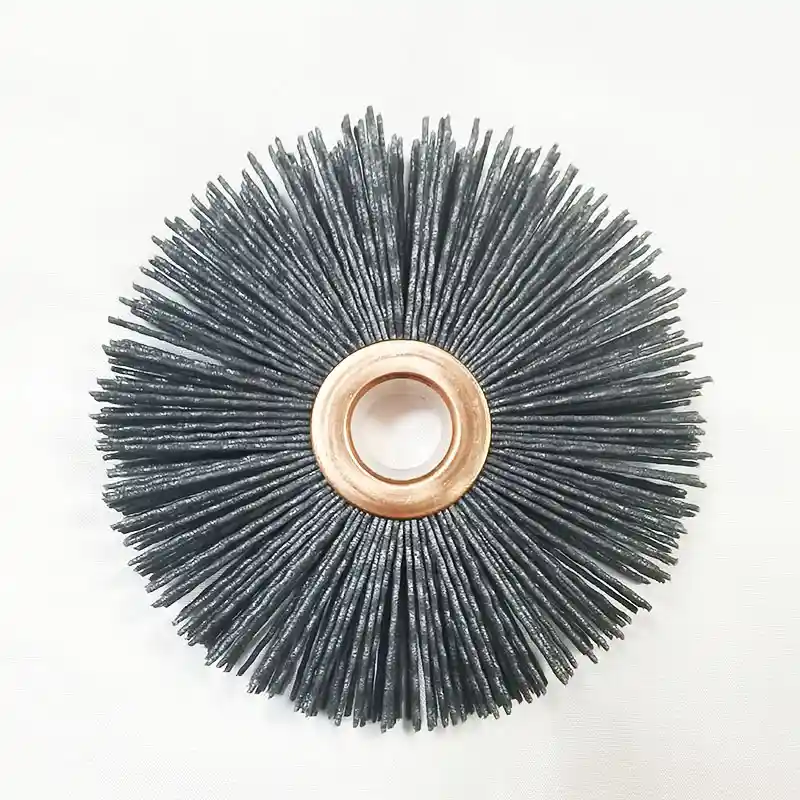
Should You Standardize or Customize Disc Brushes for Production?
For high‑volume automated grinding, off‑the‑shelf disc brushes rarely deliver the best lifecycle cost. Standard brushes are designed for general use, so their diameter, filament density, grit and arbor design are compromises. A custom disc brush, specified to your exact machine parameters, workpiece material and target surface finish, typically outlasts the generic alternative by 30% or more.
Huixi Brush has been manufacturing customized industrial brushes for 16 years, and our approach is to start with a sample of the workpiece and the machine specifications. We then dial in the filament type, grit, density and arbor interface so the brush becomes a direct drop‑in replacement with minimal break‑in period. This service is especially valuable for automatic grinding machines because the brush becomes a predictable consumable rather than a variable that disrupts production schedules.
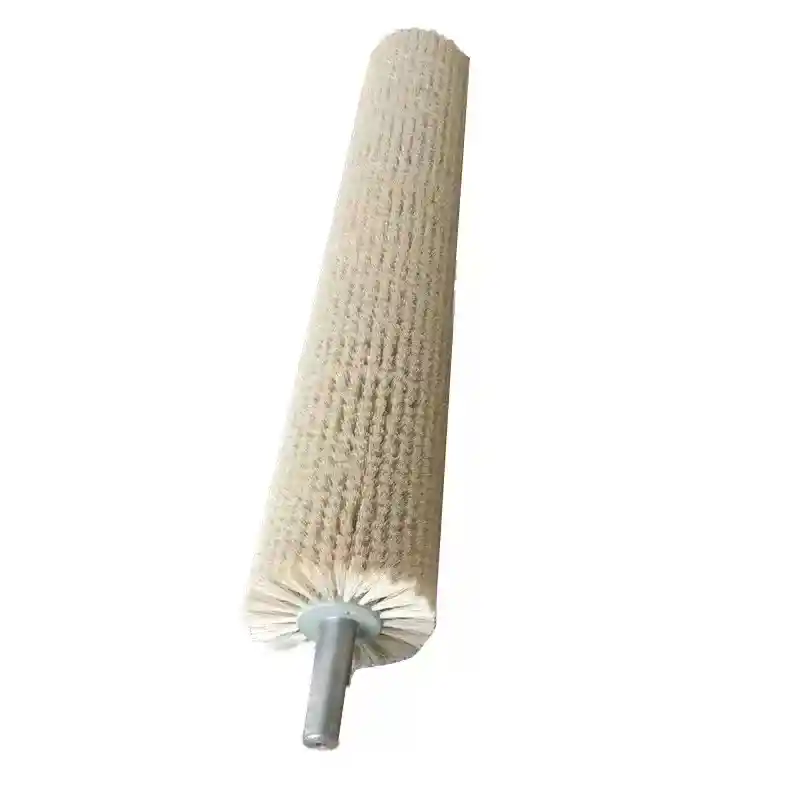
Finding the right disc brush for your automatic grinding machine takes some back‑and‑forth, but once matched, a durable disc brush becomes a reliable part of your production schedule. Send us your machine model, spindle speed, arbor details and workpiece material, and we will recommend a disc brush that balances cut rate and service life. Contact [email protected] or call +86 1580 0932 713.
Common Questions About Disc Brushes for Automated Grinding
Can I use the same disc brush for different workpieces?
It is rarely optimal. Different workpiece materials, geometries and surface finish requirements demand different filament stiffness, grit and density. A brush set up for soft aluminum will wear quickly on hardened steel. If your automated line switches between materials, consider a quick‑change system and separate custom brushes for each job.
How often should disc brushes be replaced in automated lines?
Replacement interval depends on filament material, machine settings and workload. In a well‑matched setup, a durable disc brush can run hundreds of hours. The clearest indicator is loss of cut rate or change in surface finish. Track brush wear by measuring edge radius or weight loss at regular intervals, and replace before it affects quality.
Does a higher‑priced disc brush always last longer?
Not necessarily. A higher price may reflect specialized materials or complex construction that suits a specific application. But if the brush is not matched to the machine’s RPM and contact pressure, it will not last longer than a less expensive brush that fits correctly. The right specification matters more than the price tag. If you are unsure which specification delivers the best value, share your requirements and we will help you evaluate the trade‑offs — reach us at [email protected].
If you’re interested, check out these related articles:
rope cleaning brush for industrial use a key tool for maintaining safe production
what you know about brass wire brush strip
where stainless wire spiral brush can be used
advantage of hx cylindrical sanding brushes