Hotel signature scent programs fail when the fragrance is chosen before the guest journey is mapped. A successful rollout is not about finding the most luxurious oil; it is about matching diffusion intensity, zone airflow, and maintenance to how guests actually move through the property. I’ve spent over ten years in fragrance R&D and commercial scenting, serving properties across 68 countries. The hotels that gain the most from scent treat it as an operations decision, not a one-time design flourish.
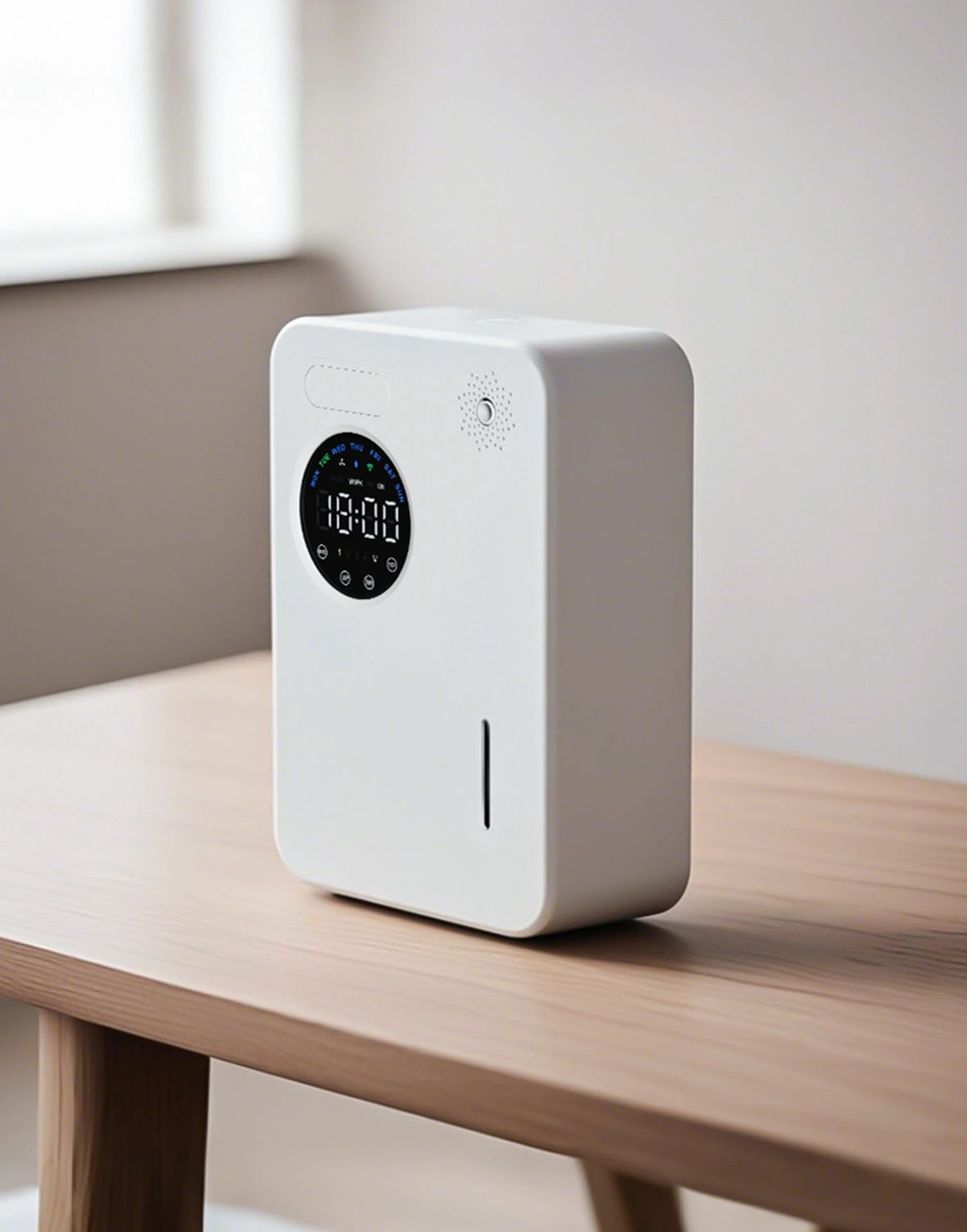
A Hotel Signature Scent Starts With the Guest Journey
The arrival moment does the heaviest work. A guest forms an impression before the front desk interaction, and the lobby scent either sharpens that moment or fights it. I have seen properties choose a beautiful white tea note for the lobby, then push the same concentration into low ceiling corridors where it turns heavy and stale. That is not a fragrance problem. It is a journey design problem.
Map the sequence: entrance, check-in, elevator, corridor, guest room, breakfast area, spa, and meeting rooms. Assign one intended mood to each zone. The scent should stay consistent in character but shift in intensity. A signature scent is most memorable when guests recognize it in the lobby and barely notice it in the guest room, where bed linens and bathroom products already add their own notes.
Fragrance Selection Depends on Zone Function and Airflow
Fragrance families work differently depending on ceiling height, HVAC return air, and occupant time. White tea and citrus feel clean on arrival, but they can disappear in open atriums without enough diffusion output. Woody amber and musk notes hold in lobbies and lounges but become too heavy in small meeting rooms. I always separate zone character before finalizing a fragrance oil.
| Zone | Fragrance Character | Intensity Guidance |
|---|---|---|
| Lobby and arrival | White tea, citrus, green floral | Noticeable but not clingy |
| Corridors and guest floors | Light woods, clean linen, soft floral | Lower than lobby |
| Lounge and bar | Warm amber, sandalwood, spice | Moderate, evening service |
| Spa and fitness | Aquatic, green, eucalyptus | Fresh and low |
| Meeting rooms | Neutral white musk, light cedar | Very low, nearly background |
Lobby and Arrival Zones
White tea, green citrus, and light floral notes create a clean first impression. In open lobbies, I test the scent at head height near the entrance and again near the elevators because airflow changes the throw. If the note disappears in the middle of the space, the problem is usually diffusion placement, not oil strength.
Guest Floors and Corridors
Corridors need a lower concentration than lobbies. A long enclosed floor with limited air exchange can amplify even a moderate fragrance into something guests describe as perfumy or stale. We often set floor diffusers 20 to 30 percent lower than lobby output and use wall mounted units near elevator banks.
Spa, Gym, and Meeting Rooms
Spa and fitness areas take aquatic, green, or eucalyptus directions because these notes read as clean and breathable. Meeting rooms need almost nothing. A neutral white musk or light cedar behind a low duty cycle prevents scent from competing with coffee, food, or the speaker’s presence.
The Biggest Mistake Is Treating Every Floor the Same
Most hotel scent guides stop at picking a fragrance. The larger risk is running one strength through every zone. Nose blindness develops quickly when the same intensity surrounds staff for an eight hour shift, and guests begin to describe the hotel as overpowering without knowing why. I apply a simple rule: the more closed a space is, the lower the output.
High ceilings and open atriums need more diffusion capacity, not necessarily more fragrance oil. Ceiling height, return air volume, and door open time change how quickly scent molecules move. Before ordering, I look at each floor plan and mark the places where scent can pool: elevator lobbies with no return vent, corridors with low air exchange, meeting rooms with closed doors. Those are the first places to underdose, not the last.
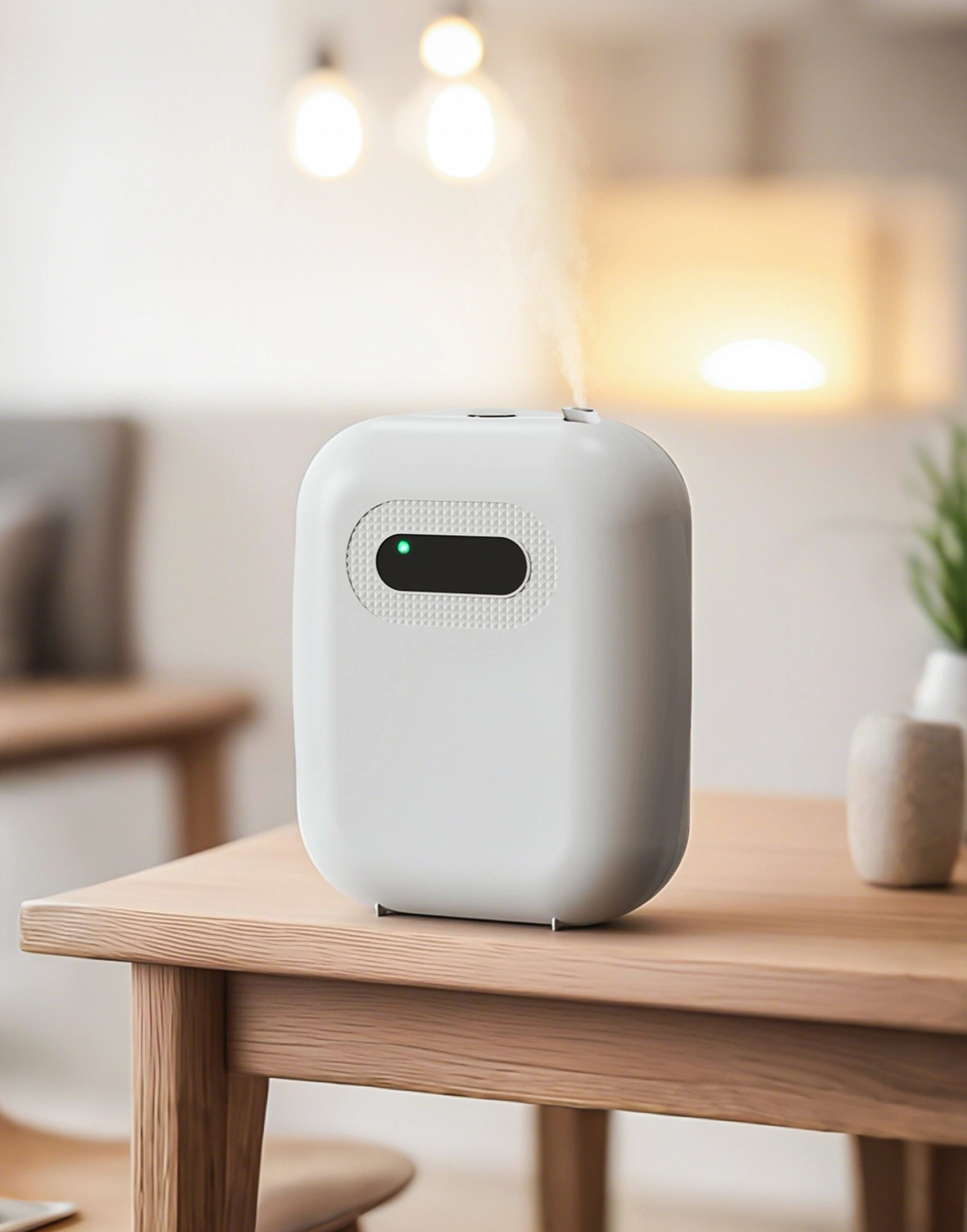
Smart Diffusion Equipment Gives Hotels Consistent Control
Standalone diffusers work for small properties, but multi floor hotels benefit from app controlled HVAC systems because schedules and intensity can change by zone. Our commercial HVAC scent diffusers cover up to 8,000 cubic meters per unit, while dual system models handle 5,000 to 15,000 cubic meters across two independent circuits. A hotel scent oil diffuser tower works well for lobby atriums up to 3,000 cubic meters where HVAC integration is not practical.
| Space Type | Recommended Equipment | Typical Capacity |
|---|---|---|
| Hotel lobby or atrium | Hotel scent oil diffuser tower or dual system HVAC | 3,000 to 15,000 m³ |
| Guest corridors | Wall mount or track mount diffuser | 300 to 3,000 m³ |
| Spa, gym, small meeting rooms | Desktop scent diffuser | 300 m³ |
| Large ballroom or open plan | Commercial HVAC scent system | 8,000 m³ |
| Multiple independent zones | Dual system HVAC scent diffuser | 5,000 to 15,000 m³ |
If your property has an atrium, a lobby above 4 meters, or windows that open to high humidity, coverage calculations should be confirmed before equipment is ordered. Send your floor plan to [email protected] and we will check the right diffuser capacity and oil throw for your zones.
A Signature Scent Needs a Maintenance and Refill Plan
Even the best fragrance loses its impact when cartridges run dry or nozzles clog. A hotel signature scent should be treated like lighting or HVAC maintenance, not a one time install. I build a schedule around oil consumption, filter condition, and seasonal shifts. In warm humid markets, oils can throw faster but also fade differently; in dry climates, top notes burn off sooner and require a slight adjustment in concentration.
Track oil levels monthly for the first quarter, then set refill forecasts based on actual use. Label each diffuser by zone so housekeeping can report a low throw without guessing. If a corridor begins to smell stronger than the lobby, the issue is almost always a programming drift or an empty cartridge in the wrong unit.
Moving from a fragrance idea to a property wide rollout is where most teams stall. The scent concept may be clear, but coverage mapping, oil compatibility, and refill planning still need to be settled before the first unit is installed. Send your floor plan, target zones, and fragrance direction to [email protected] or call +86 185 6557 5758 / +86 134 2048 5758. We will confirm coverage requirements, oil volume, and refill timing before you finalize the order.
Common Questions About Hotel Signature Scent Development
How long does it take to develop a hotel signature scent?
Most hotel signature scent projects take three to six weeks from brief to finished oil. The timeline extends when the brief changes or when the fragrance has to work across multiple climate conditions and zone types. We usually run two evaluation rounds with pipette samples before approving the final concentration. A faster path is to start from a proven base and modify it rather than compounding from zero.
What strength should a hotel lobby scent be?
A common assumption is that a stronger lobby scent creates a stronger impression. The opposite is usually true. Guests should register the scent within a few seconds without being able to trace it to a machine or a specific source. We test at nose height near the entrance and at the seating area, then back the intensity down until the note is present but not identifiable as perfumed air. This keeps the lobby memorable without making staff and frequent visitors nose blind.
Can the same fragrance work in all areas of a hotel?
It depends on the zone. The same signature character can run through the property, but concentration and diffusion rate should change. A lobby white tea note at full strength becomes cloying in a closed corridor, while a low corridor setting disappears in an open atrium. We keep the core accord and create zone-specific dilution or program settings so guests perceive one identity instead of four unrelated scents.
How much fragrance oil does a hotel diffuser use?
In our hotel projects, a 150ml cartridge in a standard 300 cubic meter diffuser often lasts two to four weeks depending on duty cycle. Larger HVAC units with 1L or 5L bottles run for months at low intensity. The real consumption variable is programming, not bottle size. A hotel that runs full output around the clock can use several times more oil than one that reduces output overnight.
Do hotel fragrance oils meet safety and compliance standards?
The answer starts with which market the hotel serves. We work within IFRA concentration limits and keep REACH documentation available for EU projects, then adjust the formulation if a specific market adds its own restrictions. A fragrance is not hotel ready simply because it smells pleasant; it also needs stable performance in cold air diffusion and safe handling across refilling cycles. Share your property brief and target market to [email protected], and we will confirm compliance documentation and diffusion calculations.
If you’re interested, check out these related articles: