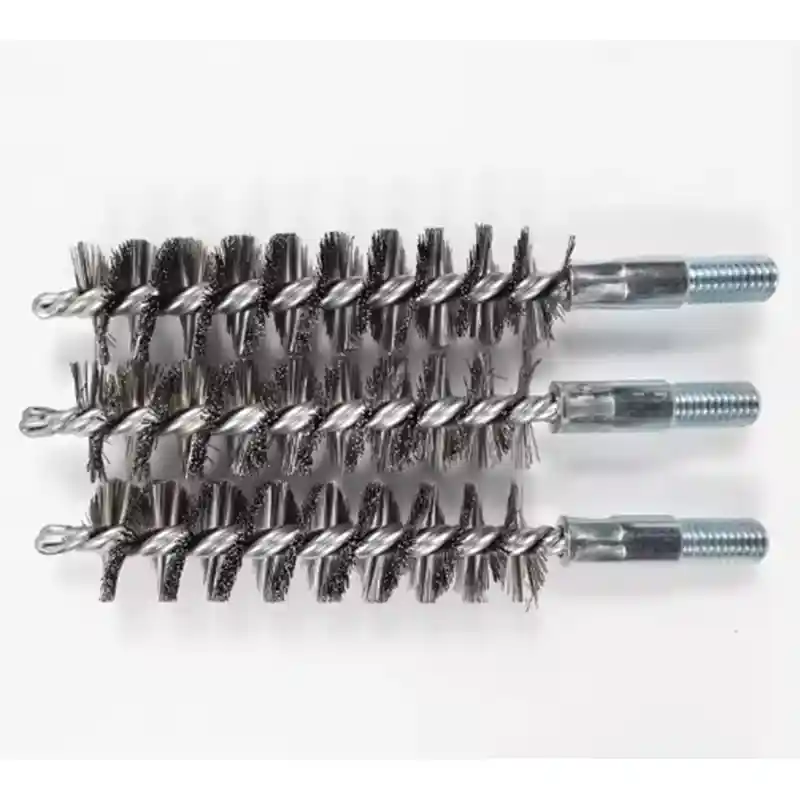

Most chimney cleaning brush failures begin before the brush enters the flue. A brush that is too rigid for a corrugated liner, too narrow for the flue diameter, or fitted with a weak stem connection will leave soot behind or break off inside the vent. A heavy-duty chimney cleaning brush has to balance fill density, bristle stiffness, and core strength against the actual liner material and access path. At Huixi Brush, we treat flue and vent cleaning as a sizing and material problem first, then a brushing problem. The specification below covers diameter selection, fill material, stem retention, and the field conditions that determine whether the brush completes the job.
The Right Chimney Cleaning Brush Starts With Flue Diameter and Draft Conditions
A flue brush is not a universal cylinder. Effective soot removal in flue and vent pipe depends more on fit than on brush type. If the brush is 3 mm smaller than the narrowest liner section, the bristle tips skate over the deposit instead of cutting it. Too much oversize creates a different problem: the bristles fold back, the rod torque rises, and the operator has to force every section through the pipe. We size the brush from the minimum measured inner diameter, not from the nominal chimney size stamped on the appliance.
Take measurements at the flue collar, at any offset, and at the termination. Oval, corrugated, and factory-built liners can differ by more than 10 mm across a run. The brush needs enough bristle length to follow the profile without letting the core ride against the liner. In a round clay tile flue, a fill diameter 6 mm to 12 mm over the measured ID is usually enough. In a stainless corrugated liner, the usable oversize is smaller because the wall profile already creates high contact points.
Draft is the second consideration. A strong draft pulls loose soot upward, but it also carries fine dust past the brush and into the workspace if collection is not arranged. The brush design should release the deposit into the gas stream, not pack it into a plug ahead of the brush. That is why dense fill is not automatically better; if the fill is too tight, the brush acts like a piston and pushes a hardened plug up the flue.
Core, Stem, and Bristle Fill Determine Whether the Brush Survives the Job
The brush head can only transfer cleaning force if the core and stem connection stay intact. In the chimney cleaning brushes we produce, the working fill is retained between ferrules on a twisted wire stem or a reinforced center cable. The connection that matters most is the first ferrule behind the leading end, because that is where pull-back force concentrates when the brush bites into a heavy deposit.
Why Do Brush Heads Separate at the First Ferrule?
Most field failures we see are not worn bristles. They are separation at the first ferrule or a snapped rod thread. The cause is usually a mismatch between the brush stiffness and the rod drive. When the brush is oversized for the liner and the operator forces the rod, the stem winds up and the ferrule receives a shock load. A heavy-duty chimney cleaning brush needs a stem connection rated for pull-back, not only for rotation. We crimp or mechanically lock the leading ferrule and use a stem diameter that resists uncoiling under reverse rotation.
What Fill Density Actually Does to Cleaning Action
Fill density controls how much wire or poly material contacts the wall per revolution. Low density leaves gaps in the spiral path; high density increases drag and can block flow. For flue and vent work, we lean toward a fill density that keeps the spiral pattern continuous without packing the full diameter solid. That balance lets the brush scrape soot and light creosote while still allowing the deposit to fall or draw out of the flue.
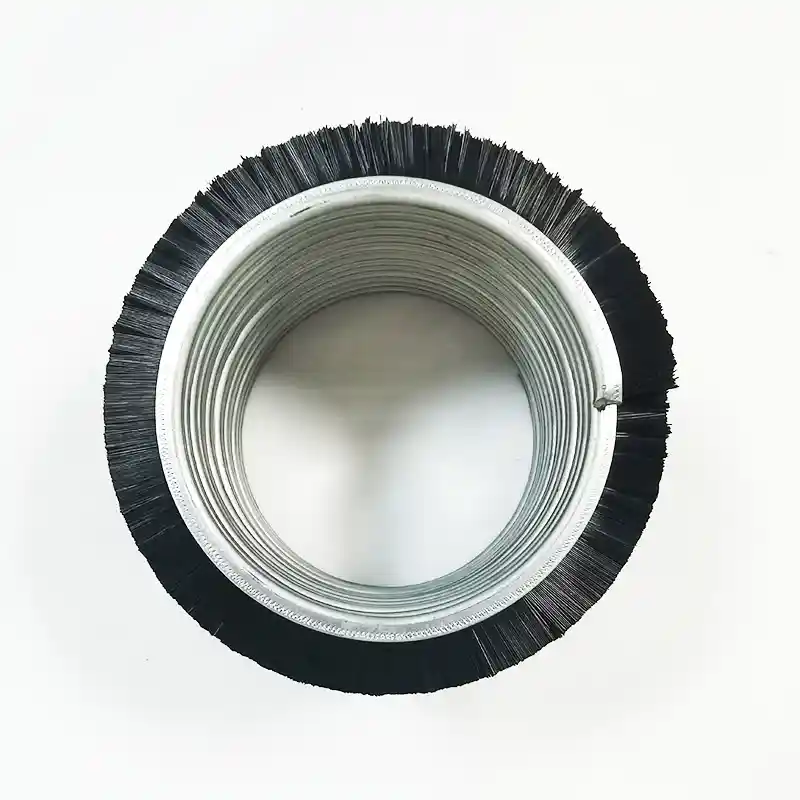
Flue and vent cleaning often uses a twisted wire stem that lets the brush follow bends without kinking. <descaling spiral brush an innovative tool and generalist in the field of industrial cleaning> covers why spiral fill contact pressure matters in round pipe sections and where a twisted stem works better than a straight rod end.
Chimney Cleaning Brush Materials Need to Match Flue Liner and Soot Type
Chimney deposits are not one material. Soot, tar, and creosote behave differently, and the flue liner sets the abrasion limit. A stiff stainless brush may clean a clay tile flue quickly but will scratch a thin stainless liner if the operator uses too much pressure. A poly or nylon fill is safer on stainless and aluminum liners, but it will not cut hard scale on masonry.
| Fill material | Deposit type | Liner compatibility | Field note |
|---|---|---|---|
| Polypropylene | Loose soot, dust | Stainless, aluminum, metal vent | Least aggressive; requires closer diameter fit |
| Nylon | Light creosote, soot | Stainless, clay tile | Holds shape better than poly in warm flues |
| Brass-coated steel | Medium soot, light tar | Clay tile, masonry | Softer than stainless, less spark risk than plain steel |
| Stainless steel | Hard scale, heavy creosote after chemical treatment | Clay tile, masonry | Not first choice for thin stainless liners |
Wire type also affects ignition risk and corrosion. Brass-coated steel reduces the chance of sparks compared with plain carbon steel, which matters when the flue has not been fully cleaned in several seasons. Stainless steel fill resists corrosion from wet or acidic deposits, but its stiffness must be matched to a sturdy stem and a controlled rod drive.
If your program involves mixed flue liners or heavy third-degree creosote, confirm whether a poly or brass fill will survive the first pass before finalizing the brush order. Send the liner material and deposit description to [email protected] and we will check the fill and stem combination that fits the actual flue.
Soft metal fill is worth considering when the flue liner can be damaged by hard wire. <brass brushes work perfectly for pipe cleaning> covers where brass wire lifts pipe deposits without cutting into softer substrate and why that matters for thin-wall liners.
Custom Chimney Cleaning Brush Quotes Need Four Measurements, Not a Nominal Size
A custom chimney cleaning brush quote turns into a production-ready specification when four measurements are recorded. Guessing from a product photo or a nominal liner size is the fastest way to get a brush that binds or skips.
- Measure the liner ID at the top, bottom, and narrowest offset. Use the narrowest point as the base dimension.
- Record the liner material and wall condition. Clay tile, stainless corrugated, and factory-built sections each call for different fill material.
- Note the access orientation. Rooftop, cleanout, and appliance-side access affect brush length, stem flexibility, and rod connection.
- Confirm the rod thread and rotation direction. The brush connection must match the existing rod set and drive type, not a generic adapter.
What Rod Connection Should Be Specified for Existing Rods?
If the crew already has a rod set, the brush should be built for that thread and not require a field adapter. The common North American rod thread may be 1/4 NPT, but metric and quick-connect systems are also used. We ask for a photo of the rod end and the thread diameter; that removes the guesswork from the connection. For vent pipe cleaning, a flexible cable connection is sometimes a better choice than a rigid rod joint because it follows offsets without levering the first ferrule.
A Workable Chimney Cleaning Brush Quote Starts With Flue Dimensions and Liner Details
Most failed chimney cleaning brush orders come from a one-line request: we need a brush for a 6-inch chimney. That number does not say whether the liner is clay, stainless, oval, or corrugated, and it does not say whether the brush will be pulled from the top or driven from the cleanout. Huixi Brush builds flue and vent brush sets around the measured liner ID, deposit type, and existing rod connection. Send the inner diameter, liner material, and rod thread to [email protected], or call +86 1580 0932 713 with those three details. We confirm fill material, brush diameter, and stem retention before production so the quote you receive is already set up for your access path.
Buyers Ask These Chimney Cleaning Brush Questions Before Ordering
Do I need a poly brush or a wire brush for a stainless steel flue?
For a stainless steel flue, poly or nylon fill is the safer starting point because it removes loose soot without scoring the liner. Stainless steel fill should be reserved for heavy deposits that have already been softened or where the liner is masonry. The harder the fill, the more important the diameter fit becomes; a stainless brush that is oversized for a thin liner will mark the wall. We normally recommend a nylon or poly brush on stainless flues and switch to brass-coated steel only when the deposit requires more cutting action.
How much larger should the brush be than the flue diameter?
The oversize range depends on liner shape. For round flues, a brush tip diameter 6 mm to 12 mm above the measured flue ID is usually enough. The range narrows for corrugated stainless liners because the ridges create local contact pressure; there, 6 mm over the narrowest measured point is safer. Do not size the brush from the nominal chimney size. If the flue is oval or has an offset, measure the short axis and treat that as the governing dimension. An oversized brush will bind and increase the chance of breaking the rod connection.
Will a chimney cleaning brush remove glazed creosote?
A brush alone will not remove glazed creosote. That deposit is hardened and bonded to the liner, so it normally requires chemical treatment or professional mechanical treatment before brushing can be effective. The brush is still part of the process; it removes the loosened material and helps expose the next layer. If the flue has a heavy glazed deposit, specify a fill material and stem that can handle the higher drag, and plan for multiple passes rather than forcing the brush through on the first attempt.
What should I check before requesting a custom quote?
Before you order, record the liner type, the narrowest measured ID, and the existing rod thread. Those three details separate a workable brush from a guess. A photo of the rod end and access point also helps, especially for vent pipe runs with offsets. Send those details to [email protected] and we will confirm the brush diameter, fill material, and stem connection that fit your flue instead of sending a stock size that may not match the liner.
If you’re interested, check out these related articles:
how do you know about deburring brushes
what you know about brass wire brush strip
honing brush a magic tool for flexible burr removal