The moment you walk into a space and catch a scent that feels intentional—not accidental—something shifts. That subtle recognition, the sense that someone thought about how this place should feel, creates an impression that lingers far longer than any visual detail. Getting there consistently, though, requires more than picking a nice fragrance and hoping for the best. It demands attention to fragrance refill scheduling, the kind of behind-the-scenes discipline that separates memorable environments from forgettable ones. After working with businesses across dozens of industries, I’ve seen how the difference between “sometimes pleasant” and “always on point” comes down to systems, not luck.
Why Consistent Scenting Shapes Business Outcomes
Ambient scenting works on people in ways they rarely notice consciously. A customer might not think “this store smells good,” but they’ll stay longer, feel more relaxed, and remember the experience more favorably. Research backs this up—pleasant aromas increase dwell time in retail, improve how guests rate service quality in hotels, and help office workers focus. The mechanism isn’t mysterious: scent bypasses analytical thinking and connects directly to emotion and memory.
A hotel lobby with a signature aroma communicates something specific about the brand’s attention to detail. A retail space with a subtle, welcoming scent encourages browsing rather than rushing. For employees, working in a space that smells intentional rather than stale reduces background stress and signals that someone cares about their environment. These effects compound over time, building associations between your brand and the feelings your space evokes.
The challenge is consistency. A scent that appears and disappears randomly, or shifts in intensity throughout the day, loses its power. Worse, it can create confusion—customers sense something is off without knowing why. This is where fragrance refill scheduling becomes the invisible infrastructure supporting everything else.
 ## Building a Refill Schedule That Actually Works
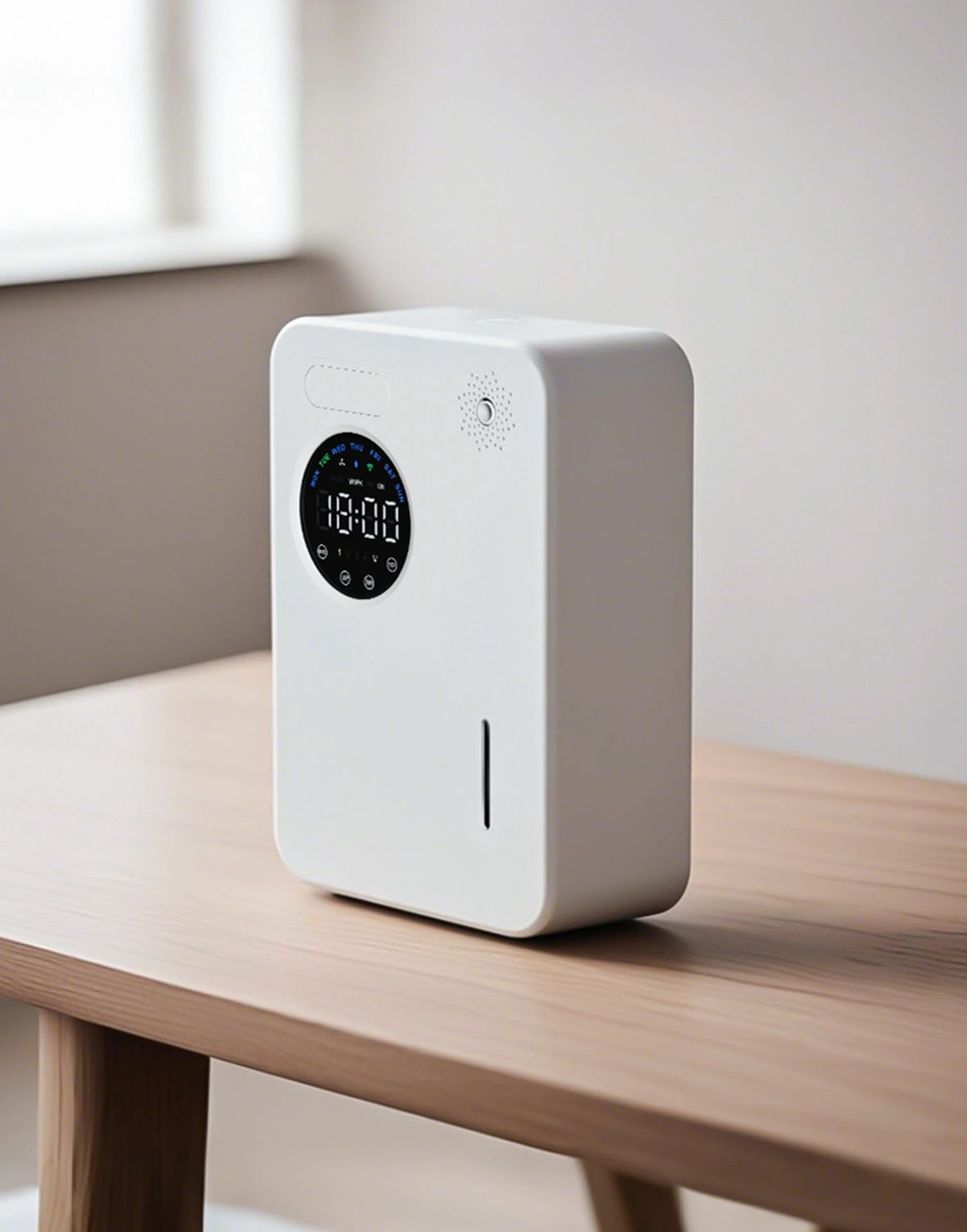
Effective fragrance refill scheduling requires thinking through several variables at once. The type of diffuser matters—HVAC-integrated systems like the Scent-Share Commercial HVAC Scent Diffuser Aroma Dispenser System distribute scent broadly across large commercial spaces, while standalone units work better for targeted areas. Space size, ceiling height, traffic patterns, and desired intensity all factor into how quickly oil depletes.
Start by mapping your space. High-traffic zones near entrances need different treatment than quiet corners. A 300-square-meter retail floor with constant foot traffic will burn through fragrance faster than a private office suite. Environmental factors matter too—spaces with strong air circulation or competing odors may need higher intensity settings, which accelerates consumption.
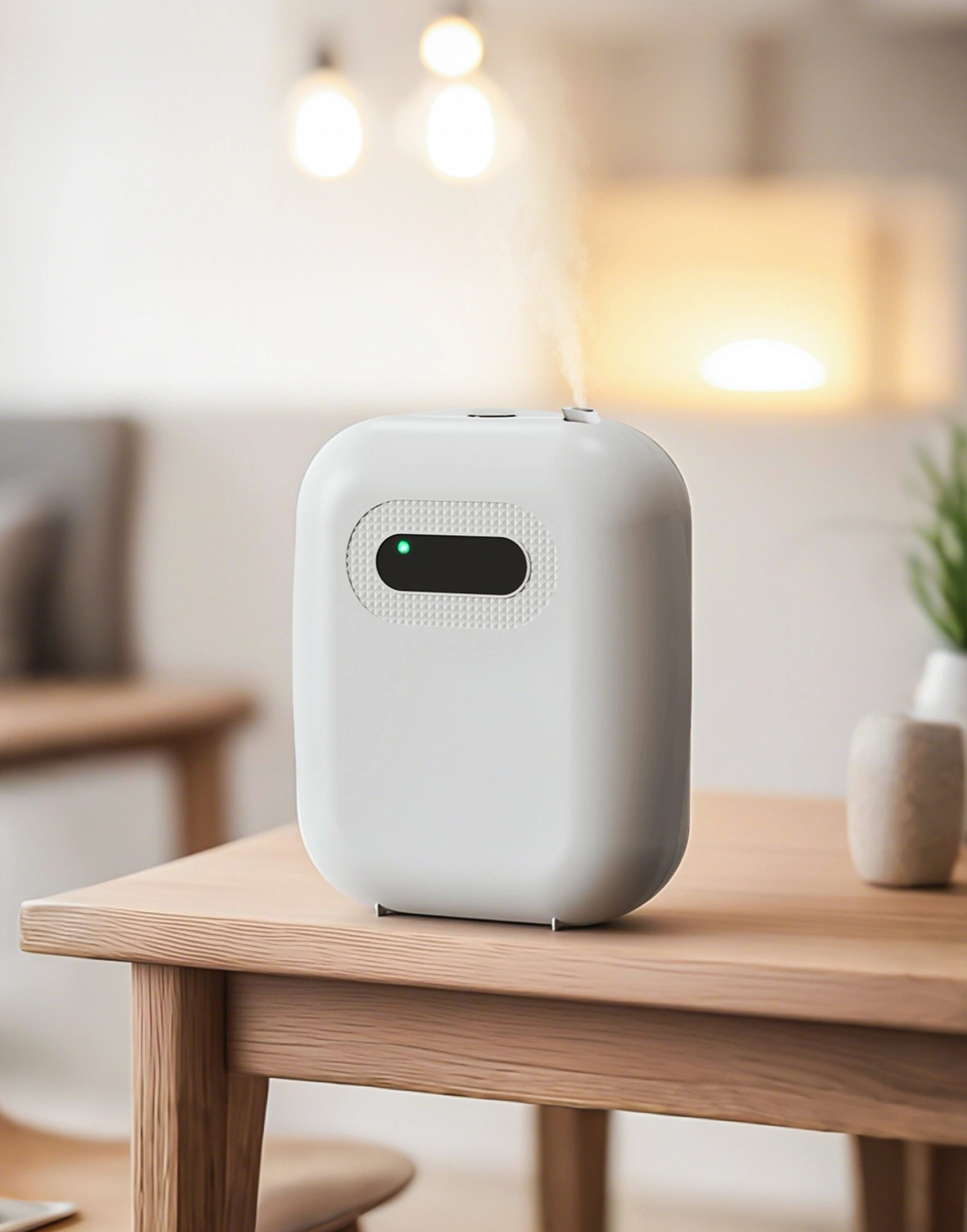
Once you understand your baseline, build a monitoring routine. Check oil levels weekly until you establish patterns, then adjust to a predictable schedule. Most businesses find that commercial diffusers need attention every two to four weeks, though this varies significantly based on usage intensity and bottle capacity. The Scent-Share Commercial Scent Oil Diffuser (Bluetooth APP) with its 150ml reservoir operates differently than the Home Aroma Air Diffuser Scent Machine (Mini) with its 10ml capacity—plan accordingly.
Seasonal adjustments deserve attention too. Summer months with air conditioning running constantly may require different settings than winter. Special events or promotional periods might call for temporary intensity increases. Document what works and build institutional knowledge so the schedule survives staff turnover.
Determining Refill Frequency for Commercial Spaces
The honest answer is: it depends. A diffuser running continuously at high intensity in a large space depletes faster than one operating on a modest schedule in a smaller area. For a 150ml commercial unit covering 300 cubic meters around the clock, expect refills every two to four weeks. Smaller units designed for compact spaces need more frequent attention if used continuously.
The variables that matter most are coverage area, operating hours, and intensity settings. A hotel lobby running 24/7 faces different demands than a boutique open six hours daily. Track your actual consumption for the first month or two before committing to a fixed schedule—real-world usage often surprises people who planned based on manufacturer estimates alone.
What Automated Systems Actually Deliver
Smart diffusers with remote monitoring capabilities change the economics of fragrance refill scheduling fundamentally. Instead of sending someone to physically check oil levels across multiple units, you can see everything from a dashboard. Low-level alerts arrive before depletion happens. Intensity adjustments happen remotely, in real time.
This matters most for businesses managing multiple locations or large facilities. A hotel with diffusers in the lobby, spa, fitness center, and conference rooms can monitor all of them from one interface. A retail chain with dozens of stores can maintain consistent scenting without relying on individual store managers to remember refill schedules.
The Scent-Share Commercial Scent Oil Diffuser (Bluetooth APP) and Scent-Share Desktop Scent Diffuser for Home Bluetooth APP represent this approach—app-controlled operation with 24/7 capability and precise output management. Predictive maintenance features can flag potential issues before they cause scent gaps, and usage data helps optimize future purchasing.
Do Automated Systems Actually Save Money
The cost savings are real, though they accumulate in ways that don’t always show up on a single line item. Labor costs drop when staff no longer need to physically check diffusers regularly. Inventory management improves because you order based on actual consumption data rather than guesswork. Energy usage optimizes when systems run only as needed rather than on fixed schedules that ignore actual conditions.
The bigger value often comes from consistency itself. A scent gap during a busy period—because someone forgot to check the diffuser—costs more in lost impression quality than the technology investment. For businesses where ambiance directly affects customer perception, the ROI calculation favors automation fairly quickly.
Managing Scent Across Multiple Locations
Maintaining a consistent brand scent across multiple sites requires deliberate coordination. The goal is simple—a customer walking into any of your locations should encounter the same signature aroma—but execution gets complicated fast. Different building layouts, HVAC systems, and local conditions all affect how scent behaves.
Centralized control systems help enormously. When headquarters can monitor and adjust every diffuser remotely, consistency becomes achievable rather than aspirational. Standardized equipment matters too—using the same diffuser models across locations eliminates variables and simplifies training.
Quality control extends beyond equipment to the scent itself. Fragrance formulations should be identical across all sites, sourced from the same production batches when possible. Installation procedures need standardization so diffusers are positioned optimally in every location. Maintenance protocols should be documented and followed uniformly.
Regional variations sometimes make sense—a location in a humid coastal climate might need different intensity settings than one in a dry mountain environment—but these should be conscious adjustments to preserve the core scent profile, not random drift.
| Challenge | Practical Solution |
|---|---|
| Inconsistent scent levels | Centralized app control for uniform intensity and scheduling |
| Manual refill oversight | Remote oil level monitoring with automated alerts |
| Varied equipment across sites | Standardized diffuser models (Scent-Share Commercial HVAC Scent Diffuser Aroma Dispenser System, Scent-Share Hotel Scent Oil Diffuser Commercial Scenting) |
| Maintenance inconsistencies | Predictive maintenance alerts and documented service protocols |
| Regional environmental differences | Expert consultation for adjustments that preserve core brand identity |
 ### Practical Steps for Multi-Location Consistency
Start with standardized installation procedures that specify diffuser placement, initial settings, and testing protocols. Train local staff on basic monitoring even when remote systems handle most oversight. Use centralized scheduling so all locations operate on synchronized programs—this prevents the drift that happens when individual sites make independent adjustments.
Regular scent audits at each location verify that the intended experience actually matches reality. Sometimes equipment issues, environmental changes, or well-meaning local adjustments create gaps that remote monitoring misses. Walking through your own spaces as a customer would catches problems that dashboards can’t.
Finding a Partner Who Understands the Full Picture
The difference between a vendor who sells diffusers and a partner who understands scenting as a business discipline shows up in the details. A genuine partner offers consultation on scent selection, guidance on placement and scheduling, technology that simplifies ongoing management, and support when things don’t work as expected.
Look for demonstrated experience across your industry and scale. A company that has deployed scenting programs in 68 countries has encountered and solved problems that a regional supplier hasn’t faced. Customization capability matters—your brand deserves a scent profile developed for your specific identity, not a generic option from a limited catalog.
Technology integration should simplify your operations, not create new complexity. The best systems offer intuitive controls, reliable remote monitoring, and predictive maintenance that prevents problems rather than just reporting them. After-sales support should be responsive and knowledgeable, not a call center reading from scripts.
| Capability | Comprehensive Partner | Basic Supplier |
|---|---|---|
| R&D and innovation | Continuous development of new technologies | Relies on third-party products |
| Service scope | Full support from consultation through ongoing maintenance | Product sales with limited follow-up |
| Geographic reach | Global deployment capability | Regional or limited international presence |
| Customization | Tailored scent development for brand identity | Generic fragrance options |
| Technology | IoT integration, app control, predictive maintenance | Basic timers and manual controls |
| Support | Dedicated pre-sales and after-sales assistance | Transactional relationship |

Creating Spaces People Remember
The businesses that get scenting right share a common trait: they treat it as infrastructure, not decoration. Fragrance refill scheduling becomes a routine operational discipline, not an afterthought. Technology handles monitoring and alerts. Staff understand why consistency matters. The result is an environment where scent works continuously in the background, shaping impressions without demanding attention.
This kind of systematic approach transforms ambient scenting from a nice-to-have into a genuine competitive advantage. Customers feel the difference even when they can’t articulate it. Employees work in spaces that feel intentional and cared for. The brand communicates through every sensory channel, not just visual ones.
If you’re ready to build this kind of program, the conversation starts with understanding your specific spaces, goals, and constraints. Reach out to discuss what a customized scenting solution could look like for your business.
Contact: [email protected] | +86 185 6557 5758 | +86 134 2048 5758
Frequently Asked Questions
How do environmental factors affect fragrance refill scheduling
Temperature, humidity, and air circulation all influence how quickly scent disperses and depletes. Spaces with strong HVAC airflow distribute fragrance faster but may also require higher output to maintain perceived intensity. Humid environments can affect how scent molecules behave in the air. Seasonal changes often require schedule adjustments—summer air conditioning and winter heating create different dispersal patterns. The practical approach is to establish baseline schedules during typical conditions, then adjust based on observed performance during seasonal transitions.
What happens if a diffuser runs empty between scheduled refills
Scent gaps create inconsistency that undermines the entire program’s value. Customers may not consciously notice the absence, but their overall impression of the space shifts. The solution is building buffer time into schedules and using monitoring systems that alert before depletion rather than after. For critical locations like hotel lobbies or retail entrances, consider slightly more conservative refill timing to ensure continuous coverage even if consumption runs higher than expected.
Can different scent intensities work in different areas of the same business
Absolutely, and this is often the right approach. A hotel might use stronger intensity in the lobby where first impressions form, moderate levels in corridors, and subtle presence in guest rooms. Retail spaces might concentrate scent near entrances and fitting rooms while keeping sales floors lighter. The key is intentional variation that serves specific purposes, not random inconsistency. Map your customer journey and decide where scent should be prominent versus background.
How long does it take to establish an effective fragrance refill scheduling routine
Most businesses need two to three months of active monitoring before patterns become predictable. The first month involves frequent checks to understand actual consumption rates. The second month tests initial schedule assumptions against reality. By the third month, you should have enough data to establish reliable routines with appropriate safety margins. Automated monitoring systems accelerate this process by providing precise consumption data rather than relying on visual estimates.
If you’re interested, check out these related articles: