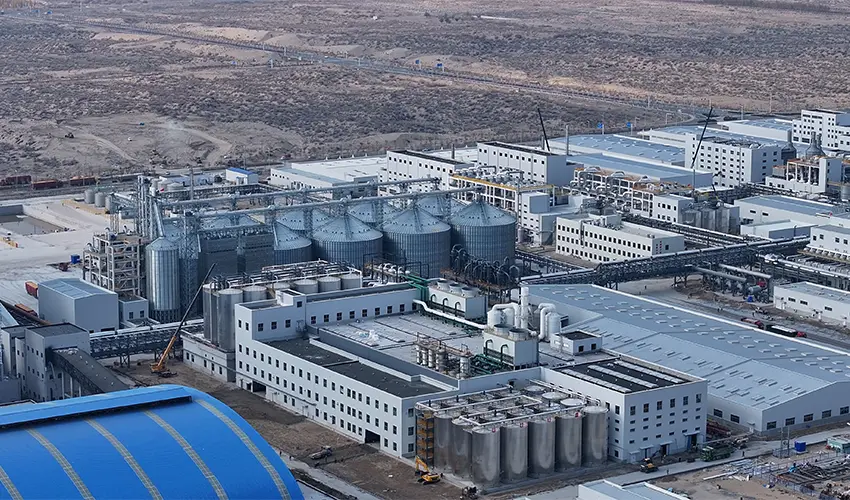

A fire in a corn ethanol plant does not stay local for long. Ethanol is a polar solvent that mixes with water, and corn dust from milling and drying forms a separate explosion hazard. Ethanol plant fire protection is therefore an early design input for grain-to-alcohol EPC projects, not a retrofit decision. Detection, suppression, drainage, and code compliance have to be fixed while process flow diagrams and layout are still open to change. In the grain alcohol projects our team plans, we set the fire protection basis of design at the same stage as distillation column layout, because later changes cost more and protect less.
How Should Ethanol Plant Fire Protection Start in the Design Phase?
Fire protection decisions in a corn ethanol plant are locked into the plot plan. If the distillation and dehydration units sit too close to corn storage, a fire in one area raises the exposure risk of the other. The first step is to classify hazardous areas using NFPA 30 for ethanol as a flammable liquid and NFPA 61 for grain dust handling. This determines electrical classification, equipment spacing, drainage slopes, and firewater routing. We do not wait for the mechanical equipment list to begin this work. In grain alcohol projects our team plans, the fire protection basis of design is issued with the preliminary process flow diagram, because the plant layout and firewater demand have to be developed together.
| Plant Area | Primary Hazard | Detection Approach | Suppression Approach |
|---|---|---|---|
| Corn receiving and grain silos | Combustible grain dust | Spark and ember detectors on conveying | Deflagration venting and explosion isolation |
| Milling and drying | Dust deflagration | Differential pressure and spark detection | Dry risers, isolation valves, and housekeeping controls |
| Fermentation | Ethanol vapor and carbon dioxide | Gas detection in low points | Ventilation, spill containment, and foam-water systems |
| Distillation and dehydration | Ethanol pool or spray fire | Infrared, ultraviolet, and gas detection | Alcohol-resistant AFFF fixed monitors |
| Denatured ethanol storage | Pool fire from tank failure | Flame detection at tank vents and dikes | Foam chambers, deluge, and tank cooling |
| Truck loading rack | Spill fire during transfer | Flame and thermal detection | Alcohol-resistant AFFF with sloped drainage and shutoff |
What Detection and Suppression Systems Match Ethanol and Grain Dust Hazards?
Ethanol vapor is heavier than air, so detection points belong in low areas, drains, and enclosed processing spaces. Flame detection around distillation columns and storage vents has to be paired with a suppression system designed for polar solvents. Standard AFFF collapses when applied to ethanol because the fuel mixes with water before a stable film forms. Alcohol-resistant AFFF remains the working choice for ethanol pool fires. For grain dust, the faster system is not water. A spark detector on the dust collector inlet can close an isolation valve before a deflagration reaches a downstream vessel or dust collector. These two detection philosophies sit in the same plant but solve different problems. We specify gas detection by process area, not as one plantwide package. The detector type follows the failure mode, not the equipment price.

How Do Storage and Loading Areas Change Ethanol Plant Fire Protection Requirements?
Storage and loading create pool fire scenarios that process vessels rarely produce. The dike wall around a denatured ethanol tank has to hold the spilled volume plus firewater without releasing it to grade. Foam chamber placement on the tank shell, plus water deluge for cooling during a prolonged fire, must be fixed before civil design is complete. Loading racks need three elements designed as one: an alcohol-resistant AFFF system, concrete sloped to a firewater sump, and an actuated shutoff valve that stops product flow at the rack. Retrofitting these elements after paving is the most common source of rework we see in project reviews.

If your project includes a denatured ethanol tank farm or a large corn receiving system, it is worth confirming the required foam inventory and firewater retention before finalizing the EPC scope. Send your process capacity and site constraints to [email protected].
What Does Code Compliance and HAZOP Review Cover in Corn Ethanol Plants?
Code compliance and HAZOP are not the same check. HAZOP identifies scenarios such as loss of cooling, control valve failure, or transfer overflow, then estimates consequence and assigns safeguards. Code compliance converts those safeguards into firewater demand, foam concentrate storage, access road widths, and electrical classification. In corn ethanol plants, the two highest-consequence studies are the vapor cloud scenarios around distillation and the dust deflagration scenarios in milling and drying. We treat both as process safety inputs, not as documentation to close out. Fire protection review should mark the same drawing set that the HAZOP team marked, so the final piping and instrumentation diagrams show the interlocks and isolation valves the study required.
When Should Fire Protection Integration Include the EPC Contractor?
Projects that leave fire protection until after main equipment procurement often find that firewater demand, electrical area classification, and drainage no longer match the selected equipment. This creates change orders at the exact point in the schedule where they are expensive. AGRIFAM’s grain alcohol EPC scope brings fire protection review into the same engineering sequence as fermentation, distillation, and dehydration, not after them. If you are planning a corn ethanol plant, send your process capacity, product grades, and site location to [email protected]. Our team will review which firewater, foam, and detection scope fits your layout and code package before the civil works begin. You can also reach the office at 010-8591 2286.
What Else Should Project Teams Ask About Ethanol Plant Fire Protection?
Does ethanol require a different firefighting foam than gasoline?
Yes. Ethanol is a polar solvent, so standard AFFF that works on gasoline can break down quickly. Alcohol-resistant AFFF forms a polymer layer between the foam blanket and the fuel, which keeps the film stable long enough to suppress the fire. The proportioning rate and application density change from hydrocarbon fire design, so the foam system cannot be copied from a gasoline terminal.
Is grain dust an explosion risk or only a maintenance problem?
It is easy to mistake grain dust for a housekeeping issue, but in a corn ethanol plant it is a process safety risk. Dust from hammer mills, dryers, and conveyors can form a deflagration cloud when it reaches the right concentration and ignition source. The design answer is not only cleaning. It includes deflagration venting, spark detection, isolation valves, and electrical classification in dusty areas. Maintenance reduces fuel accumulation, but it does not remove the ignition risk by itself.
What code question should a new corn ethanol plant resolve first?
The first question is usually firewater demand for the largest single hazard, because that number drives tank size, pump sizing, and site drainage. The local authority having jurisdiction will also need to accept the foam type, tank spacing, and access road design. Resolve these items before detailed civil and mechanical design, because changing the firewater basis later moves pipes, dikes, and electrical routing.
Can fire protection be added after the main process design is fixed?
It can, but the cost rises quickly. If the process equipment is already placed and the civil works are underway, adding foam chambers, firewater lines, or explosion isolation means reopening piping, drainage, and electrical area classification. If the project is still at feasibility or preliminary design, fire protection can be embedded without conflict. For a project at that stage, share your process capacity and site plan with [email protected] and we will confirm the firewater, foam, and detection scope alongside the process package.
If you’re interested, check out these related articles:
Driving Global Food Conservation Through Technological Innovation